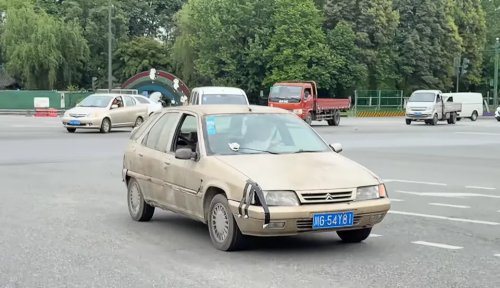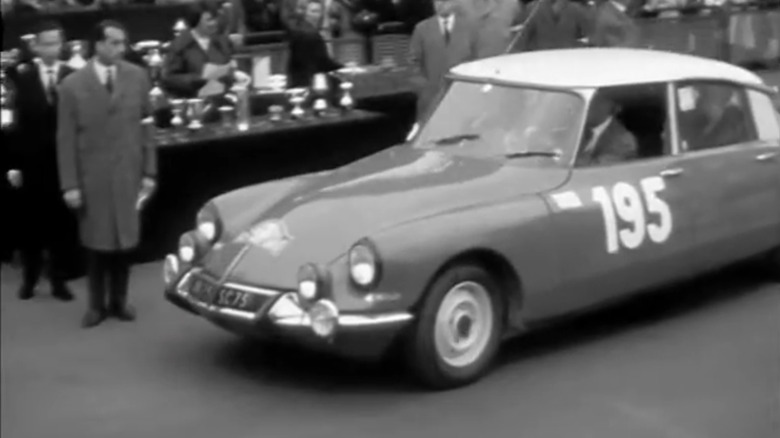
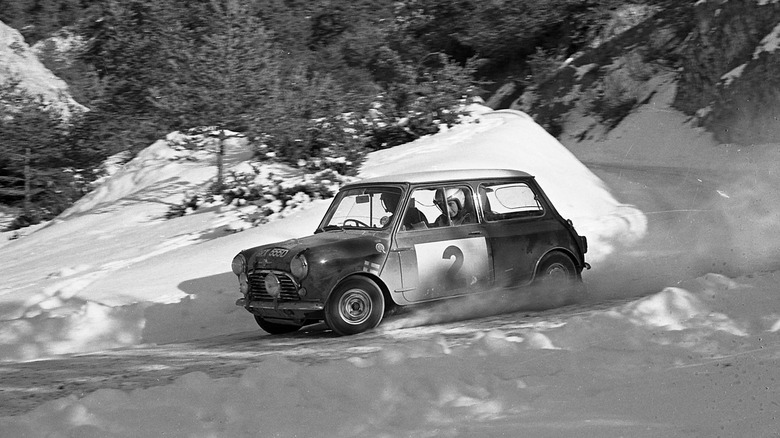
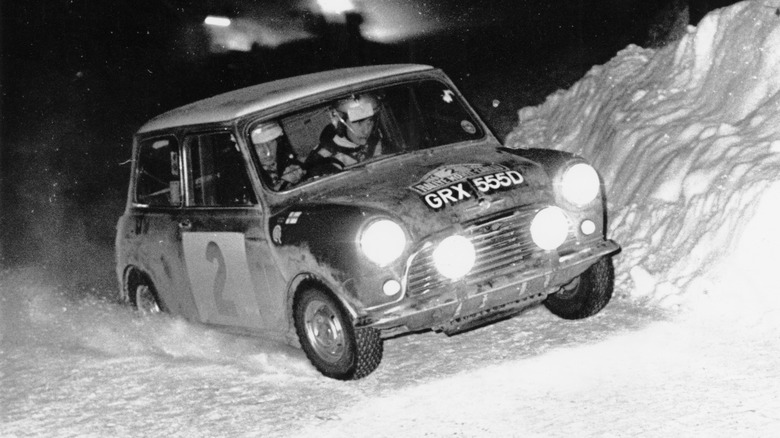
















British Pathé/YouTube Add Jalopnik on Google: Google Discover Disqualifications are nothing new in motorsports. For example, a simple plank got Hamilton and Leclerc disqualified a few years back. However, a win is still a win, even if it only comes after someone else was disqualified, right? Technically, yes. But that must dampen the feel for the winner, and such victories can frustrate fanbases who feel that the true victor was denied their glory. Such was the case with the 1966 Monte Carlo Rally, which had one of the most controversial endings in the history of motorsports. The official winner was Finnish driver Pauli Toivonen, behind the wheel of a Citroën, even though he technically finished in fifth place. When Toivonen's Citroën DS crossed the finish line, he was in fifth. So, you can imagine his bewilderment when he was told he was collecting the first-place trophy. How did Toivonen jump from fifth to first? At the end of the race, all four British cars that finished ahead of Toivonen — three of which were Minis — were disqualified, that's how. Why were they disqualified? According to FIA officials at the time, the Brits were running with a style of headlight that was banned from the race. If that seems shady, don't worry, it seemed shady then, too. Fans of the sport were furious. Hell, Toivonen didn't even like the results. It looked like the Minis were intentionally robbed by race officials. But why specifically target the little Mini Cooper? Because it had been dominant the previous two years and no one could stop it. No one could stop Minis on the road British Motor Industry Heritage Trust (british Motor Museum)/Getty Images The 1964 and '65 Monte Carlo Rallies were both won by John Cooper's go-fast version of the original Mini. In '64, Irish rallying legend Paddy Hopkirk won in the Mini Cooper S, but Mini drivers also took fourth and sixth place. A Cooper S won the following year with Timo Mäkinen at the helm, but that was the only Mini in the top 10. Rumors swirled of Monegasque officials being upset and wanting to prevent a Mini three-peat to give French automakers a better chance at winning at home. So, some rules were changed. At the time, Group 1 cars in the Monte Carlo Rally needed to be homologated, with 5,000 road car versions sold in exact race spec. If the car was modified in any way for racing, it fell into Group 2, but Group 2 cars had an 18% handicap, meaning they weren't going to win anyway. So, the British Motor Company, who manufactured Minis, built and sold 5,000 rally-spec cars to the public to qualify for Group 1. However, in the first draft of the Group 1 rules drawn up by the Automobile Club de Monaco organizers and FIA, teams had some leniency for their headlight bulb technology. So, the Mini team went with filament, non-dipping (just one beam, without low or high settings) headlights and would switch between the normal lights and radiator-mounted fog lights when needed. Both BMC and Lotus met with the FIA to make sure their cars complied and were given the green light. However, a second rule draft was made, specifying the need for double-filament, dipping headlights only. The Brits weren't given that second draft. A rule bait and switch handed the 1966 win to the French British Motor Industry Heritage Trust (british Motor Museum)/Getty Images Ahead of most professional races, officials check each car to make sure it's within spec. The same thing happened before the 1966 Monte Carlo Rally. The Brits passed their pre-race inspections, including inspections of their headlights. So, they raced on and dominated once again, but this time, even more impressively. In 1966, the four fastest finishers were three Minis, finishing first, second, and third, with a Lotus in fourth. However, after the race was over, officials inspected all of the Brits for several hours, and it seemed like they were fishing. "They counted all the teeth on the gears in the gearbox" after the race, Hopkirk reportedly told the BBC, according to Cars & Classic Sports Car. "They took the tires off the wheels and weighed the wheels then weighed the tires separately. It was ridiculous — they couldn't find anything wrong." But then they did. After the long inspection, officials disqualified the three Minis and one Lotus for their non-dipping headlights, leaving Toivonen's fifth place Citroën as the winner. It's impossible to say for certain that the French organizers fixed the race, as there was never an investigation, and the Citroën is still considered the official winner. The public has eyes and ears, though, and we can see what happened. It's pretty clear that the officials waited until the end of the race to disqualify however many drivers were ahead of the Citroën. Toivonen himself was embarrassed and didn't want to except the trophy. He also never raced for Citroën again. The Citroën DS is a cool car, but it didn't deserve its win. Revenge is sweet, though, and Mini came back the following year to win the 1967 Monte Carlo Rally.