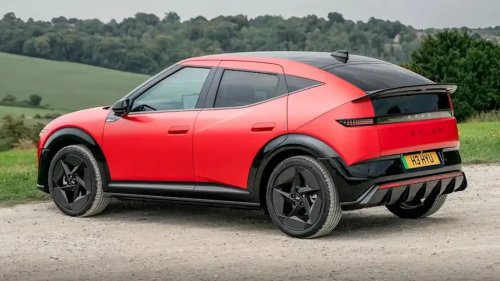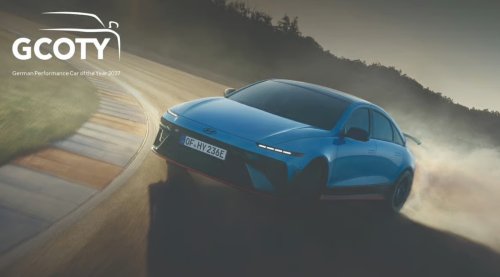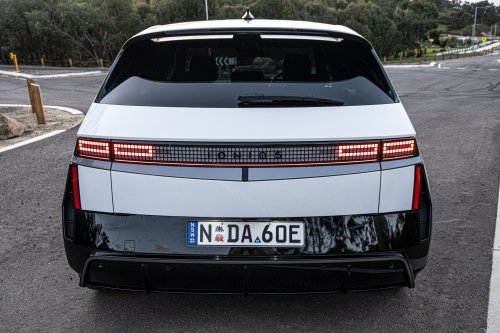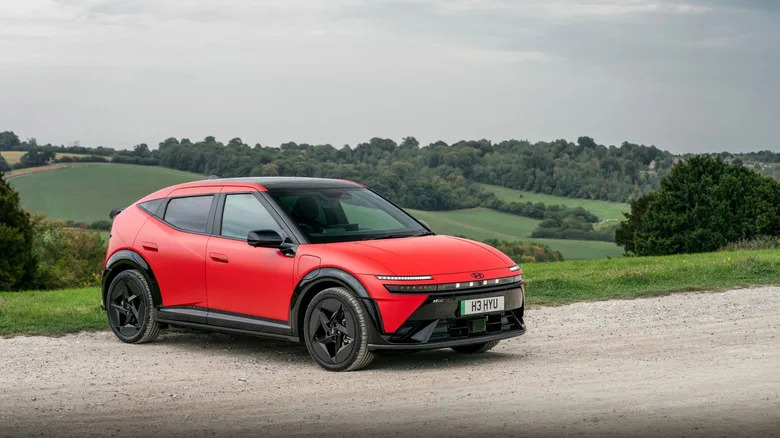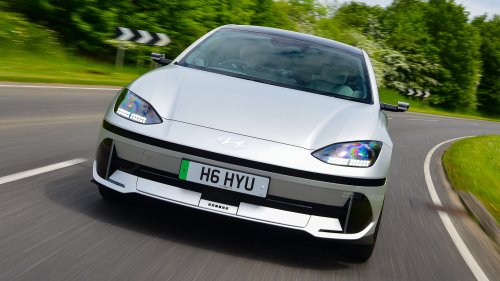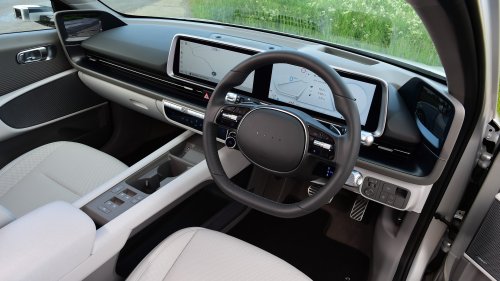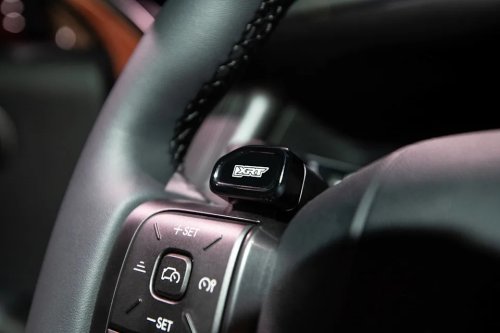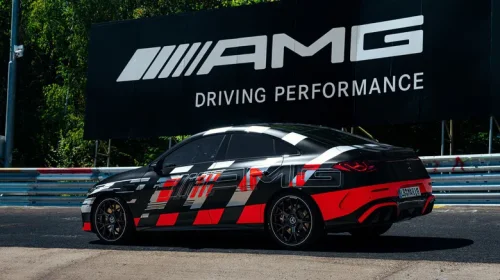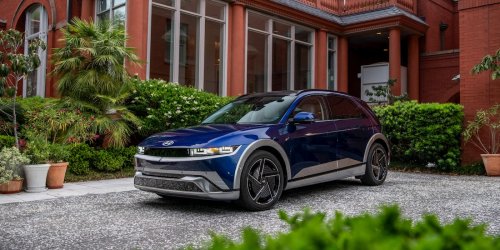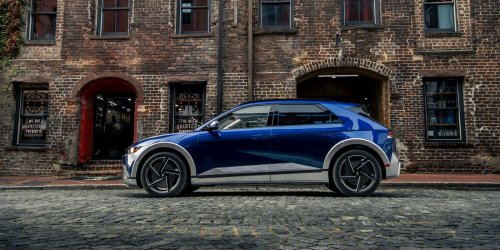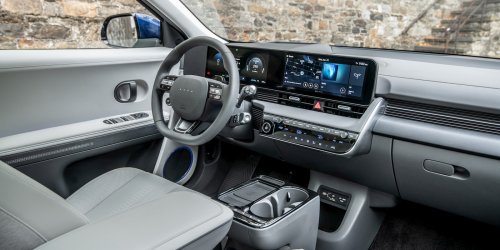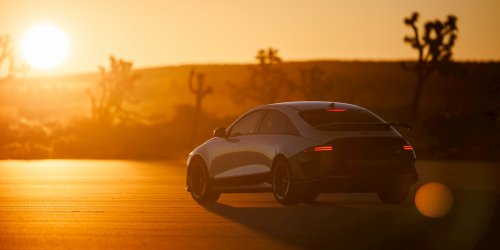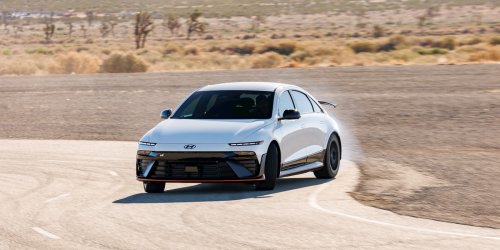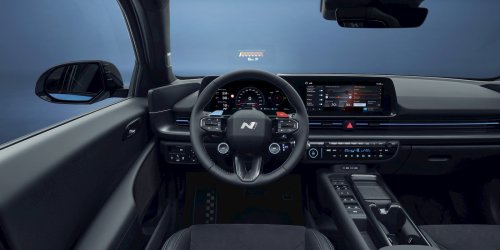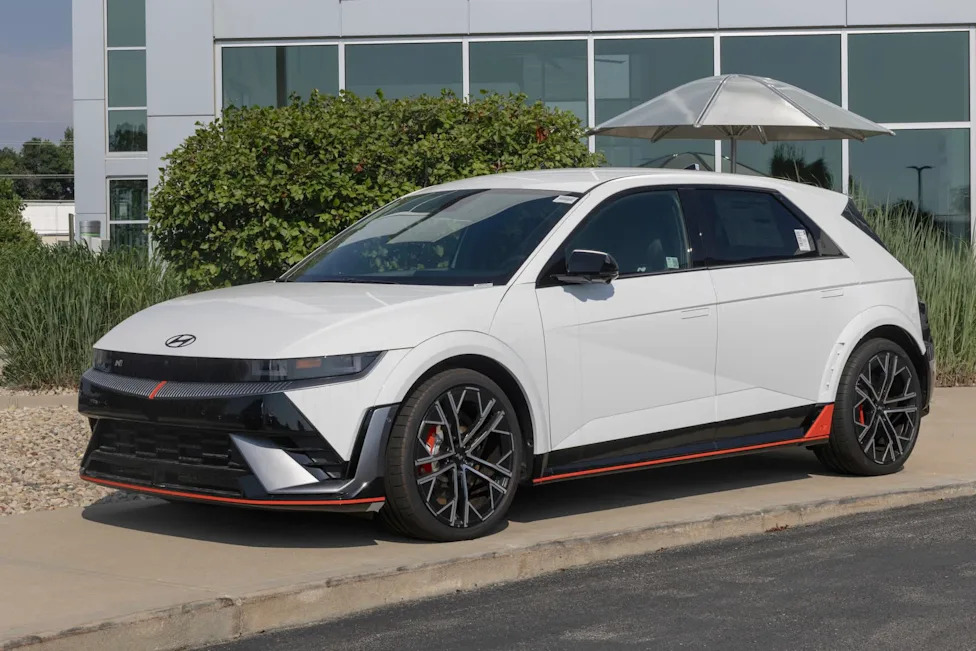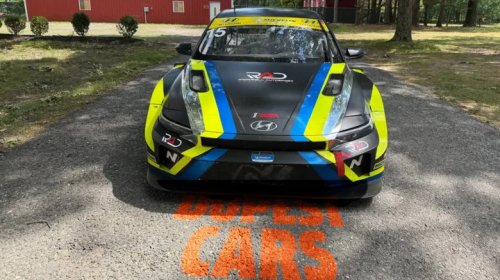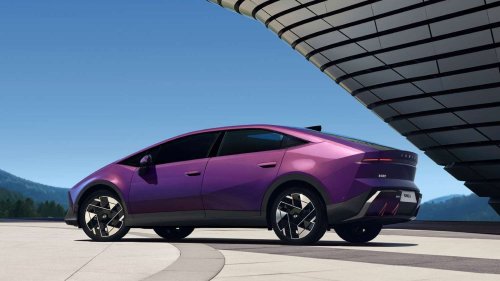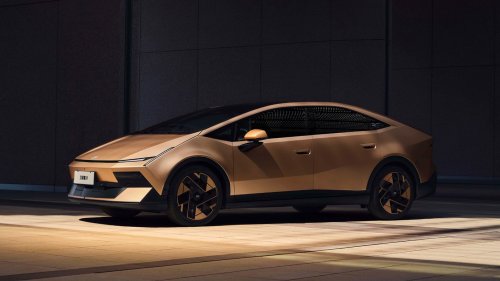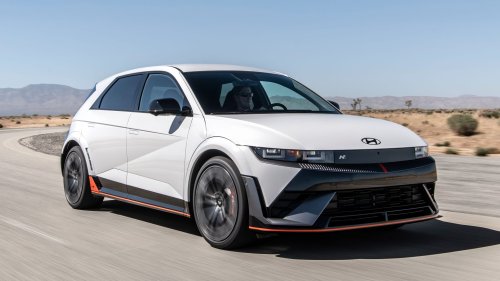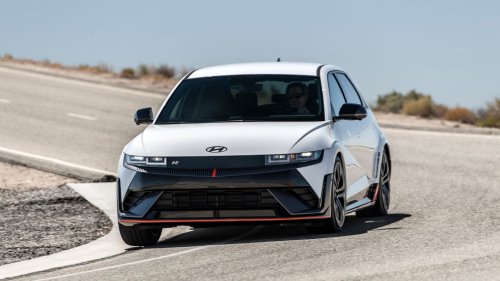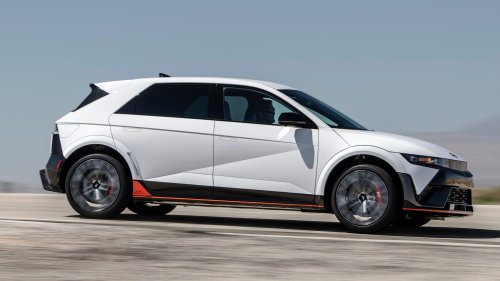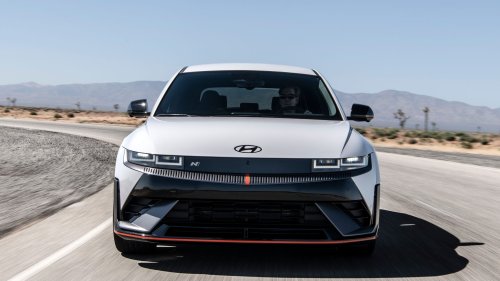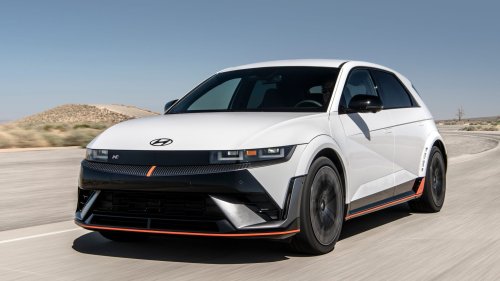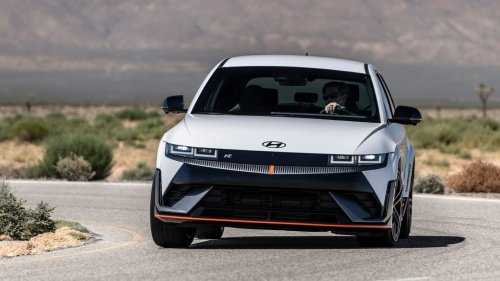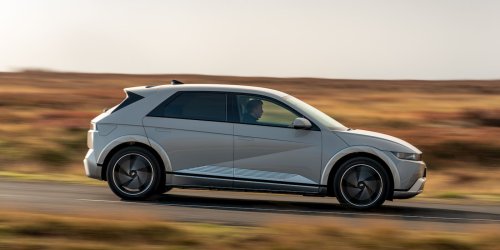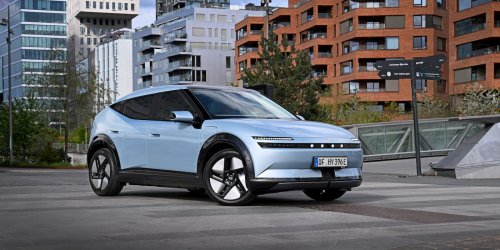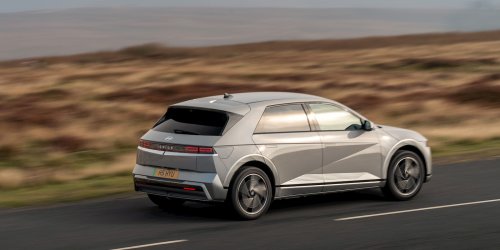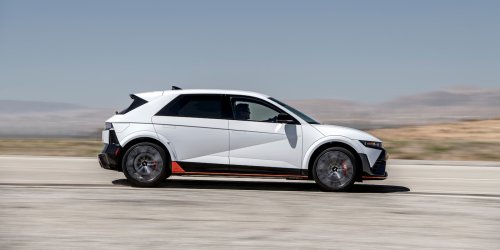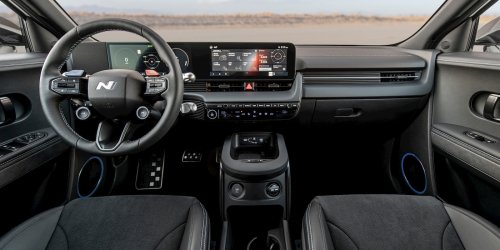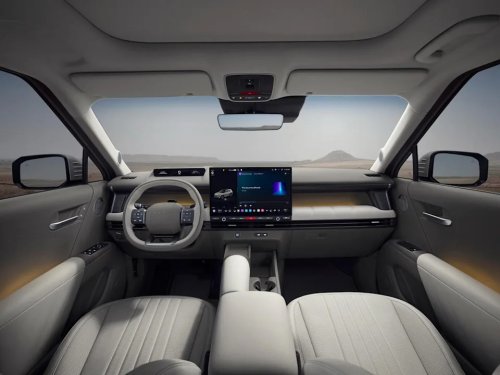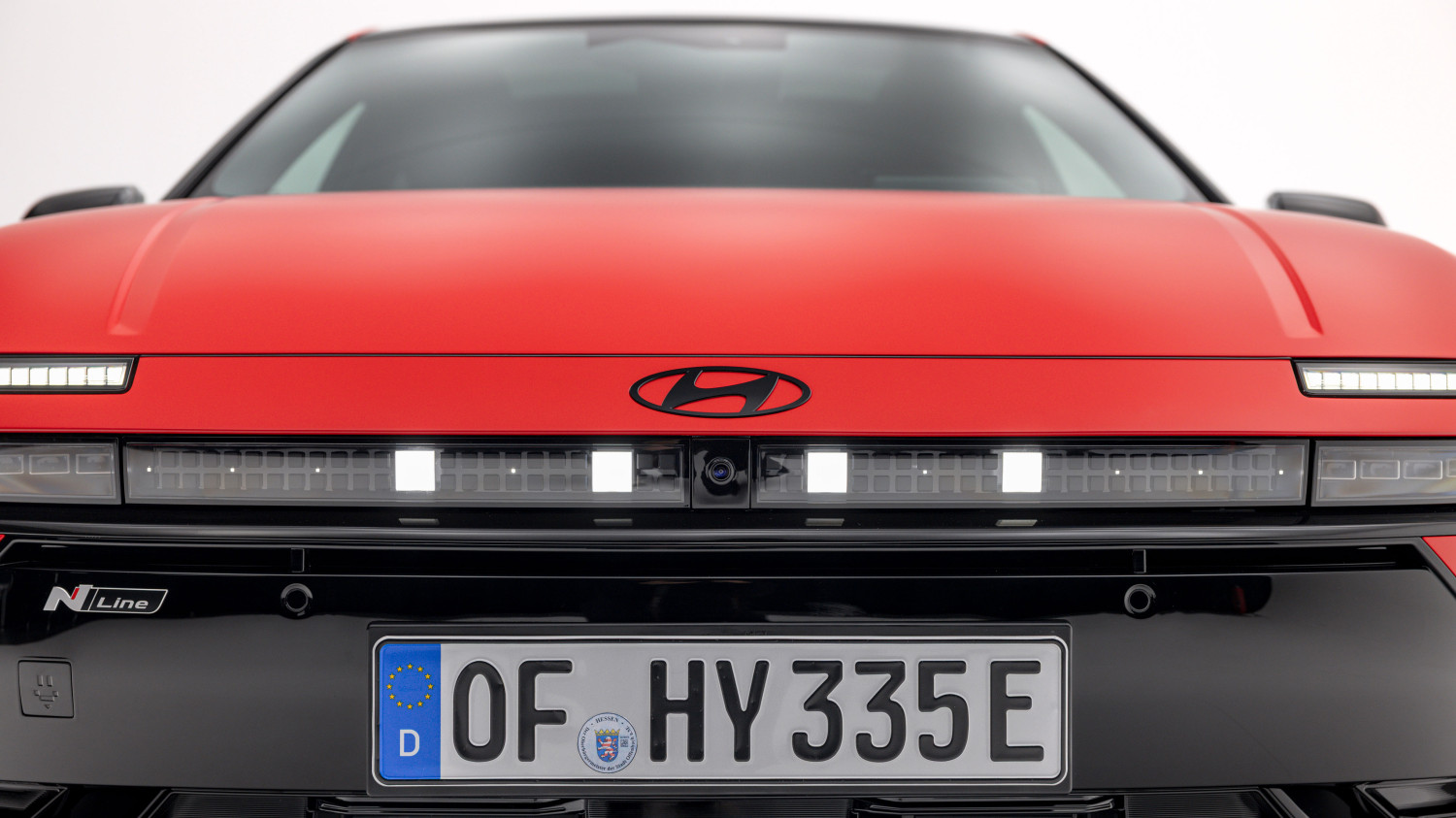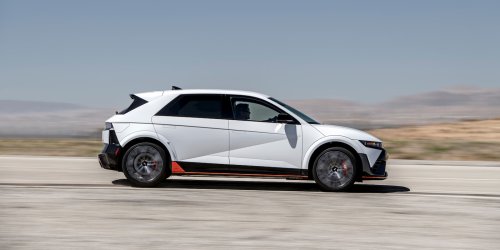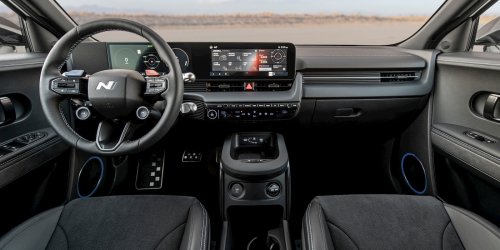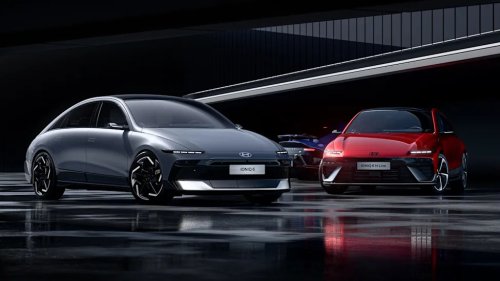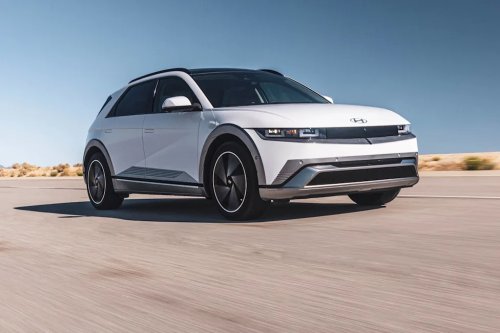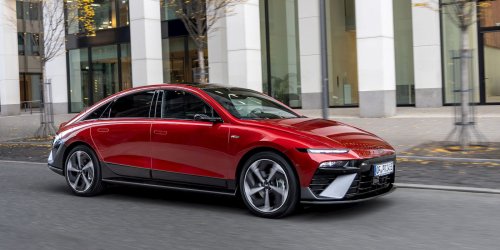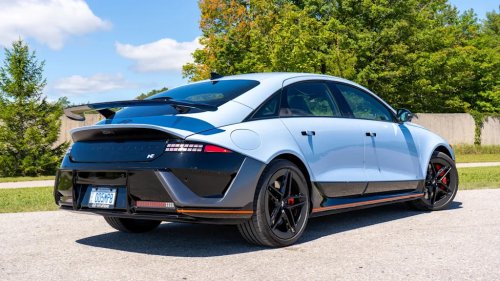
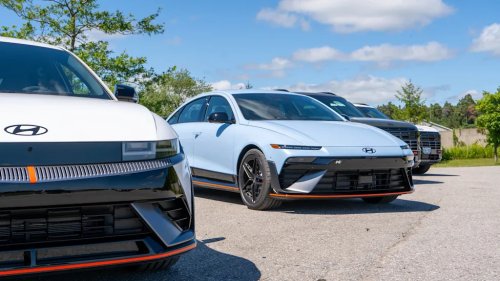
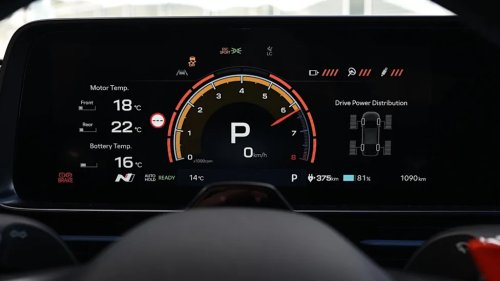
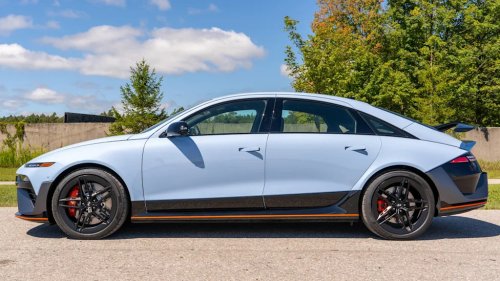
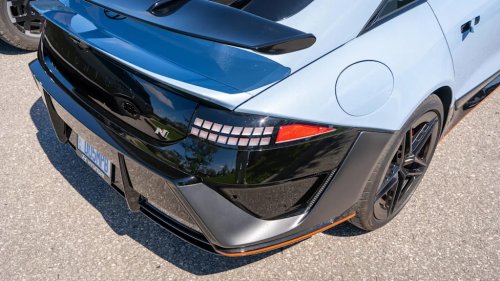



















Autoblog and Yahoo may earn commission from links in this article.When I first arrived at Canadian Tire Motorsport Park—better known as Mosport—just a short drive from Toronto, Ontario, I honestly didn't expect the 2026 Hyundai Ioniq 6 N to feel like much more than an Ioniq 5 N that had been squashed lower to the ground. Hyundai had invited me to the track primarily to run hot laps in the turbocharged, gas-burning Elantra N TCR Edition, but I was also provided an opportunity to fling the all-new Ioniq 6 N, as well as an Ioniq 5 N for the sake of comparison, around a short autocross-style test course for a brief taste of what the brand's latest electric performance car can do. The most interesting result of this exercise, as it turned out, was that I discovered the Ioniq 6 N was far more different from its hot-hatch sibling than I had expected.Both the Ioniq 6 N and the Ioniq 5 N share the same 84-kWh battery, the same dual-motor all-wheel-drive layout, the same 601 horsepower rating—or 641 hp when you press the aptly named N Grin Boost button—and the same feature menu of simulated gears, manufactured engine noises, and software designed to make a mostly silent electric car behave as if it still has a strong appetite for dinosaur juice. Hyundai also quotes 568 lb-ft of torque and an estimated 3.2-second sprint to 60 mph, matching the Ioniq 5 N. Surely, I thought, the sedan would simply be the same thing—perhaps, maybe, a bit sharper and more refined—albeit with a sedan body. Then I drove both back-to-back and promptly smoked a cone in the Ioniq 6 N after successfully avoiding all of them in the 5 N. Apparently, things weren't going to be so simple.Hyundai Ioniq 6 NCole AttishaTo Clarify, This Isn't A Full, In-Depth Ioniq 6 N ReviewMy time behind the wheel of the Ioniq 6 N was brief. I spent roughly 10-15 minutes on a tight autocross-style course with slaloms, hard braking zones, second-gear corners, and some technical momentum shifts, but that was nowhere near enough time to tell me how the Ioniq 6 N rides on urban pavement, behaves on a highway, or how well it works as an everyday EV—I'll need substantially more seat time before passing judgment on any of that. What made this experience unusually useful, however, was that I had driven an Ioniq 5 N immediately beforehand, on the exact same course, under the same dry conditions. This meant that any differences at all—no matter how minor—would become glaringly obvious.AdvertisementAdvertisementAfter some time spent behind the wheel, I then climbed into the passenger seat while professional Hyundai TCR racer Mark Wilkins demonstrated what the 6 N could do with considerably more talent behind the wheel. Wilkins currently races Hyundai's Elantra N TCR with Bryan Herta Autosport in the IMSA Michelin Pilot Challenge, and he opened my eyes—quite widely—to how much time I was still leaving out on the course, and to how ridiculously playful the Ioniq 6 N could be when pushed hard by a pro. Ultimately, a few minutes in both the driver and passenger seats were enough to establish one important thing with surprising clarity: the Ioniq 6 N and Ioniq 5 N don't feel like the same car, and yet they're both still wildly entertaining in their own ways.Thinking about selling your car? Get an instant cash offer online now. Click here to get started.Hyundai Ioniq 6 NCole AttishaThe Ioniq 5 N Feels Like A Hot Hatch. The 6 N Feels Like Something ElseThe Ioniq 5 N felt stiffer, tighter, and, at first, easier to thread through the slalom. The Ioniq 6 N, on the other hand, was slightly softer in a way, yet more willing to rotate from the rear. It also felt physically longer because, at 194.3 inches, the 6 N stretches almost 9 inches beyond the 185.6-inch Ioniq 5 N. Interestingly, though, the sedan actually has a slightly shorter wheelbase, meaning considerably more of that length extends beyond the axles. That was, of course, my best excuse for murdering that one cone. After running the same section cleanly in the Ioniq 5 N, I initially misjudged where the 6 N's longer tail was going to follow me. Once I'd recalibrated, though, the sedan's willingness to rotate became one of its most entertaining and defining characteristics.Drive into a corner without deliberately managing the rear, though, and some understeer can emerge, but it doesn't take much encouragement to change the car's attitude. With the appropriate N settings already configured, I could provoke genuine, controllable oversteer and use the throttle to influence where the rear went next. Hyundai redesigned the Ioniq 6 N's suspension geometry, lowered its roll center, and fitted stroke-sensing electronically controlled dampers to give it a feel of its own. The company also stiffened the rear anti-roll bar and reinforced the body structure, yet from behind the wheel, it still never translated into the harsher persona I expected—through everything, even its thoroughly bolstered bucket seats, I always remained comfortable. The best shorthand I can offer is this: the Ioniq 5 N feels like a very powerful electric hot hatch, but the Ioniq 6 N feels more like an executive sedan with an energy-drink addiction.2026 Hyundai Ioniq 6 NHyundaiN e-Shift Shouldn't Work As Well As It DoesBoth cars produce essentially identical peak power, and I couldn't really detect any meaningful acceleration advantage in the sedan—not that either needs one. Full throttle remains properly brutal, particularly when you're trying to feed more than 600 horsepower through a tight sequence of cones. Throttle management became more important than outright commitment, but what makes that power surprisingly manageable is Hyundai's N e-Shift system. Yes, it's fake. It simulates gears, engine speed, a rev limiter, and the torque interruption you'd experience when shifting a combustion-powered performance car. But dismissing it because it isn't mechanically necessary misses why it's useful.AdvertisementAdvertisementOn track, gears become valuable reference points. I knew which simulated gear I wanted when approaching a particular corner. I could hear engine speed rising, feel the artificial shift, and use that information to judge speed without constantly looking at the instruments. Suddenly, manhandling a 641-hp EV around an autocross course felt remarkably natural, rather than requiring me to recalibrate years of internal-combustion muscle memory. Hyundai even revised the N e-Shift for the 6 N with shorter, motorsport-inspired ratios, and I could still happily slam its mimicked engine against its imaginary rev limiter, knowing full well that no actual valves were about to come flying out of the engine block.Hyundai Ioniq 6 NCole AttishaThe 6 N's unique engine note also affected the personality. The Ioniq 5 N's synthesized soundtrack reminded me of a buzzy four-cylinder hot hatch, but the setting I experienced in the Ioniq 6 N sounded more like a high-strung six-cylinder. Neither does it fully pretend to be an actual combustion engine, nor is it particularly convincing if you stop to overanalyze it, but the clever part is that when you're busy driving, you stop thinking about it and simply enjoy the added communication it offers in an EV that might otherwise feel cold and distant.Shopping for a new car? Click here to get a great deal on your next vehicle. Powered by Carvana, no haggle pricing, 100% online.Hyundai Ioniq 6 NCole AttishaSame Hardware, Two Different Electric N CarsThough the 5 N initially felt more precise through the slalom, and its shorter body was easier to place, the 6 N came alive more noticeably in longer, sweeping corners and higher-speed transitions, where its more playful rear end and lower center of gravity gave it a distinctly different rhythm. That uniqueness impressed me most, and it answered the question I had asked myself before I had the chance to experience either of Hyundai's electrified N models.Hyundai could've simply taken the Ioniq 5 N's extraordinary recipe, given it the sleek, low-slung sedan body of the Ioniq 6, and still have considered the job well done. Instead, my experience, albeit brief, suggests that Hyundai has created two electric N cars with palpably distinct personalities, despite sharing most of their hardware. I'd still like to drive the Ioniq 6 N on a highway, through city traffic and—most importantly—down a proper winding road before I'd call this a full, in-depth review, but my first few minutes answered the question I cared about most. This isn't just an Ioniq 5 N in a sedan form factor; it's something tangibly unique and new, bringing Hyundai's unconventional yet incredibly convincing vision of electrified N performance to an entirely new kind of driver.AdvertisementAdvertisementAutoblog aims to feature only the best products and services. If you buy something via one of our links, we may earn a commission.This story was originally published by Autoblog on Aug 28, 2026, where it first appeared in the Reviews section. Add Autoblog as a Preferred Source by clicking here.