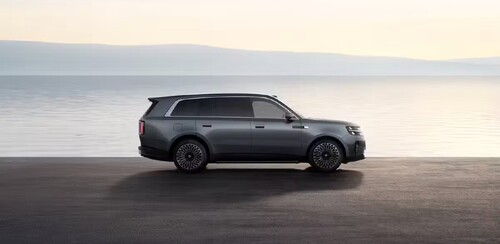
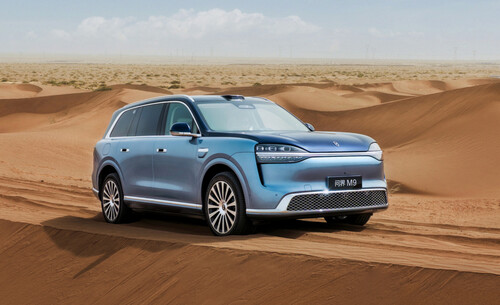
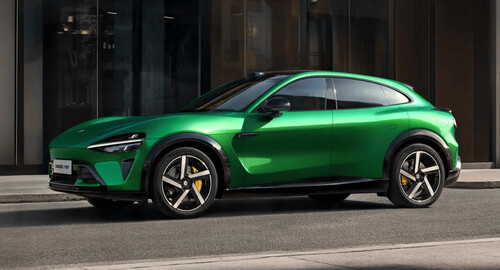
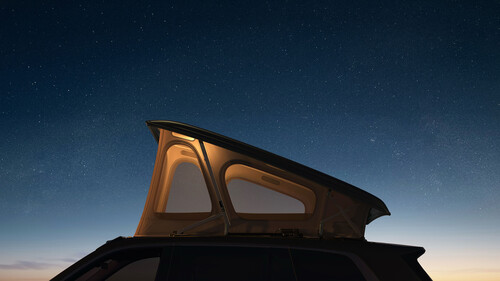
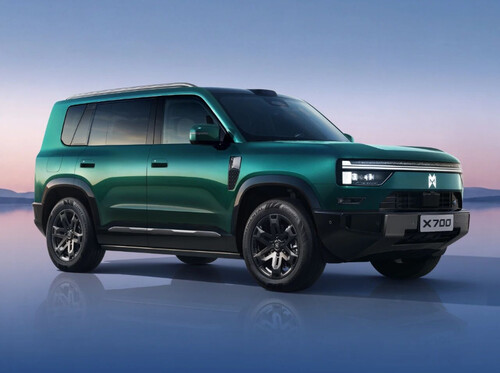
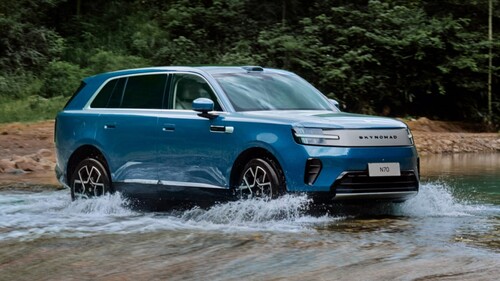
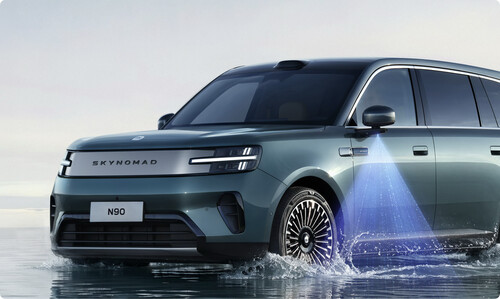
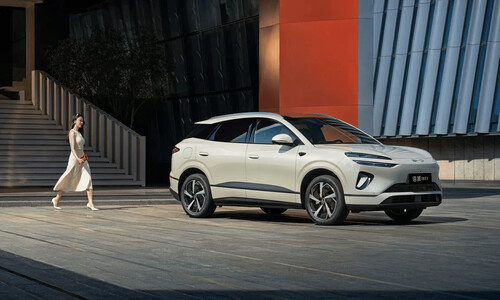
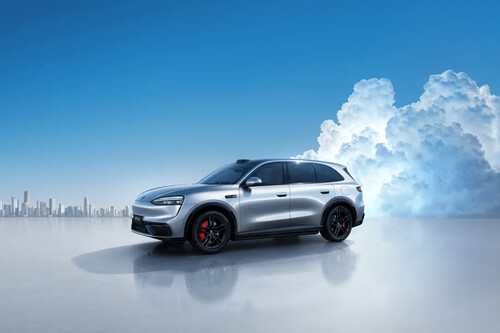
Xiaomi Corporation (HKG: 1810) said on September 7, 2026 that cumulative deliveries of its electric vehicles have surpassed 800,000 units, a milestone founder and CEO Lei Jun announced the same day the company prepared to launch its first extended-range SUVs, the SkyNomad N70 and N90. Lei disclosed the figure roughly 29 months after Xiaomi's first deliveries began on April 3, 2024, with the SU7 sedan. The 800,000 mark follows the 700,000-unit milestone reached on July 30, 2026, meaning Xiaomi added roughly 100,000 deliveries in just over five weeks even as it juggled a new vehicle launch. Monthly output has stayed above 30,000 units every month from April through August 2026, after a slower start to the year with more than 39,000 deliveries in January and roughly 20,000 in both February and March. August alone accounted for more than 30,000 units, keeping the pace needed to reach Xiaomi's stated goal of 550,000 deliveries for the full year. The SU7 series, Xiaomi's first production model, crossed 500,000 cumulative deliveries by August 17, 2026, taking about 28.5 months to reach that mark. The YU7, a midsize SUV that launched roughly six months earlier, has already delivered more than 150,000 units and is now described as the primary driver of Xiaomi's current delivery momentum. With SU7 and YU7 both established as bestsellers, Xiaomi used the same day to push into a new segment: extended-range electric vehicles, or EREVs, that pair a battery with a small gasoline engine acting as a generator. Four trims, the N70 Pro, N70 Max, N90 Max, and N90 Max Explorer Edition, went on sale at 7 p.m. Beijing time on September 7, entering a segment already crowded with Li Auto (NASDAQ: LI) and AITO. SkyNomad N70 shown in the butterfly-valley blue paint option, one of three exterior colors offered across the lineup (Xiaomi) Official launch pricing landed at 209,900 CNY (c. $31,282) for the N70 Pro, 239,900 CNY (c. $35,753) for the N70 Max, 269,900 CNY (c. $40,224) for the N90 Max, and 299,900 CNY (c. $44,702) for the N90 Max Explorer Edition, which swaps in a pop-up roof cabin in place of the flagship trim's original presale price slot. Every figure undercut the presale prices Xiaomi floated in late July, when the N70 Max and N90 Max were quoted at 259,900 CNY and 299,900 CNY, respectively. Under the hood, the N70 and N90 share a "super range extender" system built around a 1.5-liter engine sourced from Changan subsidiary Dongan, running on 92, 95, or 98 octane fuel, paired with battery packs from Sunwoda (52 kWh, LFP) and CALB (76 kWh, ternary NMC). The N90 Max's 76 kWh pack delivers a CLTC pure-electric range of 464 km (288 miles) and a combined range of 1,705 km (1,060 miles), with a 15-minute DC fast charge adding up to 285 km (177 miles) and a 20-80% top-up taking 18 minutes. The N70 Max's battery options return up to 505 km (314 miles) of CLTC electric range and a combined 1,461 km (908 miles). Performance varies by drivetrain: the N70 offers a single 210 kW rear motor or a dual-motor, all-wheel-drive layout rated at 300 kW combined, while the N90 Max pairs dual motors for 310 kW of combined output, a 5.9-second 0-100 km/h (0-62 mph) time, and a 190 km/h (118 mph) top speed. The N90 Max also adds a 750 mm wading depth with two wading radars and an IPX8/IPX9K-rated battery enclosure, along with a 220V, 6.6 kW external power discharge function. The two SUVs share a boxy, hard-edged design language topped by a "SkyNomad" badge centered on the grille and dragonfly-shaped headlights the company says throw light up to 624 meters across a 180-degree field, alongside a full-width rear light bar. The N90 Max measures 5,285/1,998/1,825 mm (208.1/78.7/71.9 in) on a 3,080 mm (121.3 in) wheelbase, while the smaller N70 comes in at 4,960/1,998/1,765 mm (195.3/78.7/69.5 in) on a 2,950 mm (116.1 in) wheelbase, 325 mm shorter overall with a 130 mm shorter wheelbase. Exterior colors include a sage green, a butterfly-valley blue, and a volcanic-ash gray, with mocha brown and sand-ceramic beige interior options. N90 Max's full-width taillight bar shown in Xiaomi's official launch gallery, photographed at a coastal bluff (Xiaomi) Inside, the N90 Max seats seven in a 2+2+3 layout with a claimed 2,760 mm (108.7 in) of interior cabin length and rear doors that open to nearly 90 degrees. All four seats are described as "zero-gravity" recliners, the second and third rows can slide fully forward to free up 1,831 L (64.7 cu ft) of cargo space, and the trunk holds 577 L (20.4 cu ft) with all seven seats in place. The cabin runs on a 16.1-inch 3K central touchscreen, an 8.88-inch digital instrument cluster, a 20-inch head-up display, an expandable tablet mount on the front passenger seatback, and a 21.4-inch rear entertainment screen, all powered by a third-generation Qualcomm Snapdragon 8 chip and a standard "Super Xiao Ai" voice assistant. Driver assistance across the lineup runs on Xiaomi's HAD and XLA models paired with a 700 TOPS Nvidia Thor chip, a roof-mounted lidar unit, a 4D millimeter-wave radar, 11 cameras, and 12 ultrasonic sensors, with the N90 Max adding a rear-facing solid-state lidar aimed at easing parking maneuvers in a vehicle over 5.2 meters long. The pricing undercuts Li Auto's L9, which starts at 459,800 CNY (c. $68,525), and AITO's M9, which starts at 479,800 CNY (c. $71,505), by more than 150,000 CNY, positioning the N90 Max and its Explorer Edition as a value play against two of China's best-selling flagship family EREVs. Whether an automaker that built its reputation on battery-electric sedans and SUVs can win over EREV loyalists already courted by Li Auto and AITO may say as much about Xiaomi's next 800,000 deliveries as the SU7 launch said about its first. Conversion rate: 1 USD = 6.71 CNY as of September 10, 2026.