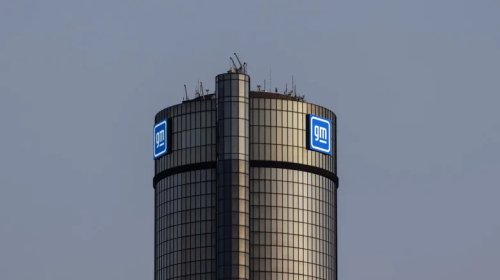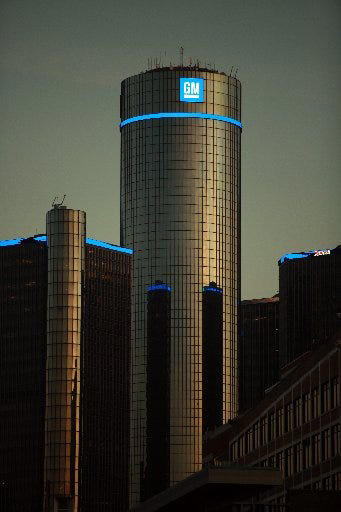



















Almost anyone who's driven on the Southfield Freeway — or along Michigan Avenue — through Dearborn is familiar with that moment the towering green-tinted glass and porcelain-paneled office mecca with the blue oval Ford logo on top of it comes into view. The sight of it is somewhat awe-inspiring because it is the landmark telling the world: Ford Motor Co. lives here. The 12-story, 950,000-square-foot building, of course, is Ford's iconic former world headquarters that most natives dubbed "The Glass House." It was built in 1956 in the International Style with individual offices. Ford will vacate it this year to move its salaried employees to a 2.1 million-square-foot new world headquarters building with a modern design of open spaces for collaborative teamwork. But the new Ford World Headquarters is tucked behind Greenfield Village along Oakwood Boulevard visible only to those who drive directly past it. The Glass House, meanwhile, in its iconic location is slated for demolition in the next couple of years, meaning the landmark that reminded drivers of Ford's presence and prowess for seven decades will be gone. With it, goes the publicity its presence evoked. It is a fact that has not escaped Ford leaders. "Look, we've discussed it," Jim Dobleske, Ford Land's CEO, told the Detroit Free Press. "As we look to sustainably decommission that facility, we've talked about what we'll do at that site, and while we're still looking at a number of different options, how we market from that site has been one of the big topics." Ford is not alone Ford Land is Ford's real estate division and Dobleske's attention to what happens at The Glass House location is important, marketing experts said. That's because companies should try to have a high-profile presence, experts said. After all, Behavioral Science 101 dictates that a company's presence does help form customer bias. "If you think about it from a consumer behavior perspective, The Glass House functioned as a powerful environmental cue," said Ayalla Ruvio, associate dean of MBA and master's programs at Broad College of Business at Michigan State University. "It shaped how people felt about Ford without requiring any active attention. Repeated exposure in a highly visible, everyday context builds familiarity, and familiarity, in turn, builds trust and perceived importance." But Ford is not alone in facing the loss of marketing presence and panache by relocating its world headquarters to a less-visible location. Crosstown rival General Motors vacated its longtime world headquarters in the Renaissance Center along the Detroit River earlier this year. It moved its headquarters a few blocks inland to the Hudson's Detroit building on Woodward. Renaissance Center at sunset in downtown Detroit. For nearly three decades, GM's logo crowned the top of the jewel of Detroit's skyline: the RenCen. If you watched a televised Detroit sports event, you were sure to see a shot of the skyline with the GM logo lit brightly on top — giving GM optimal national exposure in some cases. Sometimes GM would even change the colors or tweak the logo to give a nod to a special event. For example, in January 2024 when the Detroit Lions were in the playoffs, GM showed its "#onepride" spirit when the TV cameras panned the Detroit skyline by animating the GM logo at the top of the RenCen to include a lion's tail. GM removed its logo from the RenCen in January after moving into its new global headquarters. For the past few months, the Buick, Chevrolet, Cadillac and GMC brands were displayed atop the RenCen. On Tuesday, those brand names were replaced with the Marriott logo. GM logo a big loss GM's logo a top of the Hudson's Detroit building is visible to drivers from I-75 in Detroit, but it likely won't capture the same kind of television glory shots of the past during sports events, which University of Michigan business professor Erik Gordon said is a loss far worse for the company's marketing efforts than Ford demolishing The Glass House. "When The Glass House and Ford Oval disappear, commuters on the freeway might miss them, but GM has lost Detroit's most visible logo from its tallest building," Gordon said. "It's like the Pan Am logo coming down from the second-most recognizable building in New York." Gordon said Ford's Glass House in Dearborn and Stellantis' tower at its headquarters off I-75 in Auburn Hills are landmarks, but they don't drive car sales and they aren't part of the companies' image to the world outside Detroit like GM's was when it was on top of the RenCen. "It was seen in every picture of downtown Detroit and it was a bigger deal for the company's local and national image," Gordon said. "The logo at GM's new headquarters is much less visible. It doesn't tower over Detroit like the old headquarters, but then neither does GM." But GM spokesman Kevin Kelly sent the following statement to the Detroit Free Press when asked if the company regrets losing the logo on the RenCen: "We’re proud to call Detroit home and to be headquartered at Hudson’s Detroit in the heart of downtown. People see GM brands every day in lots of ways: our vehicles on the road, our work with customers and communities, our presence at major events and in sports, our digital channels, and through our ongoing commitment to downtown Detroit. GM Entrance One at Hudson’s also gives people the unique opportunity to experience our vehicles and technology up close and to interact with our brands in a highly visible, street-level space.” It's a new world order MSU's Ruvio said losing that physical moniker is part of the evolving world today where many brands operate within broad ecosystems, using digital, experiential, and social interactions for more active and meaningful connections to customers rather than passive reminders. "But there’s a tradeoff: When you lose a dominant physical cue like that, you also lose a kind of effortless, subconscious reinforcement," Ruvio said. "The challenge for a company like Ford is figuring out how to re-create that sense of presence and meaning across many smaller interactions, rather than one big, unmistakable one." Both GM and Ford need to keep up with the times and offer talent work environments that enhance recruitment efforts, said Marick Masters, a business professor at Wayne State University. The new headquarters and the collaborative designs underscore the dramatic shift in the nature of the U.S. economy over the last 70 years, Masters said. He pointed to a simple comparison of the makeup of the top 10 Fortune-ranked companies between 1955 and 2025. Masters noted that in 1955, manufacturing and oil companies such as General Motors, U.S. Steel, Chrysler and Exxon dominated the Fortune 500 companies. But seven decades later, technology, logistics and health care led the pack: Alphabet, Amazon, Walmart, CVS, UnitedHealth, and McKesson. The rise in technology-service based companies corresponds with changes in the contemporary practices in management and talent acquisition, Masters said. Today, the team-based approaches that require collaboration, innovation and the efficient use of time and space suggest different office models are needed. "The future of the U.S. auto industry depends heavily on the leaps it can make in technology innovation and execution," Masters said. "The new Ford World Headquarters symbolizes the commitment of Ford to moving in this direction." 'We'll see ... what we may come up with' Ford's Dobleske told the Detroit Free Press the company will be moving the last of the employees who remain in The Glass House into the new world headquarters on Oakwood Boulevard in May. Once The Glass House is empty, he said, Ford will have 18 to 20 months to "sustainably decommission" The Glass House site and demolish the building. He recognizes the presence Ford loses by taking it down, but he echoes Masters' observation that the new campus brings more employees together to collaborate and that "it's much more important for us to have our teams together and be able to collaborate in a great work environment than it would be to have a big sign so people driving south, down Southfield, can see it." Still, he said, the company's leaders are definitely talking about a way to keep Ford's presence public, "and who knows, we'll see what opportunities we may come up with in the future." Staff writer Jackie Charniga contributed to this report. Jamie L. LaReau is the senior autos writer for USA TODAY Co. who covers Ford Motor Co. for the Detroit Free Press. Contact Jamie at jlareau@freepress.com. Follow her on Twitter @jlareauan. To sign up for our autos newsletter. Become a subscriber.