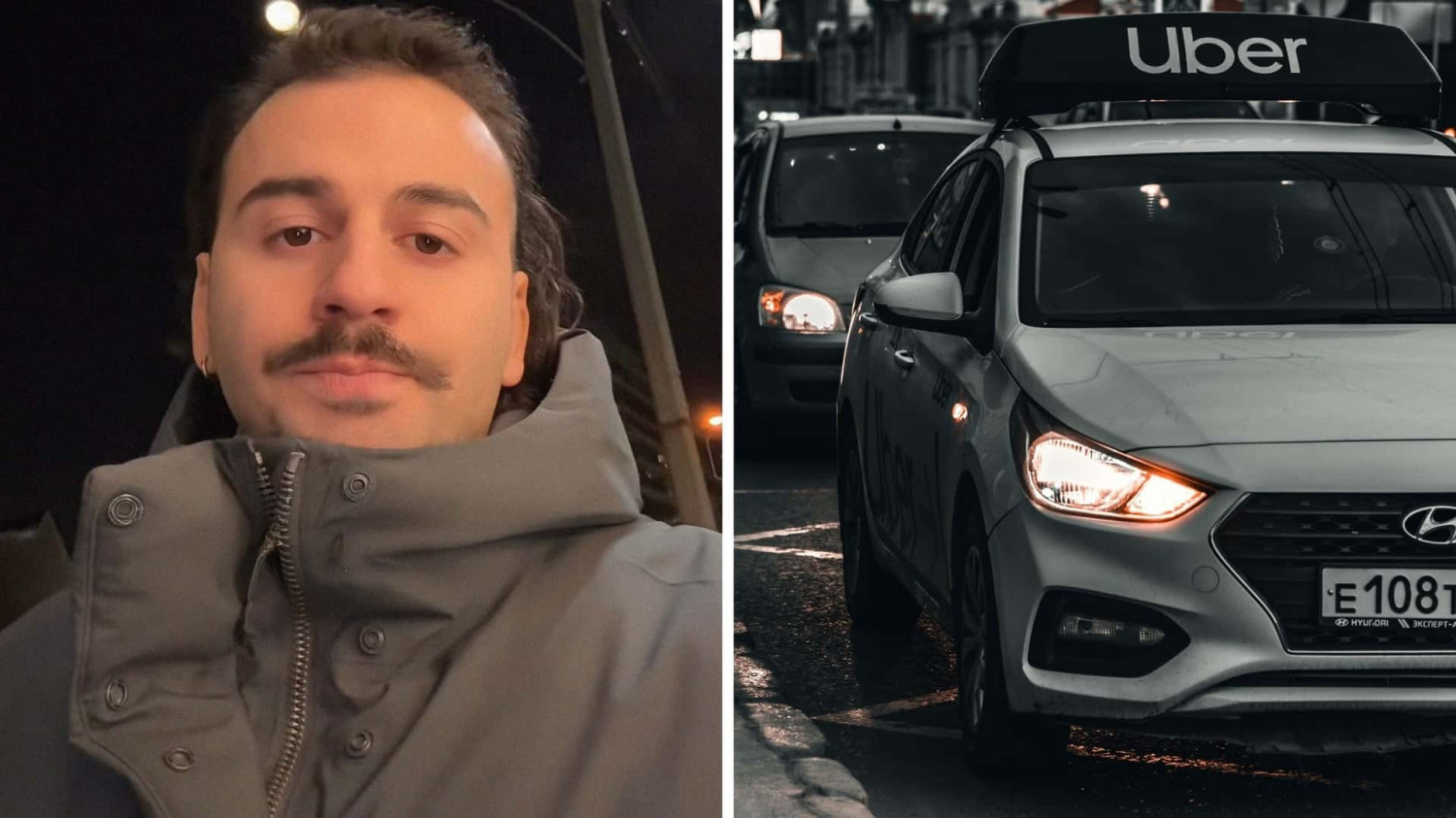

















Cheng Xin/Getty Images Add Jalopnik on Google: Google Discover Just three years ago, Uber's CEO Dara Khosrowshahi told Wired in an interview that the company's rising fare rates could be attributed to inflation and the need to pay drivers more. At the time, the rideshare app's rates had reportedly increased about four times faster than the rate of inflation, about 83 percent according to Business Insider, but drivers were not seeing much of that extra cash. Inflation in 2026 is still alive and punishing anyone at a real or metaphorical checkout thanks to the Iran war which continues to benefit the big guy, and screw everyone else. But in somewhat predictable fashion found via reporting by More Perfect Union, it seems big guy Uber is the only one profiting off these harder times. In just the last couple of years, outlets like Business Insider, More Perfect Union and Consumer Reports performed their own investigations into the rideshare company's fare and pay algorithm in an attempt to understand how the pay structure works. The sample groups would request a ride from the same location, to the same location. Some found prices varied as much as 20 percent, while Consumer Reports found in its June 2026 report that it varied as much as 42.4 percent. There was little rhyme nor reason why drivers or riders rates and fares varied so wildly aside from potential uses of data and AI. Uber told CR in a statement that the variations could come down to something as minute as "marketplace conditions [that] exist at that exact moment." Literally seconds between requests could make a difference in that price. Sure? Higher pricing should benefit the driver in the end. But another report released in June of this year written by Len Sherman, executive in residence and adjunct professor at Columbia Business School, found despite the dramatic rise of rideshare fares in the last four years, and Uber's newfound profitability, drivers pay has remained rather stagnant. If anything, they've lost pay as the cost of everything else rises around them. A profitable line item hidden in plain sight Sherman's report analyzed data from three drivers, who had driven for Uber for at least five years in the same city, and mainly did UberX and mid-tier drives, keeping the sample rate somewhat consistent. Pricing was higher. More fees were taken out by Uber. But driver take-home pay didn't change from year to year. It tracks compared to the story of 43-year-old Uber driver Mohamed Drissi, based in Portland, Oregon, who told Consumer Reports his portion of fares have decreased over the last six years he's driven for the company. He ran a test for CR, going on six test trips that paid about $126 in fares. He got $66 of it (52 percent), Uber got 46 percent of it at $58.41, and the rest went to city and airport fees. The 46 percent is much more than the 32 percent take-rate Uber had in 2022. And a 52 percent take-home rate was a massive difference from the 80 percent take-home rate Uber told its drivers it would get years ago. It wasn't always like that. Prior to Uber's IPO in 2021, driver's portion of fares averaged around 80-85 percent. After the IPO, there was the introduction of upfront pricing which revealed some interesting components in the breakdown of where all of that rideshare money was going. Sherman's report supports this pattern. Drivers were now taking closer to 50 percent of the fare home, while Uber took a slice of the waiting fee, as well as its Service Fee which can average to about 20-30 percent of the ride. That fee is used to "serve our users and run our business," according to Uber's text below the item. Then there's another line item that goes to Uber as well: Estimated commercial auto insurance and operational expenses. This line accounted for nearly 20 percent of a ride's cost. How Uber's insurance really works As spelled out on Uber's site, rideshare drivers are expected to not only have personal car insurance to cover the car they use for rides, but they're also required to carry commercial auto insurance. This policy is provided by Uber, and activated when drivers are working within the app and driving — their personal insurance covers the car when they're waiting for the next ride. Uber claims their policies are covered by different insurance companies across the nation, depending on the state you are in. But the money to pay for it all goes to another branch of Uber's company, Aleka Insurance. Uber had formed its own captive insurance company by the name of Aleka Insurance, after buying a legacy commercial auto portfolio from James River Group Holdings in 2021. It also just so happens that Aleka's board members are all former Uber executives. This type of arrangement would allow Uber to provide its own commercial insurance for drivers, or handle the insurance claims and payouts for any issues the commercial insurance covers. The benefit of this is because Uber essentially handles its own insurance and it doesn't have to report its payouts or share its numbers like public insurance companies do. That insurance is paid for through every ride a driver takes. But the rate also varies from ride to ride. Levi Spires, an Uber driver who also runs Upfront Tip, a blog about driving for rideshare companies, found in nearly identical trips, that rate varied considerably. Uber attributes the differences in pricing to distance, duration, location, time of day and weather, while also pointing out that "this amount is not specifically tied to per-trip insurance costs." The routes, time of day — everything could be the same and the fee still varied. Now, Spires works out of New York state, where commercial insurance rates are much pricier compared to other states. And that could account for some of the discrepancy. But why the variation on the same drives? Also what happens to the other portion, cited as "operational expenses" if that's what the Service Fees are for? Fees on fees is how a company can please the investors and shareholders Jetcityimage/Getty Images More Perfect Union looks at the line item to be the driving portion of how Uber has suddenly been able to be a profitable company. It's not a coincidence that the commercial insurance portion of Uber's ride fares mysteriously got a little larger around the time the rideshare company went public with its IPO in 2019. Since 2019 as driver take home pay stayed the same (the percentage or cut of the fare just got smaller) the commercial insurance line with its operational expenses has taken a bigger chunk out of the driver take-home. Upfront pricing, which would reveal this new line item, was introduced in limited capacity in 2021, and it's almost too on-the-nose that in 2023, Uber then had its first profitable year at $1.1 billion. Uber defended itself by saying the line item's rising percentage can be attributed to rising insurance costs. But studies show that's not really the whole story. A study released by Gridwise Analytics this year verified Uber's claims that insurance costs can differ between the ride that is offered (from mid-tier to black car), location (cities are more expensive), distance, and time of day. Yet insurance rates haven't all necessarily trended upward. Some have thanks to tariffs making parts more expensive to obtain for repairs. But Uber and other rideshare companies are actually enjoying a break in insurance in places like California thanks to the state Senate bill 371, passed in October of last year, which lowered Uber (and other rideshare companies) liability risk from $1 million per rider during their ride to $60,000 per person and $300,000 per incident. Common sense would say that insurance would cost them and drivers a little less, right? But it's not. Spires told More Perfect Union that his rides in one year paid out about $20,000 to Uber for commercial insurance costs and the "operational expenses" which by any auto coverage seems like an exceptional amount of money for insurance and a "part two" of service fees. Without more transparency from Uber, the correlation of rising prices and its rising profits, while taking advantage of its drivers tells a lot more of the story. And it ends with money in Uber's pockets.