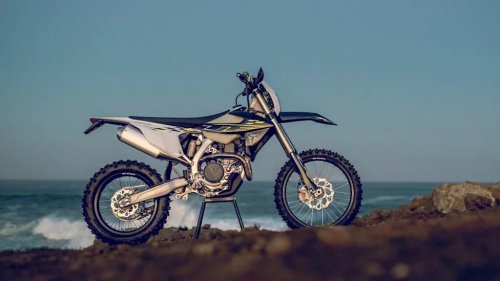
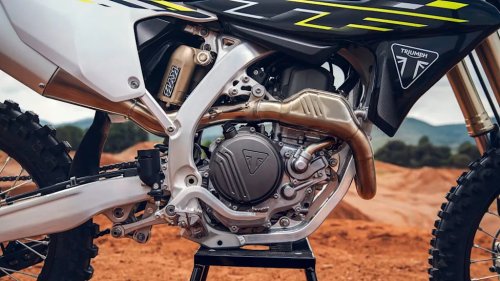
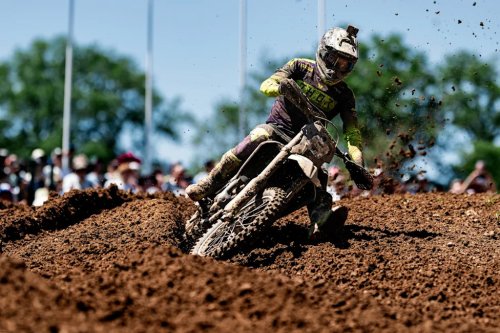
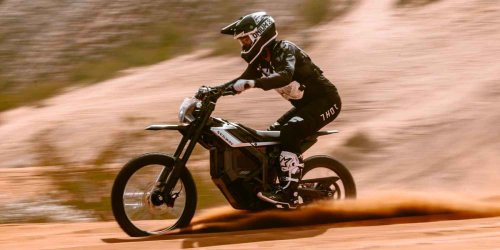
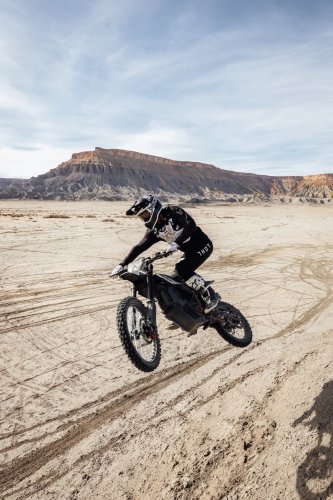
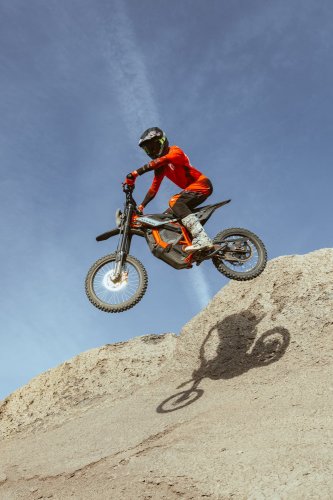
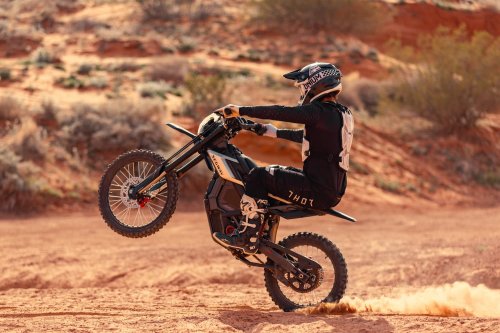
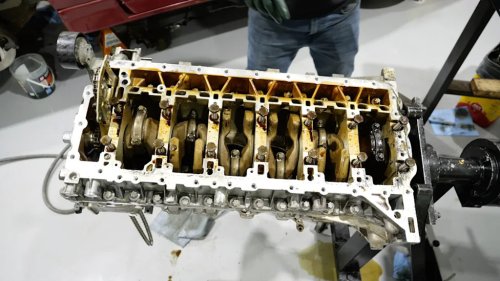
Triumph's TF450 Recall Goes Federal: 1,560 US Bikes, a Broken Bone, and a Full Cylinder Head SwapBackfire NewsJohn LloydSat, September 12, 2026 at 4:00 PM UTCAdd us on GoogleTriumph's TF450 Recall Goes Federal: 1,560 US Bikes, a Broken Bone, and a Full Cylinder Head SwapThe recall Backfire flagged out of Canada back in August just went nationwide. The U.S. Consumer Product Safety Commission published recall 26-763 on September 10, confirming that Triumph's return to competition motocross has a rocker arm problem serious enough to cost at least one rider a broken bone.CPSC's notice covers the 2025 and 2026 TF450-C, TF450-E, TF450-X and TF450RC Edition, all built on the same 450cc single-cylinder platform Triumph designed in-house for its first real push into off-road racing. The defect lives inside the head: the exhaust rocker arm can seize or stick, and when it does, the exhaust valve either stays open or breaks outright. On a four-stroke single, that is not a minor annoyance. A valve that will not close kills compression and power on the spot, and a broken one risks contact with the piston, which turns a stalled engine into a locked rear wheel or a sudden, unrecoverable stumble mid-corner or mid-jump.The scale is bigger than what Transport Canada disclosed last month. Canada's filing covered 171 units; the American count is roughly 1,560, meaning the vast majority of the affected fleet has been sitting on U.S. soil the whole time without a public record to search. Triumph told CPSC it has fielded 12 reports of a seized or sticking exhaust rocker, along with valve damage that shows up as a progressive loss of engine performance rather than an instant shutdown. One of those cases ended in a rider going down and breaking a bone. That figure is self-reported by Triumph, not independently confirmed by the agency, but it is the first documented injury tied to this specific campaign.The Fix Is a Full Cylinder Head, Not a Parts KitTriumph's fix is not a bolt-torque or a firmware flash. Dealers will pull the entire cylinder head off every affected bike and install a new one, then handle the downstream work that comes with it: cam timing, valve clearances, fresh gaskets, coolant, and a proper break-in before the bike goes back to a customer. That is the same scope of repair Transport Canada described for the 171 bikes it caught in August, just applied to a fleet roughly nine times larger. Swapping a complete head instead of a rocker kit tells you Triumph traced the failure to the casting itself, not to a bin of bad parts it can replace piece by piece.AdvertisementAdvertisementThe VIN range in the CPSC filing runs from roughly CD4981 to CP1597, and the affected bikes were sold new at authorized Triumph dealers between January 2025 and July 2026 for $10,000 to $15,000 apiece. Every one of them was built in Thailand and imported by Triumph Motorcycles America, based in Atlanta. That window matters: it covers essentially the entire time TF450 has been on sale in the U.S., so model year alone will not tell an owner anything. The only way to know if a specific bike is affected is to run its VIN through Triumph's recall lookup.Why This Is a "Fast Track" Recall, and Why That Label MattersCPSC's notice flags this campaign as a Fast Track recall. That designation exists for cases where a manufacturer voluntarily agrees to recall a product and notify CPSC within a matter of days, in exchange for the agency skipping its own lengthy hazard investigation and formal vote on whether a defect exists. It is a real recall with a real remedy, but it is also Triumph choosing to move before CPSC forces the issue. That is generally the better outcome for owners, since it gets a fix into the pipeline faster than the standard process, which can take months of back-and-forth before anything becomes public.A Second Off-Road Recall in Eighteen MonthsTF450 is not the first Triumph off-roader to land on CPSC's desk. In February 2025, the agency published recall 25-144 for roughly 690 TF250-X motocrossers after Triumph logged 16 cracked handlebar-mounted switch cubes and seven bikes that started on their own when brake fluid got into the switch housing. No injuries were reported in that campaign, but the pattern is the same: a brand-new, in-house-designed race engine and electronics package finding its failure modes in customers' garages instead of a test lab. Established motocross builders like KTM, Honda, Yamaha and Kawasaki went through the same process decades ago, just without a modern regulator publishing every stumble. Triumph is relearning those lessons in public, at a moment when the off-road-flavored side of the motorcycle business is getting more crowded, not less, with rivals like Harley-Davidson locking up new competition-oriented nameplates of its own.Why You Could Not Have Searched for This Bike a Month AgoTF450 is a closed-course competition machine: no license plate, no VIN registration, not a motor vehicle under NHTSA's definition. That routes it to CPSC instead of NHTSA, and the two agencies do not operate on the same clock. A street-legal defect triggers a manufacturer filing with NHTSA within five business days, and it is typically searchable within a day or two after that, which is why a road-bike campaign like Honda's expanding handlebar bolt recall shows up in a public database almost the moment it exists. CPSC recalls, by contrast, are usually the product of a negotiated announcement between the agency and the manufacturer, and until that announcement goes live there is no public record to check at all. Transport Canada draws the line differently, filing competition vehicles into the same public database as every pickup and minivan in the country. That is the entire reason a 171-unit Canadian filing became the first visible sign of a defect that, it turns out, touches a U.S. fleet nine times larger.What Owners, Racers and Buyers Should Actually DoStart with the VIN, not the model name or year. Triumph's recall portal is a VIN-only lookup, and a campaign like this rarely sweeps an entire production run, so the seventeen-digit number on the steering head is the only thing that actually tells you where a specific bike stands. Do not assume a notification letter will find you, either: Triumph mails whoever is on file as the registered owner, which means a bike bought used, borrowed, or handed down within a family can sit unrepaired indefinitely unless someone proactively calls a dealer. And given that the failure mode is a progressive loss of power that can arrive without warning, this is a bike to park rather than race until a dealer has confirmed the head has been replaced.AdvertisementAdvertisementThere is a liability wrinkle here that is easy to overlook because these bikes never touch a public road. Competition-only motorcycles are typically excluded from standard street motorcycle insurance entirely, so coverage for a TF450 usually comes through a club or series racing policy, or through an AMA-style competition license, rather than a normal rider's policy. Most of those competition policies and event liability waivers are written around the assumption that the machine is mechanically sound and free of open safety defects. Racing a bike with an unresolved recall, and then crashing because of the exact failure mode that recall describes, is the kind of fact pattern that gives an insurer or a track operator a real argument for denying a claim. It is also the kind of detail a plaintiff's attorney would look for first in any injury case tied to this campaign. None of that requires a lawsuit to matter in the meantime: club racing organizations increasingly ask for proof that open recalls have been closed before they will let a bike on the gate, so an unresolved TF450 recall can cost a rider a race weekend even before it costs anything else.For anyone shopping the used market, a completed recall repair is worth asking about directly, and a dealer-stamped work order proving the head was swapped is worth keeping forever. An open safety campaign on a $10,000-plus competition bike is exactly the kind of leverage a buyer will use to knock down an asking price, and rightly so. Triumph absorbing the cost of a full cylinder head on roughly 1,730 bikes across two countries is the expensive way to handle this, and it is the correct one. A company that ships shim kits and hopes usually finds out later that the cheap fix was never actually cheap. Two off-road safety campaigns in eighteen months is still a rough start for a brand-new engine program, but so far, at least, Triumph appears to be answering data with hardware rather than excuses.