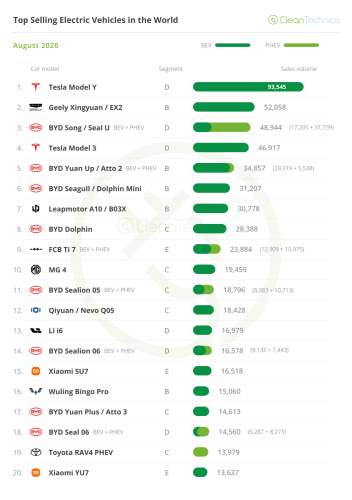
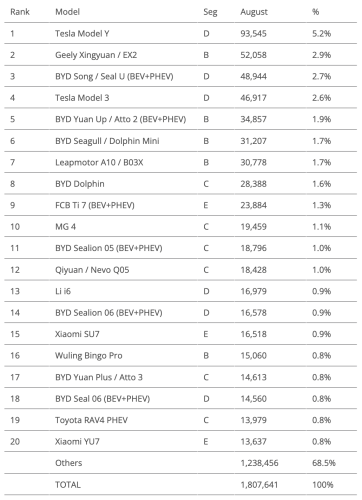
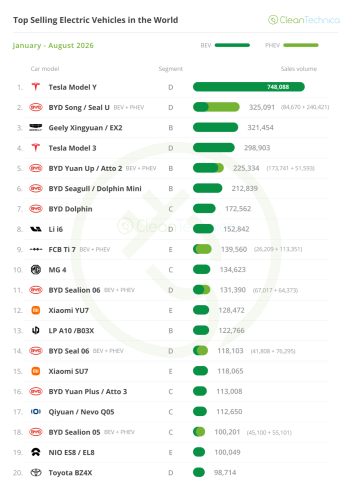
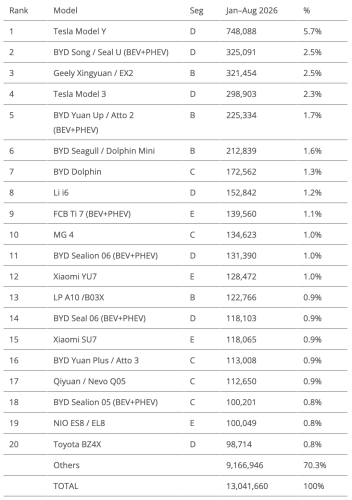
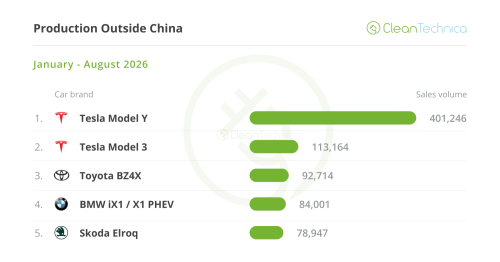
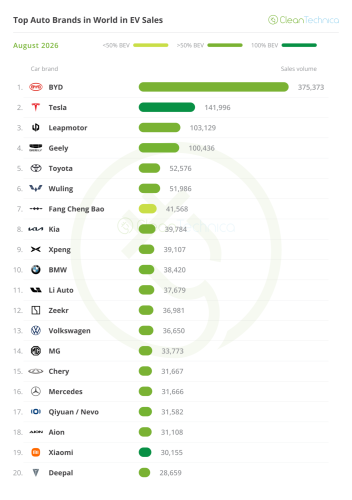
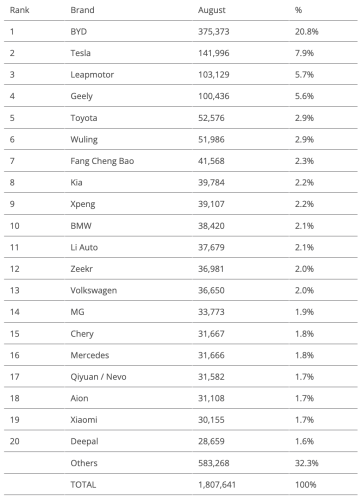
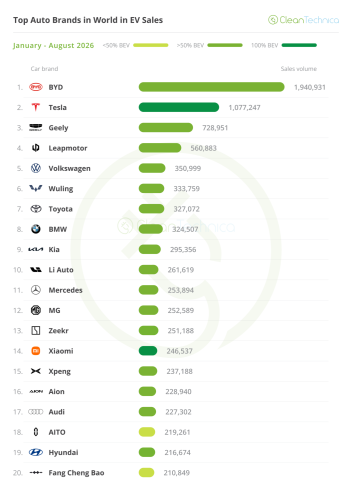
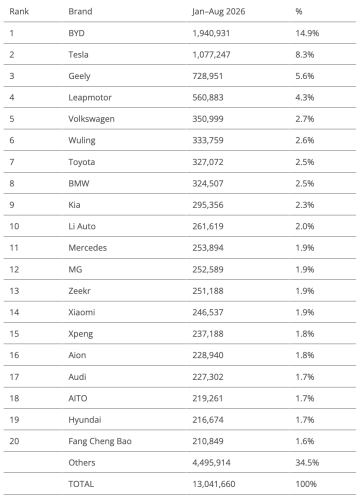
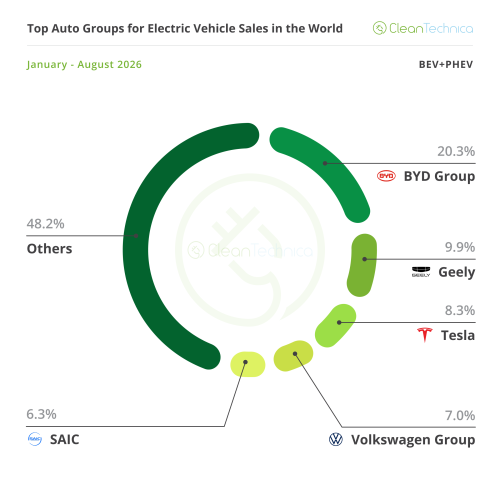
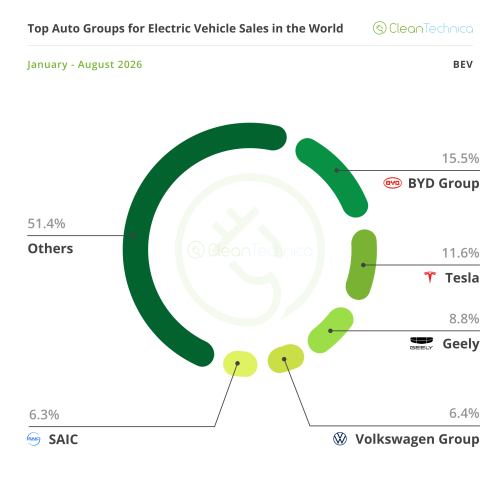
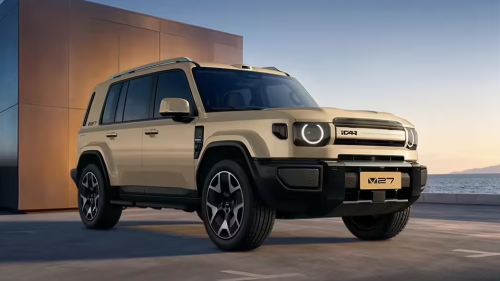
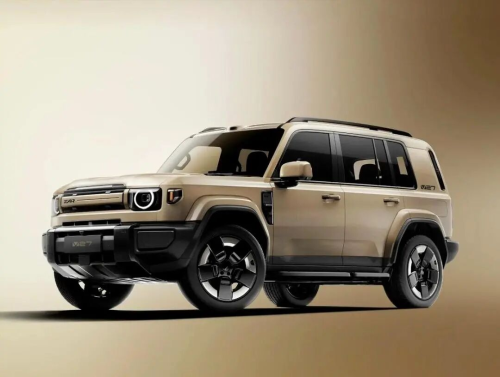
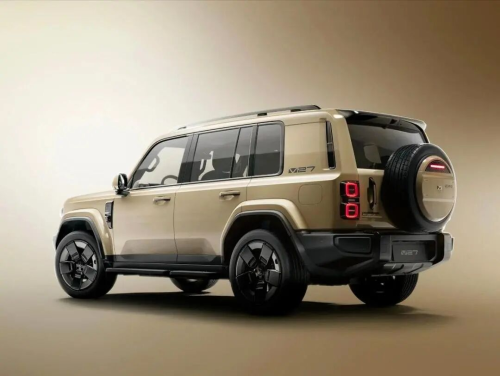
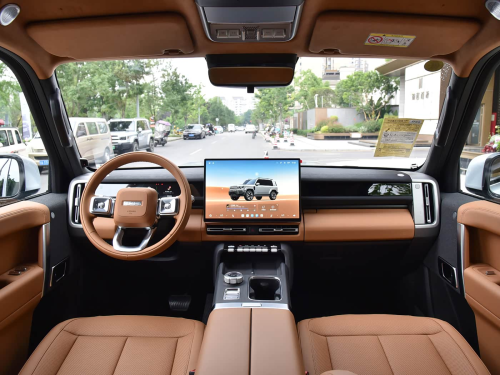
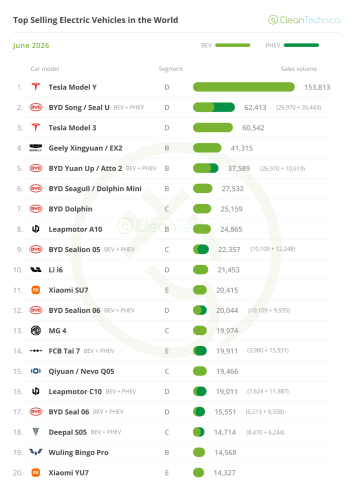
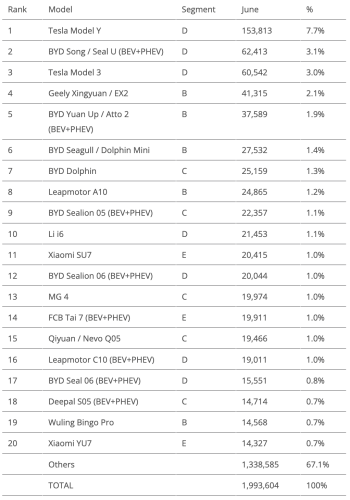
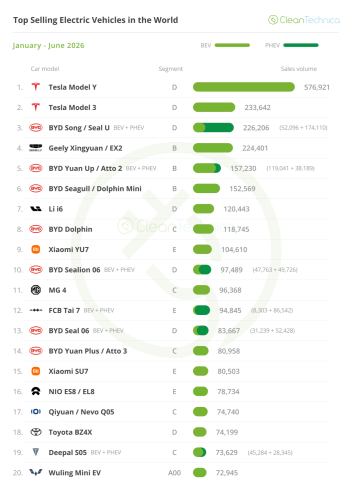
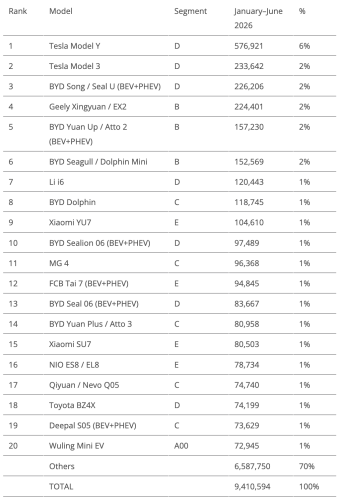
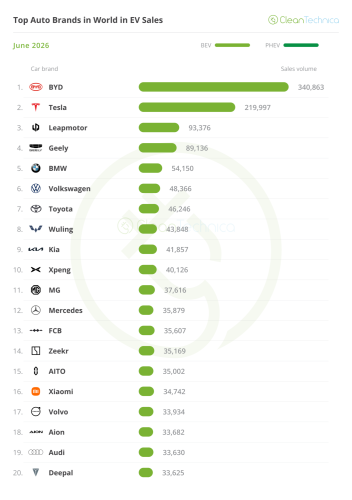
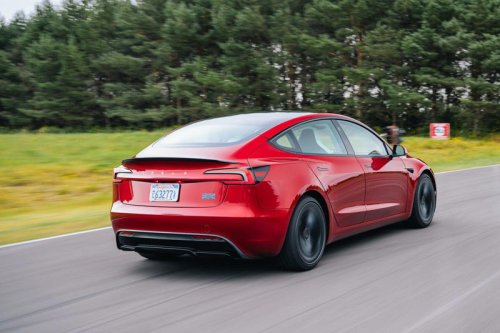
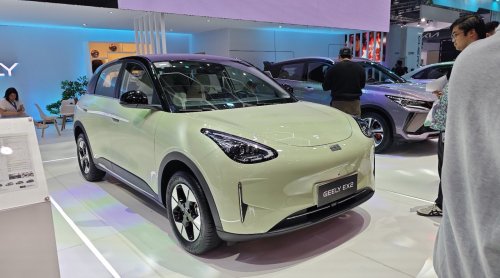
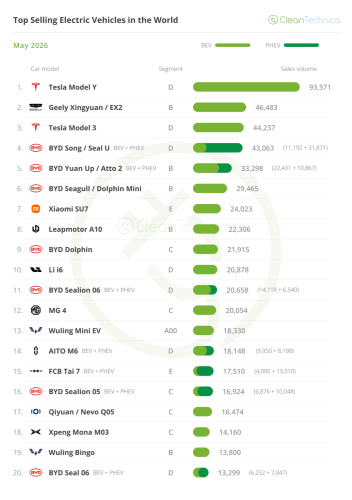
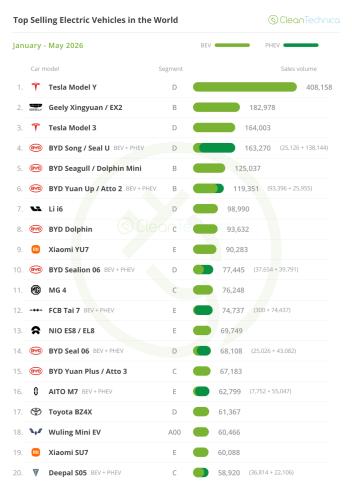
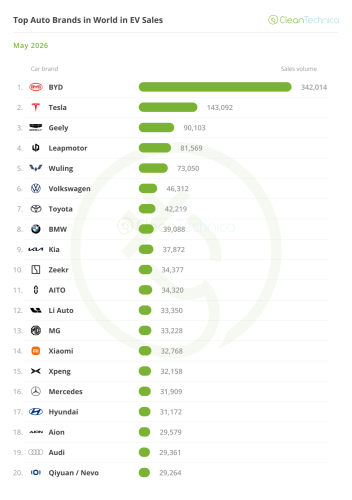
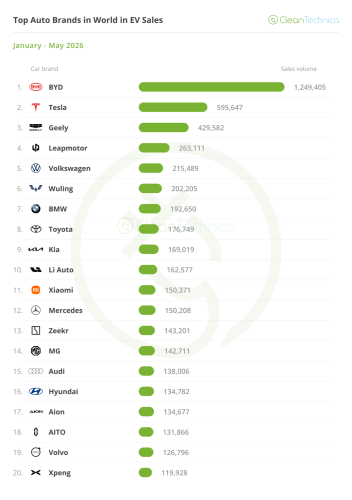
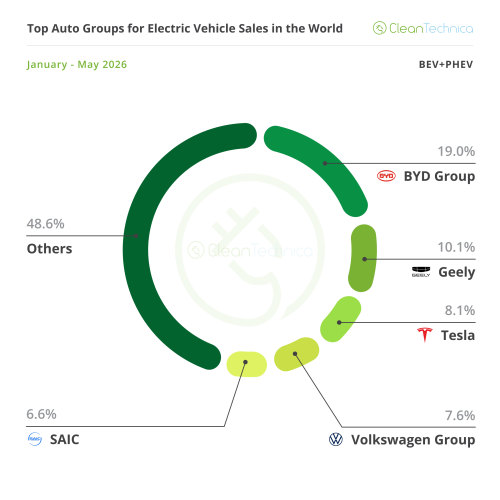
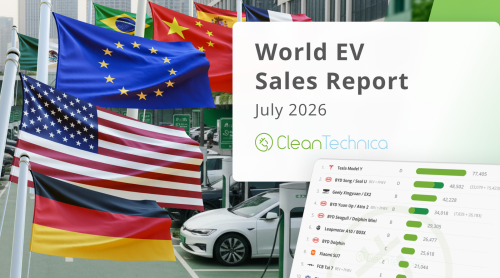
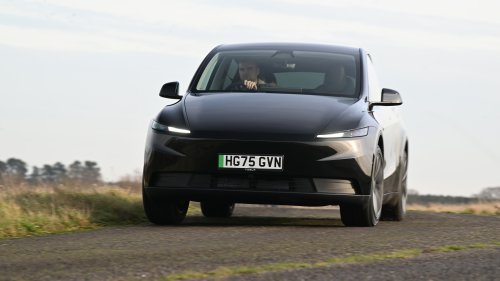
BEVs Up, PHEVs Down Plugin vehicle registrations were up 5% year over year (YoY) globally in August, ending the month at around 1.8 million units. Once again, BEVs (+13% YoY) and PHEVs (-12% YoY) are experiencing opposite dynamics, with pure electrics firm in double-digit growth while plugin hybrids remain in deep red. This means that, while the plugin YTD growth remains low (+4% YoY), that is solely due to the PHEV blues (-11% YoY). BEVs are on their way back to normal (+12%). And the different dynamics between pure electrics and plugin hybrids are reflected in the BEV vs. PHEV share of plugin sales. In August, BEVs represented 73% of all plugin sales, or about 1.3 million units, one of the best results of the past few years. That led the YTD breakdown to stay at 71% vs. 29% in favor of pure electrics, which is their highest since 2022 (72% back then). However, China and the USA are experiencing their own market dynamics — PHEVs in China are crashing, while in the USA, EVs are still reeling from the end of the federal tax credit and much weakened US auto policy. Excluding those two auto markets, EVs are flying high, jumping 53% YoY globally in July. BEVs in particular surged 62% YoY. Share-wise, August saw BEVs end the month at 20% share, with the tally increasing to 27% if we add in PHEVs. This performance kept the 2026 plugin share at high levels. BEVs are at 17%, while plugin hybrids are at 7%. Therefore, the 2026 EV share is 24%. Adding the 15% HEV share to the tally, one can say that in 2026, 39% of all cars sold globally had some kind of electrification. Looking at the best selling models, there’s some news. True, the Tesla Model Y remained on top, despite deliveries dropping 12% YoY, but it’s below it that we find something to talk about. The small Geely Xingyuan, also known as E2 or EX2 in export markets, benefitted from the strong demand at home and the start of volume exports to score a record 52,058 units in August, which is not only a new record for Geely’s star player, but also allowed it to surpass the BYD Song and end the month in 2nd. The hatchback’s export highlights were Brazil (5,804 units), Australia (1,279), Indonesia (1,595), and Thailand (1,770). Despite being relegated to 3rd, the BYD Song grew 21% YoY, thanks to 48,944 registrations. This was due to an export push (the highlights being Brazil — 6,724 units, Italy — 1,477 units, and Germany — 1,466 units) and the new-generation Ultra body. Flash charging capabilities promise to recharge the Song’s sales and make it a serious candidate, not only for podium positions in the second half of the year, but also to give the Model Y a run for its money in some off-peak months, like October. But the main beneficiaries of the Tesla Model 3’s slow month were a group of small EVs that packed the table from 5th to 8th — the #5 BYD Yuan Up (Atto 2 in some export markets), #5 BYD Seagull (also known in export markets as Dolphin Mini, Dolphin Surf, Atto 1, and a couple more names I might be missing), #7 Leapmotor A10, and #8 BYD Dolphin. It seems small is hot right now. This is good news not only because small EVs are more efficient, but also because the EV revolution is finally reaching the masses, and is no longer just something for the elites. Mass adoption, here we go! Of the aforementioned pack, two models deserve a special mention. First of all, there’s the rapid rise of the Leapmotor A10 (B03X in export markets), which is becoming something of a sales phenomenon. With production still ramping up, and with exports set to start soon, expect it to become top 5 material globally, maybe even reaching the podium a couple of times. The BYD Seagull also had a great performance. Its 31,000 registrations were a year-best score, and in this case, export markets have added significant volumes to the tally. Those markets include Indonesia (5,560 registrations) and especially Brazil, with the Latin American country quickly becoming BYD’s home away from home. The Seagull reached 8,299 registrations, almost as many as in its domestic market — 10,103 units. Another example of this trend is the #8 Dolphin (28,388 registrations, its best performance since December 2023). It got 6,740 registrations in Brazil alone, far outpacing the total in its next best export market, South Korea (1,202 registrations). Still in BYD’s stable, the Fang Cheng Bao Ti 7, the most successful model from its premium brand, ended the month in 9th, with close to 24,000 registrations. That’s a new year-best for the large crossover EV. One wonders what level of success these Fang Cheng Bao crossovers and SUVs could achieve in export markets once BYD finally decides to export them in high volume. Makes like Land Rover, Toyota, and Jeep should keep a close eye on them, as they might just steal their lunch. Looking at the second half of the table, one highlight is another small car, the new generation Wuling Bingo, called the “Pro.” The model scored some 15,000 registrations, the nameplate’s best result in 15 months. But, for me, the biggest surprise of the month ended up in 19th place. After a few years of absence, the Toyota RAV4 PHEV returned to the table! Yep, thanks to its new generation and a global rollout (finally!), the Japanese SUV is back at the table, and with close to 14,000 registrations! That is almost double what the previous generation of the RAV4 PHEV peaked at, so expect this model to probably become the star plugin player in Toyota’s lineup, surpassing the all-electric BZ4X. And, quite frankly, this should have already happened some time ago. After all, it is important not to forget that the Toyota RAV4 was the best selling car globally in 2024, in the overall market. Now, despite this sales surge of the PHEV version, the RAV4 only sits in 5th overall. As the plugin and overall markets merge, if you do not have a plugin version selling well, the odds are that you are dropping places on the overall table. Outside the top 20, there are a couple of models that deserve a mention. Chery’s QQ3 EV is one of them. This is Chery’s answer to the Geely Xingyuan formula, and with the production ramp-up pushing deliveries to 12,579 units, we could see it in the top 20 soon. And now a mention goes out to the Toyota Hilux EV. Although, the Japanese pickup truck (made in Thailand) is far from a top 20 spot. After all, it reached only 1,038 deliveries globally in August, with its BEV version still in ramp-up mode and the global electric pickup truck market hurting from all the doom happening in the USA (the end of the federal EV tax credit, the Ford F-150 Lightning cancellation, the Tesla Cybertruck suffering from … being the Tesla Cybertruck, etc.). The only decent seller in the category is now the BYD Shark, and even this model is only averaging some 3,500 registrations/month. It’s a low bar for the Hilux to reach, but doing so will also depend on whether Toyota is willing to push sales of the BEV over the ICE versions…. To be continued. Year to date, the leader Tesla Model Y is really in its own league, selling twice as many units as the new runner-up BYD Song. The Model Y is so ubiquitous now that when regular people imagine what an electric car is, they think of it. Tesla’s crossover is the golden standard of EVs. In the remaining podium positions, the #3 Geely Xinguan shortened the distance to the runner-up BYD Song, with only 3,500 units separating the two, so the second place position could change hands in September. Heck, with Tesla’s Model 3 sedan having a peak month in September, we could even see three models competing for silver, but if I had to bet, I would say that the BYD bread and butter model will stay in 2nd, closely followed by the Geely hatchback, and the Model 3 ending at some distance in 4th. Still, this would leave the race for the silver and bronze medals open until the last quarter, which would be a welcome point of interest. (Adding context to this race, the Tesla Model 3 has been on every podium since 2018, while the Geely Xingyuan still hasn’t won any medal.) Elsewhere, there were only three changes in the table, with the first being the BYD Sealion 06 crossover climbing to 11th. Meanwhile, its smaller sibling, the Sealion 05, joined the table in 18th. But the Climber of the Month came from Leapmotor. The A10 small crossover jumped four positions, to 13th, and should climb further up the ranking in the coming months. Looking at the best selling EVs not made in China, Tesla still dominates the podium. The company won gold and silver, but the models’ YoY performances vary — while the Model 3 is down 16% this year, since US deliveries are down significantly, the Model Y is up 14%, because the German plant is more than compensating for the sales loss that Tesla is having in its home market. But it’s below the Teslas that things get interesting. The best sellers of last year (VW ID.4, Hyundai IONIQ 5, Audi Q4) were all kicked out of the top 5, and we now have new faces on the table — the Toyota BZ4X is 3rd, followed by the BMW twins the iX1 and X1 PHEV, while the Skoda Elroq closes out the top 5. The Toyota model in particular is striking, because its sales/production are up by 116% YoY! Toyota is rising…. Manufacturers: Leapmotor surpasses Geely, Toyota Shines The big news is Leapmotor continuing to surge, having scored yet another record sales month. In fact, it reached the six-digit level for the second time in a row and continues in the fast lane (+81%), having surpassed Geely in August, which somehow is becoming too dependent on its star player (Xingyuan) to post volume results. For instance, where is that Geely Galaxy EX7, an electric midsize SUV that can rival the Tesla Model Y and BYD Song? Or a crossover variant of the Xingyuan? Or a compact hatchback that can go face to face with the BYD Dolphin of MG4? Record breaking Toyota surpasses Volkswagen … and Wuling! Immediately below the top four, we have another eventful thing happening — the rise and rise of Toyota (52,576 registrations, a new record), which ended ahead of Volkswagen. The Japanese globetrotter finished the month as the best selling legacy make. Here, also, the establishment is being challenged, with the longtime leader of legacy brands almost being surpassed by a player that many still consider a sleeping giant. Well, I guess the giant is now awake…. And it’s not only Toyota’s RAV4 PHEV and BZ4X contributing to the volumes, as its Chinese operations are also delivering (the BZ7 sedan and BZ3X compact crossover together delivered some 15,000 units in August alone). The remaining highlights belonged to Chinese makes, with #6 Wuling, #7 Fang Cheng Bao, and #9 Xpeng all delivering year-best results, with this last one having the interesting fact that its best selling model was the Mona L03 (8,424 units), a new crossover that was still in its second month on the market! Is this top 20 material? One of the other highlights included #12 Zeekr, which doubled its sales to a record 36,981 units, in no small part thanks to export markets (in August, the 7X crossover hit 1,748 deliveries in Australia). Meanwhile, #15 Chery scored a record 31,667 deliveries, with the QQ3 EV being the major contributor. Toyota surpasses BMW and now goes after #5 Volkswagen As for the year-to-date table, there was no major news on the podium, but right below it, things are changing. BMW lost two spots, to the benefit of #6 Wuling and #7 Toyota. The Japanese make is fewer than 25,000 units behind #5 Volkswagen, and while that might sound like a lot, there are still four months ahead. With Toyota breaking records every passing month, it seems possible to shorten the distance by some 7,000 units every month and end ahead of VW by the end of December. Three more Chinese brands went up: Geely’s premium brand Zeekr was up to #13, Xpeng climbed to #15, and GAC’s Aion ended the month at #16, with exports also starting to help the Guangzhou make, like the 979 units of the UT hatchback in (where else?) Brazil and the 634 units of the V crossover in Thailand. Finally, we have a new face on the table, with BYD’s premium arm Fang Cheng Bao rising to 20th much thanks to the success of the FCB Ti 7. Looking at OEMs, BYD (20.3%) is stable in the lead, while runner-up Geely (9.9%) held a good distance over 3rd placed Tesla (8.3%). #4 Volkswagen Group (7%, down from 7.2% in July) is stable in 4th, just like SAIC (6.3%) is in 5th. Behind the top 5, though, things are shaking up. Rising #6 Leapmotor (4.3%, up from 4.1% in July) has gained distance over #7 Hyundai–Kia (4%, down 0.1%). Another OEM on the rise is #11 Toyota (2.9%, up 0.1%), which should replace BMW (3%, down 0.1%) in the 10th position. Comparing the current positions to where we were a year ago, although the positions were the same, the main differences happened at the top, with BYD having 2.4% more share than now while #2 Geely was 0.9% above its current 0.9%. Looking just at BEVs, there were about 9.2 million registrations so far this year, or 71% of total plugin sales. Will they end the year above 75%? Probably not, but if they did, that would be their best result since 2012. BYD (15.5%) is at the top, followed by Tesla (11.6%, down 0.2%), so the top two positions should be decided by now. In 3rd place, we have Geely (8.8%, up from 8.7% in July), which is also safe in the last place on the podium. Meanwhile, #5 SAIC (6.3%) is closing in on Volkswagen Group (6.4%, down 0.2%), so the Shanghai OEM could steal its #4 spot in the next couple of months. Outside the top 5, Leapmotor is close to retaining its 6th position in the BEV+PHEV ranking, as it is now just 0.1% behind #6 Hyundai–Kia (4.5% share). Comparing the current results with what was happening a year ago, there’s one position change, as SAIC was 4th by August 2025, but by the looks of things, that too should return to normal, as SAIC is close to surpassing the German conglomerate. What is surprising, though, is the fact that all top 5 OEMs lost market share year on year. This is proof of a diversifying market, and also means that new players could soon appear on the table. Two examples of that are #6 Hyundai–Kia, which has seen its share rise from 3.8% in August 2025 to its current 4.5% (all those Hyundai Ioniq’s and Kia EVx’s are pushing volumes up), while #7 Leapmotor has seen its market share more than double, to its current 4.5%. So, while 2026 will likely see the same players occupy the same spots as in 2025, 2027 should bring some welcome changes.













































![Gas car sales fell 40% in August in China [Charts]](https://cdn.topcarnews.net/thumb/id/aHR0cHM6Ly9jYXJuZXdzY2hpbmEuY29t-L3dwLWNvbnRlbnQvdXBsb2Fkcy8yMDI2-LzA5L2dhcy1jYXItc2FsZXMtZmVsbC00-MC1pbi1hdWd1c3QtaW4tY2hpbmEtY2hh-cnQtN2JhMTk3LnBuZw/fbdabd653863affb4ee0919b56236033.png?t=20261004&post_id=60956)