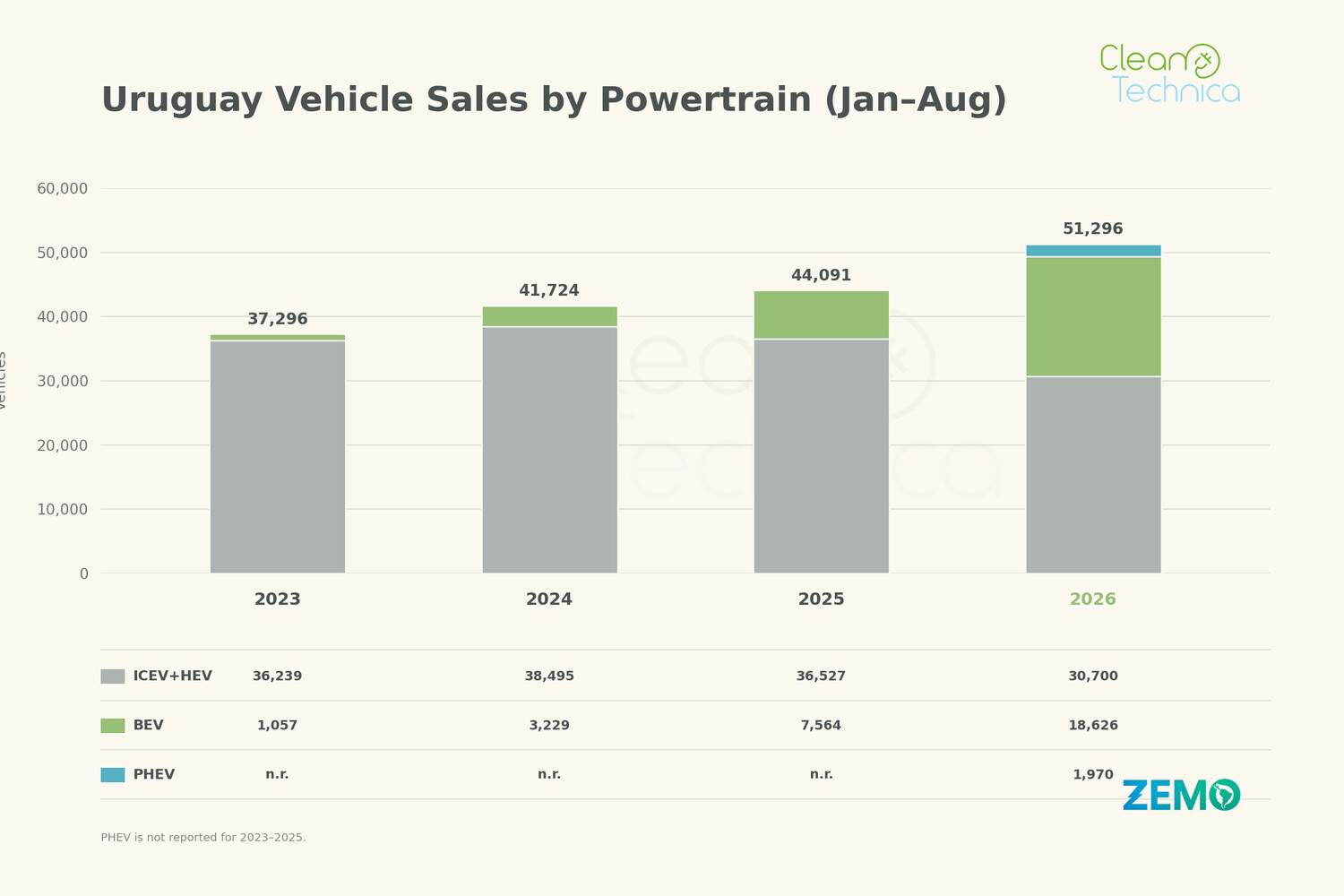
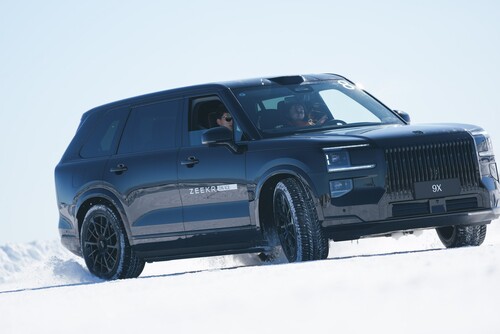
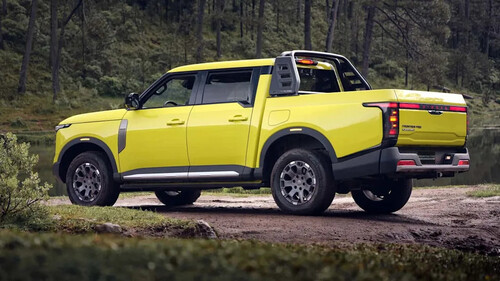
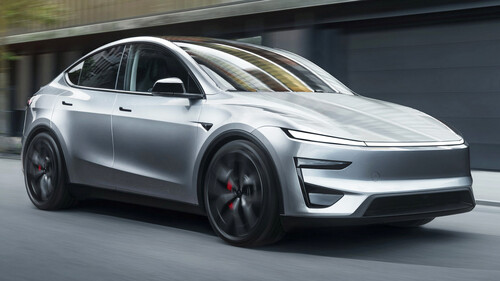
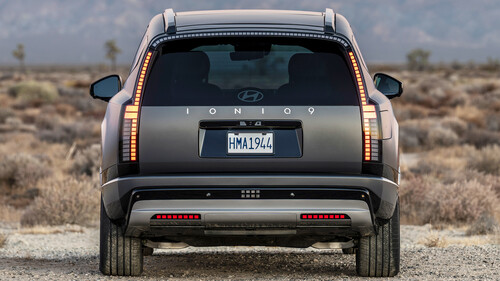
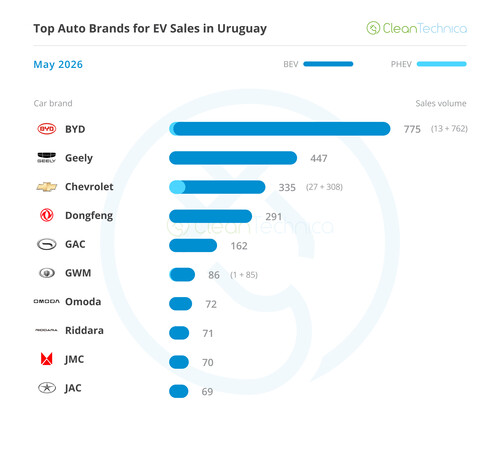
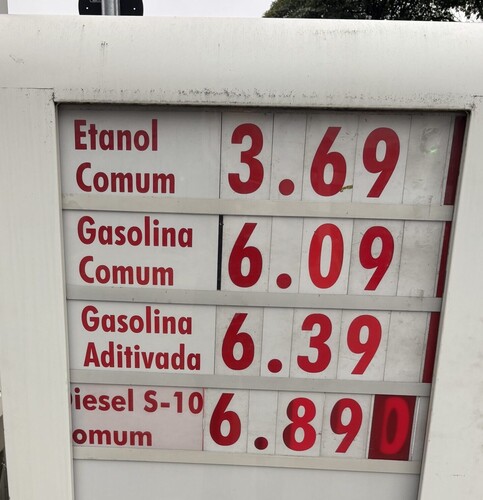
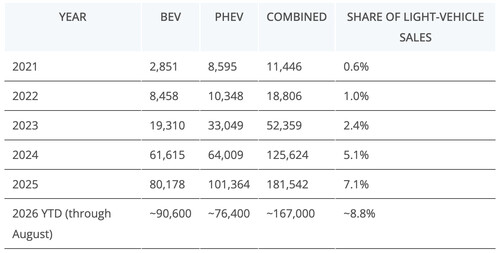
Latin America’s small champion keeps making headlines and surpassing even the most optimistic expectations. Uruguay’s EV adoption has diverged from the region and reached a level that many of us would’ve though irrationally optimist only two years ago. Amidst a booming vehicle market, Uruguay EV sales have exploded through 2026, reaching record levels in six out of the eight months this year. The result has been a market that in record time has gone from early adopter to majority adopter, going from 5% to 50% BEV market share in only two and a half years! Let’s look at the numbers! Market overview EV sales in August grew by an impressive 171% YoY, getting very close to 4,000 units and even surpassing the previous records, set in July, by 22%. Source: zemo-la.com Since Uruguay started providing data on PHEV sales, we’ve been able to add them to our tally, but they remain very limited, representing only around 1/10th of total EV sales. Uruguay, like most other small markets in the region, remains a highly BEV-centric one. Source: zemo-la.com And now we get to the most interesting part: market share. Thanks to impressive growth, EVs now account for 56% of total vehicle sales in Uruguay, 51% of these being BEVs, meaning one in every two cars sold in Uruguay in August had a fully electric powertrain! Source: zemo-la.com As a result, we’re seeing combustion-based powertrains (ICEV+HEV) melt away — despite a strong market (sales in the vehicle market grew by 16% in Jan–Aug 2026 compared to the same period in 2025), fuel-based cars have now fallen 16% throughout the year, and 20% compared to 2024. Looking at sales per brand, the market remains balanced in August, with former uber-leader BYD still in first place, but with “only” 25% of the market, followed by Geely and GAC. It’s important to mention that Tesla is yet to start deliveries, so despite the very competitive pricing it has announces, it’s still not a part of the competition. Model-wise, Uruguay is yet another country where the Geely Geome/EX2 has managed to win first prize, surpassing the BYD Seagull (now second) and the GAC Aion UT, a very interesting and competitive model that we seldom see on our podiums. Year to date, BYD remains the leader, followed by Geely and Dongfeng on the podium, and then followed by GAC in fourth place and Chevrolet in fifth place. The US brand is the only legacy automaker capable of making it into the top 10 thanks to its rebranded Baojun Yep Plus Spark EUV and Wuling Starlight S Captiva EV. Model-wise, we find BYD getting gold and silver thanks to the success of the Yuan Up (now including a PHEV version) and the Seagull, followed by the value-for-money Dongfeng Nammi. In fourth place rests the Geely EX2 (a surprisingly good result if we take into account that it only arrived in the country very recently), and in fifth place the Spark EUV. A matter of context Uruguay’s explosive growth in EV adoption is quite baffling. Even though there are clear economic incentives for it — mainly, the most expensive gasoline on the continent — the fact remains that fuel prices have barely grown due to Trump’s war on Iran (with only an 11–13% increase since September 2023), meaning this factor, though important, is probably not what’s driving such growth in the short term. More important could be the announcement of new taxes for EVs from 2027: the Uruguayan government has stated it will start to charge a 5% internal tax on EVs imported at a price between USD$19,001 and $27,000, and 9% for those above $27,001. Though symbolically important, the fact is this tax remains quite low, far below what ICEVs pay (which can go up to 35%), and cheaper EVs will remain exempt. Regardless, the announcement of taxes by itself could motivate a lot of people to jump the gun and get an EV at pre-tax prices — but since prices will not go up substantially, I doubt that we will see a significant reduction in sales in 2028. Though, growth will for sure go down. After all, you cannot sustain >100% rates of growth when you’re already above 50% market share. But my opinion on Uruguay’s EV sales is simple: the country has found that EVs provide better value, and the population is acting on this basic fact. As time goes on, we will see this in more and more countries in the region. Final thoughts Uruguay’s record EV sales, and specifically BEV sales, put the country on par with global leaders, below Norway, Sweden, Denmark, Ethiopia, and Nepal, but above China(!), the Netherlands, Belgium, and the UK. But more important than that, we’re seeing firsthand how fast things can change due mainly to EVs becoming a better option than the alternative. As a result, ICEV sales are now falling, with fleet numbers soon to follow in the coming years. Uruguay is only the first domino to fall, and soon we could see similar results all over the region. One last thing: all this growth is happening before Tesla starts deliveries, and even if the Uruguayan market is already very competitive, we saw in Colombia that having access to a Tesla at $30,000 or less can have quite an impact. So, what do our readers think? How long before fuel-based cars in Uruguay fall consistently below 20%? Six months? A year? Two years? Please do let us know your comments below.