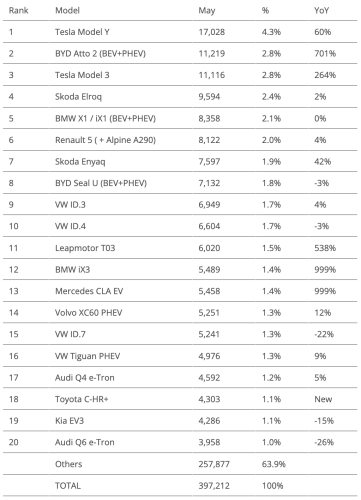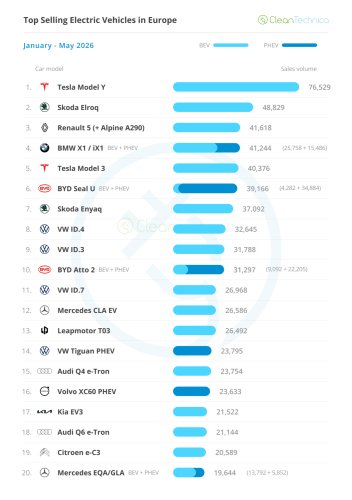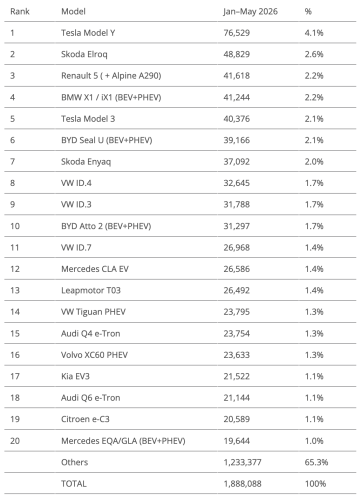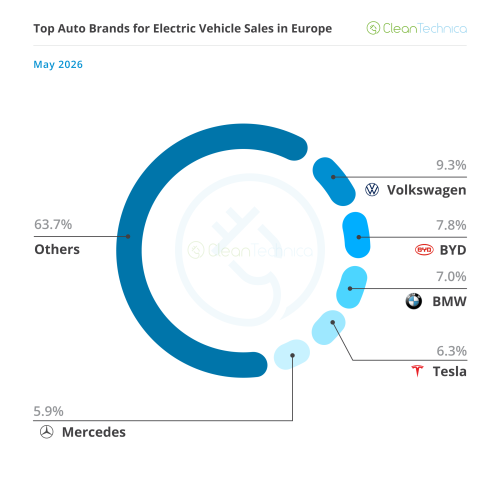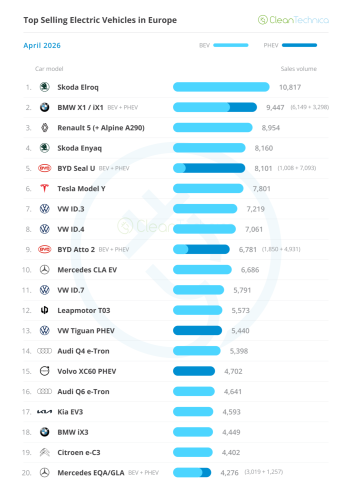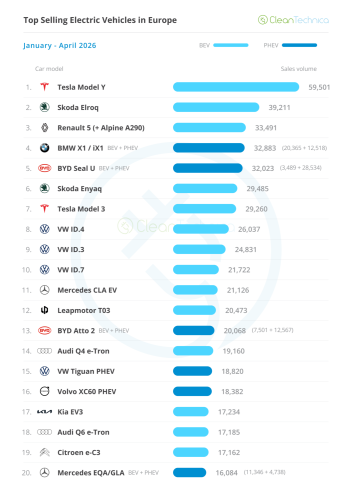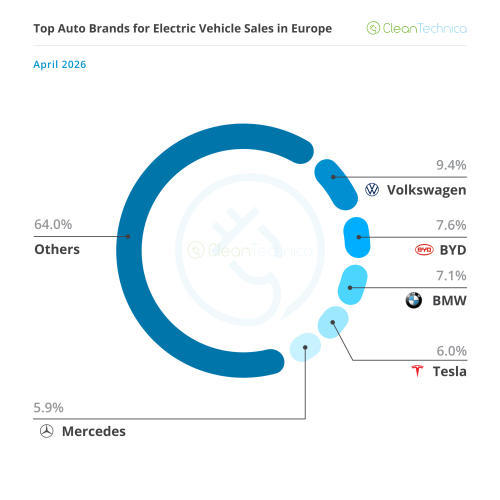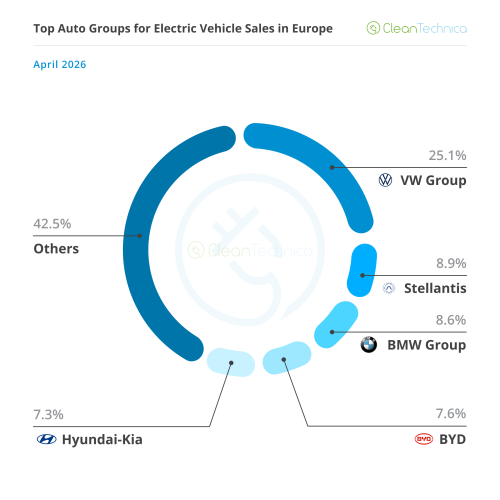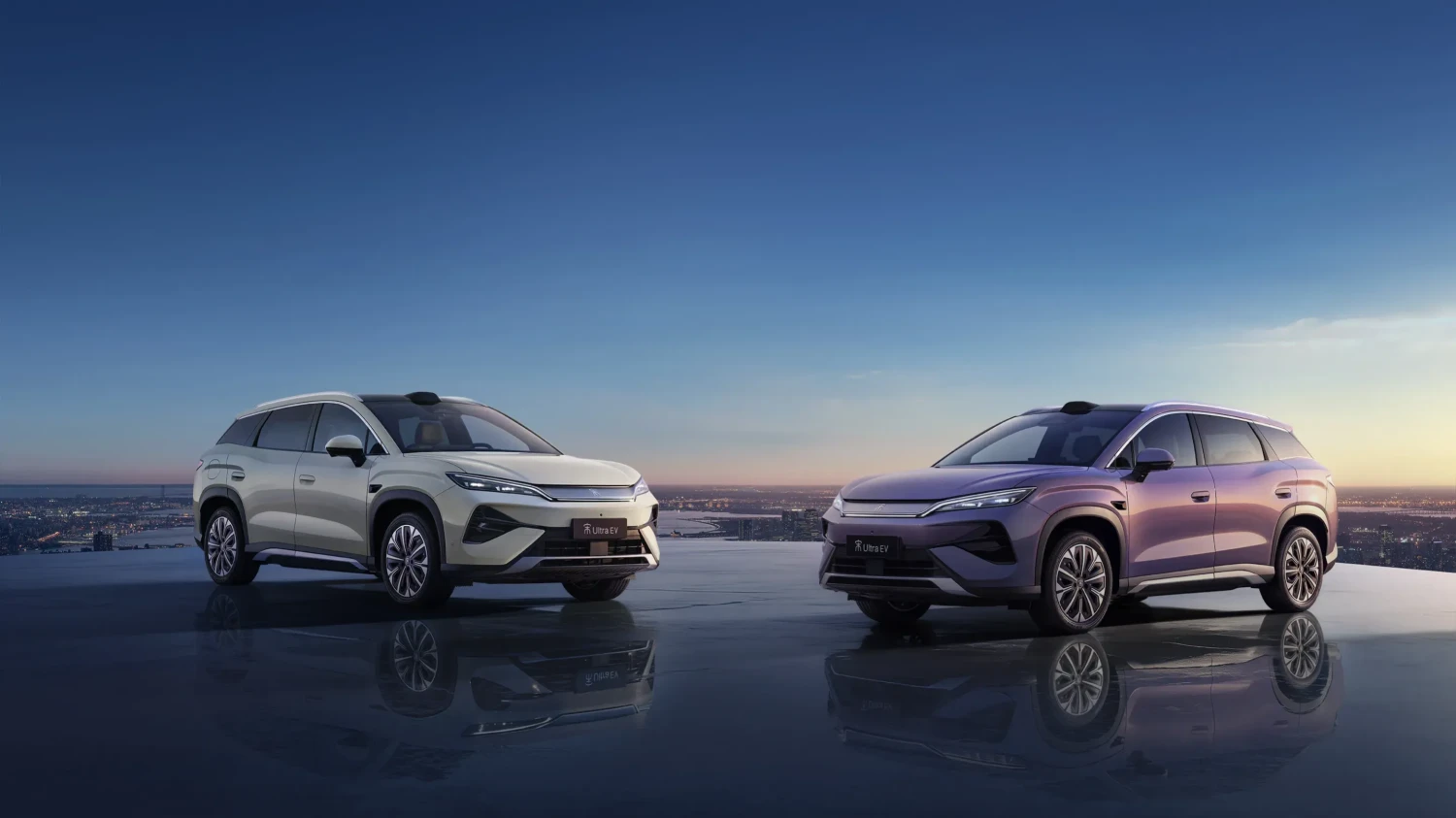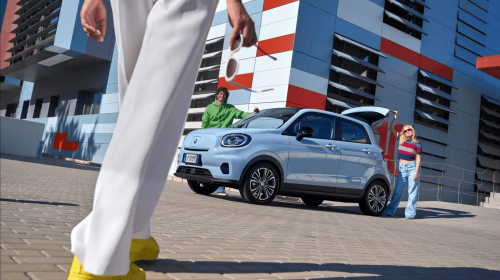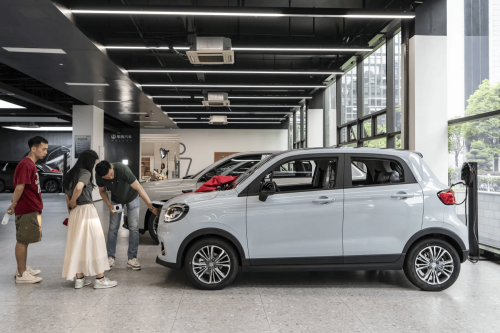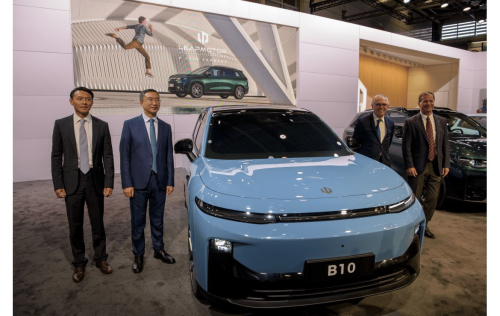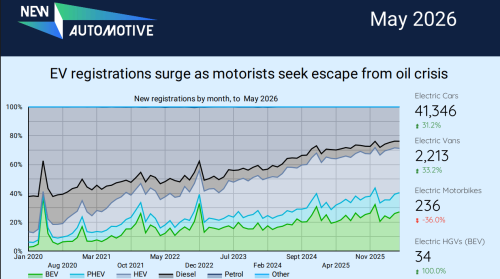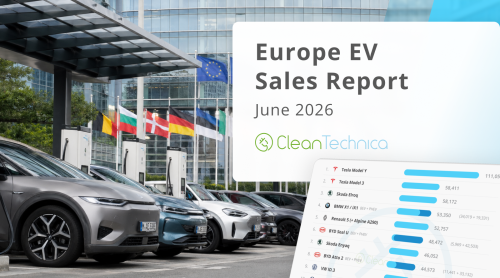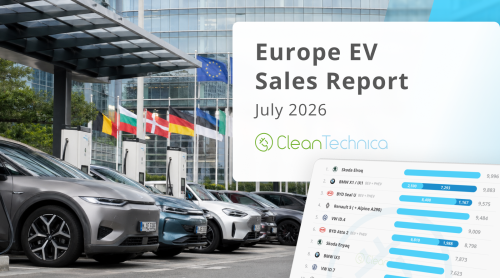
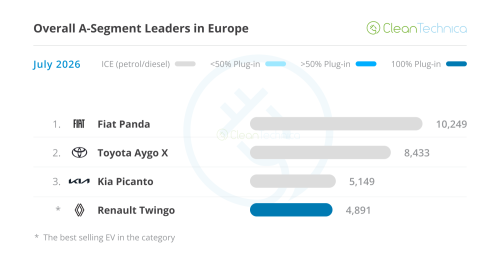
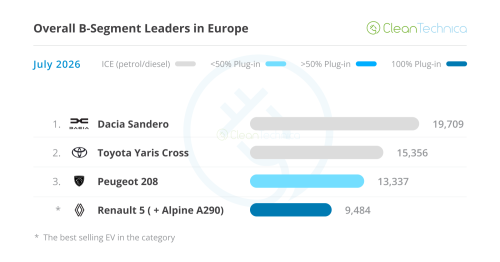
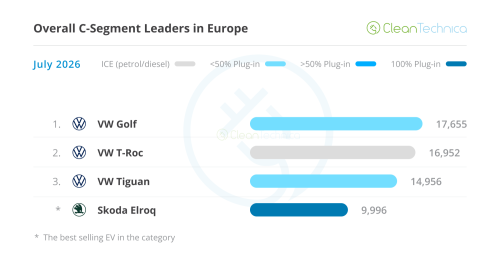
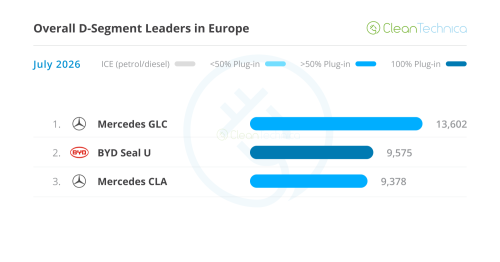
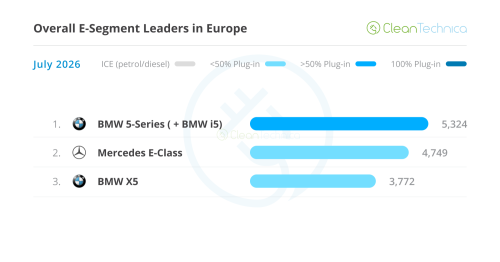

























Europe is no longer dependent on one player for the EV revolution. In a month that Tesla was down 36% YoY, BEVs jumped 51% YoY! Thanks to a number of factors (new cheaper models, high gas prices, mass arrival of Chinese models, etc.), BEVs are currently in high demand in Europe. Some 288,000 fully electric vehicles were registered in Europe in July, which is not only a 51% increase year over year (YoY), it is the fastest growth rate this year! Overall, plugin vehicles were up 40% YoY, dragged down by plugin hybrids, which grew only 21%, to 137,000 units, thus placing July’s plugin share at 38% (26% for BEVs only). With BEVs pulling the market upwards, the year-to-date share for BEVs is at 23% (34% for PHEVs and BEVs combined), which is already higher than the 2025 final result (20% BEV share, 29% adding PHEVs). This is an encouraging sign if we want to be close to 100% PEV share by the mid-2030s. Although EVs are increasing their share across Europe, their expansion is not uniform — while electrification is quite advanced in Northern Europe (BEVs in Norway are at 98%, 80% in Denmark, 53% in Finland, 43% in Sweden, 47% in the Netherlands, and 43% in Belgium), elsewhere numbers are far below (Italy is at 6% BEV share, while in Czechia, they’re at 8%). In short, full electrification will happen at different times across Europe. While in some places we will see markets close to, or at, 100% BEV share by 2030, in others, 2040 is a more likely scenario. Looking at the best sellers in several size categories, the EV push is starting to get visible. While we are far from the EV domination we see in China, things have indeed moved on in Europe compared to last year. Before, the only EVs that we saw on the overall podiums were Teslas. This month, with Teslas taking their usual stopgap month, others have taken the spotlight. The A-segment has the new Renault Twingo, which was the 4th placed model overall, ending close to the 3rd placed Kia Picanto (5,149 units), and ahead of the 5th placed Fiat 500. Even with a new ICE version of the 500, sales have failed to replicate the previous generation’s numbers, or even the beginnings of the current one … so I guess the problem wasn’t the lack of an ICE version? Maybe the slowdown had more to do with other, better, cheaper EVs starting to land on the market, cannibalizing the 500e’s sales? Anyway, besides the current category leader, the Leapmotor T03, and the new Renault Twingo, we have a new Dacia Spring set to land soon, as well as its Nissan sibling, a new Smart #2, which is also landing later this year. And next year, the future city car from Volkswagen (ID.Lupo?) will start its career, so we have plenty of competitive electric city cars ready to take over the podium. Oh! And let’s not forget that a new Panda city car (Pandina?) is set to start in 2027, both in BEV and ICE versions. This all means that the city car category should be one of the first to be fully electrified. Looking at the other segments, the B-segment is still ICE heavy, with only the #3 Peugeot 208 having some degree of electrification (24% of sales are from the BEV version). The C-segment is a bit more electrified (the #1 VW Golf is 14% PHEV, and the #3 VW Tiguan is 34% PHEV), but it is the midsize category where electrification is more advanced, even without taking Tesla into account. The #1 Mercedes GLC has 52% of all of its sales coming from either the BEV or the PHEV version, the runner-up BYD Seal U is fully electrified, and the 3rd placed Mercedes CLA has 70% of its sales coming from its BEV versions. In the full size category, electrification is also significant. The #1 BMW 5 Series has 62% of sales coming from either the i5 BEV units or its own PHEV versions, the #2 Mercedes E-Class is 40% electrified (PHEV versions), and the #3 BMW X5 has 32% of its sales coming from the PHEV version. So, the A, D, and E segments have good electrification perspectives, but the all-important B and C segments, the most important in Europe, are the laggards. Looking at the best selling EV models, the big news this month was the absence of Tesla representatives. BYD had 3rd place to itself thanks to the Seal U (BYD Song in Euro-spec), while the Skoda Elroq won the best seller title, followed by the BMW iX1/X1 PHEV twins. Here’s a more detailed analysis of the top 5 EVs this month: #1 Skoda Elroq — After a slow June, the Elroq returned to the podium and was the best selling European model in July, with 9,996 registrations. Looking ahead, the Czech crossover will have to face fierce internal competition, as a new, smaller, and more affordable Skoda crossover is about to land. Called the Epiq, that model risks stealing lots of sales from the current star player of the Skoda lineup, as it will be simultaneously cheaper and more modern than the Elroq. Will we see it slow down later this year? #2 BMW iX1/X1 PHEV — The German twins are in cruise control, winning another podium presence in July thanks to 9,883 registrations. Benefitting from favorable lease rates to help things along, the BMW crossovers are the brand’s bread and butter models. An interesting evolution is the fact that while the overall numbers remain stable, the mix between the BEV and PHEV versions is changing over time. While a year ago the iX1 represented 62% of the sales of these two, now they represent 74%, meaning that BEVs are gaining importance and PHEVs are losing sales (-1,300 units comparing July ’25 with July ’26). With a deep refresh coming to BMW’s compact models later, promising to transform them into baby Neue Klasse vehicles, expect both, but the iX1 in particular, to upgrade their specs. That will make them more interesting than the current versions and allow the Bavarian brand to keep its compact models as podium material. #3 BYD Seal U (BEV+PHEV) — After three months of absence, the Chinese SUV returned to the top 5 and hit 9,575 registrations last month, meaning that while the BYD’s star is recovering in China, thanks to the new-generation Ultra body, the old generation is still able to reach the top 5 in Europe all by itself (a bit like when veteran football/soccer players leave top leagues and semi-retire in less competitive ones…). July’s 3rd place finish was much thanks to generous discounts, but still, with the model’s development costs now well behind it, BYD can afford to go into hard discount territory with this one. #4 Renault 5 (including Alpine A290) — Renault’s star player delivered 9,474 sales in July, with the iconic hatchback increasing its sales year on year by 52%, thus backing previous optimistic statements from its representatives. The truth is that the French manufacturer has done its homework, and while others are scrambling with what to do next, Renault is now reaping the profits of its EV strategy. Sure, no matter how attractive the 5 is, the truth is that in 2026, its space in the market will be squeezed, not only by external competition like VW’s own take on the R5 formula, the ID.Polo, but also by internal competition, with the equally cute new Twingo potentially stealing sales from below. That is why Renault is taking a page from its Asian counterparts and going at China speed, evolving its R5 and R4 while they are still recent with more efficient motors and LFP batteries — because cute design can only take you so far (just look at the Fiat 500e). The real factor that will make the French twins true volume models over the years is meeting constantly evolving buyer expectations — regarding specs, value for money, and pricing. #5 VW ID.4 — VW’s star player won its first top 5 presence this year in July, thanks to 9,009 registrations, a 39% improvement over last year’s performance and its best result this year, which is actually a surprisingly good performance for a model set for a deep refresh later this year, and a name change. Instead of ID.4, the refreshed model will be called the ID.Tiguan and will offer refreshed styling and updated specs, with much-awaited LFP batteries finally joining the range of options. Does this mean that the Volkswagen crossover will return to the podium? Maybe, but we should only know for sure about the volume potential of the new ID.Tiguan in 2027. Outside the top 5, there were a number of highlights to mention. Starting with BMW, we have another strong result from the new BMW iX3 (8th place with 7,873 registrations). One wonders if the midsize SUV has already reached its cruising speed or there will be even higher volume months ahead. Regardless of what might happen to the iX3, I am now curious about the production ramp-up of the upcoming BMW i3. Will the new midsize sedan also reach top 10 status? In the Mercedes stable, its star player, the CLA EV, continued in near-record territory, clocking 6,599 registrations. The three-pointed-star brand is now concentrated on the new GLB EV seven-seater, which seems to have hit a plateau at around 3,500 units (more or less what the EQB, its predecessor, had in a good month) and the GLC EV midsizer, which is now starting to reach significant volumes (4,107 units). Will the GLC be able to replicate the BMW iX3’s success? I doubt it. Not only does it lack the Beemer’s waiting list, now at around 8 or 9 months, but I guess the GLC’s ramp-up should end sooner, at around 5,000 units/month. I’d love to be wrong, though. Volkswagen also had a good month. Besides the surprisingly good result of the #5 VW ID.4, the ID.7 ended the month in 9th, with a year-best result of 6,766 units. Finally, a reference is due for Renault. Not only did it continue to place the Renault 5 among the top 5, but this time it also placed the new Twingo in 17th, the first top 20 position for the new generation. Additionally, it snuck the Scenic crossover into 20th place, thanks to 4,354 registrations, thus placing three representatives on the table, probably for the first time ever. Heck, even the relatively slow selling Renault Megane, due for a refresh soon, saw its sales jump 54% YoY in July, to 1,927 units, which proves that once a certain brand is on a high tide trend, all its models benefit from the increased dealership traffic. Outside the top 20, in such a strong month, there was plenty to talk about: In the midsize category, besides the Mercedes GLC EV ramp-up, another model on the rise is the Xpeng G6. It hit a record 3,222 registrations in July. A good omen for the future success of the Xpeng L03? Speaking of the compact category, we do have a couple of record performances to mention. In the Mini stable, the Countryman BEV scored a record 3,266 registrations. Meanwhile, the Geely brand is starting to make itself noticed thanks to its Starray PHEV crossover, which hit a record 2,937 units in July. But the highlights are happening below, in the B segment. The Cupra Raval and Kia EV2 are starting their careers on a high note, with the sporty Spaniard reaching 3,159 registrations in only its second month on the market while the Korean did the same with 4,335 registrations, losing a top 20 spot by just 19 units. Both have a waiting list, so the production ramp-up is still on its way, and top 20 presences are expected for both soon. The slightly more veteran Peugeot e-208 EV had its best result since November, thanks to 3,212 registrations, but that wasn’t enough to be the Stellantis best seller. The Citroen e-C3 took that title with 4,013 registrations in July. With a new generation of the 208 said to land in a year, which will be BEV-only, Stellantis is currently lacking a star player in a category that could run at the same pace as both the Renault 5 and the VW ID.Polo. Finally, somewhere between the A and B segments, we have the Hyundai Inster, the Casper-eyed city car that thinks it is an SUV. The car had 3,477 registrations in July, which was its best result in a year. Looking at the 2026 ranking, the major change in the top positions was the three-position drop of the Tesla Model 3, back into the fifth spot. Without stock units to resort to, the Tesla sedan scored only 461 deliveries in July, an 85% YoY drop, which brought it back to where it was in May. The beneficiaries were the usual. The Skoda Elroq returned to the runner-up position, the BMW crossover twins were up to 3rd, while the Renault 5 went up to 4th. Still, it isn’t all bad for the Model 3. The lack of stock units means that demand is there, so expect a positive month of August and an epic September, which should propel it back to the podium. The question is — to what place on the podium, second or third? With the competition experiencing different kinds of headwinds in the second half of the year (the Skoda Elroq suffering from competition from the smaller Epiq, BMW compact crossovers going through a refresh later this year, increased competition for the Renault 5) and the BYD Atto 2 being too far away to be a real threat, all of a sudden the Model 3 seems to be the strongest candidate for the silver medal, which it last won in 2024. Bring on the popcorn, because this looks to be fun! As for the remaining changes, the VW ID.4 was up one spot, to 9th, switching positions with its smaller sibling, the ID.3. Still on Volkswagen, the ID.7 profited from a strong month and climbed one position, to 12th. Further highlighting the good month for the German brand, the VW Tiguan PHEV was also up one spot, to #14. On the second half of the table, the Kia EV3 climbed one position, to #17, surpassing the Audi SUVs. And it would have gone higher … … if the BMW iX3 hadn’t done even better. With the midsize SUV riding high, it not only replaced the Citroen e-C3 EV on the table, but at the same time managed to surpass four other models. So, it started its career in the top 20, in 16th. Not bad, eh? How high will the German SUV go? I would say 14th in August, 11th in a few months, and maybe it can even have a shot at 10th in December? Please place your bets. As for the plugin auto brand ranking, the leader, Volkswagen, remained in the lead, recovering some of the share (9%, up from 8.9% in June, but still down from the 9.3% in May) it had lost in the previous month. Sure, it still holds a comfortable advantage over BYD (7.9%), and its new small EVs (VW ID.Polo, ID.Tiguan, etc.) should help it recover some sales, but … the German brand cannot allow itself to slow down. It can’t distract itself by hoping for some kind of ICE recovery/miracle. If it does, the company will get BYD on its back real fast … in its home market. And if you can’t win at home.… BMW (7.1%, up 0.1%) recovered the last place on the podium thanks to Tesla’s crash (6.2% share, down from 7.1% in June). It will be an interesting race between these two for the bronze medal. Will the Texan make return to the European podium? Or will the Bavarian brand stay in the medal positions for the 6th time in a row? (As a side note, BMW was on the podium 9 times out of the last 10 years.) In 5th we have Mercedes (5.8%). It is holding steady in the last position of the top 5 and gained even a little bit more distance over a slow selling #6 Audi (5.4%, down 5.5% in June and 5.7% in May). The Ingolstadt make now has its Czech cousin Skoda closer than ever (7th, 5.3%). Additionally, #8 Renault is on the rise (5%, up 0.1%), so it could start to pose a threat to both Volkswagen Group in a not too distant future. Arranging things by automotive group, Volkswagen Group is firmly in the lead, with 24% share. With plenty of fresh metal coming soon, expect the German OEM to stay comfortable in the lead. #2 BMW Group (8.7%, up 0.1%) continues to consolidate the runner-up spot, while #3 Stellantis is consolidating its never ending slide (8.2%, down 0.1%). The multinational OEM’s drops seem to have no end in sight, and it could even lose its podium position this year, as 3rd placed BYD (7.9%) is getting closer every passing month. Could this change happen already by September? Interestingly, both BYD’s rise and Stellantis’ fall are almost a mirror of each other, so maybe the Shenzhen’s rise in Europe is being done mostly at the expense of Stellantis? Something to think about…. Outside the top 5, #6 Geely is stable (6.9%) but lost ground to #5 Hyundai–Kia (7.5% in July, up from 7.3% in June). Now the 7th placed Renault–Nissan Alliance is starting to show up on the radar as well, with 6.6% share, up 0.2% from June.