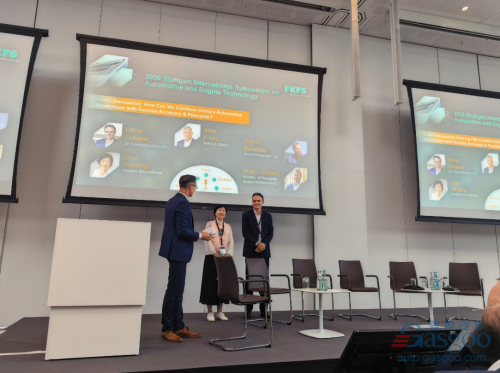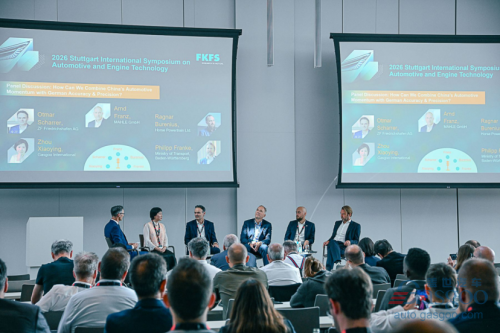



















China's automotive rise is bringing Europe more than a new group of competitors. It is introducing an entirely different industrial pace.For German companies, the greatest concern is that transformation is not happening fast enough. Can product cycles be shortened? Can decisions be made more quickly? Can software, supply chains, and global talent be reorganized into a more responsive innovation system? For ordinary employees, however, the anxiety comes from precisely the opposite direction: change may already be moving too fast. Will working hours increase? Will expertise built over decades still retain its value? Can a stable career—and a familiar way of life—still be preserved?The same transformation therefore carries two very different meanings. For companies, it is a race against time. For employees, it may signal the gradual erosion of an established social order. Understanding this tension is essential to understanding the transformation of Germany's automotive industry.Europe's Growing Sense of UrgencyGermany's automotive industry remains one of the world's deepest reservoirs of engineering excellence.In vehicle safety, materials science, chassis engineering, powertrains, durability, validation and testing, precision manufacturing, and quality management, German companies continue to possess formidable strengths. The challenges they face today should not be mistaken for a sudden loss of technological leadership, nor do they suggest that the capabilities built over decades have somehow become obsolete.What has fundamentally changed is not the capabilities themselves, but the hierarchy of value attached to those capabilities.The engineering expertise forged during the era of internal combustion engines, transmissions, and traditional mechanical systems remains indispensable. Yet it no longer translates automatically into competitive advantage in an industry increasingly defined by software, artificial intelligence, electronic architectures, and digital user experiences.For decades, German automakers excelled at transforming complex technologies into products that were exceptionally safe, reliable, and precise. Standardized manufacturing, strong global customer relationships, and premium brands then allowed those strengths to scale worldwide.Today, however, building a reliable product is no longer enough.Companies must also answer a different set of questions. Can they define and develop products more quickly? Can software, hardware, manufacturing, and supply chains operate in parallel rather than sequentially? Can engineering teams in China, Europe, and other regions function as a truly integrated global innovation network rather than separate regional organizations?German industry has long been admired for its efficiency, execution, and system-level capabilities. Yet as products have become more complex, regulations more demanding, organizations larger, and governance structures more layered, many of the processes originally designed to control risk, ensure quality, and protect stakeholders have also begun to increase the cost of decision-making.In conversations with executives from several leading companies during my visit, one theme surfaced repeatedly: decision-making has become increasingly complex.After the panel discussion, one participant offered a revealing example.At a major German automaker, a significant decision often requires repeated coordination across brands, business units, functional departments, headquarters, and regional organizations. When issues involve major capital investment, organizational restructuring, working hours, layoffs, or factory locations, the process expands even further—bringing supervisory boards, works councils, labor unions, and employee representatives into a formal system of consultation and negotiation.These procedures are far from meaningless.They play an essential role in controlling technological risk, protecting employees' rights, balancing the interests of labor and management, and safeguarding social stability. Indeed, they are one of the reasons why German industry has been able to maintain its reputation for quality and reliability over so many decades.The challenge arises when each legitimate procedure, each organizational layer, and each stakeholder adds another step to the decision-making process. What is individually rational can become collectively slow. Companies may find it increasingly difficult to reach timely decisions before market opportunities disappear.And in the era of intelligent vehicles, time has become the scarcest resource.Software platforms, artificial intelligence, battery technologies, electronic and electrical architectures, and digital user experiences are evolving far more rapidly than the mechanical technologies that once defined the industry. A single misjudgment in platform strategy—or even a short delay in software development—can, within just a few years, translate into sustained losses in market share, brand appeal, and profitability.This leaves German companies facing an extraordinarily difficult balancing act. They cannot afford to abandon the strengths that have defined German engineering—its commitment to safety, rigorous validation, reliability, and long-term responsibility. Yet neither can they continue to accept product cycles, organizational speed, and cost structures that are increasingly out of sync with the market.Instead, they must fundamentally reconfigure how R&D, software, supply chains, global talent, cost engineering, and market feedback are integrated into a single innovation system.For many German automakers, the window for transformation may be no more than three to five years.Miss that window, and catching up may become extraordinarily difficult.On the timescale of business, change is already moving too slowly.Ordinary People Under Pressure to ChangeCorporate executives see competitiveness.Ordinary employees, by contrast, experience something much more immediate: uncertainty about everyday life.In early July, Mercedes-Benz's management became embroiled in a heated dispute with IG Metall—the country's largest industrial union—and employee representatives over proposals to extend working hours for some employees while lowering labor costs per unit of output. The debate was widely understood to center on increasing the standard workweek for certain positions from 35 hours to 40 hours, without a corresponding increase in fixed pay.Whatever form the final agreement ultimately takes, the proposal has touched one of the most sensitive fault lines in German industrial society: the long-standing social contract between work and life.In Germany, this debate is about far more than labor costs.The 35-hour workweek is the product of decades of negotiation and compromise among trade unions, employers, and society as a whole. In 1984, metalworkers across Germany staged weeks of large-scale strikes to win shorter working hours. The issue was never simply about wages. It reflected a broader understanding of employment, workers' rights, and the value of personal time.From a management perspective, longer working hours may improve labor productivity and reduce unit labor costs.For many employees, however, they signal something quite different: that the boundary between work and personal life—carefully established over decades—is beginning to retreat under the pressure of industrial competition.This is essential to understanding public sentiment in Germany.The mixed emotions many German workers feel toward China's automotive industry are not driven solely by trade protectionism, nor can they simply be dismissed as resistance to foreign competition.What they fear is that China's model of competition may reshape the way they live.China's automotive industry has achieved remarkable speed through dense markets, highly coordinated supply chains, digital capabilities, and an exceptionally high degree of organizational responsiveness.German society, by contrast, has evolved around a different work ethic.Work is an important part of life—but it is not life itself.Time after work, weekends, family, community activities, sports, and personal interests are widely regarded as essential parts of a fulfilling life, not resources to be continuously absorbed by work.During one of my conversations in Germany, an industry professional who had lived in Europe for many years offered a telling observation. For many German employees, management positions, higher salaries, or faster career advancement are not the only measures of success. Some spend their evenings rowing. Others dedicate their weekends to hiking in the mountains. The satisfaction they derive from these pursuits is often every bit as meaningful as a promotion at work.This stands in sharp contrast to the culture of ambition, rapid response, and collective mission often emphasized by Chinese companies. These differences go beyond management techniques. They reflect two distinct understandings of why people work—and how much an employer may reasonably ask of them.Chinese companies, one might say, often achieve speed through greater organizational intensity. European societies preserve stability through clearer boundaries around individual life.Each model has its strengths, and each carries a cost.The Chinese model makes it easier to mobilize resources quickly, but it can also place heavy demands on talent and erode an organization's long-term endurance.The European model places greater value on personal life, procedural fairness, and employment stability. Yet in a rapidly changing market, it also increases the time required for organizational adjustment and decision-making.Companies need greater efficiency. Employees need to protect their lives beyond work.When markets are expanding, profits are strong, and labor productivity is high, this tension can be absorbed through better pay, benefits, and social protections. But as the automotive industry enters a period of contraction and restructuring, the underlying conflict is becoming increasingly difficult to contain.