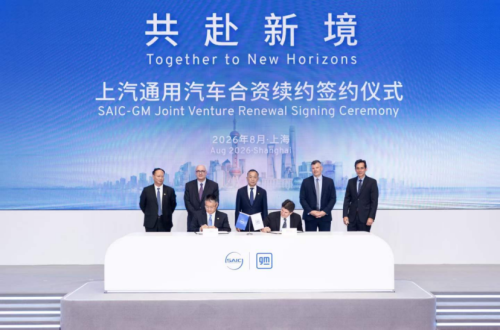
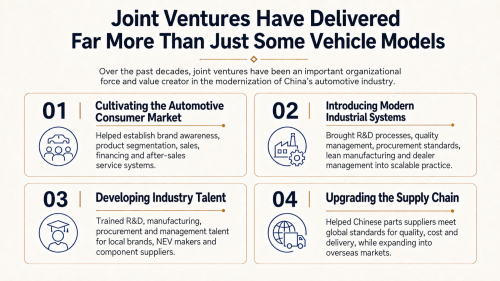
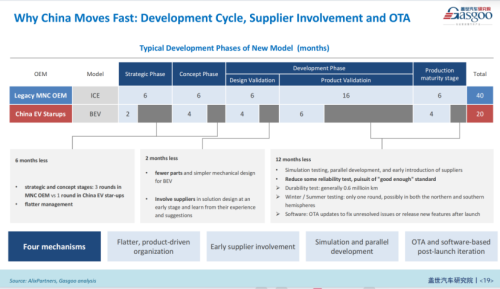
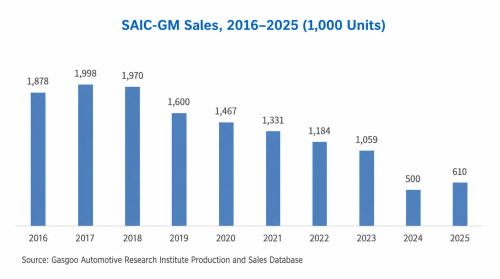
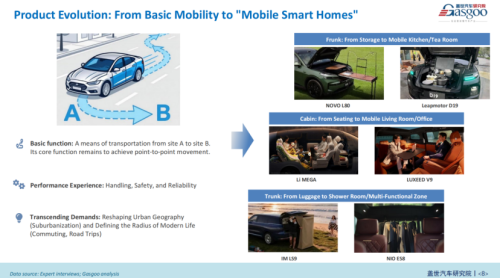
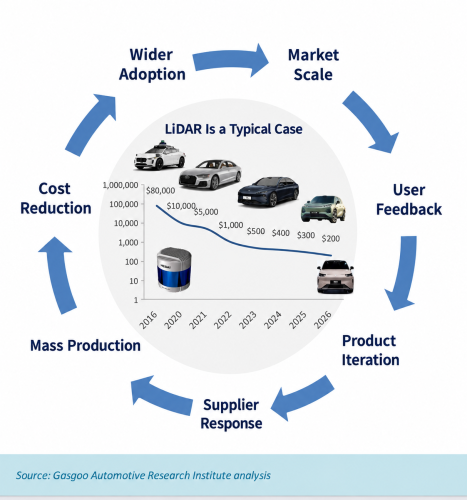
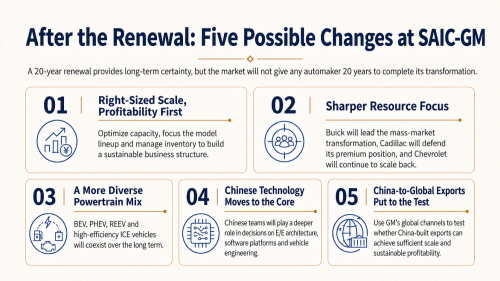
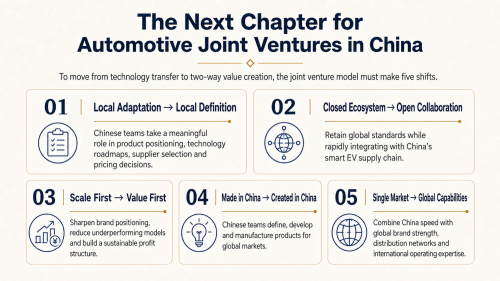
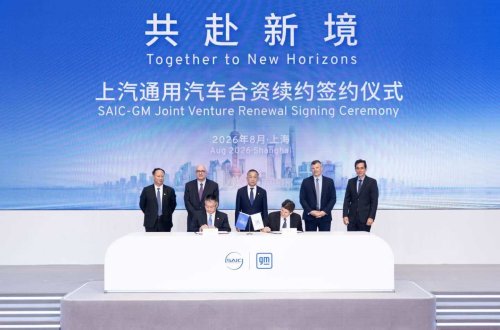
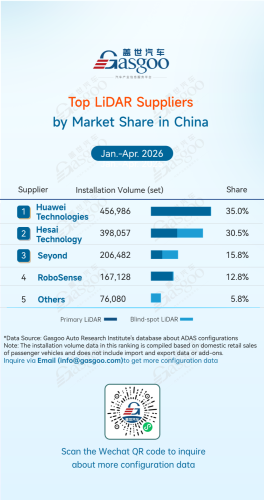
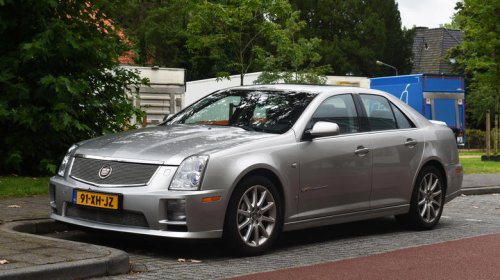
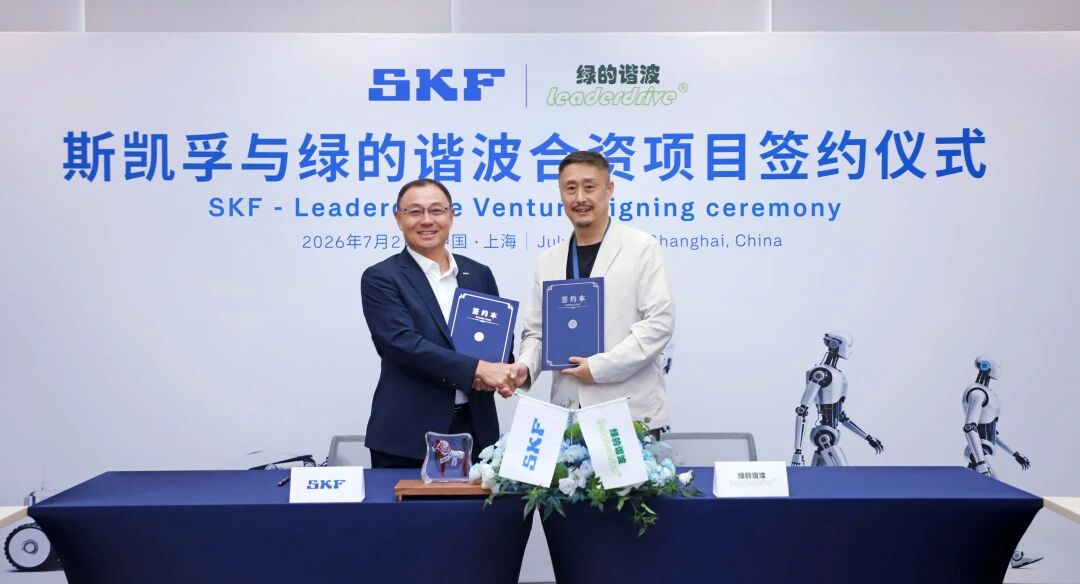
Thirty years can turn the tide.On August 5, SAIC Motor and General Motors formally renewed their joint venture agreement, extending SAIC-GM's term by 20 years through 2047.At a time of rapid transformation in China's automotive industry, a 20-year commitment carries considerable weight. SAIC-GM's sales have fallen far below their historical peak, while joint venture automakers face mounting pressure from Chinese brands, new energy vehicles, and intensifying price competition. Meanwhile, as China–US relations and the global business environment grow increasingly complex, multinational automakers are reassessing their investments, production capacity, and operating models in China.Against this backdrop, SAIC Motor and General Motors' decision to remain partners for another 20 years has drawn considerable attention in China and abroad. Yet the more fundamental question is this: now that China's automotive industry no longer lacks brands, technology, talent, or supply-chain capabilities, why do joint venture automakers still need to exist? What value can they create in the next phase?The answer may lie in the eight Chinese characters that define this renewed partnership: Innovate locally, share globally.Image source: SAIC-GMThe Historical Contribution of Joint Venture Automakers Should Not Be UnderestimatedFounded in 1997, SAIC-GM was designated the Shanghai municipal government's top-priority industrial project at the time. It took the company just 23 months to build its facilities and begin production—a demonstration of what became known as "Shanghai speed"—while establishing vehicle manufacturing and supply-chain systems aligned with global standards. Over nearly three decades, SAIC-GM has sold more than 24 million vehicles, experiencing the full evolution of China's automotive market: from its formative years and period of rapid growth to today's transition toward intelligent electric mobility.Any discussion about the future of joint venture automakers must begin by acknowledging one fact: over the past several decades, joint ventures have been an important organizational model and source of value creation in the modernization of China's automotive industry. Their contribution extended far beyond introducing a handful of vehicle models.First, joint venture automakers helped cultivate China's automotive consumer market. From brand awareness and product segmentation to sales, financing, and after-sales services, they contributed to the development of a relatively comprehensive automotive retail and service ecosystem.Second, they introduced modern automotive R&D, manufacturing, and management capabilities. Product development processes, quality management systems, procurement standards, lean manufacturing practices, supplier certification, and dealer-network management were all implemented at scale in China through joint ventures.Third, joint ventures developed a substantial pool of industry talent. Many of the professionals now working in R&D, manufacturing, procurement, and management at Chinese automakers, NEV companies, and component suppliers began their careers and developed their expertise within joint venture organizations.Fourth, joint venture automakers helped upgrade China's automotive supply chain. By entering their procurement systems, many Chinese component suppliers gradually mastered the global automotive industry's standards for quality, cost, and delivery. These capabilities subsequently enabled them to serve a broader range of international customers and expand into overseas markets.Image source: Gasgoo, enabled by AISAIC-GM and the Pan Asia Technical Automotive Center offer a representative example. Pan Asia pioneered the development of a localized R&D system within an automotive joint venture and trained a large pool of engineering and research talent for China's automotive industry. From adapting global products to local market requirements in its early years to gradually building ground-up development capabilities for complete vehicles, batteries, electric motors, and power electronics, SAIC-GM's evolution mirrors the broader transformation of China's automotive industry—from technology introduction to local innovation.The rise of Chinese automotive brands should therefore not lead us to dismiss the historical value of the joint venture model.At the same time, one reality cannot be ignored: the competitive foundations that once made this model successful are rapidly eroding.The dramatic shifts in market share over recent years tell the story clearly. After all, the numbers do not lie.The Existing Model Is Becoming UnsustainableOver the past three decades, the basic exchange of value within automotive joint ventures was relatively clear: China provided market access, production capacity, and an enabling industrial environment, while foreign partners contributed brands, vehicle models, technology, and management systems. Product design and development were led by global headquarters, while regional operations handled market launch, production authorization, sales, and services. At a time when China's automotive market faced limited supply and relatively weak technological capabilities, this model created enormous commercial value and accelerated the industry's development.Today, however, both the balance of supply and demand and the underlying distribution of capabilities have fundamentally changed.Following more than a decade of rapid progress in electrification and intelligent technologies, Chinese brands have become the dominant force in the domestic market. In June 2026, they accounted for 68.6% of domestic passenger-vehicle retail sales, and their share continues to rise. China is also home to the world's largest NEV market and has built a complete, highly competitive industrial ecosystem spanning batteries, electric drive systems, semiconductors, intelligent cockpits, intelligent driving, and automotive software.More importantly, China's automotive market now operates at a pace fundamentally different from that of the traditional global automotive industry.In the past, a global vehicle developed over several years could still succeed after being introduced and adapted to the Chinese market. Today, Chinese consumers' expectations for intelligent features, interior space, driving range, energy replenishment, and scenario-based experiences are evolving rapidly, while product development and renewal cycles have shortened dramatically. By the time a global model completes internal approval, development, and localization, market demand may already have moved on.Image source: Gasgoo Automotive Research InstituteOn the surface, the challenges facing joint venture automakers appear to be slow progress in the NEV transition, insufficient intelligent-vehicle capabilities, and increasingly uncompetitive products. At a deeper level, however, their value-creation mechanisms have failed to keep pace with the market. Global product-introduction cycles remain too long; Chinese teams often lack sufficient authority over product definition; decision-making between the two shareholders can be cumbersome; local intelligent-technology suppliers cannot always be integrated with sufficient flexibility; global technical standards do not always align with China's digital ecosystem; and the production capacity, distribution networks, and organizational structures built during the internal-combustion era all require substantial adjustment.In the past, a mature global system was among the greatest competitive advantages of a joint venture automaker. Today, if that system cannot accelerate local decision-making, it may instead constrain the commercialization of innovation.SAIC-GM's trajectory over the past several years illustrates this tension particularly clearly.After reaching a historical peak of more than two million vehicle sales in 2017, the company experienced a sustained decline and undertook extensive adjustments across its product portfolio, brands, production capacity, and distribution network. In 2024, General Motors also recorded more than US$5 billion in impairment and restructuring charges related to its China operations.Image source: Gasgoo Automotive Research InstituteBoth partners have recognized that the original joint venture logic cannot sustain the next 20 years. The real challenge addressed by this renewal is how to reactivate existing assets through a new model of value creation.What Does the "Old Bottle" Contain?SAIC-GM faces significant challenges, but it is far from lacking resources. The company still has several important cards to play.The first is its brand portfolio.Buick, Cadillac, and Chevrolet have operated in China for nearly three decades and established relatively clear positions in the minds of consumers. Buick retains a substantial customer base, while the GL8 continues to exert considerable influence in the MPV segment. Cadillac also retains meaningful brand equity in China's luxury vehicle market.These assets may be under pressure from intensifying price competition and changing market conditions, but they cannot easily be replicated in the short term.The second is R&D.The value of the Pan Asia Technical Automotive Center is no longer confined to conventional localization and product adaptation. According to information disclosed by SAIC Motor, SAIC-GM has developed ground-up engineering capabilities for complete vehicles as well as batteries, electric motors, and power electronics. Its local team is also gaining greater authority over product definition and technology-roadmap decisions.In 2025, SAIC-GM introduced the Xiaoyao Super Fusion Architecture, developed under the leadership of its China-based team. The architecture supports multiple NEV powertrain configurations, including battery-electric, plug-in hybrid, and range-extended systems. It reflects SAIC-GM's efforts to reduce its reliance on a single global vehicle platform.The third is manufacturing and supply-chain capability.Over nearly three decades, SAIC-GM has established comprehensive manufacturing, quality-management, and supply-chain systems. These systems connect SAIC Motor with China's automotive industrial ecosystem while also meeting General Motors' global standards for quality, certification, and product development.The fourth is access to global markets.As Chinese automakers expand internationally, building distribution networks, securing regulatory certification, establishing brand recognition, and providing financing and after-sales services often prove more difficult than manufacturing vehicles themselves. General Motors already possesses established brand and distribution resources across the Middle East, Africa, South America, Mexico, and the wider Asia-Pacific region.If vehicles developed and manufactured in China can be integrated into this system, SAIC-GM will have a stronger foundation for reverse exports than it would have if it had to build an overseas network from scratch.The fifth is the operational restructuring already underway.According to publicly available sales data, SAIC-GM sold nearly 50,000 NEVs in the first half of 2026, an increase of approximately 81% year on year. NEVs accounted for around 21.6% of its total sales. Meanwhile, General Motors' automotive joint ventures in China have remained profitable for several consecutive quarters.This return to profitability has been accompanied by capacity adjustments, inventory reduction, portfolio rationalization, and cost optimization. It does not mean that SAIC-GM has returned to a sustained growth trajectory. It does, however, indicate that the company's priorities are shifting away from restoring its historical scale and toward improving operational efficiency and the quality of earnings.SAIC-GM's central challenge today, therefore, is not a lack of resources. It is how to recombine its brands, R&D capabilities, manufacturing footprint, supply chain, and access to global markets in line with the competitive logic of the intelligent electric era.That is the essence of putting "new wine into an old bottle."What Is the "New Wine"?Simply replacing internal-combustion vehicles with battery-electric, plug-in hybrid, or range-extended models will not be enough for SAIC-GM to complete its transformation. Product-strategy adjustments alone cannot address the deeper challenge, particularly in China, where new models are launched at extraordinary speed and product cycles are exceptionally short.The "new wine" must consist of at least five new capabilities.Product Definition in ChinaIn the past, Chinese teams were primarily responsible for adapting global models to local requirements. In the future, products must be defined from the outset around the needs of Chinese consumers.Chinese buyers care not only about power and handling, but also about space efficiency, cockpit experience, intelligent driving, charging speed, and scenario-based functionality. Only when Chinese teams have genuine authority over product definition can the distance between customer demand and product development be shortened.Moreover, in China today, the car is evolving beyond a means of transportation into an intelligent living space on wheels. Many features are designed around highly specific user profiles and real-life scenarios. Without deep engagement with the market and a genuine understanding of these evolving needs, it will be difficult for any automaker to keep pace with the industry.Image source: Gasgoo Automotive Research InstituteR&D in ChinaChina-based R&D organizations need to evolve from execution teams into decision-making bodies.The next phase will be defined by China-developed solutions reaching global markets. Making full use of China's local R&D resources and its broader industrial innovation ecosystem will therefore become an essential strategic lever. This is also a key direction that Gasgoo is exploring and advancing as part of its own international development.The role of the Pan Asia Technical Automotive Center should extend beyond adapting global models for China. It should undertake ground-up development of vehicle architectures, powertrain strategies, electrical and electronic architectures, and software experiences, while providing products and technologies for General Motors' other markets.Technology from ChinaJoint venture automakers need to integrate more openly with China's intelligent electric vehicle supply chain.Across batteries, electric drive systems, intelligent driving, intelligent cockpits, semiconductors, and software ecosystems, China has developed a wide range of mature, production-ready solutions. Joint ventures therefore need more flexible partnership mechanisms that allow them to select the most competitive local technologies for each product's positioning and requirements.Once a technology gains market acceptance in China, it can move rapidly into large-scale adoption. Costs continue to fall, and advanced features can quickly become standard equipment. China's combination of technological innovation, rapid commercialization, and large-scale market validation is difficult to replicate elsewhere.LiDAR provides a useful example. In roughly a decade, prices have fallen from tens of thousands of US dollars for early high-end systems to the low-thousands-of-renminbi range for mass-produced automotive units, with some high-volume procurement prices approaching RMB1,000. As a result, LiDAR is expanding from premium vehicles into a much broader range of intelligent-driving applications in China.Image source: Gasgoo Automotive Research InstituteChina SpeedDelegating authority over product definition must be accompanied by corresponding changes in decision-making processes.Competition in China's automotive market has moved beyond individual products and become a contest of system-wide efficiency. The ability of R&D, procurement, software, marketing, and user operations to collaborate rapidly will directly determine whether a vehicle reaches the market within the right window of opportunity.If local teams are given development responsibilities without corresponding decision-making authority, genuine "China speed" will remain difficult to achieve.Globalizing China's CapabilitiesThis may be the most consequential change signaled by the renewed partnership.SAIC-GM has proposed moving from the localization of global products to the globalization of Chinese innovation. In October 2026, the Buick Electra E7 is scheduled to begin exports, gradually entering markets across the Middle East, Africa, South America, and the Asia-Pacific region.In the past, SAIC-GM's primary role was to bring General Motors' global products into China. In the next phase, it may assume a new responsibility: bringing vehicles defined, developed, and manufactured in China into GM's global markets.This would elevate China's position within multinational automakers' global systems—from a manufacturing base and sales market to a center for R&D, supply-chain capabilities, and product exports. Managing the relationship between China-developed solutions and the needs and interests of other regional markets, however, will require considerable strategic judgment.What Lies Ahead?The 20-year renewal provides certainty for the partnership's long-term future. The market, however, will not give any automaker 20 years to complete its transformation.Over the next two to three years, I expect SAIC-GM to undergo five significant changes.Image source: Gasgoo, enabled by AIFirst, SAIC-GM is likely to move away from pursuing scale for its own sake and place greater emphasis on the quality of earnings.A return to annual sales of two million vehicles is not a realistic objective. Instead, the company is more likely to optimize production capacity, concentrate resources on a smaller number of models, and improve inventory management, building a business of more appropriate scale with a sustainable operating structure.Second, resources will become increasingly concentrated on Buick and Cadillac.Buick will lead SAIC-GM's efforts in the mainstream market and its NEV transition, while also creating opportunities for China-developed models to enter overseas markets. Cadillac will continue to compete in the premium segment. Chevrolet's presence in China may contract further, with the brand assuming a more differentiated role and placing greater emphasis on exports.Third, SAIC-GM will pursue a more diversified powertrain strategy.China and the overseas markets SAIC-GM plans to enter differ significantly in purchasing power, charging infrastructure, and energy systems. Battery-electric, plug-in hybrid, range-extended, and highly efficient internal-combustion vehicles are therefore likely to coexist for an extended period. No single powertrain pathway can meet the needs of every market.Fourth, Chinese technology will penetrate more deeply into SAIC-GM's core products.The key question will extend beyond which intelligent-driving or cockpit suppliers SAIC-GM selects. More importantly, the industry should watch whether its China-based teams gain meaningful participation in core decisions concerning electrical and electronic architectures, software platforms, and overall vehicle technology strategies.Fifth, reverse exports will become an important experiment in future growth.The export of the Buick Electra E7 is only the first step. The real test will be whether a continuing pipeline of China-developed vehicles can enter multiple overseas markets, use General Motors' distribution and service networks to generate stable sales, and establish a viable profit model.A single exported model does not amount to a global operating capability. There is still a considerable distance between the two.These are my five expectations. Time will tell whether they prove correct.The Next Chapter for Joint Venture AutomakersSAIC-GM is not an isolated case.SAIC Volkswagen, FAW-Volkswagen, GAC Toyota, Dongfeng Nissan, Beijing Hyundai, and other joint venture automakers are all strengthening local R&D, integrating Chinese intelligent-vehicle supply chains, and exploring opportunities to take China-developed models into overseas markets.They face a common question: how can a joint venture model originally built around technology transfer into China evolve into a new form of collaboration based on two-way—and increasingly reverse—flows of technology, products, and capabilities?In my view, the next chapter for joint venture automakers requires at least five fundamental shifts.First, from local adaptation to local product definition.Chinese teams need meaningful participation in product positioning, technology roadmaps, supplier selection, and pricing decisions, rather than simply executing product plans determined by global headquarters.Second, from closed systems to open collaboration.Joint ventures must preserve global standards for quality, safety, and engineering while gaining the flexibility to integrate rapidly with China's intelligent electric vehicle supply chain. Their future organizational models must strike a new balance between global standards and China speed.Third, from scale-driven growth to value-driven growth.The overall market share of joint venture brands may never return to its historical peak. Rather than relying on sustained price reductions to defend volume, these companies should clarify their brand positioning, eliminate underperforming models, and establish sustainable profit structures.Fourth, from manufacturing in China to creating in China.The competitive joint venture products of the future should extend beyond global models manufactured in Chinese plants. They should also include vehicles defined, developed, and produced by Chinese teams for subsequent entry into global markets.Fifth, from single-market cooperation to global capability collaboration.Chinese partners bring user insight, intelligent electric technologies, supply-chain efficiency, and rapid product development. Their international partners contribute global brands, distribution networks, regulatory certification capabilities, and international operating experience.Whether the two sides can combine these strengths into a new set of global capabilities will determine whether joint venture automakers truly have a next chapter.Image source: Gasgoo, enabled by AIThe "old bottle" of the joint venture model has not lost its value. It contains brands, R&D capabilities, manufacturing systems, distribution networks, talent, and global resources accumulated over decades. These assets remain valuable and cannot be replicated quickly.Yet if the bottle still contains little more than imported global models, local adaptation, and lengthy decision-making between two shareholders, even the finest vessel will struggle to meet the demands of China's automotive market today.The old exchange of value has run its course. A new era of value creation for joint venture automakers is only beginning.The next chapter must fill this established structure with Chinese user insight, local R&D, intelligent technologies, supply-chain efficiency, and rapid product development. Combined with multinational automakers' brands, distribution networks, and global operating systems, these capabilities can then reach a much broader range of markets.By extending its partnership through 2047, SAIC-GM has secured its ticket to the next chapter. Now comes the harder task: achieving a genuine rebirth.This is Tina's Talk. From China, we follow the forces reshaping the global automotive industry.