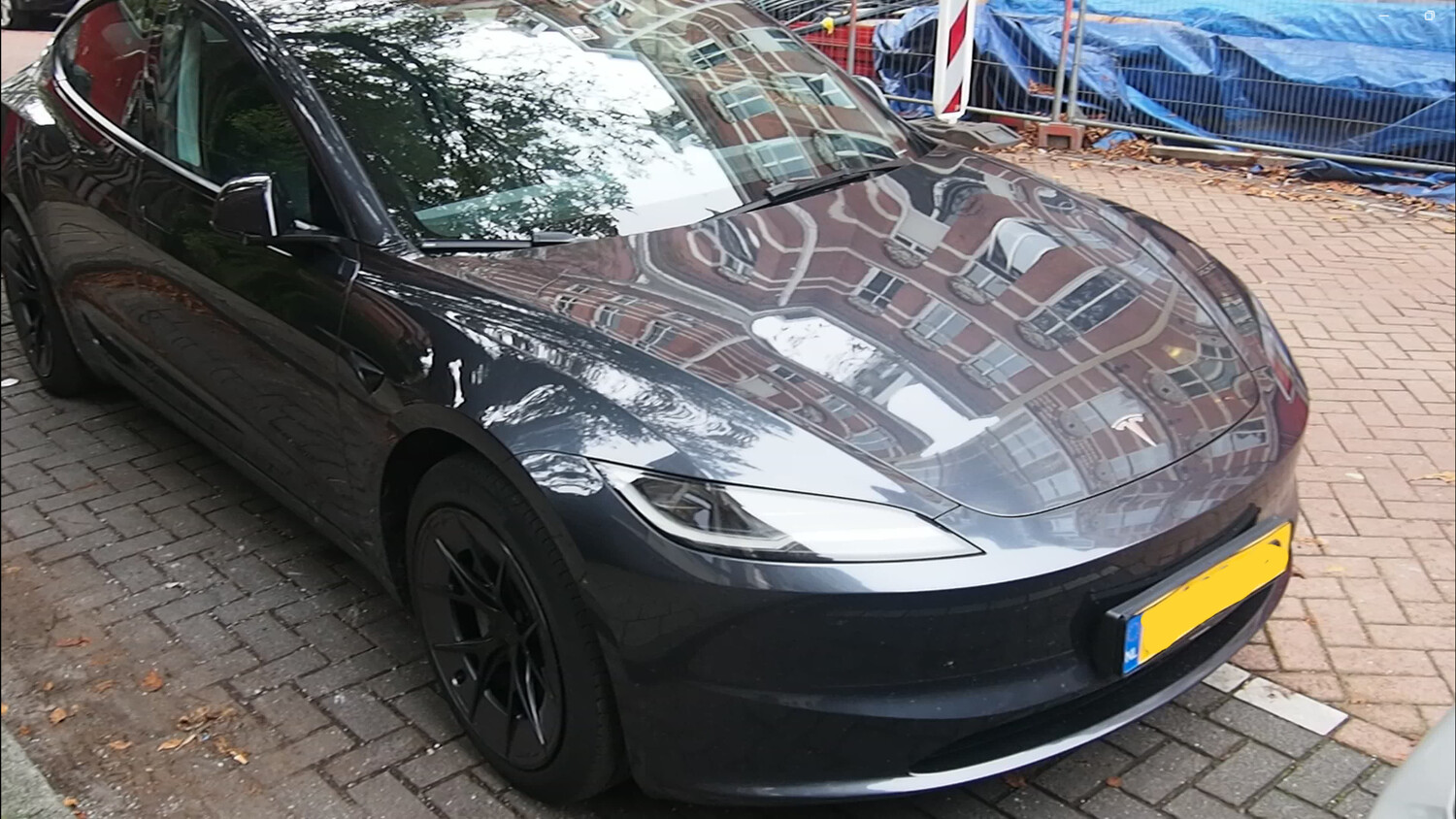
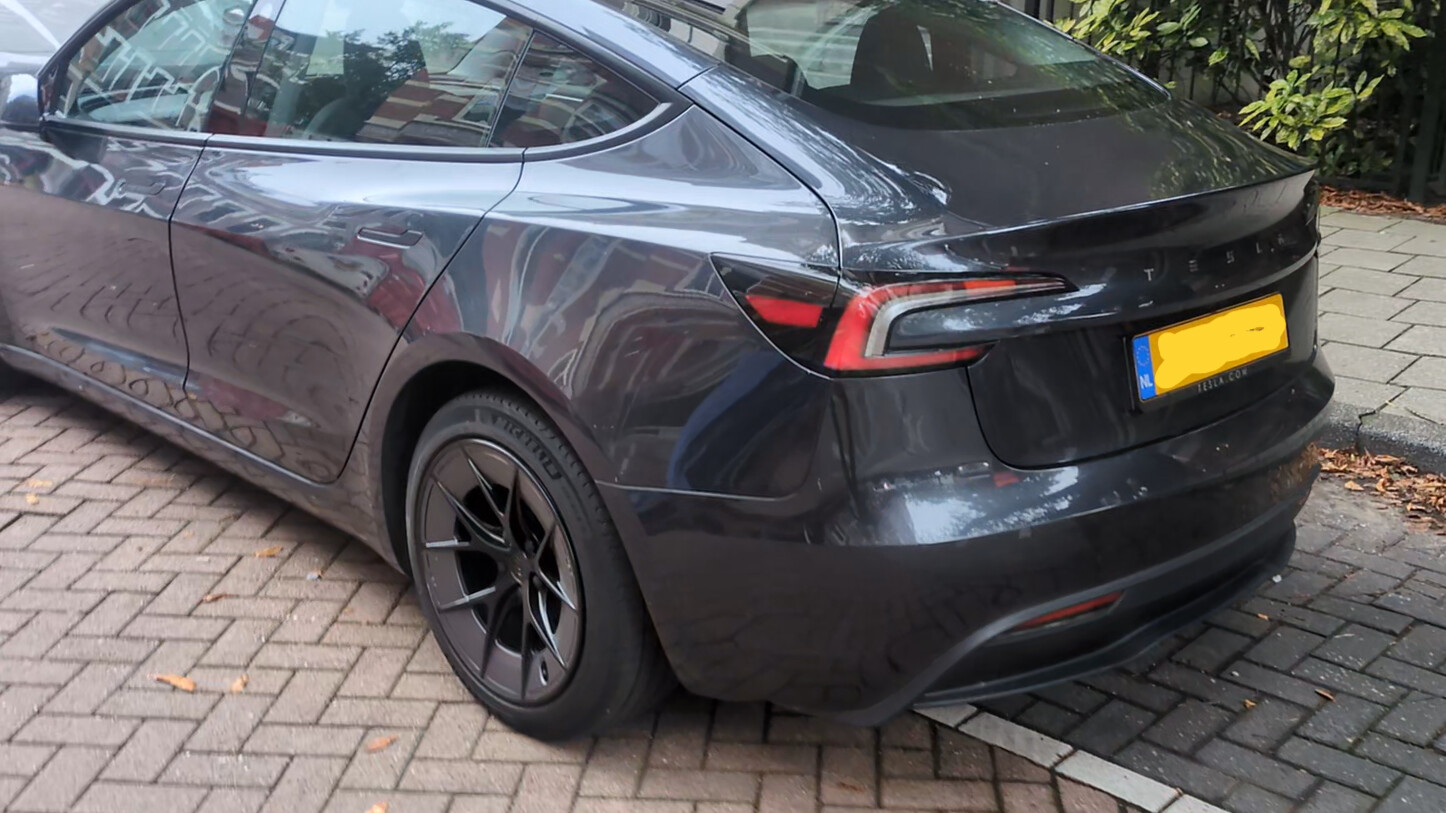
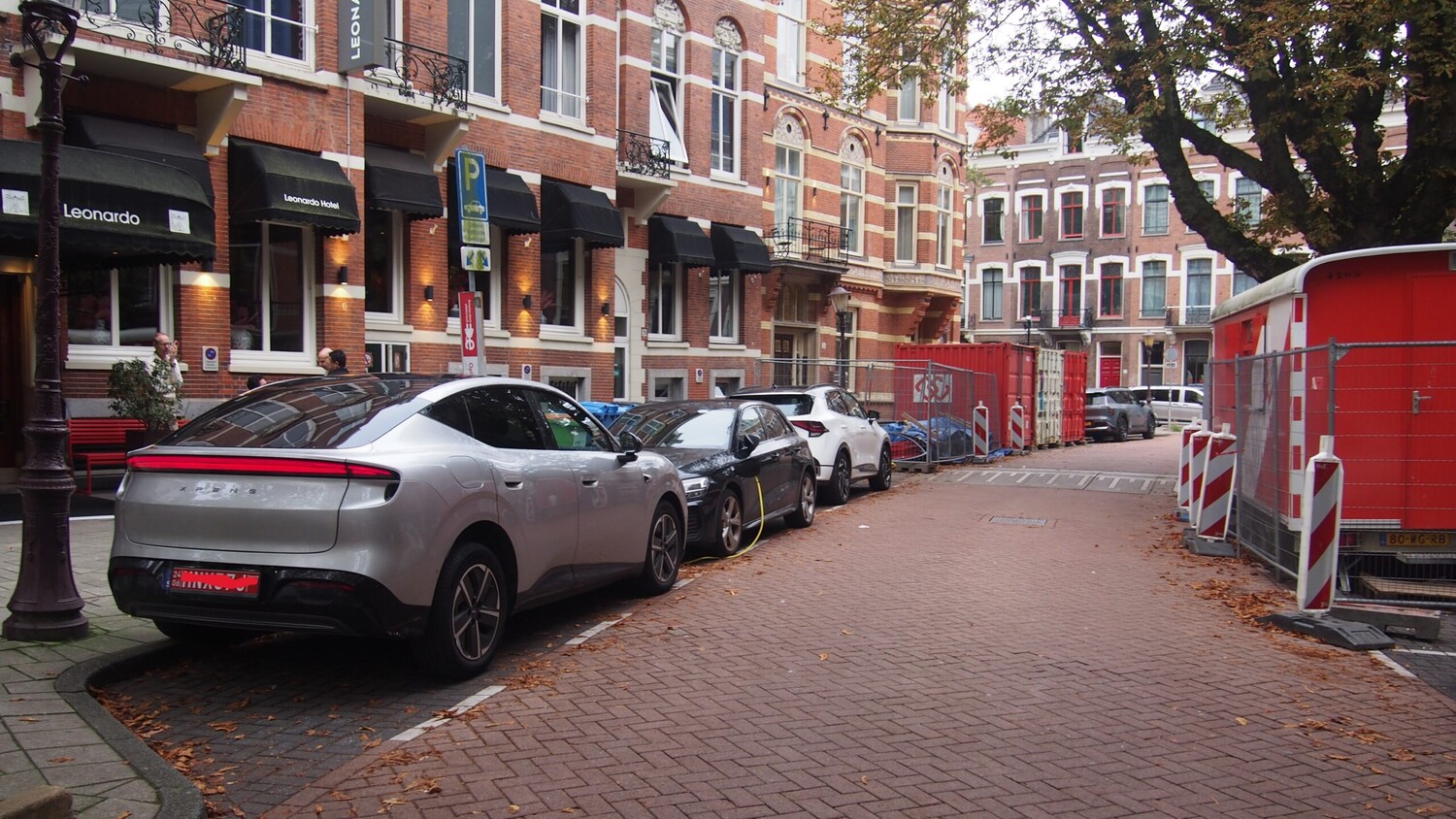
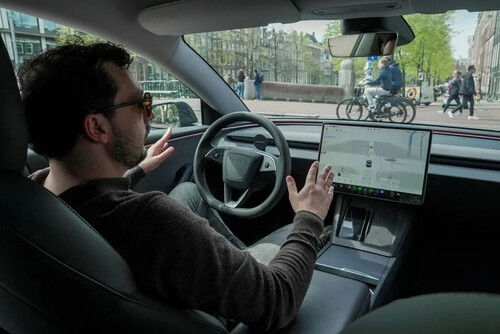
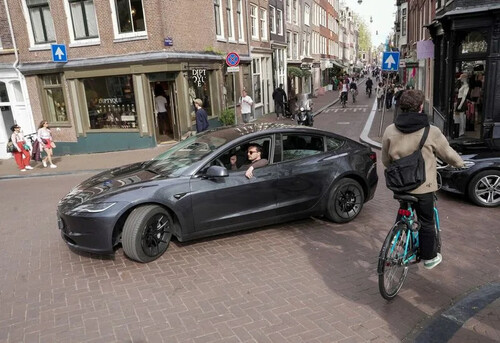
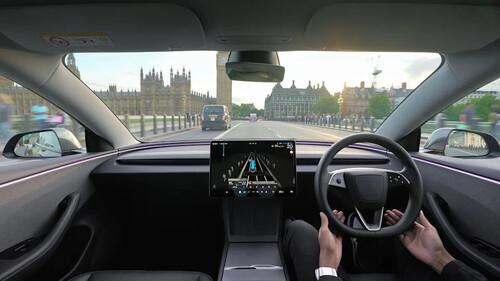
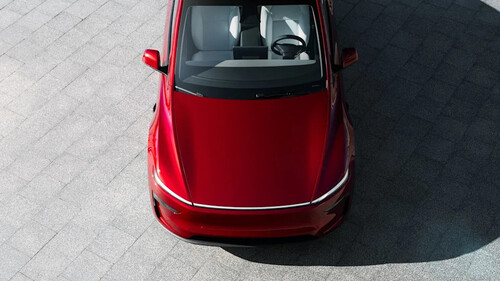
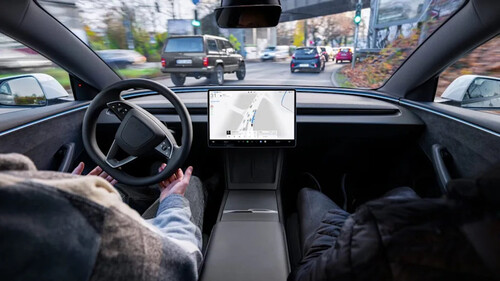
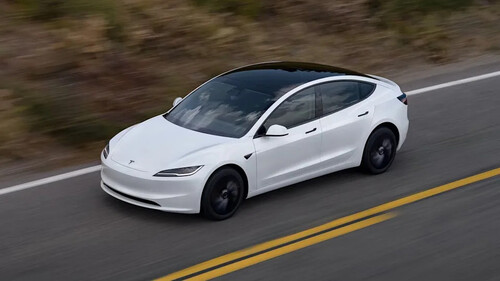
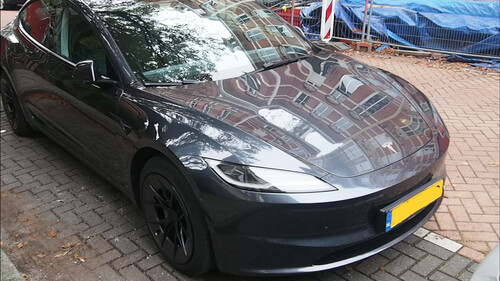
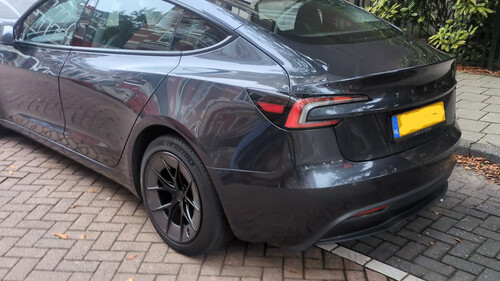
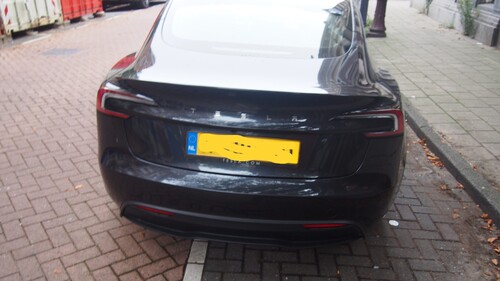
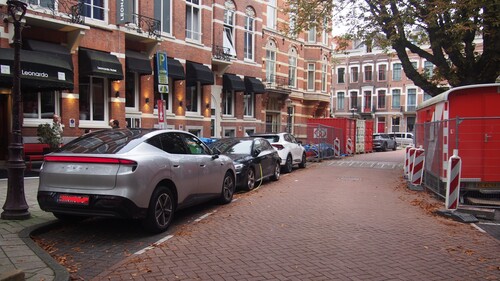
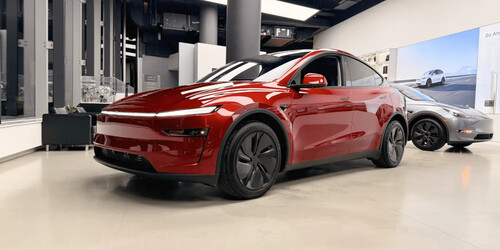
In the first two parts of this series, I explored the XPENG L03 with VLA 2.0 and the Tesla Model 3 with FSD from my recent test in Amsterdam. The focus of those two articles was on each intelligent driving system. However, the AI-based systems are just part of the entire package and interact with other vehicle attributes. Comparing them back-to-back, the noticeable differences go beyond just intelligent driving. Overall, the Tesla suspension felt a little more detached but harsher. I felt like I could sense the road and what the tires were doing better in the XPENG, which was tuned for European roads. However, potholes and bumps felt harsher in the Tesla, with the suspension clearly bottoming out on one occasion. For an analogy, I would compare the XPENG to a leather wrapped cushion and the Tesla to felt covered plastic. The XPENG has more texture on the surface but is softer when hitting a bump. Meanwhile, the Tesla was a bit soft on the surface but felt harsher when hitting bumps. Undoubtedly, some of this has to do with how the intelligent driving systems deal with bumps, in addition to the suspension. However, these are both advanced vehicles, and you may get a different perception on different roads. The XPENG was noticeably quieter. This was especially the case when going over large bumps, although VLA 2.0 slowing for the bumps undoubtedly contributed to the reduced impact noise. Road noise was quieter in the L03, despite not having laminated side windows. However, this was a low-speed test with large portions over paving bricks, and I did not sample it on the highway. In addition, the windshield wipers were quieter on the XPENG. The air conditioning was quieter. And I couldn’t hear the car steering motors working in the L03, unlike the Tesla. Of course, both cars are quiet in comparison to ICE vehicles. XPENG L03 in Amsterdam. Photo by Larry Evans After having spent more time in economy class airline seats than sleeping in a bed over the previous few days, the XPENG’s massage seats were a personal highlight of the test. The massage seats engage multiple pressure points, rather than just massaging one area or just vibrating. Due to a bit larger passenger compartment than a Model 3 or Y, despite a slightly smaller footprint, I was able to recline the seat while still giving the rear passenger adequate legroom. The seats are also surprisingly comfortable, with different densities of foam providing more support than you would expect from the seat shape. Combined with the massage function, I could have used a little more time stuck in traffic. The Tesla, despite being more expensive, did not have massage seats. Overall, the interior of the XPENG felt more premium, outside of a few surfaces that were not final production parts. Soft touch materials and real metal trim are prolific. Everything seems solid and well put together. While the Tesla materials and build quality are a clear improvement over earlier models, it still seemed a bit behind compared to the L03. The XPENG had a clearer center screen, as well as a driver display and HUD. The XPENG also has turn signal and shifter stalks, which are familiar and seemed easy to use. The XPENG will also have extensive conversational voice interaction coming soon with Master Agent, which adds another layer of control without needing to take your hands off the wheel or your eyes off the road. Meanwhile, the Tesla put all the information and much of the vehicle control on the center touchscreen, which seemed to have a pinkish hue on the overcast day. Tesla now offers turn signal stalks with their latest models in Europe, which I would welcome over the stalkless test vehicle. However, using the touchscreen to shift seemed to be a bit awkward, especially when the driver had to take over to navigate a tricky situation while FSD would not engage. Intelligent Driving On Amsterdam Roads The Ultra trim L03 has three XPENG-developed Turing chips. Two for driving and one for voice control. Each chip has 750 TOPS of processing power for a combined 2250 TOPS, which is significantly more than Tesla HW4 (~500 TOPS total). This allows for more processing to happen onboard and helps make the driving smoother. When navigating city streets, it instantly navigated to the next waypoint. In comparison, the Tesla needs to interact more with the cloud. Sometimes, it took a little time for the system to recalculate and had a little lag. The dense urban environment may also interfere with signals and exacerbate the issue. Having more processing power also helps VLA 2.0 learn quickly. It is not rules-based and does not have data labeling. In comparison, more happens at data centers for Tesla. Human beings label images to feed the model. Not needing as much central control and human input gives XPENG the potential to adapt to different driving circumstances faster. That processing power also helps find waypoints and move on to the next. Both vehicles were programmed with the same waypoints to ensure they took the same route on the test loop. In the XPENG, hitting waypoints was not noticeable. In the Tesla, it sometimes missed the waypoint, would loop back to find it, miss it again and attempt to loop around again until the waypoint was deleted. Once deleted, it would sometimes have challenges navigating to the next point and reengaging FSD. While waypoints may be a non-issue for many drivers, as vehicles get to higher levels of autonomy, smoothly navigating to set points becomes more important. Tesla Model 3 in Amsterdam. Photo by Larry Evans The route had significant construction, which presented challenges. The Tesla seemed to have more issues navigating the construction areas, requiring takeovers. Several delivery vehicles and emergency vehicles also blocked the road. And, of course, Amsterdam had heavy pedestrian and bicycle traffic. It was a more challenging driving environment than most will ever experience in the US. Overall, traffic was heavier on the L03 test, which started a little after 9 AM. I rode two laps in the Tesla due to camera difficulties on my first time around the urban route. By the second lap, traffic had significantly subsided. In both videos, there were periods of uneventful driving, which were cut due to time. However, those periods may be more like what many people experience on a daily basis. While the XPENG tended to not leave as much of a gap between itself and other road users, that seemed to be more of a comfort issue than a safety issue. I didn’t see anyone need to brake hard or move out of the way due to the XPENG. Some people who were accustomed to Dutch roads felt it should have given a bit larger gaps. However, it felt right as a New Yorker, if not overly cautious. While XPENG will likely tone down the assertiveness on the initial launch, I have a feeling that people would become more comfortable with it over time. Only the Tesla made other drivers honk. In some cases, it was due to not being assertive enough when crossing intersections. In other cases, it was due to reacting cautiously to one road user, only to create an issue for another. There were also several cases where it blocked traffic. When we were blocked by construction equipment in the XPENG, we moved forward so that a car behind us that was blocking lanes of traffic could also move forward. Evidently, although I didn’t notice it at the time, that car was the Tesla testing behind us with a Dutch YouTuber. FSD failed to read the arrows on the road in time to get into the correct lane on one occasion, requiring a manual takeover. In several other instances, it made turns from the wrong lane and didn’t always follow the correct light. The XPENG seemed to navigate these areas better. Anticipate & Act vs. React & Correct Overall, the two systems represent different flavors of driving. The XPENG felt smoother, more confident and more assertive. It anticipated and acted. The Tesla felt a bit overly cautious and nervous. It reacted and corrected. Both felt safe to me overall if used as a Level 2 system to assist the driver. Especially for someone not familiar with local rules and traffic, they would likely make you drive safer. Both can see in multiple directions at once, which helped spot bicycles. They may be perfectly capable of Level 4 autonomy in other markets, but the roads in the test seemed a bit too challenging to hand control over completely. At least not yet, although the technology is developing rapidly. There are also other challenging road conditions around the world. In some rural places in Europe, you need to back up on narrow one lane roads to let other drivers pass. In the Philippines, traffic seems to be based more on social interaction and intuition than rules. In several other markets, not being assertive enough is likely to incite road rage from other drivers. In many areas, blocking traffic could lead to gridlock-fueled frustrations. Tesla Model 3 in Amsterdam. Photo by Larry Evans Both cars had instances where the driver intervened. In the case of the XPENG, due to co-driving, the driver gave input, but the system didn’t need to disengage. Using this feature, the XPENG can accelerate or slow down, pull forward to close the gap with the car ahead of it, steer to give another road user more space… without the intelligent driving system disengaging. With the Tesla, it is more of an on/off situation. There were times when FSD had to disengage for the driver to take over. When we were back on our way and headed in the right direction, we could reengage FSD. In addition, the L03 interventions tended to be more optional, with the driver not giving the vehicle time to figure out a tight spot due to traffic behind us. With the Tesla, many of the takeovers were necessary. We had more time to let FSD figure out how to get through tight spaces as traffic subsided. Due to more processing happening onboard the XPENG, less processing happens centrally. Data that is transmitted in Europe is anonymized before it leaves the vehicle and kept within Europe. Not needing data labeling means less human interaction with the data. As such, data privacy concerns are reduced. Overall, XPENG seems to be putting a lot of effort into adapting the model for local driving customs. The approach is another difference compared to FSD, which seems to operate largely the same in every market. In terms of market penetration, Tesla was first to negotiate a European foothold with FSD in the Netherlands. They have since expanded into other markets. XPENG focused on UN DCAS regulatory compliance, which harmonizes regulations across the EU and other global markets. When those regulations go into effect early next year, VLA 2.0 is designed to comply from the start. Tesla will have to make some modifications to aspects of FSD that do not meet the new regulations, like hands-off city driving or setting speeds above the speed limit. However, Tesla may use its political connections to lobby for exemptions. XPENG L03 in Amsterdam. Photo by Larry Evans A Matter Of Perspective If I had the freedom to choose between the two vehicles, I would pick the L03 with VLA 2.0. Especially given the lower price point. The car overall feels a bit more advanced and refined, with clear attention to detail. The cabin is quieter and more comfortable. There are just enough physical controls to handle essential functions without getting cluttered. The HUD and voice control help keep your eyes on the road. The intelligent driving is smoother. The negotiation of potholes and assertiveness would be welcome on NYC streets. Co-driving also better fits how I like to engage with a car using ADAS. However, that is a matter of perspective. If you have only experienced FSD driving on less challenging US roads, you could rightfully feel impressed. If you only have access to Tesla, they still offer a good EV and intelligent driving system. If I hadn’t just experienced both vehicles, the Peugeot E-208 that I drove last week in Sardinia would have undoubtedly felt more impressive. If I was testing on Italian roads, the more assertive XPENG may not have felt assertive enough without adapting to local driving. Comparisons are shaped by the frame of reference. However, in Amsterdam, with a direct comparison between FSD and VLA 2.0, the XPENG system felt smoother, more confident and more capable. The chassis felt more advanced. Build quality seemed to be a step above. With the current trajectories of their models, I anticipate XPENG to be further ahead when VLA 2.0 officially launches in Europe next year. Of course, this is a rapidly moving target, and the perspective can change rapidly. In case you can’t get enough of the test footage, check out bonus clips from the FSD test where there were some camera difficulties: