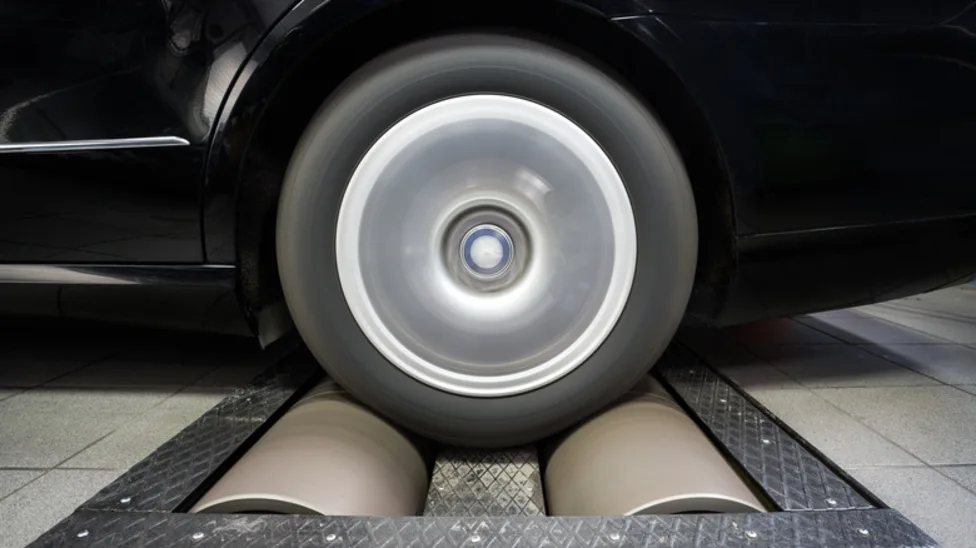
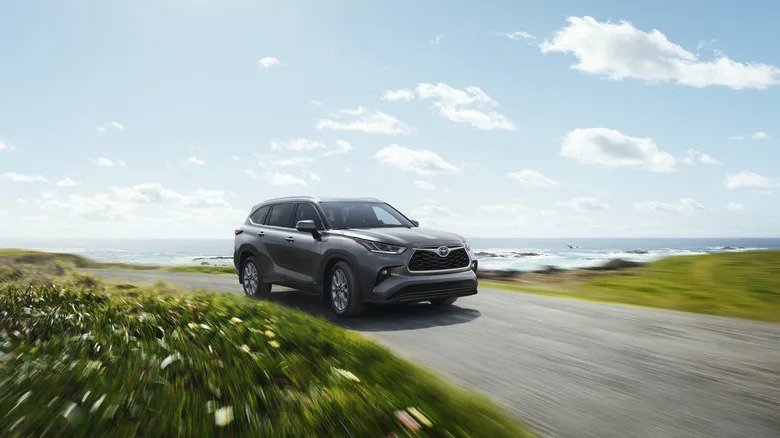
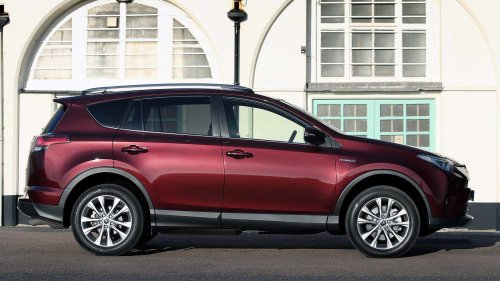
Zorandimzr/Getty ImagesIt's not necessarily a surprise that Consumer Reports and the Environmental Protection Agency (EPA) have their own independent ways of measuring fuel economy. After all, they're two completely independent organizations, and while one claims to be "widely known for its rigorous research and testing," the other is part of the U.S. government. The result is two very different approaches to the matter.As we'll discuss in detail below, Consumer Reports literally measures how much gasoline vehicles use as they're being driven on the road and track. The EPA primarily relies on self-reporting from the automakers, only bringing in about 15% of vehicles to verify that data. Plus, the EPA tests are done entirely in the lab, calculating fuel use from tailpipe carbon rather than measuring it directly.It can make for some big differences in ratings between CR and the EPA as well. Consider the current-gen Toyota Prius that's hybrid perfection. The most recent redesign suddenly left the car stylish and actually pleasant to drive, and it remains, of course, impressively fuel efficient. According to the EPA, the 2026 Prius XLE, in its all-wheel-drive configuration, is rated at 49 mpg city/50 mpg highway/49 mpg combined. Yet Consumer Reports had a very different outcome. Sure, there was a whopping 9-mpg decrease in city efficiency in the CR testing, which put the Prius at 40 mpg in town. But CR drivers did see higher efficiency on the highway, where the Prius achieved 59 mpg. CR's combined fuel-economy rating for the Prius was 51 mpg.AdvertisementAdvertisementRead more: When (And Why) Did Cars Switch From Leaded To Unleaded Fuel?Comparing Consumer Reports and EPA fuel-economy testsFOTOGRIN/ShutterstockCR testing starts with a technician splicing a precision flow meter into the fuel system. Each car is driven in two scenarios. The first takes place on a public highway, where the route is traveled at 65 mph, first in one direction and then the other. This takes into account the potential for one way to be uphill and against the wind, for instance, and the other downhill and with it. Next, CR mimics stop-and-go driving in the city and suburbs with separate tests during accelerating, braking, and idling. CR's Overall Mileage rating is then derived from the results of both sets of tests.Now, the EPA — which, FYI, also controls airplane emissions – does say that its tests are designed to "represent typical driving conditions in the U.S." These tests, however, are all performed on a dynamometer, and — according to Title 40, Chapter I, Subchapter C, Part 86 of the Code of Federal Regulations – four- and all-wheel-drive vehicles can be tested in two-wheel drive modes. In fact, one set of driving wheels can be physically disengaged if necessary to run in 2WD. The tests themselves involve drivers maintaining certain speeds for certain amounts of time in city, highway, and high-speed driving scenarios, all without the car's HVAC system running. Separate hot and cold tests, at 95 and 20 degrees Fahrenheit, are used to evaluate fuel efficiency with the A/C, heat, and defroster on.The real kicker is that fuel consumption is measured at the exhaust pipe. The EPA calculates that number based on how much carbon it finds in each vehicle's exhaust gas.What difference does it make?ToyotaWe already gave you a taste of how the two testing methods can impact fuel-economy ratings in the Prius, but that's just a single data point from a relatively low-volume vehicle segment. So how about more popular picks, such as SUVs and trucks?AdvertisementAdvertisementAnother Toyota, the 2026 Highlander Hybrid, is among CR's most fuel-efficient SUVs and checks in with fuel-economy marks of 27 mpg city/41 mpg highway/35 mpg combined. The same vehicle is rated at 35 mpg in all facets of the EPA testing regime — just keep in mind that the 2027 Highlander is going all-electric to take on the three-row EV competition. In terms of compact SUVs, the Honda CR-V Hybrid joined the Highlander on CR's most-efficient list with grades of 31/38/35. The CR-V is listed at 43/36/40 by the EPA.It's a similar tale if you're considering a pickup. For example, the Ford Maverick didn't qualify for CR's "Best Cars Made in America" list, but it was No. 1 on the website's roster of most fuel-efficient pickups — backed by a fuel-economy line of 33/39/37. Compare that to the EPA's results of 42/35/38. Chevy's ability to offer one of the few diesel-powered light trucks in America gives it the fuel-efficiency title in the full-size category. CR managed 16/32/23 in the Silverado 1500 with its Duramax diesel mill. The same Silverado's EPA ratings were 23/28/25.Want more like this? Join the Jalopnik newsletter to get the latest auto news sent straight to your inbox, and follow us or add us as a preferred search source on Google.Read the original article on Jalopnik.