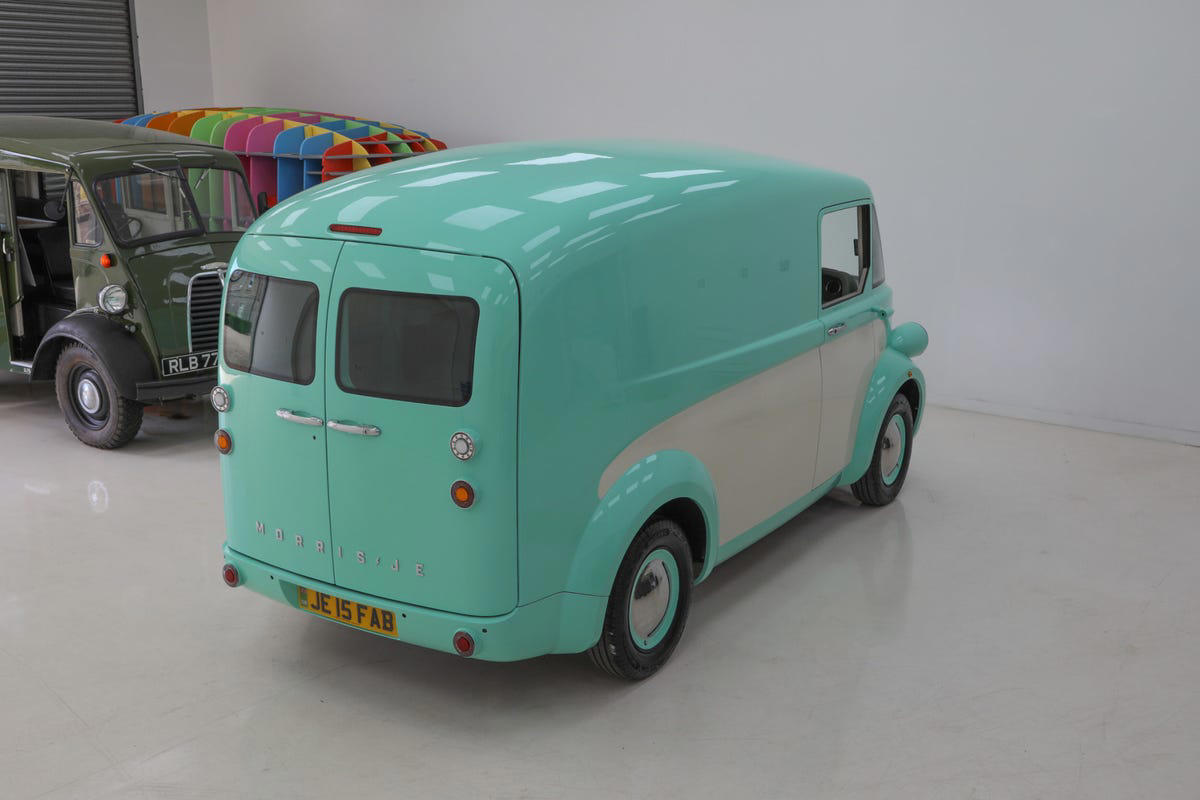




















This is a niche EV we can get behind. With the revival of Britain’s best-known commercial vehicle brands, Morris Commercial has just unveiled its latest pre-production Morris JE electric van while also details of its plan to go from pilot production next year to full-scale manufacturing in 2028.Morris Commercial says its JE draws inspiration from the postwar Morris J-Type van, and while the resemblance is obvious, the two deviate under the skin: the JE is an all-electric vehicle.It’s also not being marketed as a straight-up commercial van. Morris Commercial is calling it a lifestyle and marketing tool as much as a work vehicle, and says early interest has been strongest among premium retailers, creative industries, and specialty trades seeking a vehicle that stands out from conventional delivery vans.Underneath its retro shape is what Morris calls the world’s first recycled carbon-fiber monocoque body for a commercial vehicle, paired with an aluminum chassis. The automaker is targeting a payload of up to 1,000 kilograms (2,200 pounds) and cargo volume of up to 6 cubic meters (212 cubic feet).Details on battery size, motors, or anything else specific to its electric architecture have yet to be disclosed, but Morris Commercial does say to expect fast-charging capability allowing it to go from 20 percent to 80 percent in around 30 minutes, with a driving range of as much as 300 miles.vintage delivery van in mint green with a beige stripeThe platform has also been engineered to support multiple body styles, including pickup, camper, and minibus variants.Morris Commercial says it recently acquired Prodrive Composites, an advanced composite manufacturing company that not only brings in-house one of the JE’s key technologies but also gives the company a production pathway that begins with pilot manufacturing in Milton Keynes in 2027 and expands to commercial-scale production at St Athan, Wales, a year later.Autoweek SOC EV Newsletter sign upMorris Commercial first revealed plans for an electric revival of the J-Type several years ago, but despite the years of delays, it says interest has remained strong, with more than 7,000 registered interested parties from prospective customers in Europe, North America, Australia, and New Zealand.There has yet to be any official word that we’ll get them in the US, but one can hope.