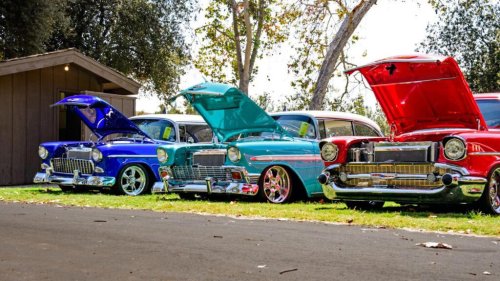
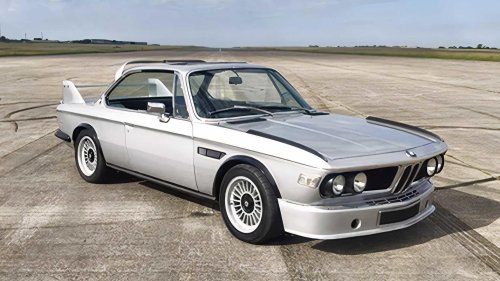
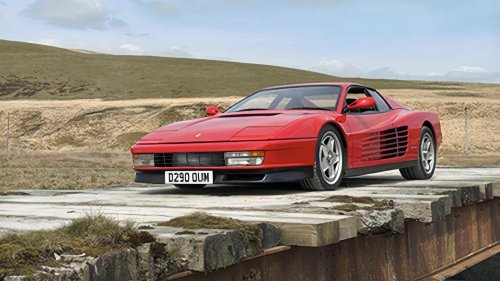
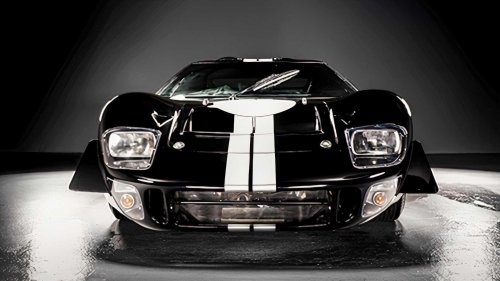
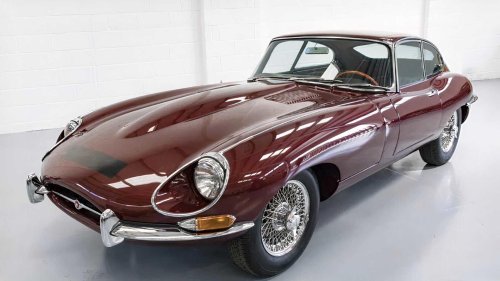
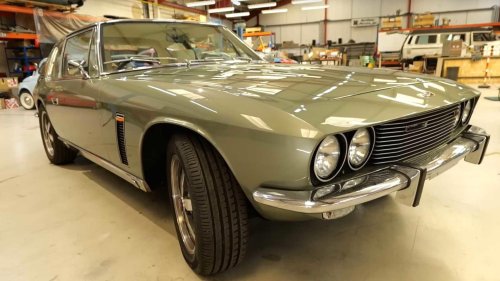
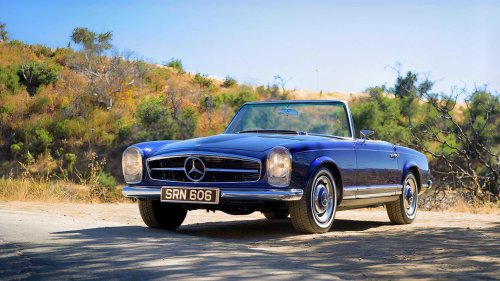
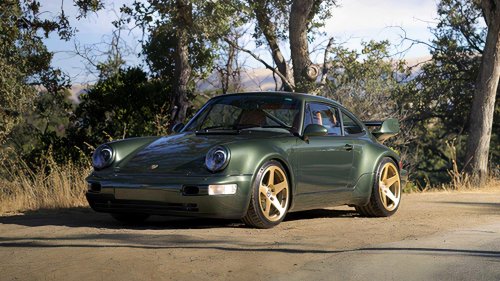
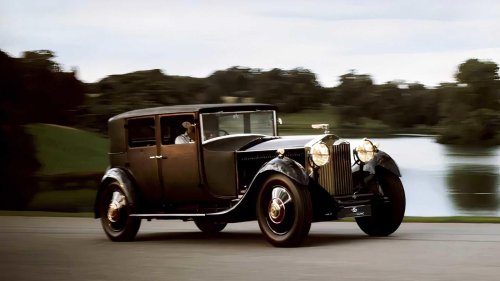
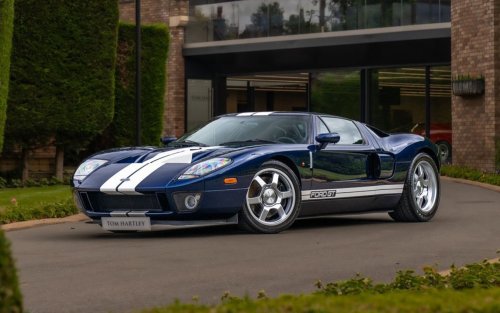
Buying classic cars is becoming a more common approach for gearheads these days, and for a multitude of reasons. They are simpler than today's electronic-focused machines, exude more charm due to featuring simpler designs, and many are increasing in value due to their old-school designs that are being more fondly looked back on as the auto industry embarks on a wildly different path.One of the key elements that sets a classic car apart from more modern vehicles is its powertrain. Engines such as naturally aspirated inline sixes and V8s are becoming an endangered species, so the only way to find them is by going for a classic.Sadly, some don't feel the same nostalgia for such powerplants, and discard them to replace them with the kind of modern tech that classics allow us to escape. Here are some examples of classic cars that have had their stunning hearts ripped out in favor of contemporary EV powertrains.This piece explores eight of the worst engine swaps conducted on classic vehicles. The entries were chosen based on how important their standard internal combustion engines were to the character of the model, and why replacing them with electric powertrains robs them of this individuality. Entires are listed in alphabetical order. 1971-1975 BMW E9 Batcar Engine Change: 3.2-liter NA Inline-Six to Dual Electric Motors Silver 1971-1975 BMW E9 Batcar frontThe 3.0 CSL Batmobile is one of BMW's most successful and iconic race cars, with the vehicle slaying the competition in the early 1970s. It claimed six European Touring Car championships, and also found success at the legendary Nürburgring Nordschleife. It got the name "Batmobile" due to its distinctive exterior design, with its prominent rear wing and various strakes making it look like Batman's whip. Around 1,200 road-going versions of the car were produced to ensure the racer cleared homologation, all of which came loaded with a 3.0-liter naturally aspirated engine.The unit gave the CSL a distinctive engine note, and was a key part of its success on track. One owner decided to throw that away in favor of a Tesla-made dual-motor powertrain, in a bid to make it more future-proof. Despite coming with a potent 450 horsepower, ripping the engine out takes away a big part of what makes the 3.0 CSL such a legend in the classic world. At least it still looks awesome. 1984-1991 Ferrari Testarossa Engine Change: 4.9L NA Flat-12 to Dual Electric Motors Red 1990 Ferrari Testarossa EVIt goes without saying that the engine placed in a Ferrari is one of the most important elements, as it acts as the heart and soul that ties the whole design together. The Testarossa is no different, with Ferrari electing to equip its 1980s supercar with a whopping 4.9-liter flat-12 powerplant. The Testarossa took on the likes of the Lamborghini Countach and Porsche 911 Turbo in an attempt to reign as king of the supercars, and the unusual flat-12 engine was one of the main differentiators of the machine.A Testarossa built by Electric Classic Cars no longer has its trademark flat-12 tucked in the middle of the chassis though, with a dual-motor EV powertrain instead lurking where the engine used to. It may send a monstrous 600 hp to the rear wheels, but the reason why the Testarossa is so fondly remembered by children of the 1980s was not only its stunning silhouette, but also the hidden 12-cylinder beast that fought tooth and nail with the V12 and flat-six powerplants of its closest rivals. Robbing the car of that snatches away its legacy, and leaves the whole thing feeling a little cold. 1966-1967 Ford GT40 Mk II Engine Change: 7.0L NA V8 to Dual Electric Motor Black 1967 Ford GT40 Mk II EVThe thundering Ford GT40 changed how the world looked at Ford, especially given that it managed to score the American manufacturer four consecutive 24 Hours of Le Mans victories between 1966 and 1969. Its dirty but amazing 7.0-liter side-oiler V8 was arguably the key ingredient of the GT40's on-track success, given the engine could power the car to well north of 200 mph down Le Mans' famous Mulsanne straight.The GT40 is what it is largely because of that V8, so there's no reason to get rid of it. EV experts Everrati felt differently, so it ditched the legendary unit in favor of an in-house-designed dual motor powertrain. It may send an intoxicating 789 hp to the rear axle, but it feels completely wrong to state that the so-called Superformance Electric GT40 has an electric range of 200 miles. The GT40 should mercilessly trample emissions regulations under its wheels, rather than whisper down the road like an angry milk float. 1961-1968 Jaguar E-Type Engine Change: 3.8–4.2L NA I6 to Single Electric Motor Red 1965 Jaguar E-Type EV frontThe Jaguar E-Type has achieved a reputation for being one of the prettiest automotive creations ever to grace the world's roads, thanks to its sleek two-door coupe silhouette. When even the great Enzo Ferrari names your car as the most beautiful ever, you know you've hit it out of the park. A lesser-known hero of the E-Type design is its silky straight-six engine, which fits the elegant design of the Jag simply perfectly. It's not only powerful and emits a retro soundtrack, it looks the part when the stunning long hood is peeled back.Sadly, one such Series I machine had its heart ripped out in favor of a single motor powertrain. While 203 hp of instant torque means it is quicker than it ever was in period, the loss of that straight-six song takes away from what makes the E-Type such a legend. The looks remain as lovely as they ever were, but you can't admire them from behind the wheel. The straight-six gave you another reason to relish the E-Type, so why get rid of it? 1966-1976 Jensen Interceptor Engine Change: 5.9-7.2L NA V8 to Dual Electric Motors 1972 Jensen Interceptor front endOne of the biggest automotive sins is to remove the heart of a muscle car, and then replace it with something that deserves to reside in a delivery van. A huge V8 is the entire identity of a muscle car, and taking it away leaves it a complete shell of its original self. That's why a Jensen Interceptor developed by Electric Classic Cars for a high-rolling owner is such a travesty, given that the whole point of the Interceptor was to twin American muscle with European style.The model, which was built between 1966 and 1976, was one of the best examples of a gentleman's muscle car. As a result, the decision to ditch the 7.2-liter V8 that originally resided proudly in the front of this Interceptor in favor of an electric dual-motor powertrain is head-scratching. An Interceptor is only an Interceptor when you hear it rumbling past you, before then proceeding to wake the dead when the throttle is pinned to the bulkhead. A muscle car should never be forced to run an EV unit, no matter how much it's meant to signify "progress". 1963-1971 Mercedes-Benz W113 SL Pagoda Engine Change: 2.3-2.7L Inline-Six to Single Electric Motor Blue 1969 Mercedes-Benz SL Pagoda EVThe elegant Mercedes-Benz SL Pagoda was originally available with a range of smooth straight-six powerplants, and they complemented the vehicle's effortless class perfectly. The car found great success with many glamorous celebrities, such as Audrey Hepburn, Sophia Loren, and Kate Moss. While replacing the six-pot powerplant in the Merc isn't perhaps quite as egregious as dumping the V8 from a muscle car such as the Interceptor, given you'll be spending most of your time posing at slower speeds anyway, that doesn't mean some of the charm of the original isn't lost. Everrati developed an EV version of the classic Merc drop-top to feature a single electric motor that sends 295 hp to the rear tires.Old cars stand out from contemporary ones because of their unique engineering and design philosophies, so not being able to listen to the old Merc's true 1960s soundtrack is like a puzzle missing its last piece. 1989-1993 Porsche 911 964 RSR Engine Change: 3.2-3.75L NA H6 to Dual Electric Motors Green 1991 Porsche 964 RSR EVThe Porsche 964 RSR was one of the most fierce GT racing cars of the 1990s, with the car claiming class wins at Le Mans, as well as winning races at historic venues such as Spa-Francorchamps and the Nürburgring. Like all 911s, the 964 RSR utilized a trusty flat-six engine to power it around the world's greatest racetracks. In this particular racer, the powerplant in question boasted a displacement of 3.8-liters.Everrati elected to develop a recreation of the legend, though with a difference. Starting with a standard 911 964 as a base, the company treats it to a new body kit inspired by the lines of the retro competition special. At the same time, the flat-six is replaced by a 500-hp dual electric powertrain, which allows the German weapon to hit 60 mph in 3.7 seconds. Like the BMW Batmobile and Ford GT40 EVs, though, the 964 RSR lacks a certain charm due to being relieved of one of the biggest ingredients of its success. 1929 Rolls-Royce Phantom II Engine Change: 7.7L NA I6 to Single Electric Motor 1929 Rolls-Royce Phantom II EV frontThe Rolls-Royce Phantom II is an art piece of its time, and it illustrates what life was like as a gearhead 100 years ago. This goes for every part of the car, and like a classic building, it should be preserved as close to its original form as possible so that future generations can admire where modern technology has developed from. Actor Jason Mamoa commissioned the project for his own Phantom II, as he wanted to preserve the timeless 1920s design of the Roller, but make it more usable and efficient.A single electric motor replaced the car's original straight-six, though builders Electrogenic at least tried to keep things looking original beneath the sumptuous side-hinged hood. Getting rid of all the 1920s hardware may make it smoother and more modern, but then why not just rebody a Rolls-Royce Phantom if you want a modern car that looks old? Hopefully, the art of turning a classic beauty into a Frankenstein EV dies out sooner rather than later.


















![“The Bear” Has Me Crazy For All Things Food, Chicago and … Cars? Here’s What They [Should] Drive](https://cdn.topcarnews.net/thumb/id/aHR0cHM6Ly9zLnlpbWcuY29tL2xvL215-c3RlcmlvL2FwaS85NGJhODE3ODBiNmMx-Mzk0MDAyODU1NjRhYmFiNTYwZWE5MDc2-YjdmODUxYjQ1ZmMyNjVhYzg2ZDdiNmU5-MzM5L2xpZ2h0eWVhcl9uZXR3b3JrYXBp-L3Jlc2l6ZWZpbGxfdzk3NjtxdWFsaXR5-XzgwO2Zvcm1hdF93ZWJwL2h0dHBzOiUy-RiUyRm1lZGlhLnplbmZzLmNvbSUyRmVu-JTJGYV9naXJsc19ndWlkZV90b19jYXJz-X2FydGljbGVzXzM3OSUyRmQyM2NiNjgz-NWQ5MzM1YjE0NGQ3ZGQ0ZjNkMjY0YWU0/ffc3ecf72244d9768588a813c456e8a1.jpg?t=20261007&post_id=29973)
![“The Bear” Has Me Crazy For All Things Food, Chicago and … Cars? Here’s What They [Should] Drive](https://cdn.topcarnews.net/thumb/id/aHR0cHM6Ly9zLnlpbWcuY29tL2xvL215-c3RlcmlvL2FwaS9iNTA3YWU2YTZhZmUy-YjBjMjkyZjQ3MmQ5NTYzNTEyZTFiYmE2-ODgzMjZlYjA5MjFkNGJmY2I4NDVmOGEx-YjRmL2xpZ2h0eWVhcl9uZXR3b3JrYXBp-L3Jlc2l6ZWZpbGxfdzc4OF9oNDQzO3F1-YWxpdHlfODA7Zm9ybWF0X3dlYnAvaHR0-cHM6JTJGJTJGbWVkaWEuemVuZnMuY29t-JTJGZW4lMkZhX2dpcmxzX2d1aWRlX3Rv-X2NhcnNfYXJ0aWNsZXNfMzc5JTJGYzY3-ZTBlMzBjZmYxODI0YWJjYjc4NjljNTc0-ZDM0ZjQ/2fea35d9d1de7464f576830b09276a58.jpg?t=20261007&post_id=29973)
![“The Bear” Has Me Crazy For All Things Food, Chicago and … Cars? Here’s What They [Should] Drive](https://cdn.topcarnews.net/thumb/id/aHR0cHM6Ly9zLnlpbWcuY29tL2xvL215-c3RlcmlvL2FwaS9mY2E1NmI2MTYyY2Iz-YTFhZjdlOTdmY2I2ZjE1NGJiNWQ5YTNh-NDE3ODYwM2QwZGE3ZmYxNjBiYzE5MTdi-MGUzL2xpZ2h0eWVhcl9uZXR3b3JrYXBp-L3Jlc2l6ZWZpbGxfdzc4OF9oNDQzO3F1-YWxpdHlfODA7Zm9ybWF0X3dlYnAvaHR0-cHM6JTJGJTJGbWVkaWEuemVuZnMuY29t-JTJGZW4lMkZhX2dpcmxzX2d1aWRlX3Rv-X2NhcnNfYXJ0aWNsZXNfMzc5JTJGMmVk-ODRmMDQyOTkwMmMwOWQzNjg1NjQ4Yzgz-YjZkNTg/b243ae42069a70345d17e0ebf4f78858.jpg?t=20261007&post_id=29973)
![“The Bear” Has Me Crazy For All Things Food, Chicago and … Cars? Here’s What They [Should] Drive](https://cdn.topcarnews.net/thumb/id/aHR0cHM6Ly9zLnlpbWcuY29tL2xvL215-c3RlcmlvL2FwaS83OGEyZWE5NzRlYTQ1-NTBiMWI0NzljNGNkOWRlMzE1ZWJjMThm-YjNjMzY2YjkyYmRjZjBkMmI3NWQwYTcw-MDk1L2xpZ2h0eWVhcl9uZXR3b3JrYXBp-L3Jlc2l6ZWZpbGxfdzc4OF9oNDQzO3F1-YWxpdHlfODA7Zm9ybWF0X3dlYnAvaHR0-cHM6JTJGJTJGbWVkaWEuemVuZnMuY29t-JTJGZW4lMkZhX2dpcmxzX2d1aWRlX3Rv-X2NhcnNfYXJ0aWNsZXNfMzc5JTJGYjc4-ZTlmNTQ5MjI4MjY4NmM1MmRjNDRhMzBm-YzVmNTI/ae9a7a2082ffec7dea7cae9c54fbef60.jpg?t=20261007&post_id=29973)
![“The Bear” Has Me Crazy For All Things Food, Chicago and … Cars? Here’s What They [Should] Drive](https://cdn.topcarnews.net/thumb/id/aHR0cHM6Ly9zLnlpbWcuY29tL2xvL215-c3RlcmlvL2FwaS9jNWFkYThhZjdiY2U5-ZWNkYzljMzljOTA2MmE5MDgzNjRlNjE3-NzQzYWE0Y2NhODM5NDAyMjBhNWM0Nzhl-YmRjL2xpZ2h0eWVhcl9uZXR3b3JrYXBp-L3Jlc2l6ZWZpbGxfdzc4OF9oNDQzO3F1-YWxpdHlfODA7Zm9ybWF0X3dlYnAvaHR0-cHM6JTJGJTJGbWVkaWEuemVuZnMuY29t-JTJGZW4lMkZhX2dpcmxzX2d1aWRlX3Rv-X2NhcnNfYXJ0aWNsZXNfMzc5JTJGNGI4-YzA5NDYyZGYwMjRhYmM0NDYwYTFlYWJh-ZWY3OGU/a0f5c869e3fbe0afde2c6cafb79b801c.jpg?t=20261007&post_id=29973)
![“The Bear” Has Me Crazy For All Things Food, Chicago and … Cars? Here’s What They [Should] Drive](https://cdn.topcarnews.net/thumb/id/aHR0cHM6Ly9zLnlpbWcuY29tL2xvL215-c3RlcmlvL2FwaS81MGExZDkxNDY2MTEz-NGZhMjJlMjNkMGIxZTg1Y2UwMDM3ZDY5-MTNlMjA5MzI2MDgwMDlhMTI4YjdkOTA2-NWE3L2xpZ2h0eWVhcl9uZXR3b3JrYXBp-L3Jlc2l6ZWZpbGxfdzc4OF9oNDQzO3F1-YWxpdHlfODA7Zm9ybWF0X3dlYnAvaHR0-cHM6JTJGJTJGbWVkaWEuemVuZnMuY29t-JTJGZW4lMkZhX2dpcmxzX2d1aWRlX3Rv-X2NhcnNfYXJ0aWNsZXNfMzc5JTJGMzBm-YmMwOTliODM5ZWRmMTRiY2VlN2I2Yjc3-MDIxZDI/b5a34a064a90370344c06989723abf99.jpg?t=20261007&post_id=29973)