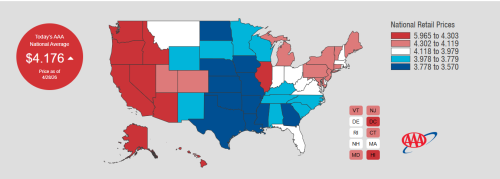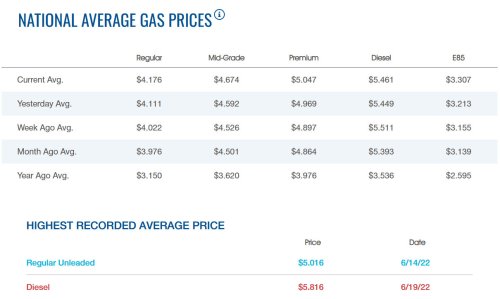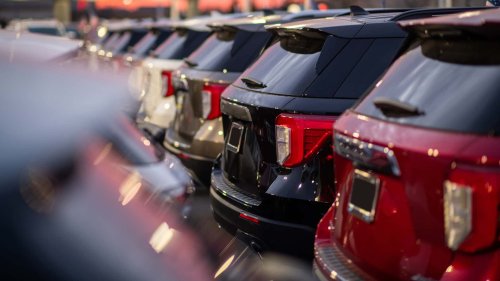

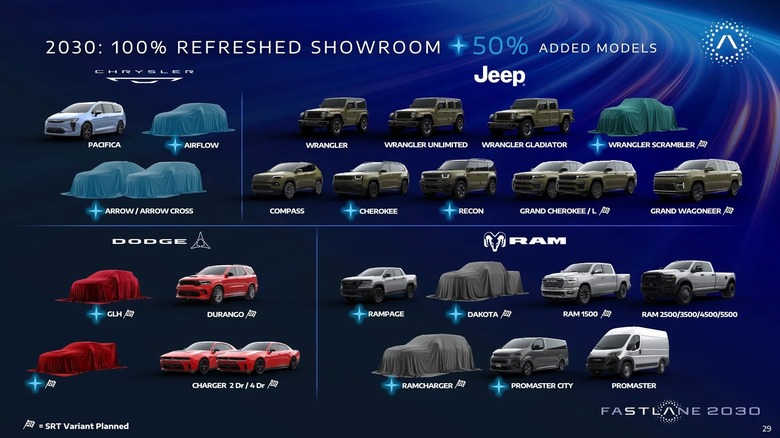






















Bettmann/Getty Images I'm not sure if you've noticed, but everything has gotten a hell of a lot more expensive over the last few years, and that fact has driven just about one million prospective buyers out of the new car market since the beginning of the 2020s. It's not expected they'll be back anytime soon, either. There was — until very recently — some hope among auto executives, analysts and economists that new car sales in the U.S. would return to where they were prior to the Pandemic, but that's now pretty much out the window, according to The Wall Street Journal. Some of the world's largest automakers, like Ford, General Motors and Toyota, have apparently said they're planning for sales of new cars to shrink or stagnate this year, due — in no small part — to inflation, rising gas prices and high interest rates. When you combine those factors with the hard truth that Automotive News says the average MSRP of a new vehicle is currently sitting at $51,593, droves of would-be customers are balking at new car purchases. Prior to Covid making everything worse, folks in the U.S. were buying around 17 million new vehicles per year, and it's now expected that we won't hit those levels again until at least the end of the decade, with 16 million or fewer sales being predicted for 2026. The damage could be even worse if gas prices remain elevated due to the U.S. and Israel's war with Iran. That's going to be a tough pill to swallow for automakers that are already dealing with higher costs due to President Trump's tariffs. Apparently, these auto executives are aware that most new cars are out of the reach of most Americans, and it would be hard for them not to realize that. I mean, about one quarter of new cars in the U.S. cost between $25,000 and $35,000, according to Edmunds. That's less than the amount that cost over $55,000 — and I'm not sure that is sustainable. No incentives in sight Praetorianphoto/Getty Images Usually, when sales stagnate as severely as this, automakers can add juice to their numbers by rolling out all sorts of deals and incentives, but that's not the case right now, WSJ reports. Instead, they're doing something far more dastardly that hurts affordability even more: selling fewer cars at higher prices. Bigger SUVs and trucks can usually be sold at higher margins than smaller, higher-volume cars that are cheaper (i.e., cars people can actually afford.) Here's what analysts told the The Journal: "I don't want to say automakers are OK with this level of sales, but they kind of are," said Ivan Drury, an Edmunds automotive analyst. "It's not like back in the day when they'd be hacking away at the price to lift sales." [...] "I don't think there's a dealer in this country who would say 'I don't want a more-affordable product to offer,'" said Patrick Manzi, chief economist of the National Automobile Dealers Association. "For now, things are going well. But what happens if we hit another recession?" Sure, used cars are an option, but as we've reported in the past, used cars are getting expensive as hell, too. Most people are just foregoing buying a new vehicle altogether, and that's why the average vehicle on the road in the U.S. is now a staggering 13 years old — a new high, according to WSJ. Cheaper models on the way Stellantis Some companies, like Ford and Stellantis, have promised cheaper models. Last week, Stellantis said it would introduce nine new models that start under $40,000 in North America by 2030 — two of which will actually start under $30,000. The vehicles would be a mix of pickup trucks and crossovers. Still, for most Americans, $40,000 is hardly "cheap," but I suppose it is a step in the right direction. Right now, it doesn't sound like there's not much of a chance of a sedan return at Chrysler or Dodge. However, Ford might be cooking up something in the three-box category. Earlier this year, CEO Jim Farley said the company hadn't completely closed the door on the sedan market after leaving it five years ago. He's also promised other, more affordable vehicles with starting prices around $30,000. It remains to be seen, though, if these companies want to give up a piece of their precious profits in the name of doing what they originally set out to do: providing reasonably cheap transportation options to budget-conscious Americans.