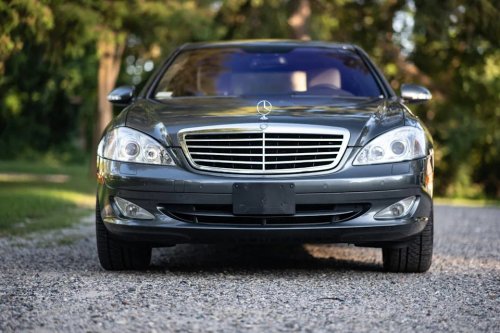
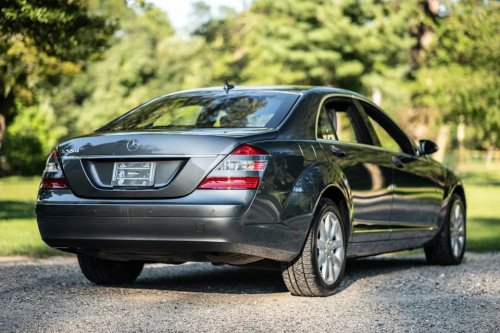
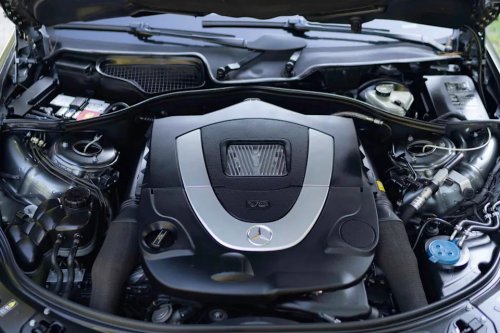
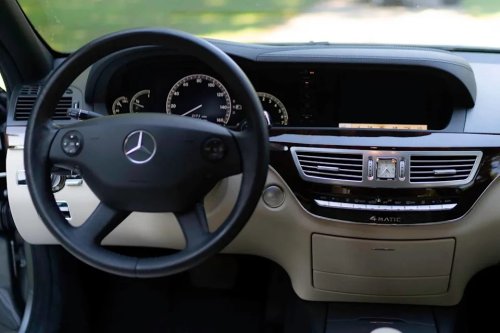
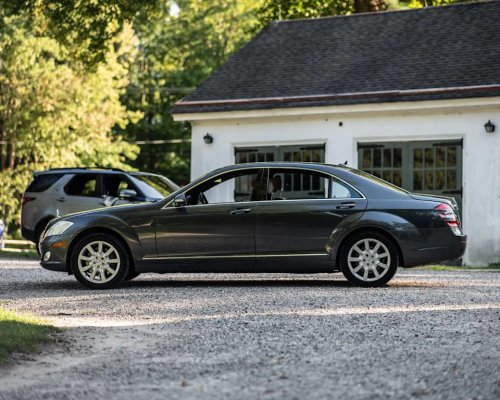
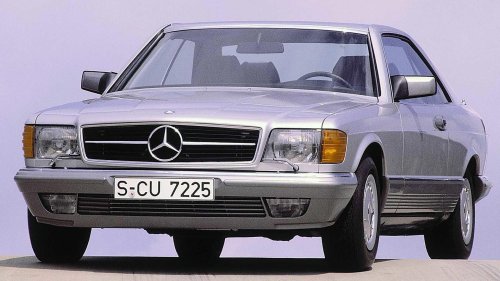
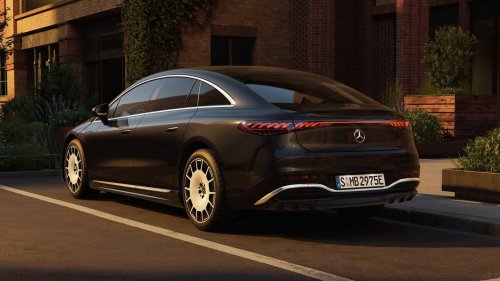
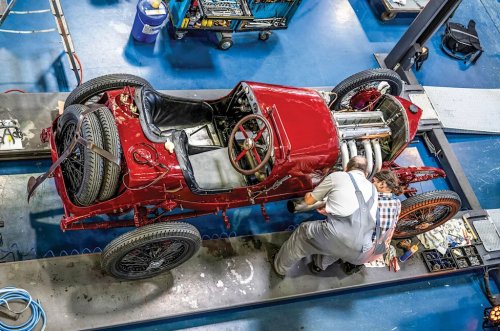
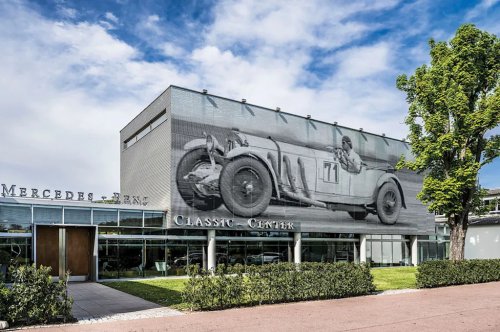
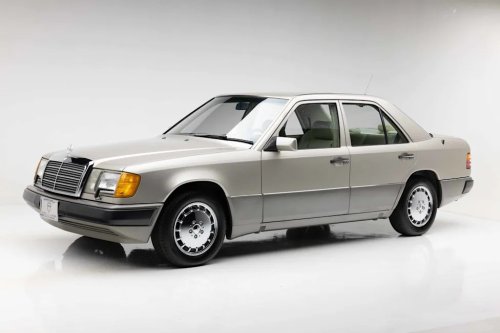
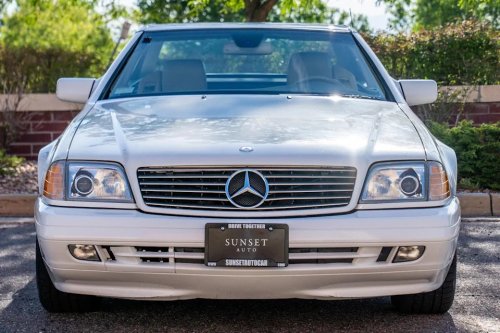
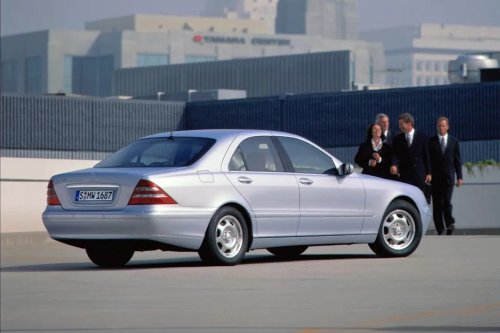
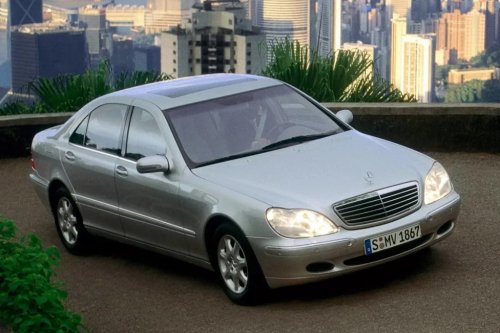
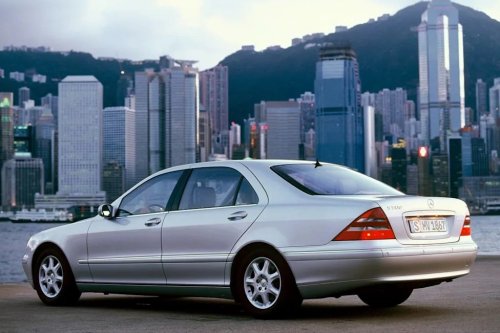
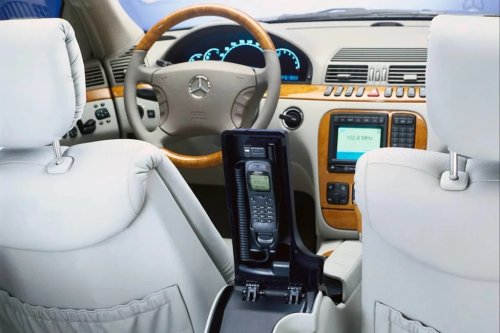
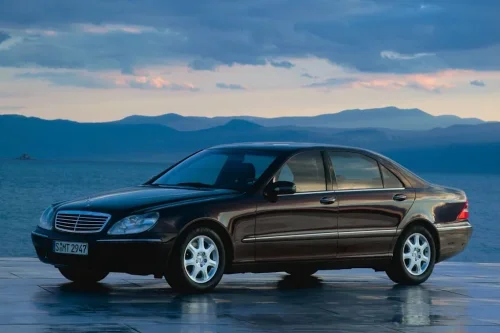
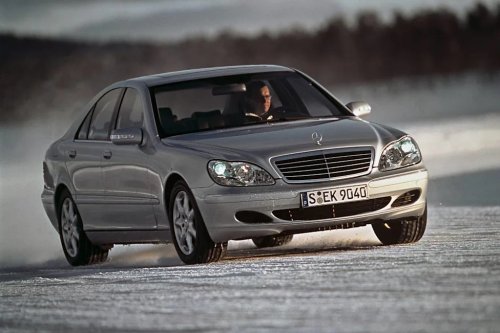
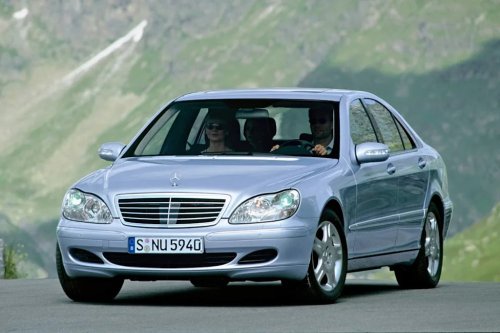
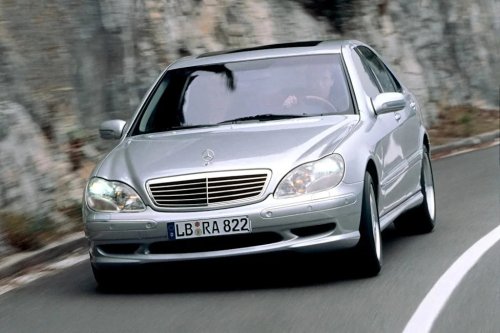
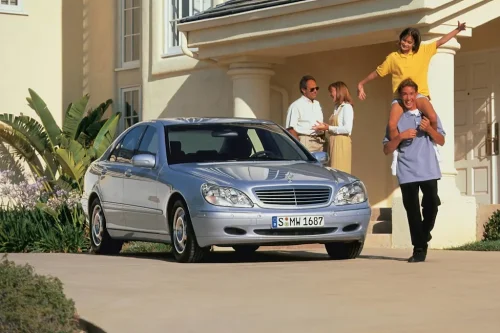
Autoblog and Yahoo may earn commission from links in this article.Setting the StandardThere was a saying that if you wanted to see the car of tomorrow, all you had to do was look at the Mercedes-Benz S-Class of today. That said, it doesn't really apply these days, given the pace of development, but the model is still held in high regard and serves as a benchmark for many.Each generation of S-Class has been met with high expectations. Not only that, many of the features we take for granted these days either first appeared in the flagship sedan, or at the very least, made it standard. With that in mind, redesigning it was always going to be a monumental task. That brings us neatly to the fourth-generation S-Class, internally known as the W220 and often referred to as the worst model of the lineage.Mercedes-BenzThe BackstoryWhile there's loads of fanfare surrounding the third-generation S-Class (W140) today, it was heavily criticized for its size, weight, and excesses when it debuted in 1991. That said, it was an absolute tank of a luxury sedan, oozing in presence without being ostentatious. It was also incredibly well-built, solid, and cost way more to develop than Mercedes had anticipated. The reason for that was the second-generation 7 Series and its available V12 that gave the engineers from Sindelfingen a mighty good scare. The goal was to build a flagship sedan, no matter the cost.AdvertisementAdvertisementThe W140 S-Class was successful, but the delays and budget overruns were something the company didn't want to go through again. So for the fourth-gen Mercedes S-Class, things had to change drastically. Not only that, something had to be done about its size and weight following criticism of the W140, and, most importantly, it had to be profitable while retaining its position as an innovator in its segment. After all, Toyota, more specifically, Lexus, had proven to the world that it's possible to build a world-beating flagship sedan for less.That's a tall order, given that the instruction to cut costs came not long after its final exterior design was approved. From there, Mercedes-Benz had just 38 months to finish the car. In development terms, that was a sprint, and that played a key role in its complicated legacy.Mercedes-BenzWhy the Cost-Cutting?Edzard Reuter was the CEO of Daimler-Benz from 1987 to 1995. His vision for the automaker was to turn it into an "integrated technology group" by acquiring defense, tech, rail, and even electronics companies. According to Car and Driver, Reuter was at odds with the brand's engineering-first mindset. The publication also said, "His interest in the car division was that it mined the money to pay for his run at an empire." The Irish Timesalso noted that the German press dubbed him the "most destructive manager in the country's history."In the end, Reuter's plan fell apart, bled Daimler-Benz dry, and left it in the red. He eventually left his post after eight years, and his successor, Jürgen Schrempp, had to turn things around fast. He got the job done, raking in profits just a year after his appointment. The accountants now had a greater say in how the cars, including the S-Class, were to be made.Mercedes-BenzPraised at FirstThe W220 S-Class made its world premiere in July 1998, with production beginning in September that year. Two wheelbases were offered, initially with four engines available in either V6 or V8 guises. While the W140 fans didn't like that it was smaller, it did little to dent the praise the car received when it first came out.AdvertisementAdvertisementMercedes-Benz S-Class reviews at the time were glowing, with some publications even proclaiming it to be the best luxury sedan in the world over 25 years ago. Swooned would be a fitting word to describe the reactions of the motoring press at the time, and it's hard not to blame the writers and reviewers of that era. The W220 wasn't as pillowy soft as its predecessor, but it was still incredibly comfortable. It was also faster, lighter, used less fuel, more maneuverable, and more dynamic than the car it replaced, not to mention being stuffed with much more high-tech equipment and innovations.That said, car reviews can give you a more in-depth sense of what it's like to live with a car for a week or two, tops. We can tell you how it drives, how it rides, if it's easy to use, and so on. What we can't predict is ownership experience, and that's where the rot started seeping in for the W220, quite literally in this case.Mercedes-BenzReality BitesThis story about the W220 wouldn't be complete without a rundown of its issues. The water-based paint didn't exactly bond well with the metal, and rust started to appear on relatively young cars. That's something unacceptable in any new-ish car, more so in a flagship model that carried a base price of just under $70,000 at the time.Then there were the electronics that went haywire without provocation, paralyzing the car and turning it into a garage ornament. With 40 ECUs to manage, it was a costly and labor-intensive job with a lengthy downtime, depending on the severity. Oh, and those ECUs led to a good number of cars suffering from parasitic battery drain, so a car that was perfectly fine parked the night before would just fail to start.AdvertisementAdvertisementThe most documented issue was the air suspension. The components fitted simply weren't up to par in terms of durability, and soon enough, it started leaking. It starts with small hairline cracks with the air compressor working overtime to keep the vehicle's body level. Eventually, that crack grows to the point where all the compressor's efforts will be for nothing. And because of the extra load on the pump, it also breaks.Mercedes-BenzTarnished StarWe know all cars break down eventually, but the frequency of the problems was an affront to everything that made Mercedes-Benz such a respected marque. Consumer Reports rated it as one of the least reliable luxury vehicles available at the time. This was from a company that proclaimed its vehicles were 'Engineered like no other car in the world.'Now, it's not just the W220 that tanked Mercedes-Benz's reputation at the time. All of its contemporaries had largely suffered the same fate due to drastic cost-saving measures. If anything, the E-Class from the same period dipped in quality even further compared to its legendary predecessor. It was a betrayal of trust, and those who encountered problems expected the best but received nothing in return.Mercedes-BenzRedeeming ItselfThe car was eventually facelifted in 2002, fixing a good chunk of the teething issues that shouldn't have been there in the first place. Its electronics were simplified, and more robust components were fitted. Even the engine lineup was refreshed, along with the exterior, interior, and a few other bits of tech.AdvertisementAdvertisementNow, the problems didn't disappear overnight, but the car's reliability did improve over time. The dreaded rust problem had gone away, too, but again, it shouldn't have happened at all. Still, the damage to its reputation had been done, but those who took the risk and bought a facelifted version likely enjoyed the car the way those who bought the first batches couldn't. By then, it was finally the car that Mercedes wanted it to be: a proper S-Class.Mercedes-BenzA Complicated LegacyAt the end of the day, it's still an S-Class and commands presence on the road. Its biggest issue was the execution and implementation of the advanced technologies, coupled with the ill-advised move to pinch pennies on a flagship vehicle. Had Mercedes given it the same care, attention, and focus as its predecessors, we probably wouldn't be writing this story in the first place. There are devoted fans of this model who show the car's full potential, something Mercedes couldn't do at the time.In some ways, the car was a victim of unfortunate circumstances. Had the ill-advised acquisitions not happened, the company wouldn't have gone through its drastic cost-cutting period. Maybe the Daimler-Chrysler merger wouldn't have happened, either, given that the brand was in a much better financial standing. Perhaps in a parallel universe, the perfect W220 exists, but that's not where we are, and that's not what transpired.Mercedes-BenzThe W220 TodayWe have to admit, the sight of a pristine W220 does catch our attention. It's not just because it qualifies as a classic now; it's more about applauding the owner for sticking with it. Perhaps it's madness or blind devotion on the part of said owners, but it's good to see that the model still gets some love despite the rocky start. The thing about the W220 is that it was never fundamentally a bad car, but it had to be extracted by the most patient owners to truly appreciate it. Sure, the car still has its detractors, but the car has atoned for its sins for the most part.AdvertisementAdvertisementIt did everything one expects from a flagship luxury sedan, and the AMG versions added more firepower on the way to the boardroom meeting. The Distronic system paved the way for advanced driver assistance, introducing adaptive cruise control, and Keyless Go eventually became the push-button start we see everywhere these days. For ushering those technologies in, the W220 deserves more respect.The W220 also serves as a cautionary tale for Mercedes. It was a result of a lack of focus, leaving the brand and its customers suffering in the end. When its successor, the W221, was being developed, the harsh lessons learned from the car that came before it were applied, and it became even more advanced without going through the same growing pains. Perhaps Mercedes needs a photo of the W220 and the W126 plastered in its offices while it develops the next-gen S-Class, captioned 'lest we forget.'Mercedes-BenzMercedes-BenzView the 8 images of this gallery on the original articleThis story was originally published by Autoblog on Jul 5, 2026, where it first appeared in the Features section. Add Autoblog as a Preferred Source by clicking here.



















 +43 others