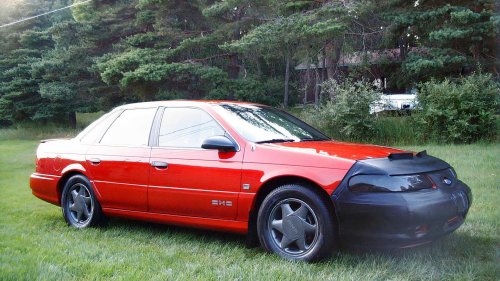
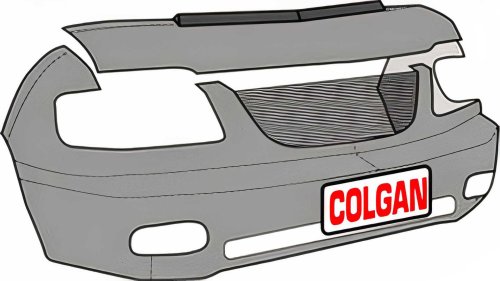
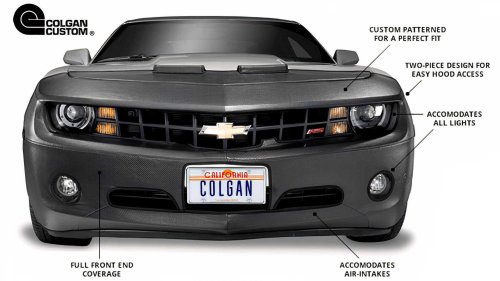
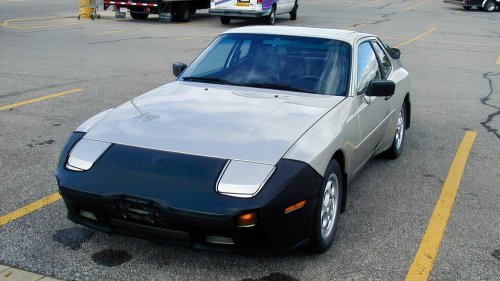
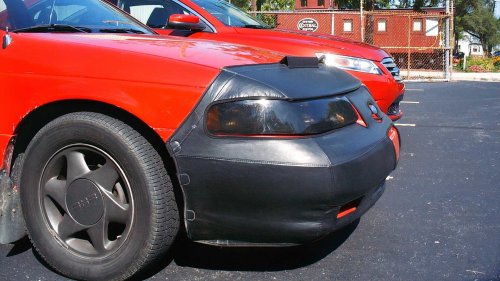
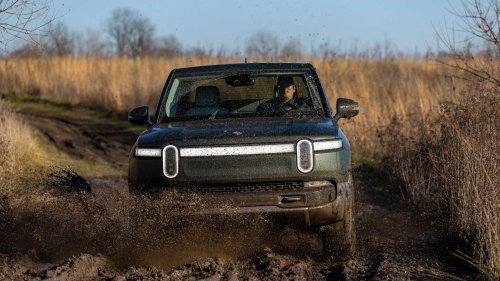


















In the late 1980s, then into the 1990s, something weird happened on the roads. You would regularly see cars with a chunky material over the front bumper and part of the hood, but with holes for air intakes and headlights. The covering was called the car bra.Other colors were available, but the car bra was typically black, made of heavy vinyl, and had a softer inner lining. It was designed to protect the paint from chipping or denting from debris like stones, while also keeping the protected parts clean of bug splatter and road tar. The device could be seen on roads across Europe and other continents, but it was America that strapped this automotive accessory to cars the most.Christopher Smith/CarBuzz/ValnetPlease appreciate not just the effort that went into researching this article, but also the willpower required not to litter it with jokes and bad puns about cars wearing bras. Your support is appreciated.The car bra was a subject of amusement and disdain at its peak, and was often cited as a pointless invention. While the fabric protects the front end of a car, the accessory is generally considered to be ugly. Of course, that's a matter of taste, and many people don't have any.There was, of course, a group of people who thought it improved the look of their vehicle by giving it a chunkier appearance and adding a temporary two-tone color scheme. The accessory's efficacy was a subject of much debate, let alone whether it did more harm than good to a car's paintwork in the long term.Let's take a closer look at the car bra, its inventor, and how it ballooned into a common sight on the road for a time. The Invention Of The Car Bra Colgan According to Bill Colgan, the founder of Colgan Custom Manufacturing in Burbank, California, he designed the first car bra as a commercial product and gave it the name. He said that a group of Lockheed engineers showed up at his door with "a ragged piece of canvas with sewn-in wooden slats, rubber bands, crude hooks and other miscellaneous innovations," asking if he could make "a dozen" of them.The engineers explained that it was a protective cover used by the Porsche factory for road testing new cars and that it was unofficially loaned to them. They wanted it reproduced to use on their own Porsche 356 models. Colgan redesigned the cover and made 12 over a six-week period, but the engineers returned asking for 50 more. He made a total of 150 covers. We presume the Lockheed engineers were selling them to other Porsche 356 owners, but Colgan had to stop due to an "overload" of work.Ten years later, a friend of Colgan asked if he could make a version for the Porsche 911. Colgan had some time, so he designed and made one, then put an ad for the accessory in Road & Track magazine. He used the German name "Steinschlagshutzshulle," which essentially translates as "rockfall protection sleeve."For short, he called it a bra, and felt justified in claiming he invented it, "since there isn't a trace of similarity to that original pile of canvas to what is now known as a 'Bra.'" Then, Colgan turned it into a full-blown business. However, the bra was fairly easy to replicate, and other makers flooded the market as the accessory gained popularity. The Rise Of The Car Bra Colgan Understandably, classic car owners want to protect their beloved vehicles while driving, so the idea behind car bras is logical. However, the accessory soon became popular even among owners of mainstream vehicles who covered many miles commuting. Then the next logical step was the world of RVs (Recreational Vehicles), where many people would tow a small car behind their motorhome so they had something to drive around after reaching a campsite. A car being towed for extended miles on freeways and then into out-of-the-way places was a great candidate for protection against stone and rock chips.Chris Bruce/CarBuzz/Valnet In the 1980s, touch-up paint wasn't so easy to get hold of, let alone available in a little pen-like device that was quick to apply and delivered a decent result. Plus, paint wasn't as technologically advanced or as resilient to small stone impacts as it is now, and the roads were quite different to drive on in a few ways. There were more unpaved rural roads, and freeways were more littered with debris.That's more observation than documented fact, but ask anyone over 50 about the remains of blown tires now compared to the 1980s. They might look confused for a moment, think about it, and agree with the statement. Problems With The Car Bra Christopher Smith/CarBuzz/Valnet So, the car bra made sense for road warriors laying down the miles on freeways, RV enthusiasts towing cars, and classic car owners taking care of their investments. These are the kinds of car bra users for whom it makes sense to put in the effort, because it requires some effort to attach the bra, then take it off and put it back on every time the car is washed.Owners were supposed to take off the bra if it got wet because the danger of mildew forming underneath was high. And, if it got wet, the car should be washed before the bra was put back on, otherwise any dust or dirt will be ground into the paint. Many owners never bothered with this hassle, though.There were many reasons cited for buying a car bra. Some folks claimed they wanted to keep their vehicle in good condition for when they resold it. The counterargument was that the accessory made a car look ugly while the model was already depreciating in value. The amusement or disdain tended to increase at the expense of the car the bra was attached to, particularly among those who thought it made a sports car look better. Today, it's similar to how people mock Dodge Challenger owners who insist on puttingsilly splitter guards on their cars. Why We Don't Need Old-School Car Bras Now Rivian / XFor general car ownership, with drivers covering the much-cited national average of around 13,000 miles per year, modern paint is pretty resilient and, if needed, touching up minor damage on the odd occasion isn't expensive. A couple of small chips isn't going to make a difference in trade-in value or give the next possible owner much to haggle over. For those who do want or need protection, we have the wonder of paint protection film (PPF).PPF is sometimes known as a clear bra, generally made of thermoplastic urethane, and often self-healing to quite an impressive degree. Thermoplastic is simply a plastic that can be molded by heat, and a film is thin enough to be barely noticeable. Sometimes, higher-end automakers put it on body panels that are prone to chipping while driving. More often, it's an option. It's also readily available from independent shops, installed by trained professionals, or sold as kits for home application.Unsurprisingly, PPF was first developed and used by the military. Less surprisingly, during the Vietnam War, and specifically for helicopter rotor blades, it was also called "helicopter tape." Now, it's predominantly made by 3M, stays clear for years without yellowing, and the thermoplastic part of its design allows it to be molded and conform to the bodywork with gentle heat, so water doesn't creep underneath. Modern PPF can also include a self-healing top coat so light scuffs and abrasions don't last long.With the advent of PPF, you can protect other areas without making a car look ugly, like the edges of doors that a child might inadvertently open into a brick wall. That example is indeed very specific, which is why this writer is an advocate for the liberal use of PPF.