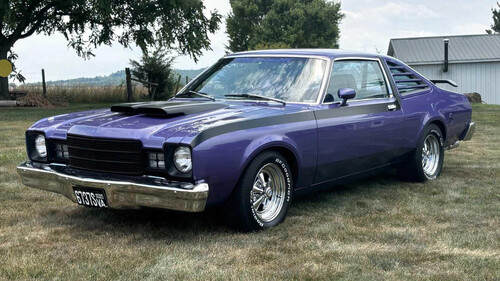
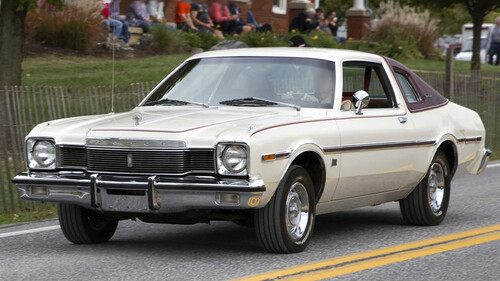
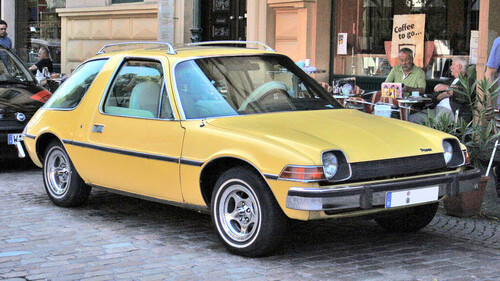
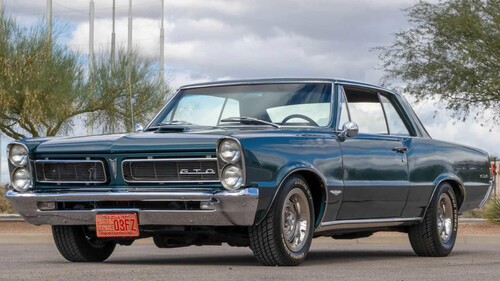
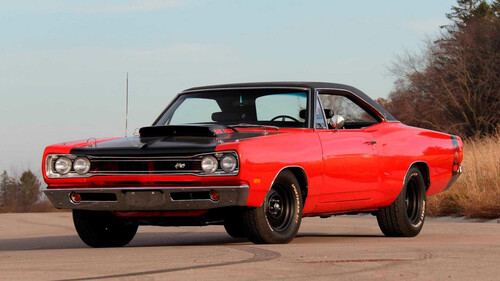
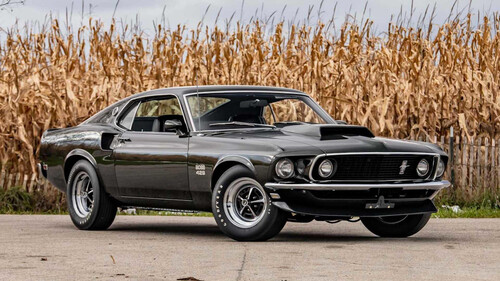
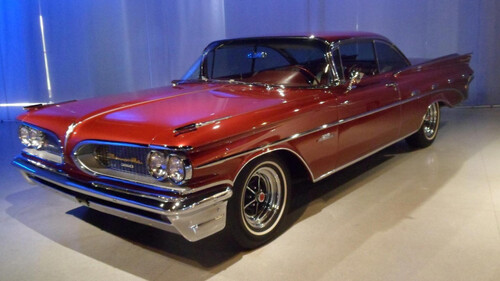
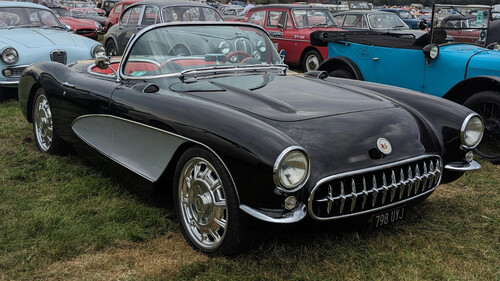
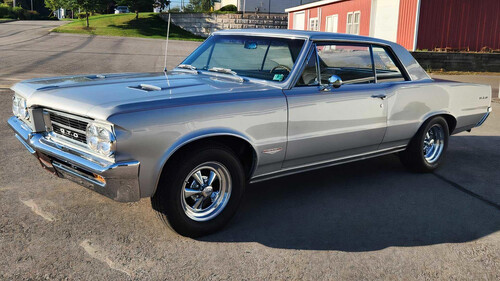
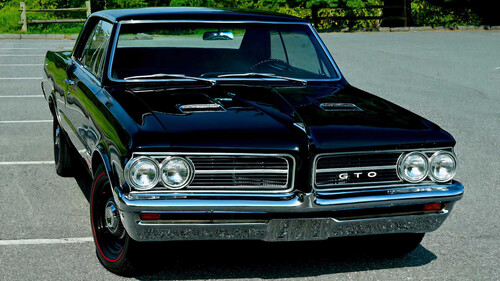
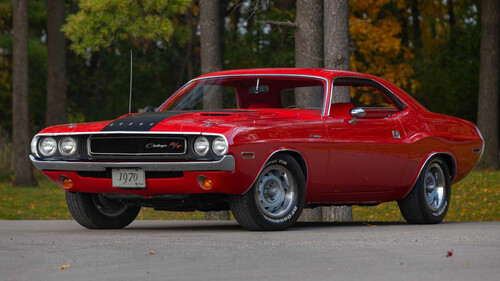
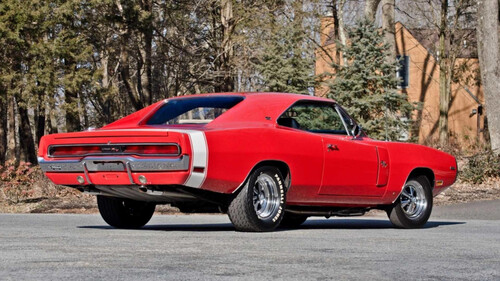
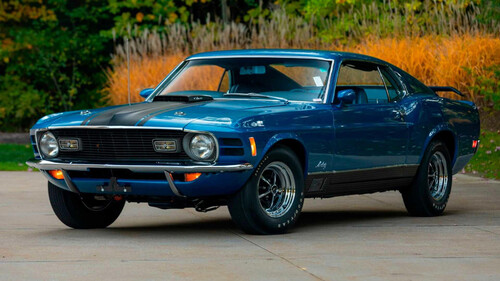
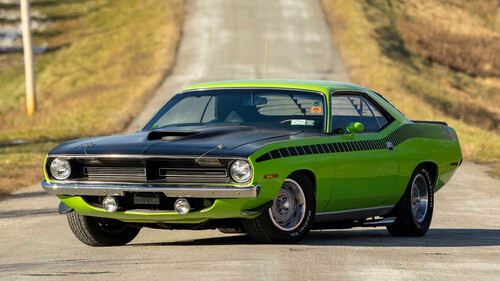
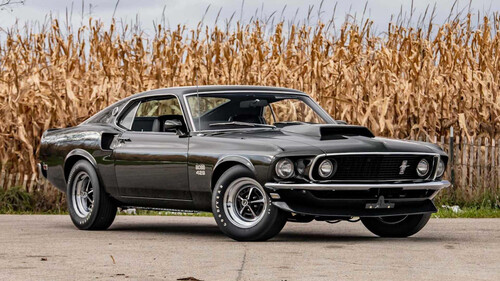
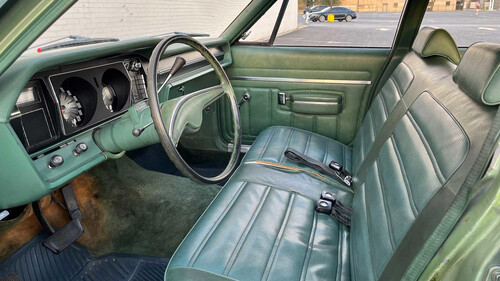
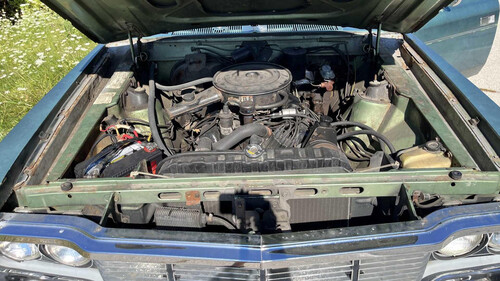
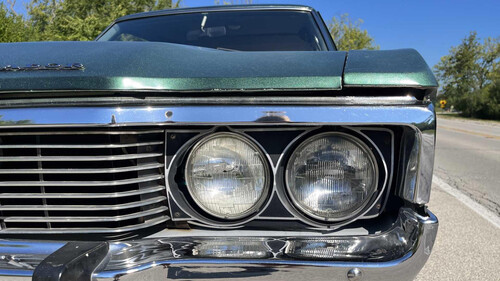
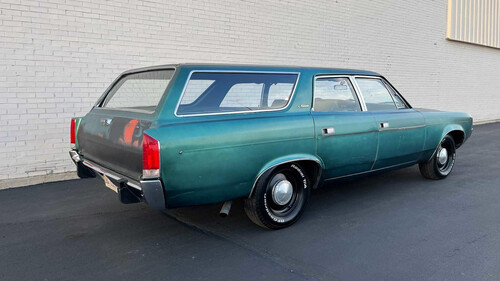
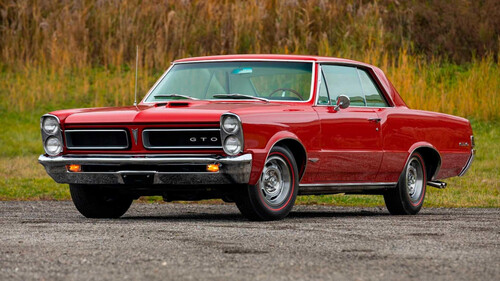
Attend a car show of any kind and the legends start to seem true: that back in the day, the streets were filled with nothing but Super Sports, Cobras, Hemi-powered Mopars painted in Day-Glo colors, and sports cars scrambling everywhere amongst taxicabs and trucks. That’s a nice dream, but the reality was for every monster muscle car there were at least twenty run-of-the-mill, basic models of the same car that were doing yeoman duty. You just don’t see them anymore for one of two reasons: either they were converted into those dream machines, or they were used as parts cars and thrown away. There’s a reason why you don’t see many six-cylinder Satellites or basic 307-powered four-door Chevelles running around.It doesn’t matter if you remember seeing basic sedans painted inoffensive colors like gold, green or silver or if you are young enough to have missed those days; the truth of today is that you’re going to struggle to find basic forms of any of the legends of the late 1960s and early 1970s. Instead, you’re likely to find the hot-ticket example (actual examples or tribute builds) and it’s those models that have captured the imagination of younger enthusiasts for decades. For this article, we wanted to focus on a handful of models that tend to fall under the classification of “junior supercars”. These compact cars used what would be moderate power in the intermediate models and a bit of styling trickery to offer up a smaller but still potent punch to buyers who were sick of paying the light bills for the insurance agencies. Today, the wild versions are widely remembered, often duplicated and easily found, while stock examples are all but extinct. Think we got it wrong? Have other models in mind? Let us know in the comments! 1970-’76 Plymouth Duster Chrysler’s A-body compact cars had earned a reputation for being solid, basic, thrifty options for buyers. The Dodge Dart and Plymouth Valiant models had a positive reputation and with engines like the bombproof 225-cu.in. Slant Six and the 318-cu.in. V8. When the fastback Plymouth Duster and Dodge Demon (later Dart Sport) appeared for 1970, buyers who were put off by the upright, boxy Dart styling had a model that fit their tastes.The Duster and Demon/Dart Sport lived through the 1970s because in their basic forms, in six-cylinder and 318 forms, were economical, smaller, versatile (especially with the fold-down rear seat option) and for Chrysler specifically, they were a stable, profitable model during a time when they needed one the most. The name would outlive the car, first appearing as a trim on the Volaré before returning once more as a trim level on the Sundance. How Are These Standard Cars Viewed Today Versus When They Were New? Modern take: Today, cars like this 1972 Plymouth Duster 340 (as well as the Dodge Demon 340 and 360-powered Dart Sports) are considered the ideal version of the fastback A-body design, as they are viewed as an affordable alternative to bigger Mopars like the Plymouth Road Runner and the older, more desirable A-bodies like the 1968 Dodge Dart. The 1970s visuals and stripes are welcomed, but outside of cars that have managed to last unmolested, a six-cylinder or basic 318 car are simply considered a canvas for something greater. 1966-’67 Pontiac Tempest and LeMans (with OHC 6 Engine) If you’re seeing the A-body and thinking “Wait a minute…”, we understand. The A-body Pontiac is the image of where the muscle car story started. But that was the GTO, not the lesser LeMans and Tempest models. And to the masses, those other two models are code for “budget-friendly GTO”. That’s accurate, but what that also meant was that a buyer who could look past the idea of all the horsepower all at once could wind up with one of the most balanced packages to come out of Detroit in the mid-1960s. And that lead to a question: which did buyers want more?Road & Track fought with this question themselves when testing a LeMans with the Pontiac OHC 6. They believed the engine would be better suited to a sportier car… or, at least, a smaller one. While impressed with the engine, putting it into a seemingly heavy intermediate when the GTO was such a performer seemed like a stopgap maneuver. John Z. DeLorean, who by this time was the youngest division leader within GM, was bent on making Pontiac great. The GTO had the spotlight. The Firebird would give the OHC 6 the proper home. But the Tempest and LeMans shouldn’t be confined to the history books. Modern take: We’d like to see how many OHC 6-powered Pontiac A-bodies have managed to make it through life unconverted into GTO clones. Finding this 1966 Tempest for sale on Hemmings was a pleasant surprise. While there is a loyal group of fans who view the OHC six as Pontiac taking a proper technical leap forward, Road & Track were right on this one. The six was an interesting option, but one that was little more than a curiosity during the days of cheap fuel and easy power. It was better suited for cars like the first-gen Firebird and would’ve been great in an X-car or the Banshee, if DeLorean’s Corvette-esque sports car had ever made it to production. 1964-’69 Rambler American/AMC Rambler AMC’s move from small, economical transportation to a brand trying to go toe-to-toe with the Big Three had actually started to gain traction in the late 1960s. The Ambassador and Rebel did well and the Javelin and AMX quickly proved their mettle when put to the test. But the stalwart American, the last car to wear the “Rambler” badge, was still holding on strong. The third-gen Rambler had been introduced in 1964 and outside of minor trim changes and updates to meet government requirements, like side market lights and seat belts, the model wasn’t changed too much and for good reason: in lieu of yearly updates, AMC could put money elsewhere, like more standard features for less cost. When the goal was to be within $200 of a Volkswagen Beetle’s price tag, every penny counted.While there were V8-powered Ramblers (more on that in a second), most of them were bought due to their low cost and their reliable, fuel-efficient nature. Ramblers were often the winner in the Mobil Economy Run, a torturous road test designed to see how economical new vehicles were in actual driving situations in traffic. They did so well, in fact, that they were all but banned from the competition, as Ford, GM and Chrysler couldn’t come close. Modern take: Outside of the attention-grabbing 1969 SC/Rambler and the occasional V8-powered version, these cars are nearly invisible, despite the fact that they are comparable to a similar model year Chevy II or Valiant in size. AMC was wise to keep the Rambler as their economy leader and not lean in too heavily to the muscle boom – the company’s reputation was built on the promise of reliability and good fuel economy. That being said, SC/Ramblers, much like any other AMC that left the factory painted red, white and blue, are very difficult to forget. 1970-’77 Ford Maverick During my formative years living in Colorado Springs suburbs in the late-1980s, you could’ve convinced me that adults were given a Ford Maverick the moment they got married. These cars were everywhere, still humming along, filling in driveways everywhere I looked. They were colorful, economical and according to my father years later, nobody wanted to get rid of theirs. I didn’t notice Mavericks and Comets fading out of the typical traffic scene until the later 1990s. That is pretty impressive for a Malaise-era icon. Yet another expansion of the 1960 Falcon platform that had also spawned the Ford Mustang, the Maverick (as well as the Mercury Comet corporate twin) was the right car for 1970s Ford: malleable, cheaper, cheerful, yet roomy enough and able to be optioned to the owner’s delight. Ford themselves were happy to build anything a buyer could want, from a stripped two-door with a Falcon Six to the Luxury Decor Option featured above in the commercial. There were even the Maverick Grabber and Comet GT versions, which evolved into 302-powered street hustlers, and there is the ever-persistent legend of the Shelby de Mexico-built Shelby Maverick. To many, the Maverick should’ve been the Mustang of the 1970s and not Lee Iacocca’s “Little Jewel” Mustang II. Modern Take: Mavericks and Comets like this 1973 example with hot small-blocks are an E-ticket ride that gearhead types have been keen to for decades. They ran the same formula that early Mustangs and the Fox-body Mustang that would follow used: take one small, light two-door, put in a punchy small-block, and have fun. But that’s about it; six-cylinder bodies are viewed as begging for the right powertrain and if there is actual love for a four-door variety that doesn’t have “Gapp and Roush” and “Tijuana Taxi” painted on the side, we’ve yet to see it. 1970-’77 AMC Hornet The AMC Hornet took over from where the Rambler left off in 1970. It wasn’t surprising that AMC was able to make a profit quickly off of the Hornet, and it wasn’t surprising that the car was popular – the Hornet’s arrival timed well against the Ford Maverick, Plymouth Duster and other compact cars that were coming to the market to stem the tide against the “foreign invasion” that looked suspiciously like Toyotas, Datsuns and Volkswagens. Nobody could have guessed that the Hornet would be AMC’s last major platform introduction or that it would be produced in various forms through 1988. The Hornet was never meant to be any kind of hot ticket. Ever. AMC had performance options for those who wanted to raise their pulse rate: AMX, Javelin, and Rebel “The Machine” all fit the bill. While the 304-cu.in. V8 was an option early on and the AMC 360 would fit, the Hornet was simply what American Motors wanted it to be: a damn good car. It was supposed to be a volume leader. Sporty-looking versions like the Sportabout wagon, the Hornet X, SC/360 and Hornet AMX were just frosting on the cake. The Hornet produced a full family of vehicles, including the Gremlin and the four-wheel drive Eagle line. In fact, the only model that never made it to production was the proposed AMC Cowboy pickup truck. Modern take: Much like the SC/Rambler, the Hornet flies under the radar of the majority. The SC/360, the hottest form of the Hornet platform, was a one-year wonder that only saw 784 examples produced. Compare that to the 862,993 cars produced for the North American market, not to mention the knock-down kits that were sent to Mexico, Australia, Costa Rica and other locations around the world. While the two-door sedans and hatchbacks are the cars most go for, the Sportabout wagon body was the most popular seller. 1974 Pontiac GTO The Pontiac GTO is credited with being the car that ushered in the muscle car craze. When it debuted in 1964, it was a lightning-in-a-bottle moment for the Wide-Track brand and throughout the 1960s, it was difficult to escape that shadow. At the peak of the era, you have the 1970 GTO Judge, wearing stripes, spoilers, and rocking 455 cubic inches of all-American attitude adjustment disorder. For a short time period, you could even option a GTO with a muffler bypass known as “The Humbler” (officially, “Vacuum Operated Exhaust”, RPO W73).Then the fun started to turn sour. Insurance premiums. Government mandates. Emissions. In 1974, the GTO nameplate had been kicked off of the A-body chassis and onto the X-car line. Instead of being a separate model, GTO now meant that you got the hottest Pontiac Ventura that could be ordered. Being fair: for 1974, the GTO was still a runner and since the X-car shared suspension items with the F-body Camaro/Firebird, handling was in the cards too. In a weird way, it would’ve been interesting to see what could’ve happened if Pontiac stuck with this formula. Imagine a 1977 GTO based on the Phoenix that packed a Pontiac 350 and the Trans Am’s suspension chops? Hindsight is truly 20/20. Modern Take: The 1974 GTO is the muscle car era’s “The Day The Music Died” mark. The legendary nameplate was now a Nova clone with no big-block. That isn’t to disparage the car at all… given the climate that they were working with, Pontiac made a judgement call and looking back, it could have worked. But for many, it was time to call it a day and put the memories away. There is a huge swath of enthusiasts who refuse to acknowledge anything made after 1972 as a proper GTO… and that includes the modern Holden-built cars. But those who can look past the legend are seeing the potential. It isn’t like X-bodies haven’t been loved for over fifty years… just look at the Chevrolet Nova’s fan base. The post How Are These Standard Cars Viewed Today Versus When They Were New? appeared first on The Online Automotive Marketplace.