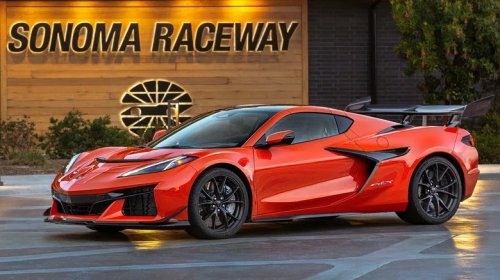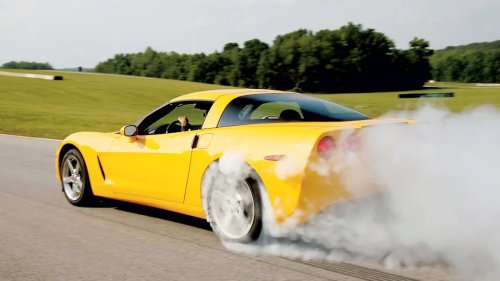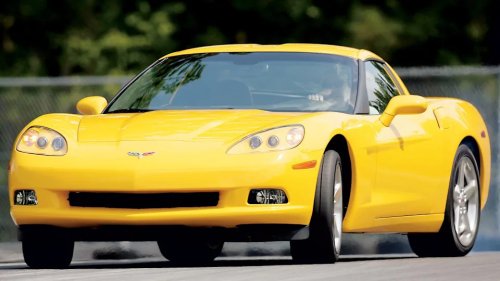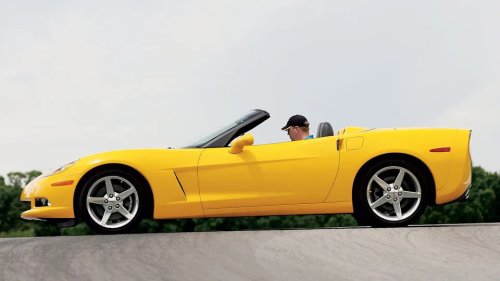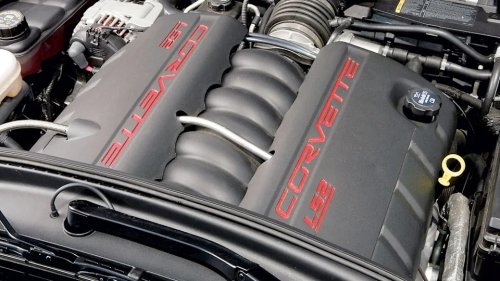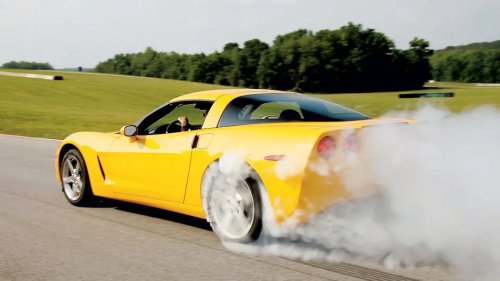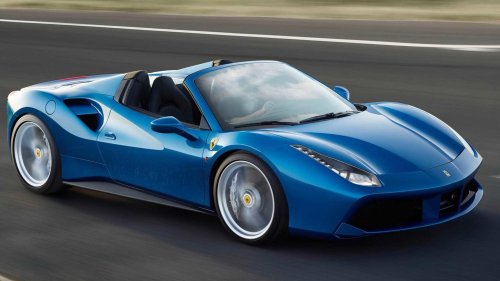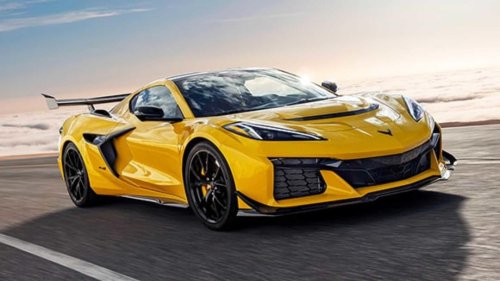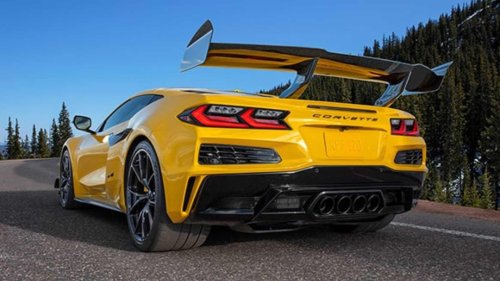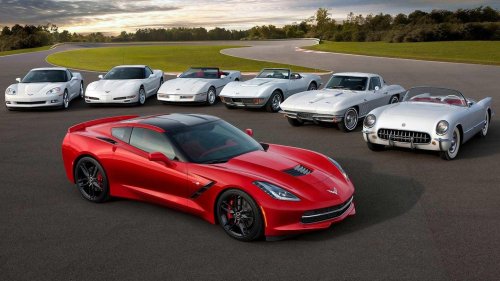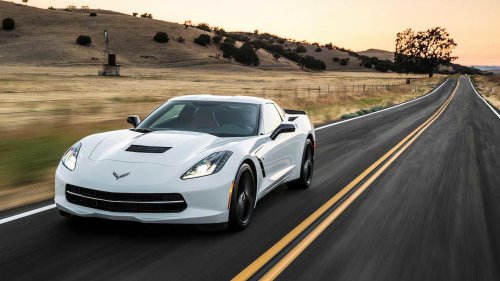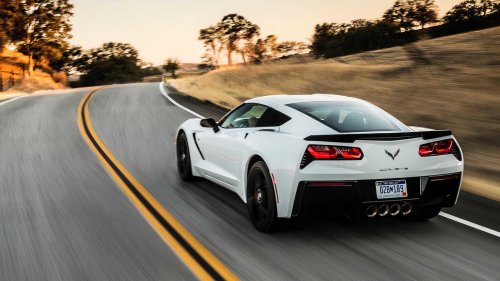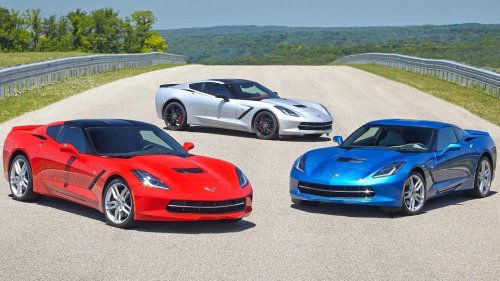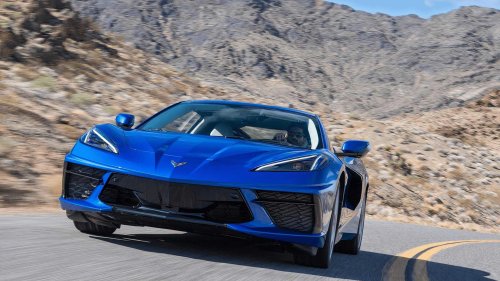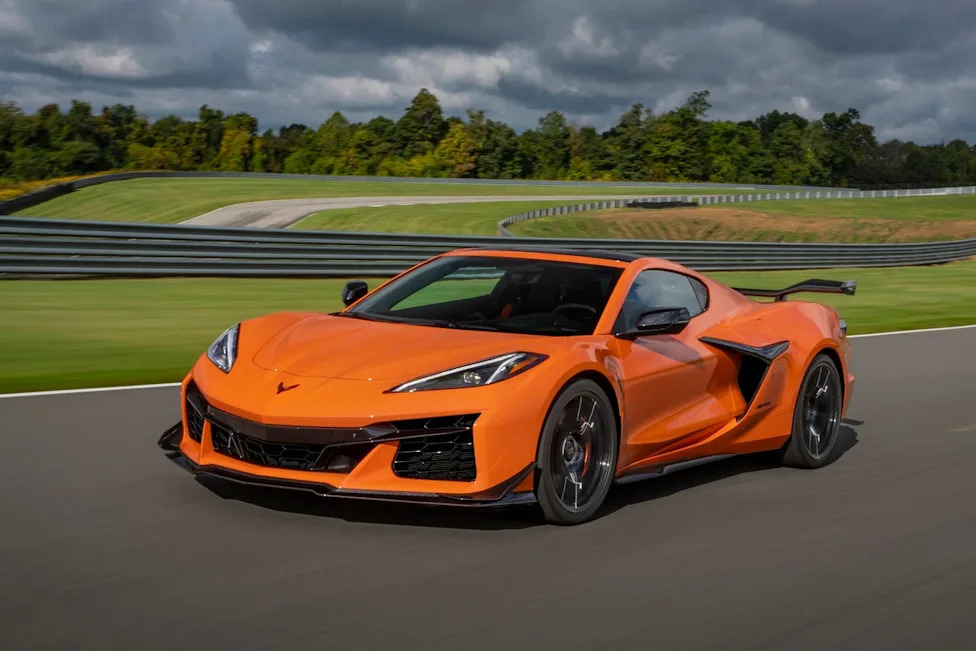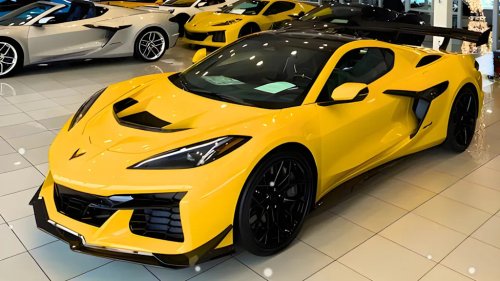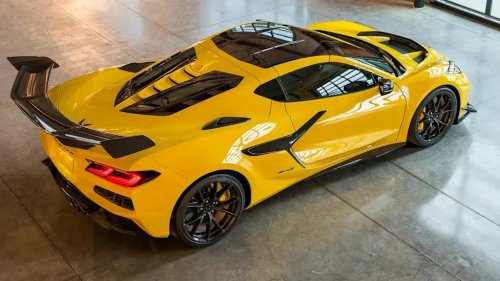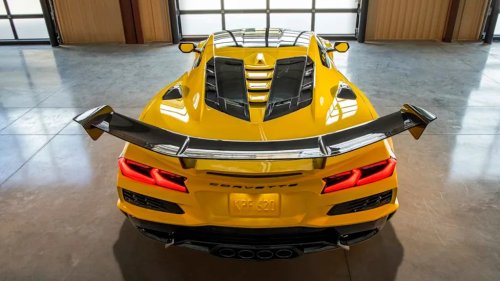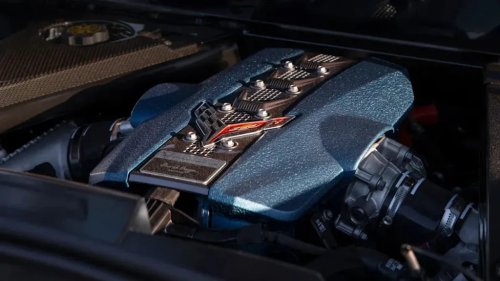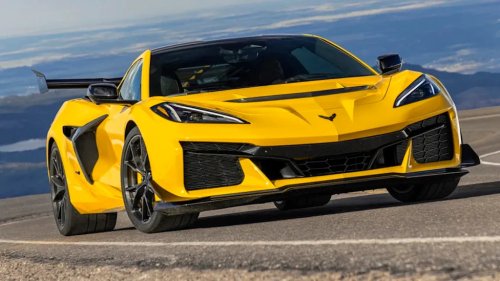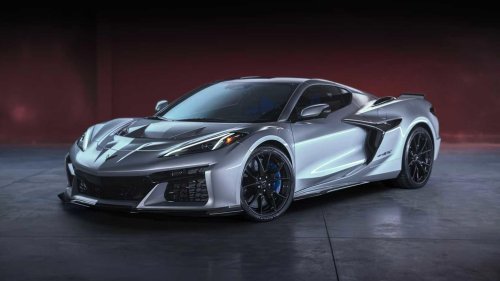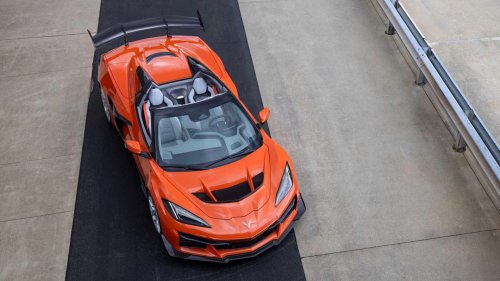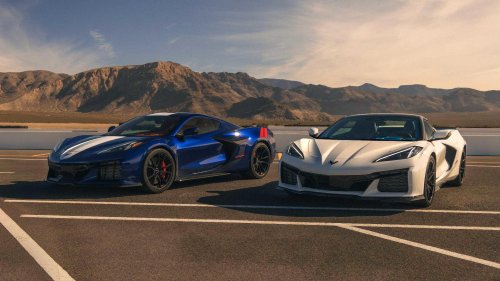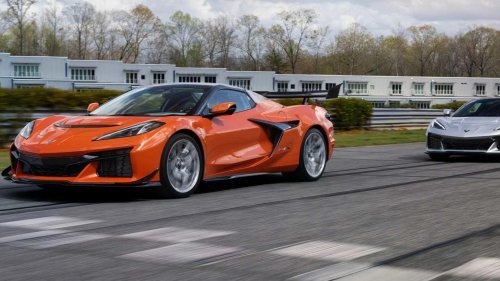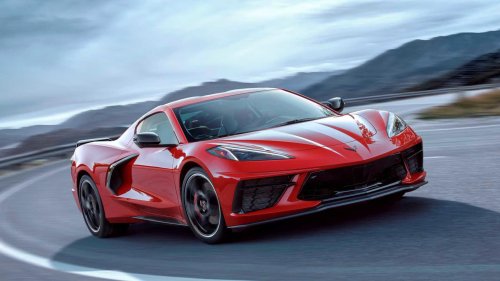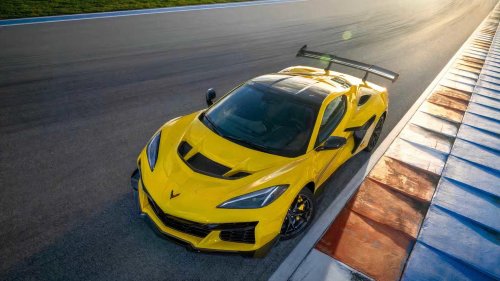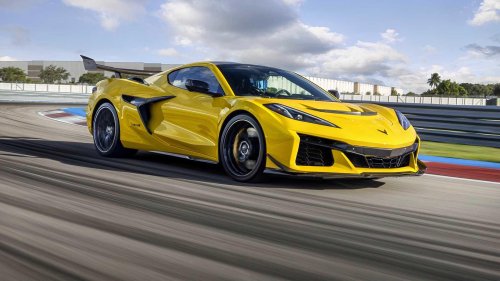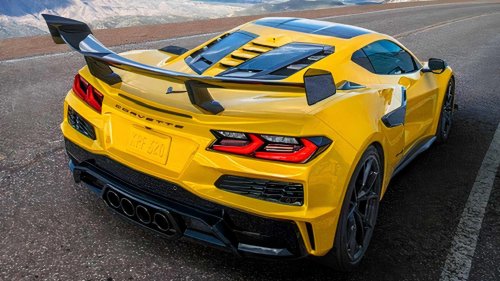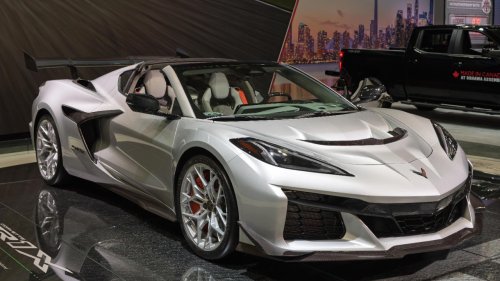

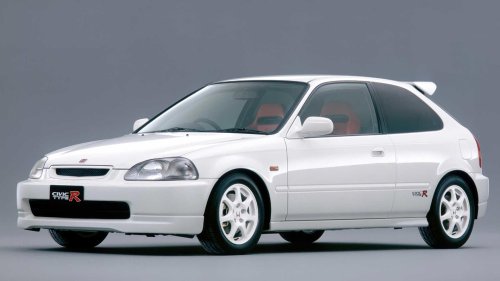




















Think high-revving exotic cars with insane power-per-liter figures, and your mind will likely wander to the bonkers V8 Ferraris and Corvettes of this world. Cars like the Ferrari 360 and Chevrolet Corvette Z06 use naturally aspirated eight-cylinder engines to dramatic effect, hitting around 8,600 screaming revs, and achieving between 120 and 125 horsepower per liter. It's heady stuff, and normally the reserve of very finely tuned engines that are designed specifically for this kind of abuse. Then there are high-revving forced induction engines, such as the twin-turbocharged, 5.5-liter LT7 in the Corvette ZR1X. This engine will rev up to 8,000 rpm, and when joined to electric power, it endows the ZR1X with 1,250 horsepower.But what if we told you there is a small, white, unassuming JDM hot hatch from the '90s that has a higher rev limit than a Corvette ZR1X? It also has a higher specific output from its four-pot than a Ferrari 360, 458, or a Corvette Z06. This is a car that no one would give a second look at the lights, and you might even get a few sniggers at a racetrack, but few hatchbacks are as exotic or competition-biased as this ultra-rare homologation model. It has also been completely lost in time. The Nissan Pulsar VZ-R N1 Is A Forgotten Sleeper You Need To Know About Facebook/ Drag International In the early '90s, Nissan was on a roll. The Japanese firm had just changed the game at the Nürburgring, ringing an R32 Skyline GT-R out to less than eight minutes around the legendary circuit, and people were starting to notice that there was more to Nissan than supermarket-spec Micras. To hammer home the point that Nissan was a serious performance brand, the company then launched in 1990 the Nissan Pulsar (or Sunny) GTi-R as a road-going version of the World Rally Championship "Group A" competition car. The halo model of the N14 Pulsar range attracted a lot of attention, and not just because it appeared to have a beard trimmer attachment on the top of the hood. The 2.0-liter turbocharged engine produced almost 230 horsepower, and that was channeled through all four wheels to create an ultra-hot hot hatch. The Pulsar And Almera Are Conservative-Looking Hot Hatches Then came the N15 Nissan Pulsar, AKA the Almera in Europe. While there were some hot versions, notably the Pulsar VZR Autech in Japan and the Almera GTi in the UK, the latter featuring a 140-horsepower revvy 2.0-liter engine, none of these quite captured the imagination like the previous-gen GTi-R. It seemed a bit unfair, really, with the Almera GTi often getting heaped with praise in motoring mags, but (blame the conservative exterior) it just didn't excite enthusiasts like a flamboyant Renault Clio Williams. After that, the Pulsar/ Almera quietly disappeared, only adored by a few Nissan faithful (and those who had actually driven a GTi), and didn't have much to show for itself. There Was One Pulsar That Thought Like A Mini Supercar That is, apart from one N15 Pulsar that seemed to have Ferrari DNA running through its veins. Enter the Nissan Pulsar VZ-R N1. This is a hot hatch with an engine 20% smaller than that in a 2.0-liter Clio Williams, yet it had 30% more power, and all without a turbocharger in sight. The 1.6-liter unit in the VZ-R N1 will rev until it sounds like it will explode too. Whereas a Ferrari 360 will hit 8,500 rpm, and a Corvette ZR1 reaches 8,000rpm, the tiny four-pot in the Nissan will keep going until an otherworldly 8,600 rpm. Now that is something to shout about - and you'll probably need to over that din. The Nissan Pulsar VZ-R N1 Had The Highest Specific Output When Launched Facebook/ Drag International The Nissan Pulsar VZ-R N1 may be pretty unknown, but to those who do, this is the Japanese equivalent to a Peugeot 106 or 306 Rallye. It's a lightweight homologation version of the Pulsar, designed with Group N Touring Car racing in mind. Another car that comes to mind as a competitor, both on road and track, is the EK9 Honda Civic Type R. The Pulsar N1 has a 1.6-liter SR16VE engine with 194 horsepower on tap and weighs just 2,403 lbs, which means that it has a specific output of 121 horsepower/ liter. That's the same as a new Corvette Z06, and when the Pulsar was launched in 1997, that figure was higher than any other production car, including the Honda (which has around 114hp/liter) and a bunch of supercars. The Pulsar Was Pretty Standard, Apart From The Nuclear Engine The Pulsar N1 was based on the entry-level car, so it made do with hardly any goodies – all the better for saving weight – and also had features like the rear wiper and heated rear window removed, as well as utilizing a factory seam-welded chassis. Interestingly, the chassis set-up was left untouched, so the car rode just like a normal Pulsar. The Pulsar and Almera were already fairly composed cars, however, but handling almost 200 horsepower on a standard set-up seemed a tall order. The most likely reason was that Nissan expected a lot of these cars to be bought by privateers, who would strip and race prep them. The Pulsar N1 did come with a body kit and a bolted-on rear wing, plus some lairy '90s spec graphics on some cars. It's hard to get a definitive figure on the sprint to 60 mph for the N1 Pulsar, but various sources seem to agree that it is as little as 6.6 seconds. The Honda Civic Type-R EK9 Was The Pulsar N1's Arch Rival Via: HondaIn contrast to the Pulsar N1, which is all but forgotten, its main rival, the Civic Type-R EK9, went on to become a performance icon. This hatchback was JDM only and has a crazy spec sheet, including a hand-ported 1.6-liter DOHC VTEC engine and a lightweight seam-welded shell. The total weight is 2,314 lbs – even lighter than the Pulsar. Then Honda threw in a helical Limited Slip Differential (LSD) and tweaked the suspension. It may have been based on a normal hatchback, but the EK9 Type-R managed to revolutionize sports cars. In 2015, a Japanese YouTube channel even pitched the Nissan Pulsar N1 against the Civic Type-R. Buying A Nissan Pulsar N1 In 2025 Facebook/ Drag InternationalTwo words: good luck. Nissan only made 500 of these homologation specials, divided between 200 Version Is and 300 Version IIs, the latter of which got some chassis tweaks and a set of racing seats, but neither comes up for sale very often in the US. Way back in 2015, Bringatrailer reported that an N1 had surfaced on eBay for $15,000. Other cars have come up for sale as fresh imports, including this example in Australia for around the equivalent of $12,000. There was also one for sale in 2015 at Drag International. The bottom line is, if you can find a good one and import it, you'll probably be looking at between $15,000 and $20,000. For comparison, a sixth-gen EK9 Civic Type-R will cost on average $25,886, according to Classic.com.