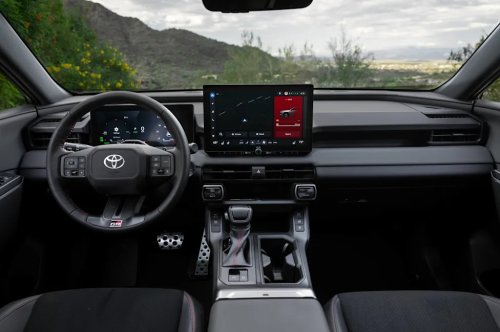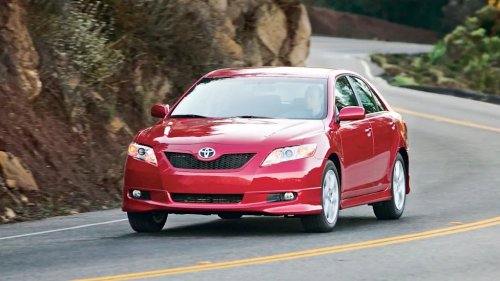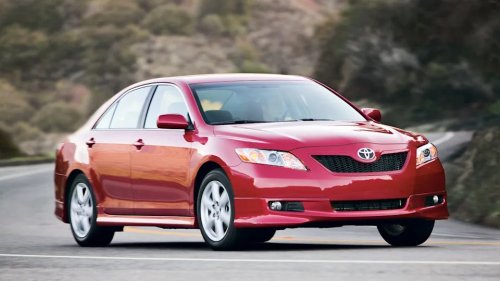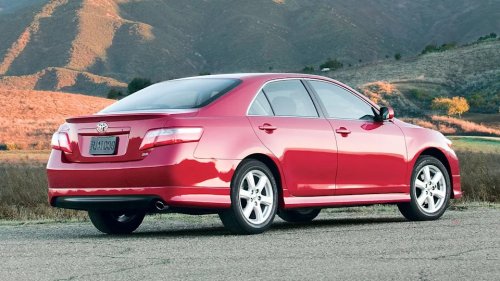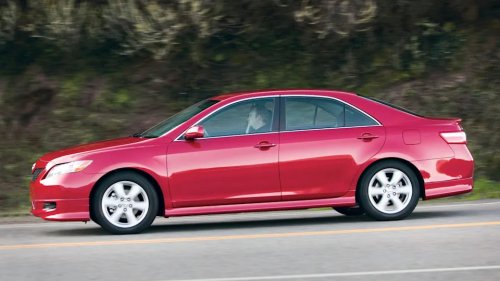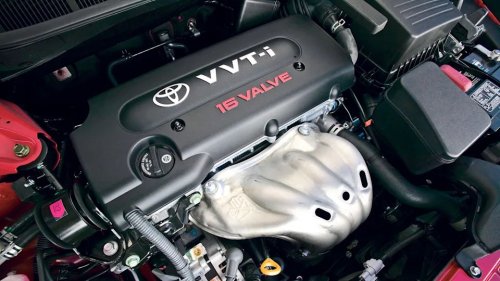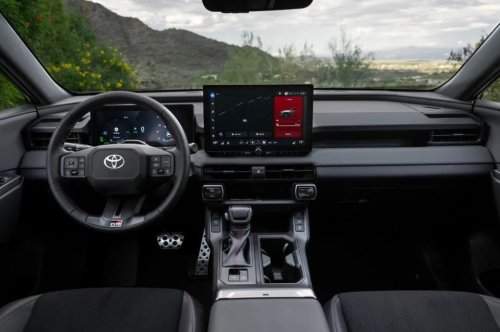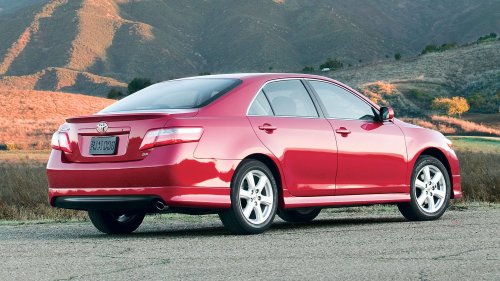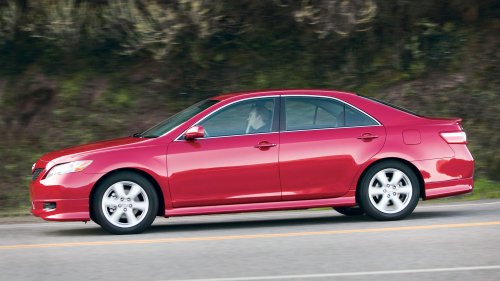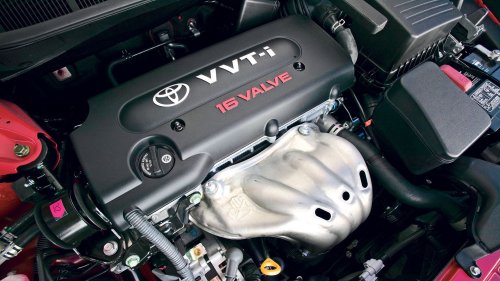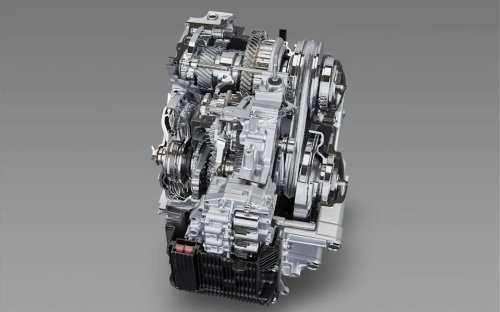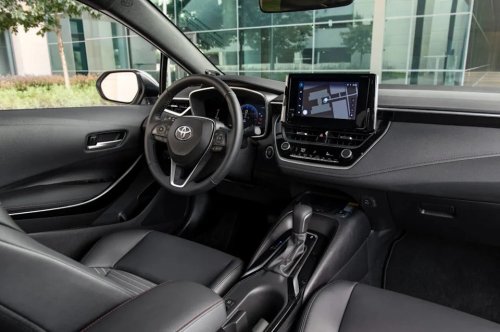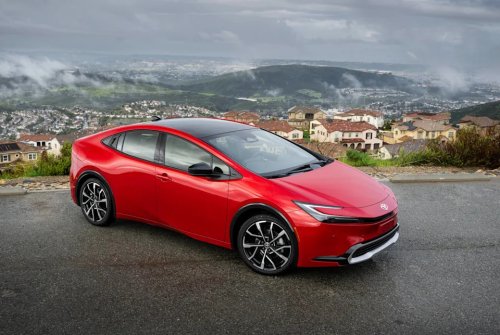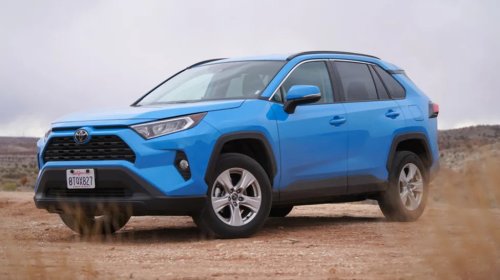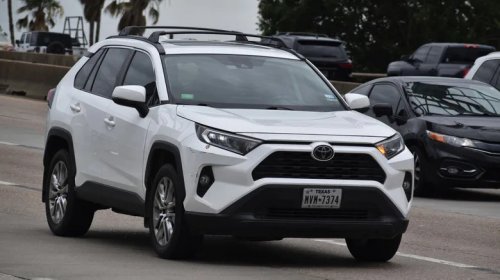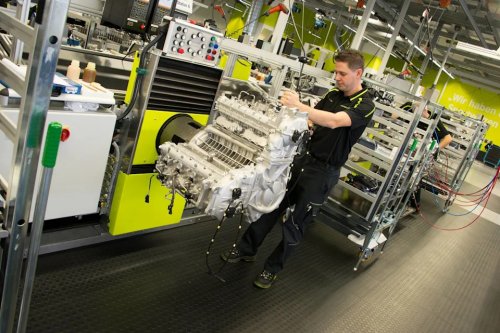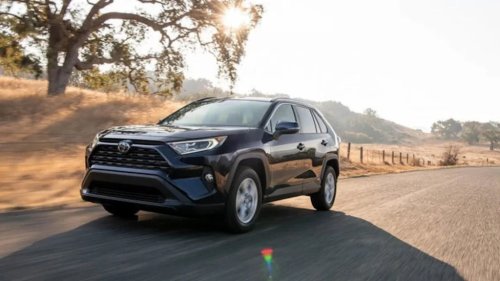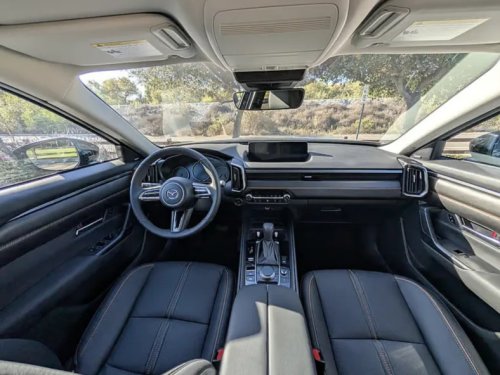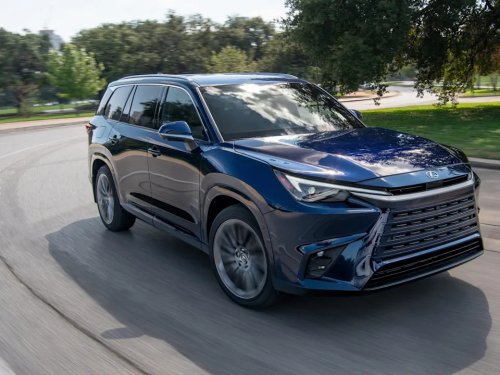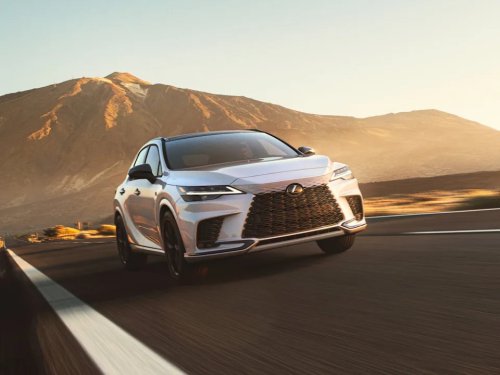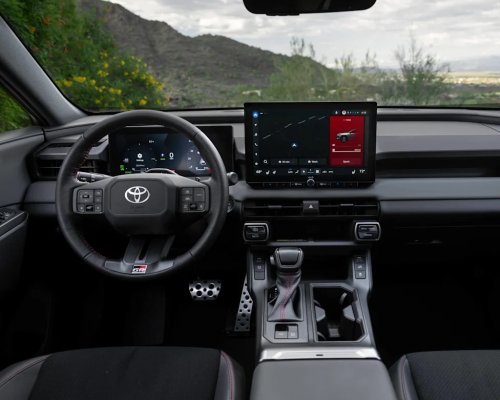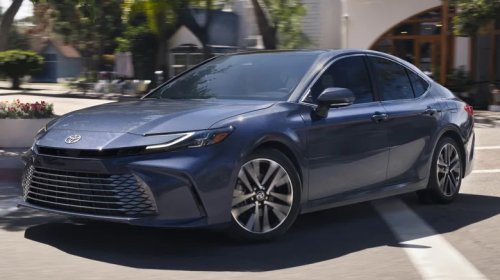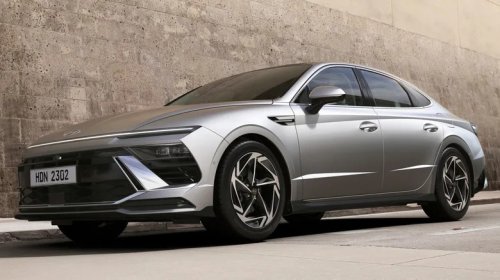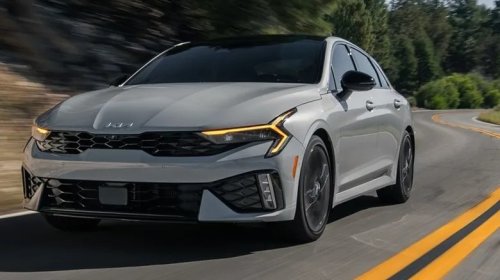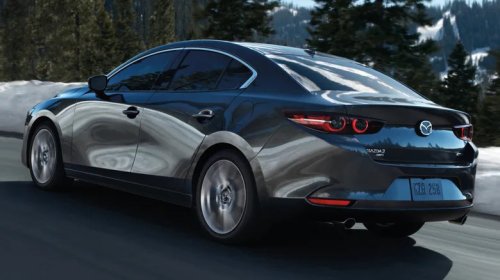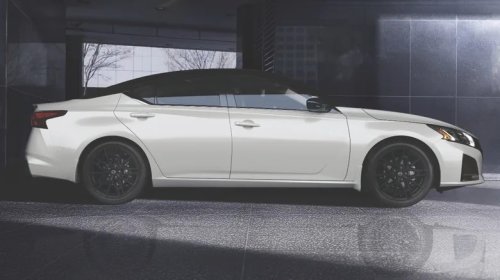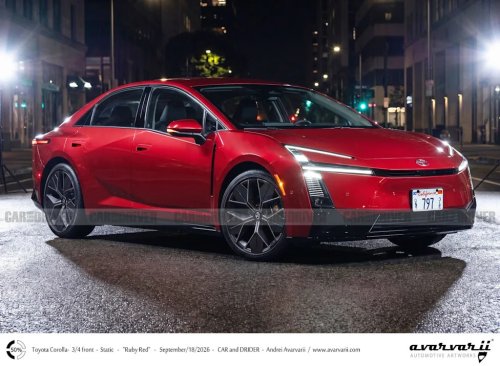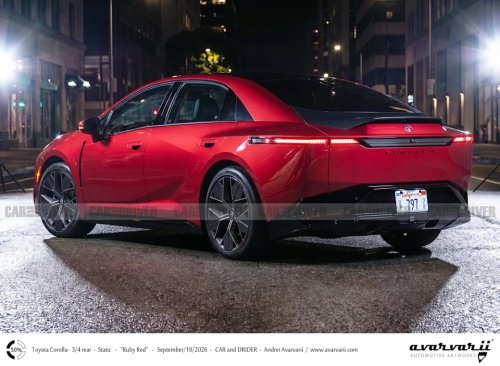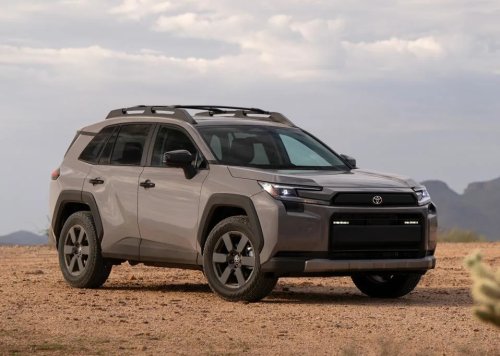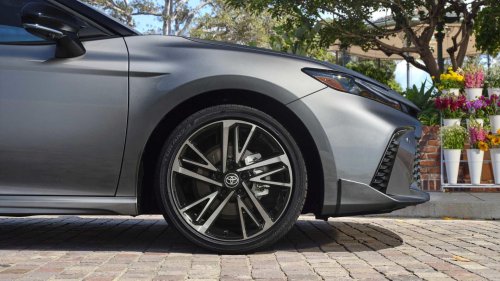
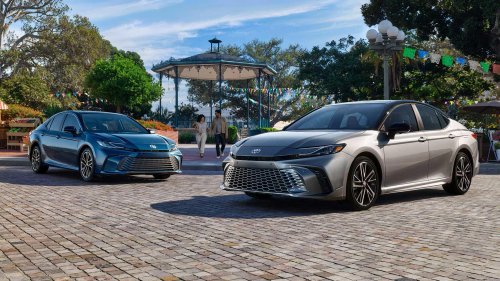
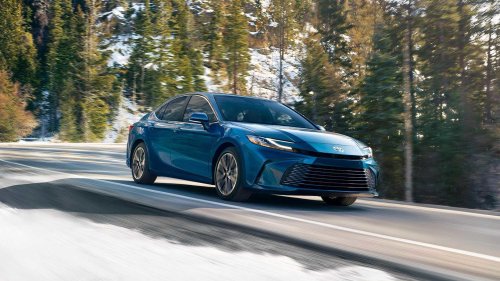
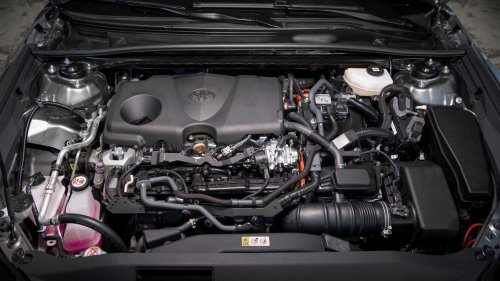
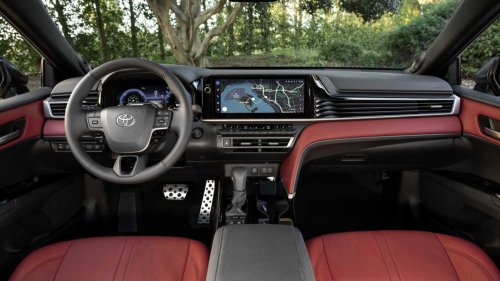
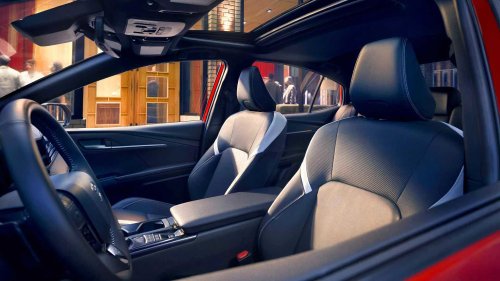



















As the first half of 2026 draws to a close, Japanese sedans continue to dominate the monthly sales charts and maintain a formidable stronghold on the U.S. market. Without fail, these dependable options account for a significant portion of the segment's volume due to a decades-long reputation for reliability and predictable value. Furthermore, most American brands have exited the midsize sedan segment due to low sales, leaving the Asian brands less contested.American consumers are noticing these sedans as a direct response to rising fuel prices. The increasing complexity of modern automotive repairs is another concerning factor that leads consumers to value the total cost of ownership. Keeping this figure low is an advantage that these Japanese brands, in particular, have refined over the last few decades. Among these options, one specific midsize sedan remains the leader in reducing financial risk over long-term ownership. Sedans Are Reclaiming Their Popularity In The U.S. Toyota As 2026 reaches the halfway point, the U.S. sedan market continues to put up a noteworthy fight against the overwhelming dominance of light trucks and SUVs. These more versatile and higher-riding alternatives currently command the bulk of all new vehicle sales. Conversely, the sedan segment's market share has diminished. This may not be the majority, but it shows that sedans remain incredibly relevant as the primary gateway for affordability and efficiency in a market where the average new vehicle price has now surpassed $50,000.There has been a slight year-over-year volume decline in early 2026 due to inventory readjustments and economic challenges. Despite this, demand for traditional four-door models remains strong. Some popular hybrid and compact versions are selling out faster than dealerships can restock them. This sustained interest is driven by cost-conscious buyers who don't want to compromise on refinement. Sedans offer a premium driving experience by traditional standards, together with superior fuel economy and lower entry pricing compared to their high-riding counterparts. These benefits have even prompted domestic manufacturers to reconsider their previous exits from the segment. Toyota Remains Dedicated To The Sedan Toyota Toyota has traditionally approached the sedan segment with a philosophy of continuously improving its product offerings, effectively not changing what isn't broken. The Japanese brand has always prioritized long-term mechanical durability and affordable starting prices, resulting in strong favor among the mass market. Toyota's concentrated approach also significantly lowers research and development costs and simplifies maintenance for the end consumer.Toyota achieves this by utilizing heavily engineered components and modular platforms that share parts across various vehicle classes. Doing so bolsters the industry-leading resale values that American buyers have come to rely on. It's a strategy that centers on providing an easy ownership experience, where the vehicle is marketed as a dependable tool rather than a temperamental luxury, appealing to a pragmatic demographic that values a low total cost of ownership and predictable performance. The Camry's Outstanding Performance In May 2026 Toyota Toyota demonstrated impressive sales growth for the Camry in May 2026, selling 35,797 copies compared to 31,337 examples in May 2025. This reflects a 14.2 percent increase in monthly sales. The Camry's momentum is also mirrored in its calendar year-to-date performance, where the brand sold 147,471 units compared to 129,995 during the same period in 2025. Toyota's sales performance results in a 13.4 percent volume increase so far this year.In sharp contrast, the Toyota RAV4 experienced a significant contraction during the same periods. The SUV's monthly volume fell 26 percent to 33,524 copies in May 2026 from 45,282 examples in May 2025. This downward trend is also visible in its year-to-date results, with RAV4 sales dropping 40 percent to 121,605 units in 2026 from 202,641 units in 2025, allowing the surging Camry to outpace it in overall sales volume both for the month and for the calendar year. The Camry Retains A Reliability Advantage Toyota When it comes to reliability, there are few cars currently on the market that can match the 2026 Toyota Camry. iSeeCars gives the Camry range an 8.2/10 overall score, including 8.1/10 for reliability, 8.6/10 for retained value, and 8.0/10 for safety. The publication indicates that the model will run for 13.1 years or 171,785 miles without encountering any noteworthy mechanical issues, and has a 31.7 percent probability of hitting 200,000 miles.Toyota In terms of depreciation, the publication indicates that the model will lose $10,829 or 37.7 percent of its initial sale price after five years or 60,000 miles, which is a bit less than the average competitor in the midsize hybrid sedan segment.J.D. Power gives the 2026 Toyota Camry model year an 82/100 consumer-verified overall score, including 80/100 for quality and reliability, 82/100 for the driving experience, 92/100 for resale, and 76/100 for the dealership experience. Appealingly Low Long-Term Ownership Costs ToyotaAccording to Edmunds' True Cost To Own calculator, you can expect a new base front-wheel-drive 2026 Toyota Camry LE to cost you $33,378 over the course of five years. This includes $11,941 in depreciation, $4,504 on insurance, $3,067 on maintenance, and $601 on repairs. Your taxes and fees will also be incredibly low, with the calculator showing that you're only likely to spend $2,115.If you opt to finance the base 2026 Camry, this will add $6,165 to your ownership costs, while fuel will cost you $4,895, based on average driving distances in the U.S. According to CarEdge, you can expect to spend $36,433 on your Camry over the same period, which includes $14,274 on depreciation, $4,530 on fuel, and $1,512 on maintenance. Efficient Drivetrains Equal Low Fuel Costs ToyotaOne main reason to consider the Camry is its fuel efficiency. The front-wheel-drive LE is the most efficient model, returning a 53/50/51 MPG consumption result on the city/highway/combined cycle, with a 663-mile range claim from the 13-gallon tank. The agency also indicates that this will save you up to $4,000 in fuel costs over five years and will cost $1.59 to drive 25 miles.The all-wheel-drive XSE is the least frugal model, but this is only by a fractional amount. The EPA indicates that it returns a 44/43/44 MPG result with a 572-mile range claim and suggests that this will save you up to $3,250 in fuel costs every five years and cost $1.84 to drive every 25 miles. Expect to pay $41 to refill the 13-gallon tank. The Beauty Of Toyota's Engine Design Toyota Toyota designed the A25A-FXS as the hybrid variant of its Dynamic Force 2.5-liter four-cylinder unit to deliver high thermal efficiency and smooth low-end torque. The engine operates on an Atkinson-like cycle with a 14.0 to 1 compression ratio, and D-4S combined direct and port injection to speed combustion and reduce pumping losses.The Japanese brand's engineers also designed the cylinder head and intake ports to increase tumble flow and use longer stroke dimensions to improve torque per displacement. The valvetrain features dual overhead cams with variable valve timing on both intake and exhaust to broaden torque and enable Miller-Atkinson modes.Additionally, Toyota machines the block and head from aluminum alloy and uses forged steel internals where strength matters to keep mass low while retaining durability. Thermal management includes cooled EGR and refined cooling passages to control combustion temperatures. Toyota calibrates the engine for low RPM efficiency and smooth transitions to electric drive, which reduces stress on the internal parts. Competitive Pricing Strategy Adds Appeal Toyota Pricing is a key reason the Camry continues to set new sales records and dramatically surpass the rest of Toyota's electrified catalog. 2026 Camry prices start at $29,300 for the base LE front-wheel drive model, making it the most competitively priced hybrid vehicle in the segment.The most expensive Camry option is the XSE, which starts at $35,700. Toyota offers the all-wheel drive system across all trims for an additional $1,525. All of these prices exclude the brand's $1,195 destination fee. There are a few optional extras across trims, because Toyota prefers a defined five‑trim pricing structure.ToyotaThe Toyota Camry outsold every other sedan in the U.S., and one reason for that is its comfortable and feature-rich cabin for the price. The midsize sedan in base form features cloth upholstery and dual-zone climate control, and higher trims inherit leather upholstery, heated seats and steering wheel, and an auto-dimming rearview mirror.In terms of tech features, you also get all the modern essentials, including a standard eight-inch infotainment touchscreen with higher trims unlocking a larger 12.3-inch unit. Both screens use Toyota’s latest software interface, supporting wireless Apple CarPlay and Android Auto. On the top XLE and XSE trims, you can also update to a nine-speaker JBL stereo system for a richer sound experience. It’s this mix of low running costs, high reliability ratings, and its family-friendly packaging that has made the Camry the most popular sedan in the U.S.