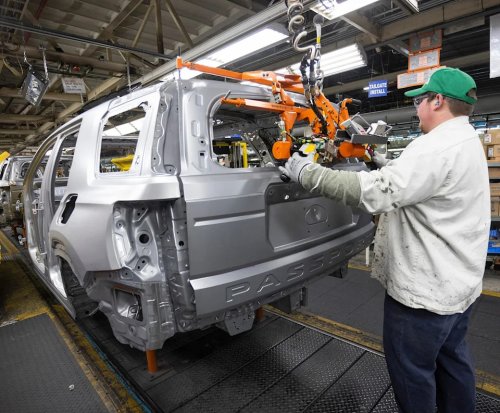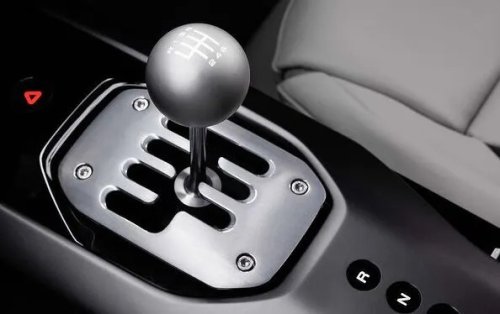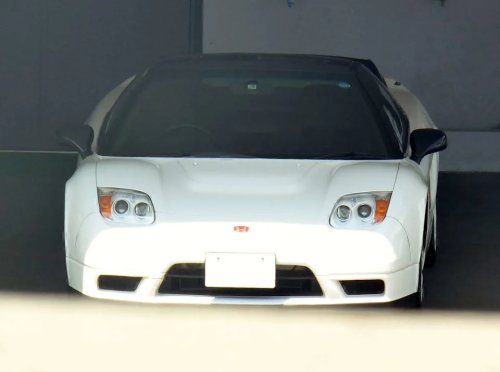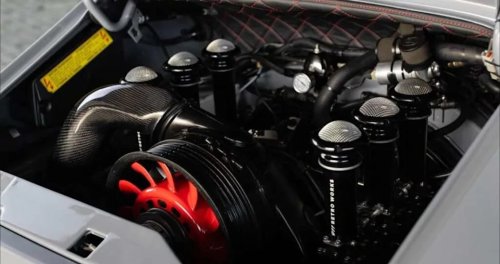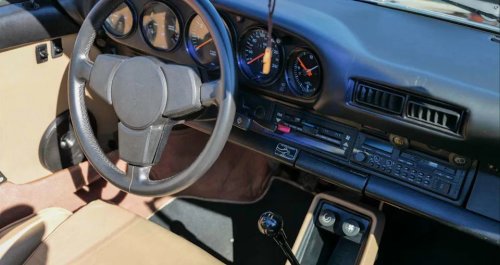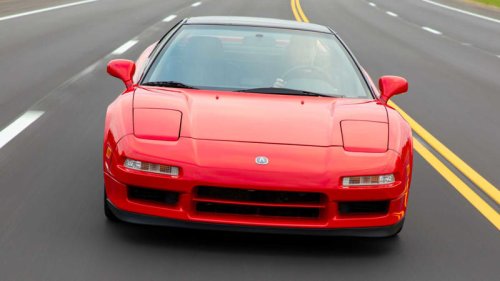
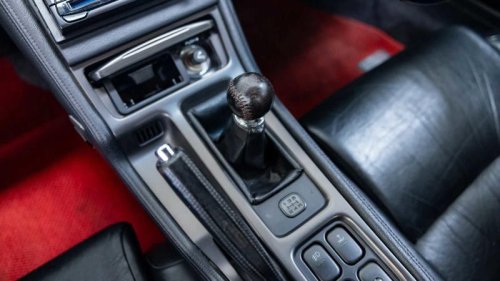
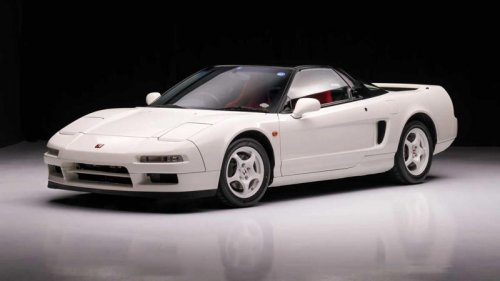
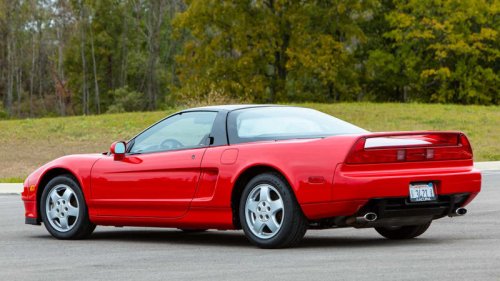
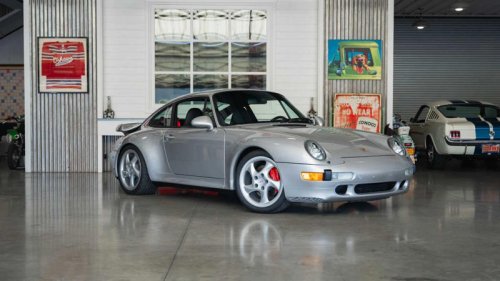
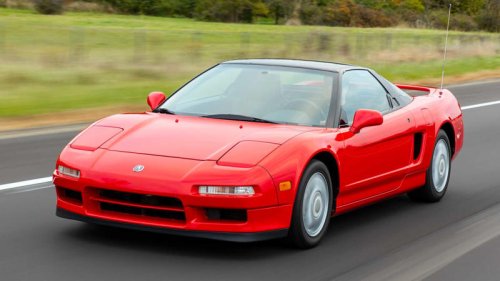
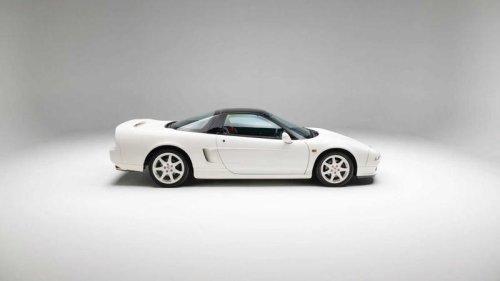


















There was a time when buying a true sports car meant accepting a trade-off. If you wanted precision, balance, and real performance, you looked to Europe. But if you wanted something that would start every morning, handle traffic without drama, and not drain your bank account in maintenance, you stayed far away from anything mid-engine. Then the Acura NSX showed up and completely rewrote that equation.From the start, it didn’t follow the usual supercar formula. Instead of chasing raw power or dramatic styling alone, Honda focused on something much harder to execute: building a car that could genuinely compete with Porsche on the road while behaving like a Honda everywhere else. What made the NSX so compelling wasn’t just what it could do on paper. It was how consistently it delivered that performance, day after day, without the quirks and compromises that defined so many of its rivals at the time. It Was Engineered To Compete With The Best In The World AcuraThe foundation of the NSX is where everything starts to make sense. At a time when most manufacturers were still relying on steel construction, Honda committed to an all-aluminum monocoque and suspension setup. That decision alone put the NSX in a completely different category, not just from a performance standpoint but also from an engineering standpoint. It was a wild decision, but it just worked out.The mid-engine layout gave it the balance you would expect from a serious sports car, but what set it apart was how approachable that balance felt. This wasn’t a car that punished you for pushing it. Instead, it communicated clearly, remained predictable, and rewarded smooth inputs, making it feel more refined than many of its competitors.Via: Bring a TrailerA big part of that came down to development. Honda didn’t just build the NSX in isolation. Input from Formula One driver Ayrton Senna helped fine-tune the chassis, particularly in rigidity and high-speed stability. You can just tell there was some important development done outside the usual steps. The car feels confident and capable, which is exactly what you want in something designed to take on Porsche.Fun Fact: Ayrton Senna didn’t just “approve” the car, he pushed Honda to stiffen the chassis after testing it at Suzuka, directly influencing how the production NSX drives. Acura Built A High-Revving VTEC V6 Built To Last Underneath the rear glass sits one of the most important engines Honda has ever produced. The NSX’s VTEC V6 wasn’t built to dominate spec sheets. It was built to deliver power in a way that felt smooth, controlled, and repeatable. The early 3.0-liter C30A and later 3.2-liter C32B engines both leaned into high-revving performance, with an 8,000 rpm redline that encouraged you to stay in the powerband. Instead of overwhelming the chassis with torque, the engine works with it, building speed progressively and keeping the car balanced through corners.Via: Bring a TrailerFun Fact: The NSX was the first production car in the world with an all-aluminum body, which forced Honda to completely retrain its workforce and develop new manufacturing techniques just to build it.What really separates it from its European rivals is durability. While many exotic engines from the same era required constant attention, the NSX’s V6 proved it could handle real-world use without falling apart. Routine maintenance was enough to keep these engines running strong well past 100,000 miles, which was almost unheard of in this segment at the time. Performance That Challenged Porsche’s Benchmark AcuraWhen you compare the NSX to Porsche models from the same era, the similarities become clear almost immediately. Cars like the 911 Carrera set the standard for driver engagement, and the NSX met that standard in a very different way. Instead of a rear-engine layout, the NSX used its mid-engine design to create a more neutral platform. That made it easier to drive quickly, especially for drivers who weren’t used to managing the quirks of a rear-engine car at the limit.Straight-line performance was right where it needed to be, with a 0–60 time around five seconds, but the really impressive part was how the car carried speed. Through corners, under braking, and during transitions, the NSX delivered the kind of composure you would expect from a Porsche, without demanding the same level of experience to access it.Bring a TrailerNSX Vs Porsche 911 Carrera (Period Comparison)Looking at those numbers side by side, the NSX clearly belongs in the same conversation. But the bigger takeaway is how differently they achieve similar results. Porsche leaned into tradition. Honda rethought the formula entirely.Fun Fact: The design of the NSX was partially inspired by the F-16 fighter jet canopy, which is why visibility is so unusually good for a mid-engine car. This Sports Car Was Built To Be Driven Every Day One of the most overlooked aspects of the NSX is how easy it is to live with. For a mid-engine sports car, visibility is excellent, controls are intuitive, and the overall driving experience feels surprisingly normal when you’re not pushing the car. Personally, I rode to school every day in an NSX. I'm not even joking. I had to hold my sister on my lap (the '90s, right?) and keep our backpacks on the floor by our feet, but my school bus was a white '91 NSX, and I wouldn't have it any other way. By the way, we survived. Obviously.AcuraThat usability is what made it such a disruptive product because owners didn’t have to choose between performance and practicality. The NSX could handle a weekend drive just as easily as a daily commute (read: drive to school), and it did so without the constant concern that something might go wrong.Compared to many European rivals from the same era, maintenance was straightforward, reliability was consistent, and ownership felt manageable. That alone changed expectations across the segment. Suddenly, buyers started asking why other performance cars couldn’t offer the same level of usability. Why The NSX Still Feels Ahead Of Its Time Looking back, the NSX feels less like a single '90s sports car that made waves, and more like a preview of what sports cars would eventually become. Today, usability and reliability are expected, but at the time, they were not guaranteed. The NSX proved that a car could deliver real performance without sacrificing dependability. It pushed competitors to improve not just how their cars drove, but how they lived. That influence can still be felt today, especially in how modern performance cars balance capability with comfort.Recent sales show just how wide the market has become. Higher-mileage or modified cars can still land under $80,000, but clean, well-kept examples are now consistently trading between $120,000 and $150,000. Low-mile and special variants push far beyond that, with rare models and pristine cars breaking into the $300,000 range. Another cool aspect of NSX ownership is that Honda is launching the Honda Heritage Parts program to give owners access to original parts or reproduced parts in the near future. Need an OEM cup holder? Coming right up.Bring a TrailerIt also helps that the driving experience still holds up. The analog feel, the high-revving engine, and the communication through the chassis all make the NSX feel connected in a way that many newer cars struggle to replicate. For a lot of enthusiasts, that’s what keeps the NSX relevant. It forced a shift in what people expected from a sports car, and it did it without losing the reliability that made it approachable in the first place.