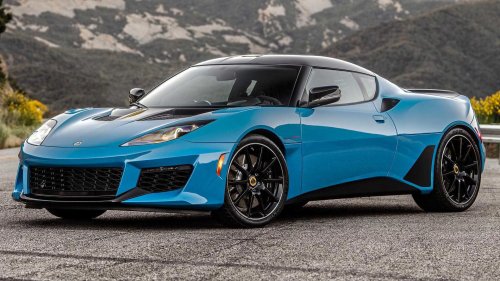
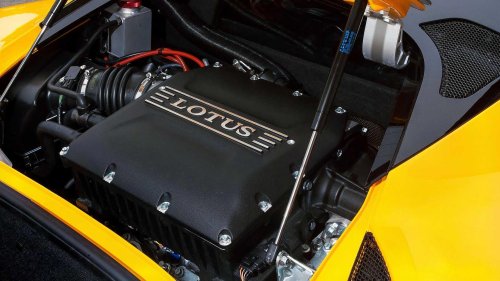
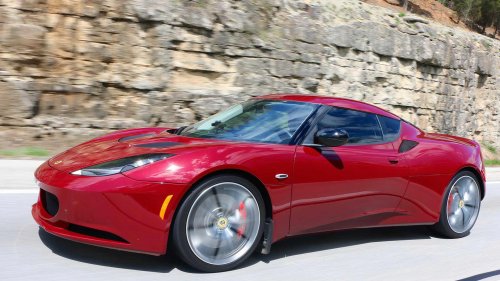
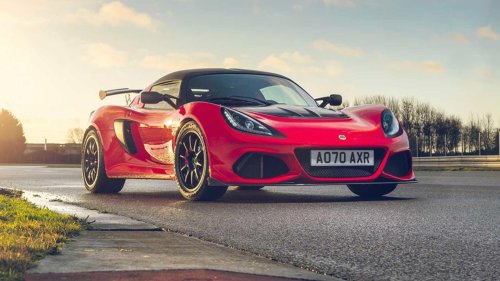
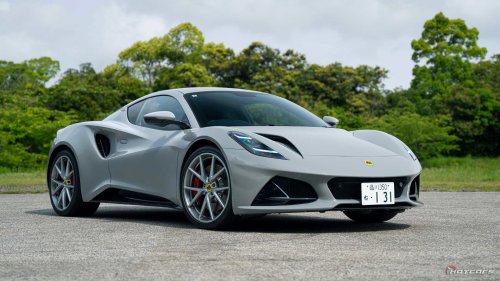
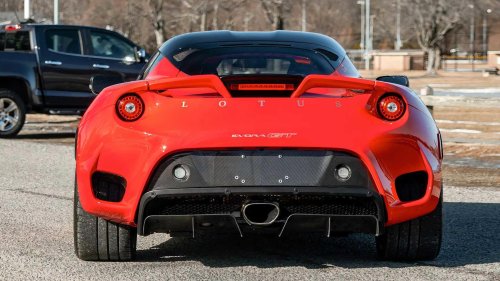




















"Float like a butterfly, sting like a bee" was the iconic phrase coined by the legendary boxer and hero to many, Muhammad Ali, before his 1964 fight against Sonny Liston. For him, it described his fighting style: moving with extreme speed and grace (floating), while for anyone unlucky enough to be on the receiving end of one, deploying a fast, powerful punch (stinging) at his opponent.From the boxing ring to the race track then, there's one car brand from Britain that has been delivering that same strategy, and it's been doing it for 74 years. Delivering featherweight bodies, razor-sharp handling, and a talent for confidently attacking any corner like Ali goes for the knockout blow, we're talking about Lotus, of course.And yet, of all the cars this iconic marque has produced over the decades, there’s one which perhaps stands out for being both rare, livable and pretty attainable too. Admittedly, while the last part depends on what version your hard-earned cash is being exchanged for, one thing that remains consistent across the range is what's always under the hood — a solid and reliable Toyota engine. Okay, it may hardly rank as an unforgettable British sports car among others, but it's still light on its feet, boasts enough dynamic finesse to rival a Porsche, and is backed by the proven reliability of a Japanese engine, which can only be a good thing. Lotus Used Toyota Engines To Avoid The Costly Risks Of Going Solo Craig Cole | HotCars You may already have your suspicions as to the car we are alluding to here, but for the sake of building up suspense, perhaps it's worth understanding exactly why boutique sports carmakers like Lotus rarely build their own engines in the first place.For much smaller brands to rival larger German giants, building an engine from scratch isn’t just expensive, it’s risky. A single flaw in a high-revving exotic engine can ruin a car’s reputation and cost millions to fix. It's simply not worth the potential damage to reputation and brand image. So instead, these brands borrow a proven powerplant from a major automaker, leaving room for their engineers to focus obsessively on other important matters, like an ultra-light chassis, precise suspension setups, and super-sharp handling.Toyota engines tend to be the most popular and appealing third-party options for these smaller firms to go for. From Camrys to Celicas, they've been stress-tested in hundreds of thousands of consumer vehicles for decades, giving boutique manufacturers a safer, more reliable platform around which they can build.These mass-produced engines don't just ensure durability, they reduce development costs too. Of course, this philosophy isn’t unique to Lotus. Brands like Caterham, Ariel, and modern AC Cobra replicas have all followed the same formula: pair a lightweight, nimble chassis with a robust, high-output production engine. The Lotus Evora Turns A Dependable Toyota V6 Into A Performance Weapon via Motor1.com The car hidden behind this recipe is, of course, the rear-wheel drive 2+2 Lotus Evora. Produced from 2010 to 2021, it was launched as the firm's first all-new model since the Elise, with the intention of moving Lotus’ brand image a little more upmarket, while still adhering to the marque’s lightweight ethos. It featured a chassis made from bonded aluminum, derived from Lotus’ proven architecture, and a mid-mounted engine that gave it balance and turn-in as sharp as a razor blade — a setup that positioned it as a serious rival to the Porsche Cayman.But maybe the most overlooked feature is what lives under the hood. Instead of developing an expensive bespoke engine, Lotus turned to one of the most robust modern V6 engines ever built: Toyota’s 3.5-liter 2GR-FE. Demonstrating its durability across hundreds of thousands of road cars, reliability reports and buying guides have shown examples running well beyond 200,000 miles with routine maintenance, with just 2 percent reporting cases of major failures after long-term use.Since the numbers don’t lie, this all-aluminum V6 was the perfect option for Lotus engineers to tune for performance duty. To significantly unlock more power, the Brits added a series of upgrades that turned it from an everyday, dependable companion into a capable weapon to rival a Cayman, such as supercharging, revised intakes, and bespoke engine calibration.Netcarshow.com When the Evora GT finally emerged as the last evolution of the Evora series, the Toyota-sourced V6 produced 416 horsepower and 332 lb-ft of torque. With the automatic transmission, this was enough to launch the car from a standstill to 60 mph in a mere 3.8 seconds, before reaching its top speed of 190 mph, putting it strictly in the performance territory of Porsche Caymans and even base 911s.The Evora GT’s appeal isn’t just about straight-line performance, either. In a review by our friends at CarBuzz, the Evora GT was praised for its “telepathic steering and ultra-communicative steering feel”, and for being “light, intuitive, and raw.” With the Evora then, Lotus created a delightfully unconventional sports car. It possessed British chassis wizardry, combined with a solid, Japanese workhorse of an engine, making it a pretty decent proposition in the used sports car market. Used Lotus Evora Models Range From Bargain Buys To Six-Figure Cars CarGurus While the Evora may no longer be in production, it still stands as a great option on the used car market as an interesting and equally capable alternative to the Cayman, with robust reliability to match.Recent sales data shows a wide price range depending on trim, condition, and provenance. Demonstrating what a top-end, well-sorted example can command, a 21-plate Evora GT went for $143,000 in 2023, while an older, higher-mileage example exchanged hands for just over $94,000. Older or less-powerful versions, meanwhile, trade significantly lower. A 2010 base Evora recently went for $46,200, while a 2015 Evora S hit roughly $57,200 at auction. Values could remain strong too, especially since only a few hundred GT models were built for the U.S. market, many of them with manual transmissions. The Evora line-up: How they stack up Other Notable Lightweight Sports Cars With Outsourced Powertrains While the Evora makes a compelling argument for itself as a rare, Porsche-competing sports car with Toyota reliability, it’s not the only one of its type that combines agility with a proven power plant from elsewhere.LotusThe Lotus Exige: Of course, we can't talk about Lotus of old without acknowledging the Lotus Exige — a go-kart-on-steroids, road-legal weapon that could devour winding roads like someone solving a Rubik's Cube at 100 mph. Earlier models used Lotus's own 1.8L and supercharged 1.8L engines, based heavily on another Toyota engine, the 2ZZ-GE. Later versions (Series 3) however, brought in the same Toyota-sourced engine from the Evora, but this time making up to 430 hp. It was essentially the Evora’s smaller brother, but every gear change and apex was rewarded with scorching accuracy at the expense of everyday usability.Ayesh Seneviratne, Claire-Kaoru Sakai / HotCarsLotus Emira: The Evora’s spiritual but rather underappreciated sports car successor took the concept into the modern era, swapping in a more powerful engine sourced from AMG, while keeping the manual gearbox alive. Like the Lotus Evora, it continues the marque's obsession with balance, steering feedback, and lightweight construction, but with the hope of delivering much greater appeal and commercial success for the brand. It was going to be the last petrol-powered Lotus, but such plans have been shelved for now in favor of an updated hybrid model for 2027.AC Cobra (modern replicas): This British-American legend continues the formula with a lightweight chassis bolted to a durable Ford V8. The combination delivers a car that feels explosive in a straight line, while keeping it engaging in the corners. Like the Evora, it’s another shining example of opting for the old-school recipe of a proven engine, with a light, tuned chassis to boot. The Proven Formula: Evora vs. Competitors How The Lotus Evora Brings Together Lightweight Design And Dependable Power Bring A TrailerIn the world of niche, low-volume sports cars borrowing engines from bigger manufacturers, the Lotus Evora arguably stood out for a simple reason: it struck a balance few of its contemporaries ever managed. The Exige may be sharper on a track, and machines like the Cobra may be even more theatrical, but the Evora sits comfortably in the middle ground — a genuine alternative to a Cayman, without having to sacrifice too much on everyday usability.That’s precisely why the Evora deserves the spotlight here. It delivered the brilliance of Lotus’ lightweight philosophy, while pairing it with an outstanding Toyota engine that’s as dependable as it is capable. And while the range-topping Evora GT is rare and expensive, the broader Evora lineup means enthusiasts can still find more affordable examples on the used market. Where exotic-looking performance cars feel financially out of reach for most of us, that’s a refreshing reality indeed.Sources: CarBuzz, Mecum Auctions, RepairPal, J.D. Power, Drifted, Lotus Cars, LotusTalk