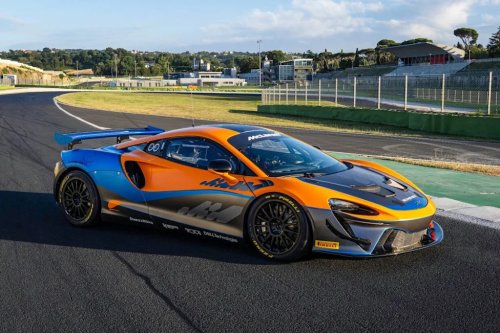
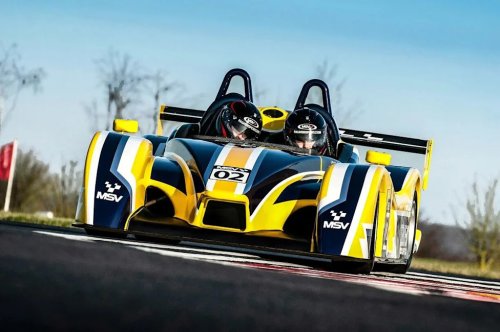
Ever wondered why a slow, technical kart lap can leave you buzzing while a passenger ride in something far faster leaves you clenched and rattled? There is now hardware-backed data to explain the gap.A study commissioned by Castrol and run by the UK neuroscience firm Brainbox wired drivers with brain, eye, heart, and skin sensors across five closed-course scenarios, then separated the neurophysiological signature of genuine thrill from the signature of fear. The headline finding upends a comfortable assumption in the car world: speed by itself does not guarantee a thrill.Thrill appears when three states crest at the same moment. A jolt of physical stimulation, a demanding mental task, and an emotional balance where excitement edges out fear. Push any one of those past what a given driver can manage and the whole experience tips from thrill into anxiety. That is the practical takeaway if you are chasing the feeling on your own terms. You are managing a convergence, and the speedometer is only one input.What The Study Actually MeasuredThe work took place at the PalmerSport facility in Bedfordshire, England, with instructors present and every run held away from public roads. The five scenarios ranged from slow off-roading in a Land Rover Defender to single-seat karts, a McLaren Artura GT4 race car, an open-wheel JPLM car, and a JPLM ride-along with a professional at the wheel. That spread was deliberate. It let the researchers compare low-speed, high-engagement driving against high-speed, low-agency riding.AdvertisementAdvertisementBrainbox captured four data streams at once: 30-channel brain-wave readings, heart rate variability, skin conductance, and eye tracking that logged fixations, blink rate, and saccades. On their own, none of these signals cleanly told excitement apart from anxiety. Cross-referenced together, they did a far better job of flagging a true thrill state. That multi-signal approach is the whole methodological point, because a raised heart rate reads identically whether you are gripped or terrified until you layer the other channels on top of it.The Three Ingredients Of ThrillThe framework Castrol landed on breaks thrill into three factors that must all clear a personal threshold. The Castrol EDGE 'Thrill of Driving' study describes them as visceral, meaning the intensity of combined mental and physical stimulation; intellectual, meaning how engaged the mind is on the task at hand; and emotional, meaning where the balance sits between excitement and fear.The catch is that these thresholds differ substantially from one driver to the next. When any factor climbs beyond what an individual can handle, the external stimuli become overwhelming and the experience flips. From a neurophysiological standpoint, that flip shows up as key stress indicators sliding into a less consistent, less managed pattern, with heart rate and eye movement chief among them. The signature of being overwhelmed is disorder. Not simply a higher reading.Why The McLaren Produced The Clearest ThrillOf the five scenarios, the McLaren Artura GT4 laps returned the sharpest thrill pattern, and the eye data explains why. Drivers locked their gaze onto the racing line for an average of 70 apex-focused fixations per minute and blinked only 2.5 times per minute, against 15 to 20 blinks at rest. That collapse in blink rate is the visible marker of total task absorption. The eyes stop resetting because they cannot afford to lose the line.AdvertisementAdvertisementThe cardiovascular load tracked the engagement. Average heart rate climbed by 43.8 beats per minute in the McLaren, compared with a 16-beat rise on the off-road course. The elevated arousal in the McLaren stayed coupled to a sense of control, and that coupling is what kept it reading as thrill rather than stress. The brain data showed focus-related theta activity and calming alpha activity both rising through the McLaren and karting sessions, the neural fingerprint of a driver dialed in rather than overloaded.Why The Passenger Seat Felt Like FearThe starkest contrast came in the JPLM ride-along, where a professional drove hard and the participant simply held on. The brain readings inverted the McLaren pattern. Fast beta waves associated with stress rose, while the theta and alpha activity that marked the engaged sessions dropped away. Losing agency changed the emotional balance from excitement toward fear even though the pace was high.The eyes told the same story in reverse. In the ride-along, participants averaged 40 blinks and 190 fixations per minute while cornering, against the 2.5 blinks and 70 fixations logged behind the McLaren's wheel. Scattered, rapid fixations and frequent blinking are the hallmarks of a mind scanning for threats rather than committing to a plan. Notably, karting at modest speed on a tight circuit scored higher on thrill than the high-speed passenger run, and even the 5 mph off-road course outranked the ride-along. What drove the outcome was who held the wheel. Speed barely factored in.The "Flow" State And Why Control Matters MostPulled together, the data points to controlled immersion as the essential ingredient. When arousal, a sense of control, and cognitive and emotional immersion spike together, the driver enters what the researchers describe as a neurophysiological flow state, the point where the whole nervous system commits to the task inside a managed, closed-course environment.AdvertisementAdvertisementBrainbox co-founder Dan Phillips frames it bluntly: "Thrill isn't about speed, it's about focus. The data shows real thrill as the moment a driver locks in completely, and it can be seen across the brain, heart and eyes." Phillips adds that no single measurement defines the state on its own. Thrill is the convergence, where elevated arousal, a perception of full control over the vehicle, and deep immersion all show up at once.What This Means For How And Where You DriveThe most useful conclusion for enthusiasts is that the ingredients of thrill are accessible without exotic machinery. Vincent Panel, head of product and communications for Castrol Europe, puts it directly: "you don't need a supercar to experience driving thrill; you can experience almost the same sense of immersive control without high speeds, from a visit to a local karting track or a drive along one of your favourite roads." The karting session in the study, run on a tight and technical circuit at modest outright speed, cleared all three thresholds precisely because it demanded total engagement.Treat the findings as a useful hint rather than a settled verdict. These were controlled tests with professionals on private circuits, so they do not mirror the reality of daily commuting, and the more interesting follow-up would be broader, real-world research. Castrol commissioned the work as part of the development ethos behind its performance engine oil, so read the framing with that context in mind.The practical next step is to chase engagement over velocity. Seek out a technical kart circuit or a favorite back road where corner sequences demand your full attention, keep yourself firmly in control of the car, and let the arousal build inside that control. That combination is what the sensors say produces the feeling worth chasing. A triple-digit speedometer reading does not.AdvertisementAdvertisementBecome an AutoGuide insider. Get the latest from the automotive world first by subscribing to our newsletterhere.
















 +26 others





![Why another US state is preparing a 10 mph e-bike speed limit [Update]](https://cdn.topcarnews.net/thumb/id/aHR0cHM6Ly9pMC53cC5jb20vZWxlY3Ry-ZWsuY28vd3AtY29udGVudC91cGxvYWRz-L3NpdGVzLzMvMjAyNS8wNS9jb3AtY2Fy-LWN5Y2xpc3QtaGVhZGVyLmpwZz93PTE1-MDAmYW1wO3F1YWxpdHk9ODImYW1wO3N0-cmlwPWFsbCZhbXA7c3NsPTE/ec73105b974abc46202940bc810b31ab.jpg?t=20261006&post_id=6517)
![Why another US state is preparing a 10 mph e-bike speed limit [Update]](https://cdn.topcarnews.net/thumb/id/aHR0cHM6Ly9lbGVjdHJlay5jby93cC1j-b250ZW50L3VwbG9hZHMvc2l0ZXMvMy8y-MDI1LzEyL2RhaG9uLWstZmVhdGhlci1y-ZXZpZXctOC5wbmc/1972a9585b4909065388160376fc2ada.png?t=20261006&post_id=6517)
![Why another US state is preparing a 10 mph e-bike speed limit [Update]](https://cdn.topcarnews.net/thumb/id/aHR0cHM6Ly9lbGVjdHJlay5jby93cC1j-b250ZW50L3VwbG9hZHMvc2l0ZXMvMy8y-MDI2LzAyL2UtdHJpa2Utb24tcGF0aC1k-aXZlcnRpbmcuanBn/c734e0c0506ed488532b75bc4120f2e5.jpg?t=20261006&post_id=6517)