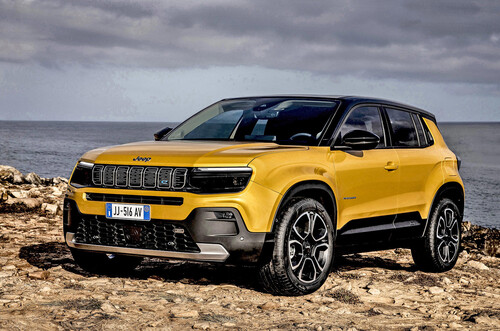
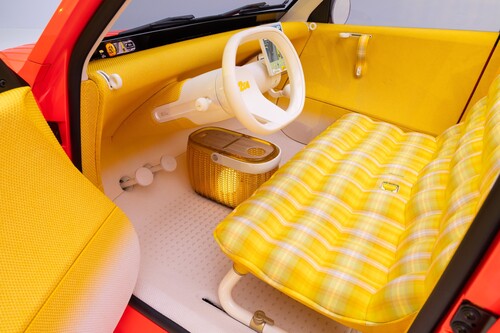
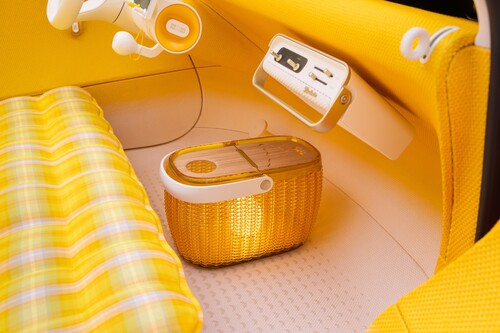
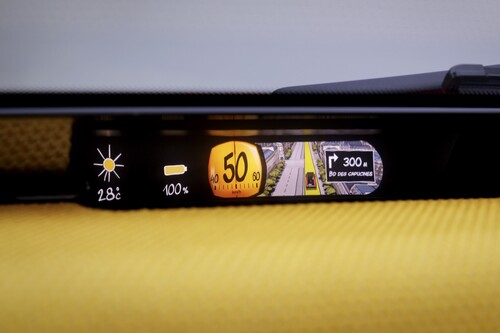
Speed limit recognition systems are 'far from infallible', says our motoring expert - Peter HinceDear Alex,The speed limit recognition system of my Citroën C5 Aircross is going crazy. I live in a built-up area with speed limits of 20 to 30mph. Several times in a 30mph zone it has told me the limit is 60mph.Another time, I emerged from a car park into a 30mph zone and the car indicated the limit was 5mph for more than three miles. My Citroën dealer says there is nothing wrong with the car. Has anyone else written to you with this problem, or have I got the only dud car?– RPDear RP,You don't have the only dud car. Owners write to me with variations on this problem with depressing regularity. Indeed, I experience the same problems myself when test-driving new cars.AdvertisementAdvertisementThe Citroën dealer is right, in a roundabout way – there is nothing wrong with the car. To put it another way, the car is performing in the same way as most other C5 Aircrosses – indeed most other modern cars – will. This is because speed limit recognition systems simply don't work very well. They are fairly simple, often based on rudimentary cameras that are far from infallible, sometimes picking up alternative speed limit signs on adjoining or parallel roads. Or, in the case of your car park experience, of failing to recognise when a speed limit has changed if there isn't a sign immediately visible upon joining a new road – which, in a 30mph zone, there often isn't.In some cars these systems are supplemented by global positioning system (GPS) data, but even then the system is not entirely reliable, as those data can be out of date, or invalidated by, for example, roadworks. Which does the car trust – the GPS data telling it a road is limited to 70mph, or its cameras, which have seen the 50mph temporary limit?As is the case with many modern motors, the technology on the Citroën ë-C5 Aircross is fallible - Matt HowellNot so long ago you could write off these systems as flim-flam, then switch them off for good. However, since 2024, all newly registered vehicles must have speed recognition fitted and automatically activated when the car is started, to satisfy EU regulations.And even though cars sold in England, Wales and Scotland are no longer subject to those regulations, manufacturers are uniformly unwilling to go to the extra expense and effort of re-engineering the software specifically for the UK market. Worse still, there isn't much in the regulations to say that these systems must work effectively – just that they must be present. So manufacturers are able to fit more cost-effective solutions that don't do the job particularly well yet still meet the rules.AdvertisementAdvertisementThe net result is that new car buyers are being forced to put up with sub-standard, half-baked systems that don't do what they are supposed to do, but which are being inflicted on them by a mandate to which, in Great Britain at least, they aren't even subject.All of which means there's no easy fix for your C5 Aircross's speed-limit-detection errors – other than to get into the habit of disabling it every time you start the car.A Renault 4 is a great small electric SUV - Vincent MieleDear Alex,We want to replace our Skoda Fabia with an electric car. Our annual mileage is fairly low; most days only involve local trips, with two or three longer trips each year; we would like to do these without recharging. We have off-road parking and solar panels, so home charging is easy.We would like a car of similar size to the Fabia, with a decent-sized boot and four doors, preferably not Chinese, while an SUV format would suit our ageing joints. We have £30,000 and think the Renault 4 would perfectly suit our needs. Do you agree, or should we consider something else?AdvertisementAdvertisement– CGDear CG,The Renault 4 is an excellent choice. Its 420-litre boot is a good size for a small car, while its taller stance makes it easy to enter and exit – and it looks terrific and feels great to drive and to sit in. And with a 247-mile official range (think 180-200 miles real-world) it will be more than capable of your 135-mile longer trips, even in winter when batteries tend to be less efficient.If the 4 has a downside, it's that its ride is slightly stiffer than the Renault 5 on which it's based, which could become tiresome over longer distances. If you test-drive one and find that this is a problem, try a Citroën e-C3 Aircross instead. The Extended-Range version has a near-identical range to the 4, but the e-C3 Aircross is more softly sprung and therefore more relaxing on longer journeys.Its memory-foam seats are pretty comfortable and while it doesn't have quite as strong a sense of fun as the 4, there are plenty of quirky touches that give a unique charm. It has 40 litres more boot space than the 4, too.AdvertisementAdvertisementRenault provides only a three-year warranty on the 4; Citroën will extend the warranty each time you use a main dealer for servicing until it's eight years old, although cover beyond the original three-year warranty is limited.If a longer warranty is key, look at a Hyundai Inster. It is smaller than the other two, so it will feel less adept on motorways but more at home in urban areas. Its boot is small, but sliding rear seats mean it can be extended to provide 351 litres of space – not as much as the other two, but more than your current Fabia.The greatest downside is the 229-mile official range, although this should still be enough to undertake your longer trips without having to worry about recharging. As with all Hyundais, it has a five-year, unlimited-mileage warranty, making it the peace-of-mind option.So the 4 is the feelgood all-rounder and the Citroën majors on comfort and practicality; try all three before making a decision.AdvertisementAdvertisementDo you have a question? Contact carsadvice@telegraph.co.ukTry full access to The Telegraph free today. Unlock their award-winning website and essential news app, plus useful tools and expert guides for your money, health and holidays.