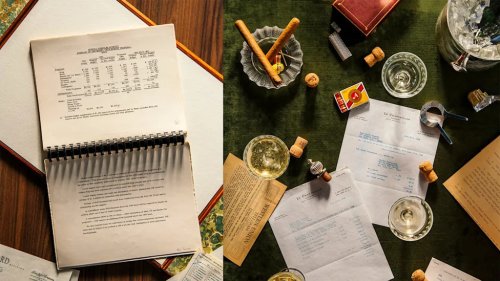
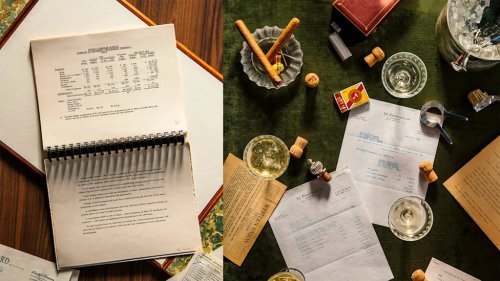
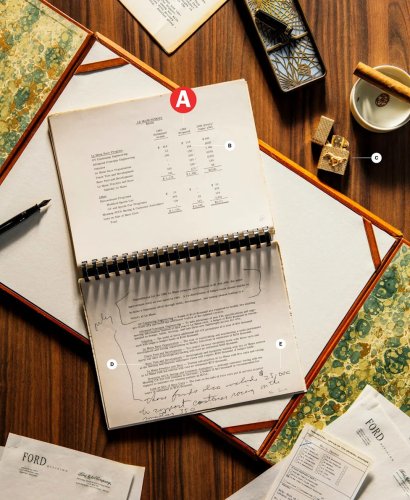
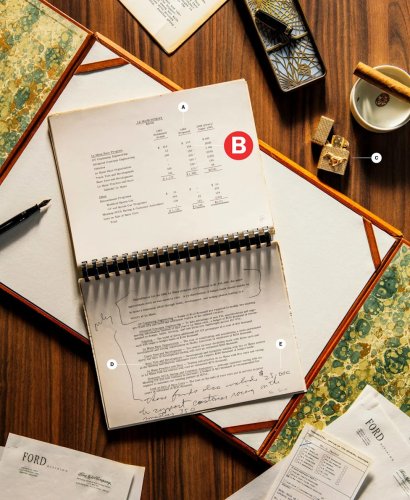
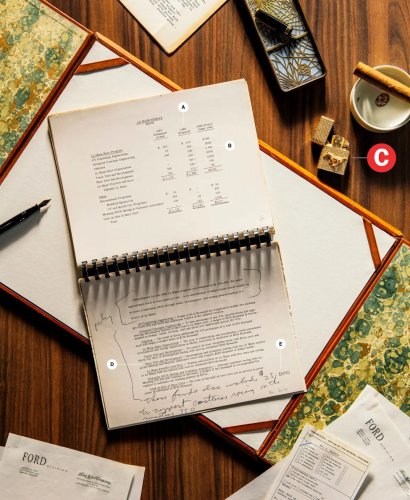
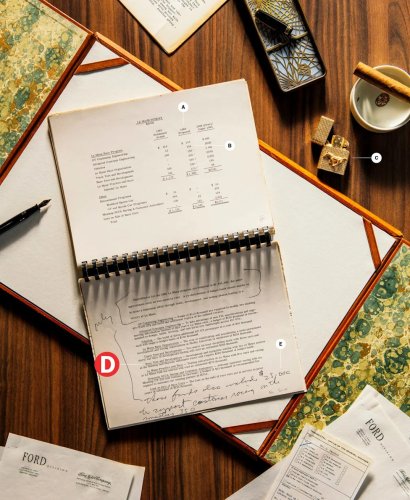
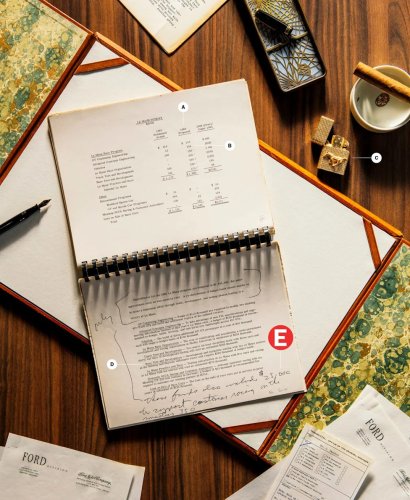
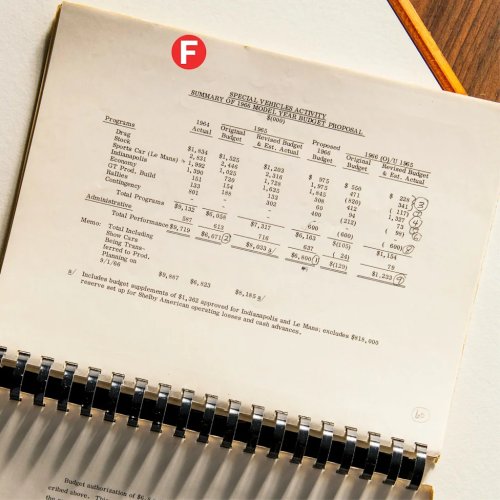
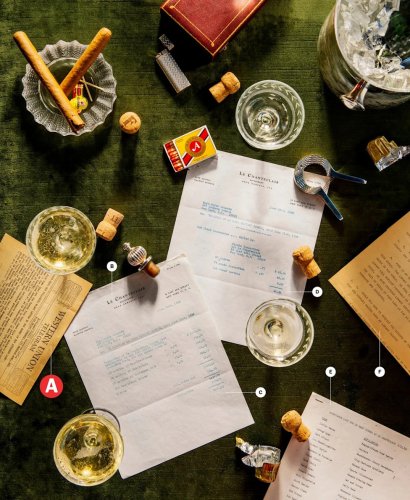
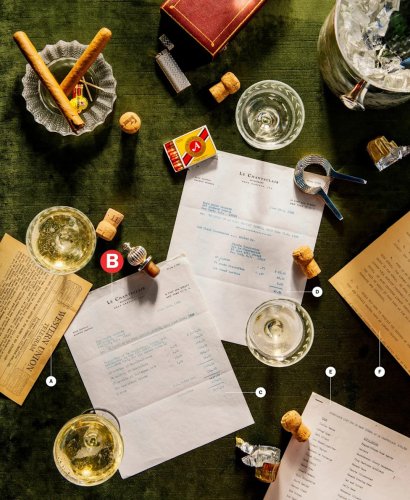
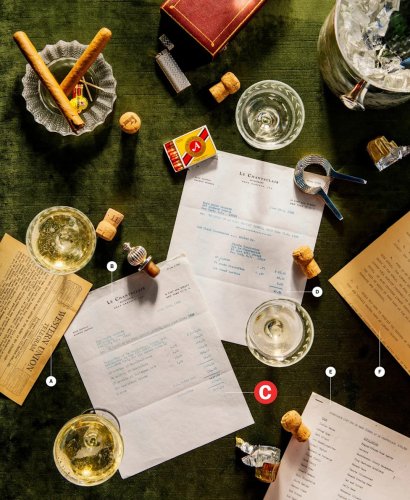
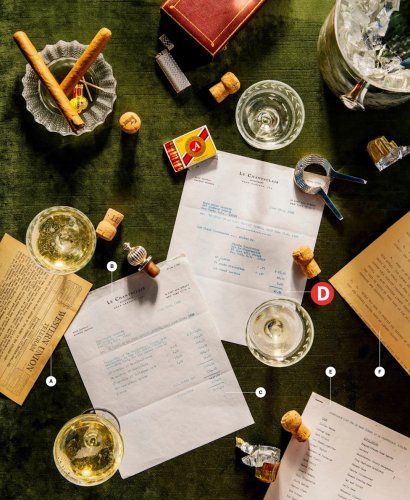
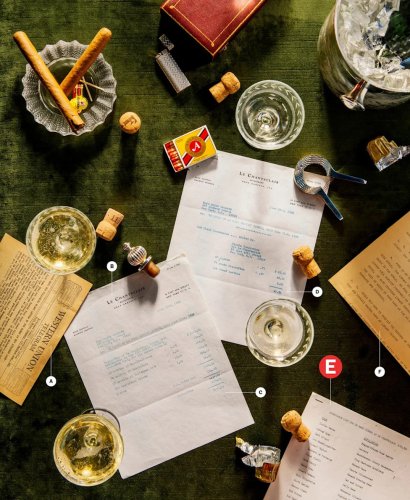
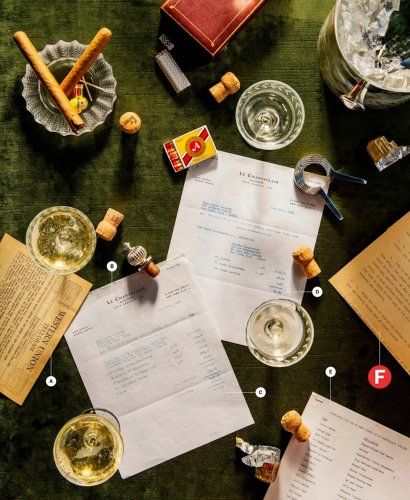

















The Receipts Behind Ford's Legendary GT40 Photography By EE Berger / Styling by Stephanie PottsPhotography By EE Berger / Styling by Stephanie Potts"You wouldn't believe what happens when a man like that turns on the faucet," the late Carroll Shelby once told me, regarding Henry Ford II's decision to spend whatever it took to beat Ferrari at Le Mans in the Sixties. We all know how that turned out. The Ford–Ferrari wars pitted two of history's most powerful companies against each other in an epochal rivalry to win the greatest sports-car race on earth. It's a story that continues to capture the imagination of the masses. And with Ford's announcement of a return to the top-tier class of endurance racing in 2027, new chapters will continue to be written. Recently, Road & Track raided the Ford archives and found documents that illuminate this drama in new ways. Some of the papers you see on these pages have never been published before. First, here's the paper trail leading up to the climactic event in June 1966.A.Photo credit: Photography By EE Berger / Styling by Stephanie PottsOne of the great mysteries about Ford's Sixties Le Mans triumphs regards the cost. How much did Ford spend to beat Ferrari? Now that mystery is solved, as seen in this vintage budget document. "Expenditures for the 1966 Le Mans program are budgeted at $1,845,000," according to the company's documentation. That's worth over $19 million today. Just to win one race! Losing was out of the question.B.Photo credit: Photography By EE Berger / Styling by Stephanie PottsThe budget called for $550,000 (about $5.7 million today) for "Advanced Concepts Engineering . . . to design, build, develop, and test three new lightweight series 427 GTs"—those being GT40 Mk II models with 427-cid V-8s.C.Photo credit: Photography By EE Berger / Styling by Stephanie PottsAdvertisementAdvertisementThe crux of Ford's racing program was "Win on Sunday, Sell on Monday." By 1966, the Ford Mustang, whose April 1964 release represented the most successful car launch ever, set all-time sales records. Check out this lighter from the Ford archives, with a Mustang logo. It was a gift from Lee Iacocca, "father of the Mustang," to CEO Henry Ford II, with an engraving: "To Health, Happiness and 30% Return," signed "Lee."D.Photo credit: Photography By EE Berger / Styling by Stephanie PottsFord budgeted $200,000 (just over $2 million today) for "development and durability testing with two or three entires [sic] at the Sebring and Daytona endurance races." Ford GT40s won both of those events in 1966.E.Photo credit: Photography By EE Berger / Styling by Stephanie PottsHere you can see scribbles that are probably from someone in Ford's accounting department: "These funds also include $25,000 to support customer racing on the Mustang 350." That being equivalent to about $259,000 today allocated toward the Mustang GT350 and GT350R, the first Shelby Mustangs, which came out in '65.F.Photo credit: Photography By EE Berger / Styling by Stephanie PottsFord's Total Performance campaign wasn't just about Le Mans. The plan was to take the entire racing world by storm, including rival Chevrolet. The company earmarked $975,000 in 1966 for drag racing (about $10.1 million today), $1.975 million for stock-car racing ($20.4 million today), and $308,000 for Indianapolis (just over $3.2 million today). Ford supplied motors for the revolutionary rear-engine Lotus Type 38 that won the Indy 500 in 1965 and the Lola T90, which won the race in '66.Ford threw one heck of a victory party, according to the receipts.Hearst Owned - Hearst OwnedAdvertisementAdvertisementVictory at Le Mans was something no American manufacturer had ever achieved. After the triumph in 1966, "it was checkered flags, Champagne, and chauffeur-driven cars," Ford driver Bruce McLaren once recalled. He and fellow winning driver Chris Amon were flown to the U.S. and picked up in a limo. "The enormous Lincoln that collected us at New York airport was flying a New Zealand flag on one wing and the Stars and Stripes on the other," McLaren said (he and Amon were Kiwis). These documents from the Ford archives illustrate how wild the revelry grew.A.Photo credit: Photography By EE Berger / Styling by Stephanie PottsAfter Ford's win at Le Mans in 1966, it was time to party. This Western Union telegram regarding the official banquet at Le Chanteclair in New York City on June 21, the Tuesday after the race, was sent to a long list of names. Guests were invited to celebrate "the first American victory [at Le Mans] in history."B.Photo credit: Photography By EE Berger / Styling by Stephanie PottsBrothers René and Maurice Dreyfus owned Le Chanteclair. They were also motoring icons. René, in particular, was a famed French grand prix driver in the Thirties, blacklisted by some teams because of his Jewish name (he is the focus of Neal Bascomb's terrific book Faster). The brothers opened their watering hole on East 49th Street in 1953 and decorated it with racing memorabilia.C.Photo credit: Styling by Stephanie PottsFor the "24 Hours of Le Mans Victory Dinner," Le Chanteclair charged $1285 for food. Twenty-five bottles of Pouilly-Fuissé cost $131.25, 26 bottles of Beaujolais cost $104, and 17 bottles of Bollinger Brut Champagne came to $204, while 453 cocktails added up to $566.25. The total bill was $2,800.03 (the equivalent of about $29,000 today).D.Photo credit: Photography By EE Berger / Styling by Stephanie PottsAdvertisementAdvertisementSeen here is the tobacco invoice from the victory party. It lists 60 cigars ($42) and 72 packs of cigarettes ($43.20). Notice the date on this bill (as well as on the drinks tab): two days after the party. It took that long to tally up the charges. That party was 60 years ago, as of this summer. Any attendees who are still alive probably continue to shake off the hangover.E.Photo credit: Photography By EE Berger / Styling by Stephanie PottsHere's the actual guest list. Look closely and you'll see the name "Dave Davis" of Car and Driver. That would be the famed automotive writer and editor David E. Davis Jr., publisher of the magazine at the time.F.Photo credit: Photography By EE Berger / Styling by Stephanie PottsThis page shows responses from Henry Ford II to interview questions for a Sports Illustrated article titled "Here to Show the World," published June 20, 1966. Portions of Le Mans were shown on television in the U.S., but many fans learned the details by reading about it after the fact in newspapers and magazines.A car-lover's community for ultimate access & unrivaled experiences.JOIN NOWHearst OwnedYou Might Also LikeIf You Can Only Own One Car, Make It One of TheseThese Are the Most Popular Cars by State