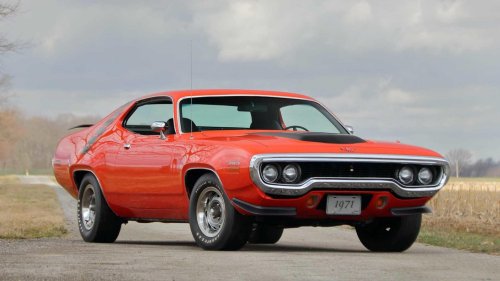
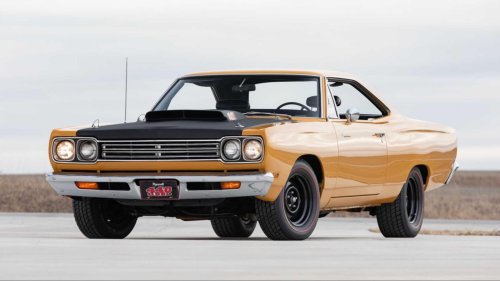
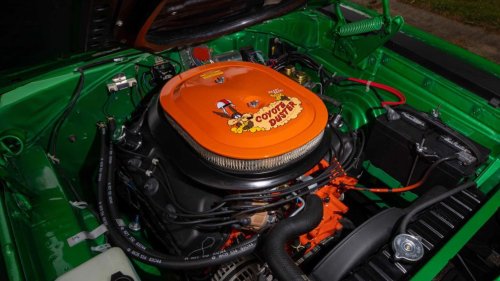
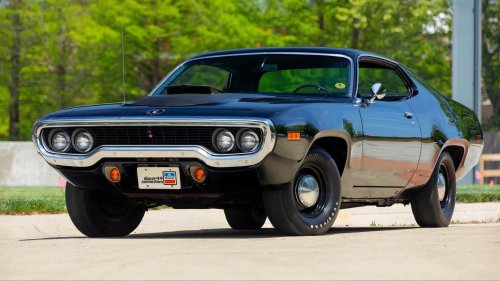
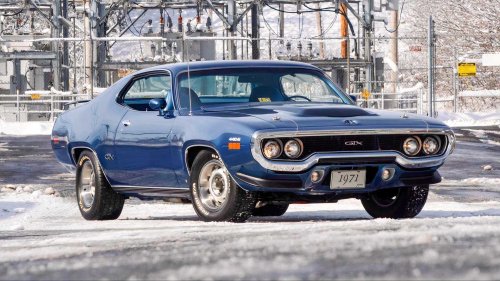
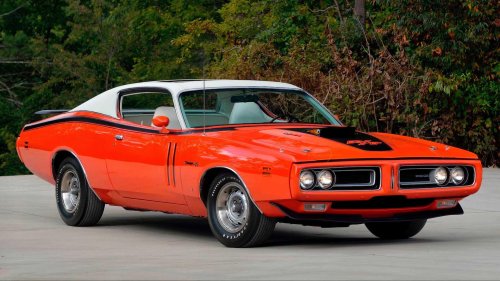
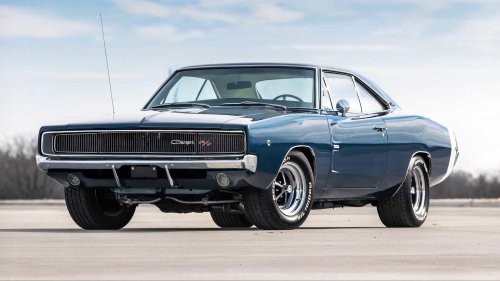
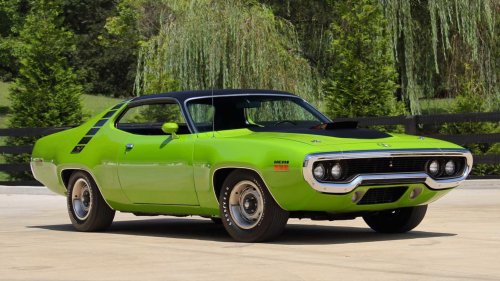
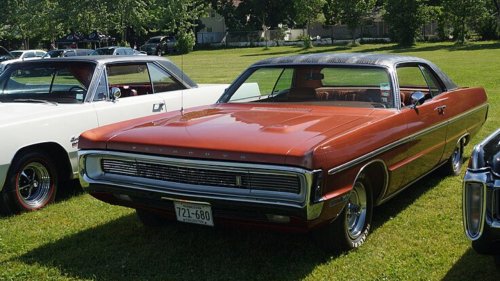
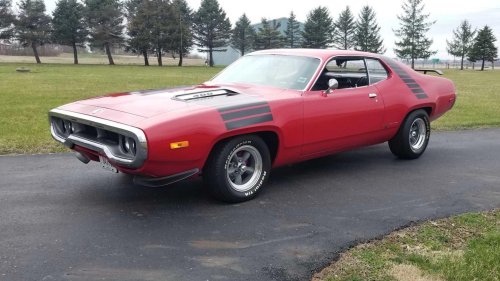
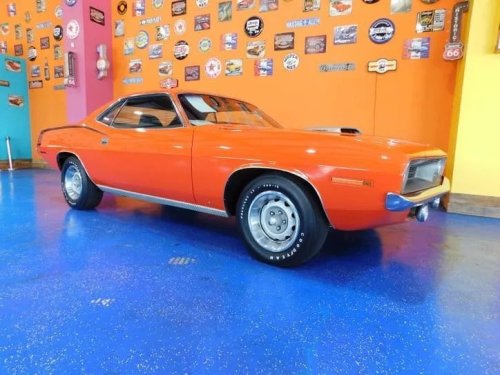
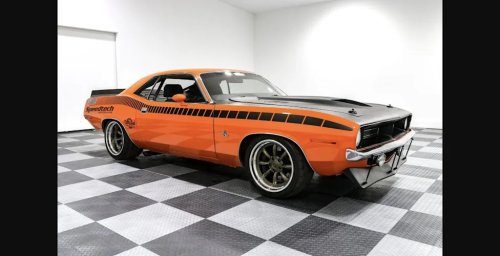
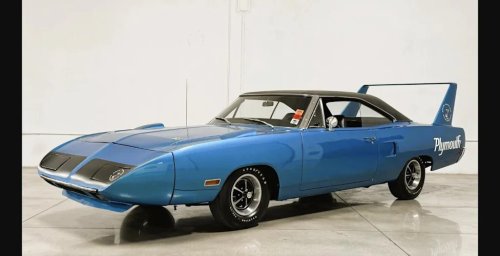
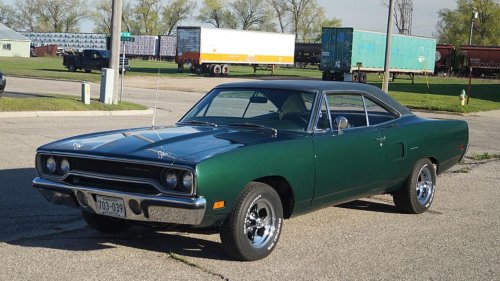
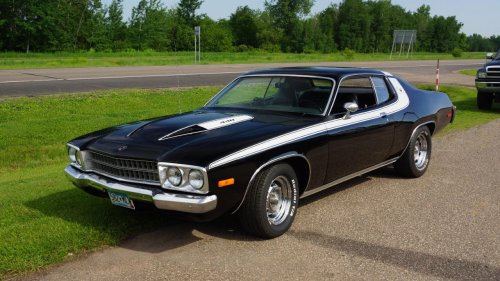
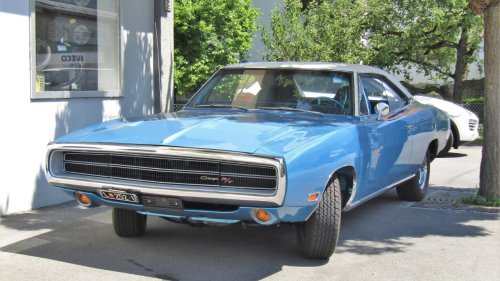
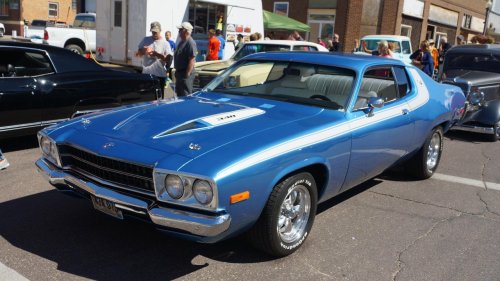
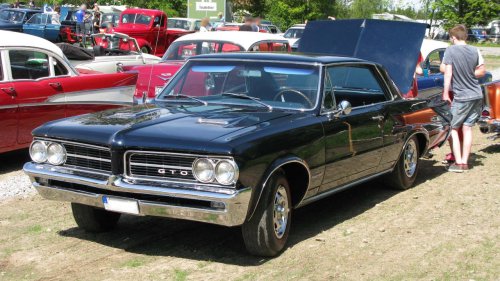
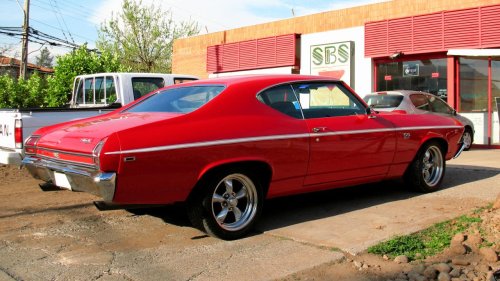
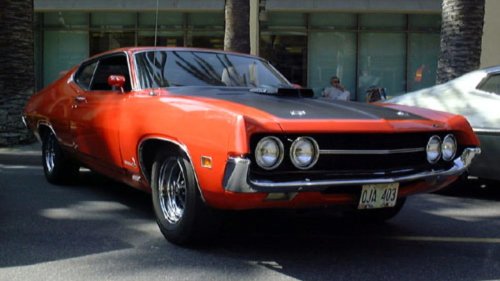
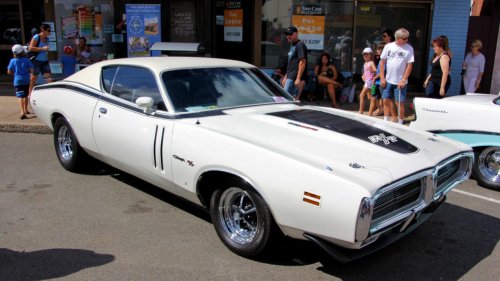
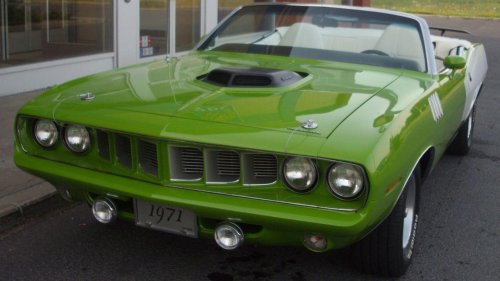
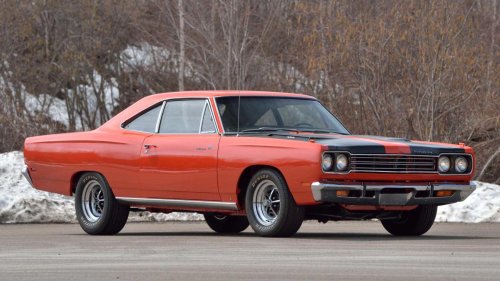
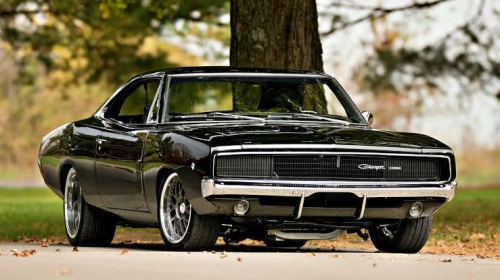
The idea of collecting sports cards, comic books, and records didn't really become a thing until the late 1980s, because before that they were viewed as items of immediate consumption, rather than a long-term investment. Classic muscle cars were also not always considered the big-money collectibles they are today, but thankfully didn't have such tragic fates.The whole point of muscle cars was to provide affordable speed machines, so they weren't dripping in luxury and folks back then could never have conceived they would eventually become quite valuable. Some probably had an inkling that the Ford Mustang Boss 429 or Dodge Charger Daytona was a keeper, but nobody thought there would be a million-dollar Pontiac GTO and that's a reality now. The Golden Age of American Muscle was an amazing time and the greatest thing about it was that someone could have bought a car for around $3,000 that is now worth a half-million or more. Chrysler B-Body 1971 Refresh Mecum 1971 was the last great year for the classic muscle car era, but Mopar didn't phone in their swan song as the B-Body platform got an amazing refresh. The Dodge Charger's Coke bottle design and the Plymouth Road Runner's boxiness were replaced with a "fuselage" body style that was meant to emulate a fighter jet. With a long hood, short decklid, and raked windshield, the new B-Bodies were sort of like bigger, meaner pony cars. The Charger and Road Runner had their own sheet metal, making them distinct, with maybe the Plymouth being the cooler-looking of the two. This was also the last year for the 426 Hemi and 440 Six-Barrel V-8 engines, so the beginning of the next-gen B-Body was actually an end of the era. Road Runner Budget Bruiser Mecum Muscle cars initially became a hit because they were powerful yet affordable rides, and the price was kept down by not including any fancy features that were unnecessary for blowing off doors. Then, luxury started creeping into the segment betraying the original purpose, and even Plymouth was guilty of this with their upscale GTX, marketed as the "gentleman's muscle car." To their credit, Plymouth sought to right the ship with the stripped-down 1968 Road Runner that was a raging big-block and not much else. The Road Runner could de-option things like back seats, carpets, and radios to get the price down even further, making it a huge hit with cheapskate horsepower junkies. 426 Hemi’s Favorite Ride Mecum The 426ci Hemi V-8 was unleashed on Dodge and Plymouth muscle cars in 1966, and helped secure the Golden Age King of the Streets crown for Mopar, as nobody had anything that could beat it. While it seems like Hemi-equipped cars are abundant, it's actually quite a rare engine option, with less than 10,000 produced between 1966-1971. Slightly less rare is the Hemi Road Roadrunner as the Plymouth nameplate was gifted more of these wondermills than any other model. In 1968, over 1,000 Road Runners were optioned with the 426 Street Hemi, and for all years, 2,014 cars were packing 425-horsepower and 490 pound-feet of torque, terrorizing Fords and Chevys with ETs in the low 13s. ’71 Plymouth Road Runner Auction King Mecum To modern eyes, the second-gen Road Runner is so badass-looking it should be a crime, but back in the day, people weren't too keen on them with production falling from an all-time high of 84,420 in '69 to just 13,664 units in '71. Buyers also weren't jacked up over the 426 Street Hemi either with a mere 55 cars being optioned with it that year. Combined with the fact that '71 B-Body cars were not very popular, this makes for one of the least likely classic rides to blow up an auction block, but we wouldn't be writing this if one hadn't shocked the collector's market.That triple-black 1971 Plymouth Hemi Road Runner pictured above dropped the gavel at Mecum Indy 2023 for an astounding $500,000. According to the listing, it is an unrestored, numbers-matching four-speed with just 10,828 miles on the odometer. Even cooler, it's a one-owner car, so somebody bought this street menace new for probably $4,000 and eventually sold it for a $496,000 profit. It's unclear if the original owner is the Nostradamus of muscle cars, but it's guaranteed that the 54 other people who bought a '71 Hemi Road Runner never had visions of an epic flip like this. More Regal Than an Upscale GTX Mecum The 1971 Plymouth GTX was like an aristocrat while the Road Runner was its menial laborer, but in today's collectors market the roles have reversed. The most a '71 Hemi GTX has sold for is $374,000, which math whizzes will recognize as being $126,000 shy of the best-selling Hemi Road Runner. It is ironic, or maybe just counter-intuitive, that the GTX was the top of the line muscle car that came with every option Plymouth offered, while the Road Runner was a no-frills budget ride that has now become the more expensive of the two. The '71 GTX actually has more six-figure auction sales, but that's because Hemi Road Runners are super-rare and hardly ever get listed. ’72 440+6 Could Take The Throne The Chrysler 440 Six-Pack as it was known at Dodge and either 6BBL or Six-Barrel over at Plymouth was a triple two-barrel carb big-block that delivered Hemi-like performance and an affordable price. As we mentioned, the 390-horsepower, 490 pound-feet of torque engine was discontinued in 1971, but not everyone at Plymouth got the memo. It was listed as an option in some early 1972 catalogs and two or three of them actually left the factory, but was never supposed to be. The whereabouts of at least one is known and should that car ever come up for auction, it could potentially join the Million-dollar Mopar Club, dethroning the '71 Road Runner as the hardtop auction king. A '72 440+6 is a genuine Holy Grail car that collectors would get into a bidding frenzy over. Revenge of the ’71 B-Bodies Mecum Conventional wisdom says that B-Body Mopars from '68-'70 should be the most collectible because enthusiasts prefer them, but the '71 are the ones setting records. We've already covered the half-million dollar '71 Road Runner as well as the $374,000 Hemi GTX, but there have been several hundred-thousand-plus sales from both nameplates. That Hemi Orange 1971 Charger Hemi R/T pictured above sold for an eye-popping $550,000 at an auction in 2023, becoming the most expensive non-aerocar hardtop muscle car of all time. There are also many other Hemi R/Ts and Super Bees that sell in the multi-hundred thousand range, proving '71 B-Bodies rule the collector's scene. Second-Gen Charger Places Second Mecum The second-gen Dodge Charger is not only the defining ride of the Golden Age, but a cultural icon that has starred in more movies than Vin Diesel. The 1968-1970 Charger was simply the perfect muscle car and the reason why collectors dismissed the '71s for so long, but it's now taking the back burner to its successors. The highest selling second-gen Charger Hemi R/T we could find was a '70 that sold for $352,000 and even the super-rare '69 Charger 500 peaked at $231,000. Those prices are about half of what the top-selling '71 B-Bodies are going for, and quite frankly, it makes no sense. They are all very cool, but the second-gen Charger is on every enthusiast's wish list, and it shouldn't be that much less valuable than cars nobody even wanted 20 years ago. ’71 Plymouth Road Runner Prices And Values Mecum We know that a superb example of a '71 Hemi Road Runner is worth a fortune, but even lesser cars are up there. J.D.Power reports that the high retail price is $211,700, which is slightly less than the Hagerty Concours condition value of $285,000. Either way, that's a lot of money for a set of wheels nobody could have predicted would become so collectible. As we mentioned, there were only 55 '71 Hemi Road Runners built, which makes it among the rarest Mopar muscle cars, and it's infrequent appearances at auctions helps drive up the price. Only three have been listed in recent memory with the $500,000 record-setter, a $242,000 sale in 2025, and another for $176,000 back in 2019.The '71 Hemi Road Runner is now among the elite classic muscle cars, but because they weren't terribly collectible until recently, many people didn't hang on to them, and they've just been lost to time. Some estimates put the number of existing '71 Hemi Road Runners at around 25, but that number could be as low as just a dozen or so. It's unlikely that another low-mileage survivor car will ever show up again, but somewhere, somebody has a highly-optioned second-gen Hemi, rusting away in the backyard, with no idea how valuable that car really is. When that Road Runner is eventually found and restored, it may end up breaking the B-Body record with a monster auction sale.Sources: Hagerty, J.D. Power, and Mecum