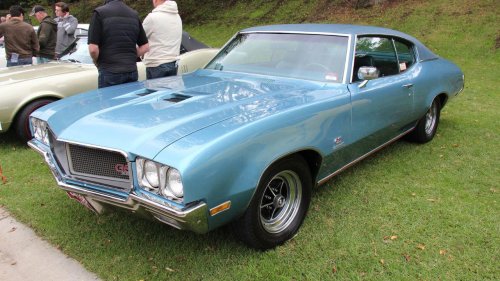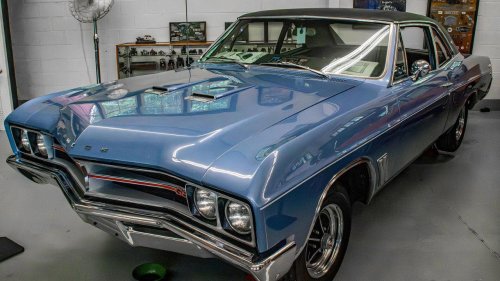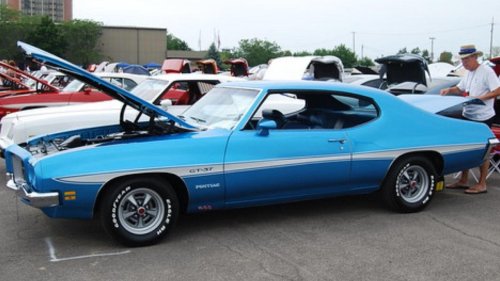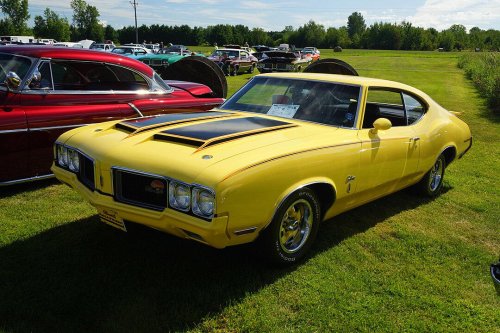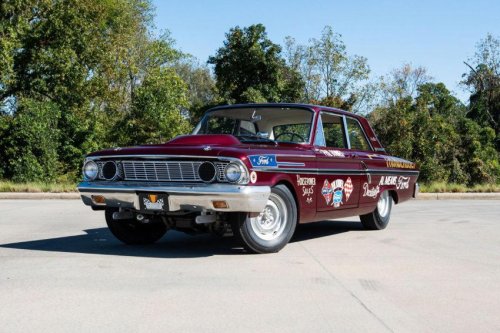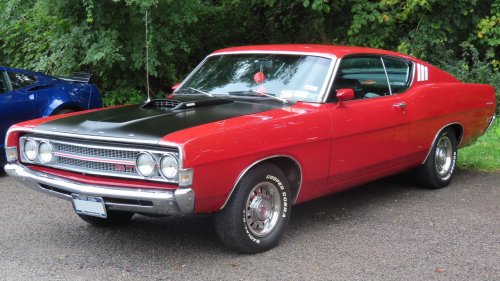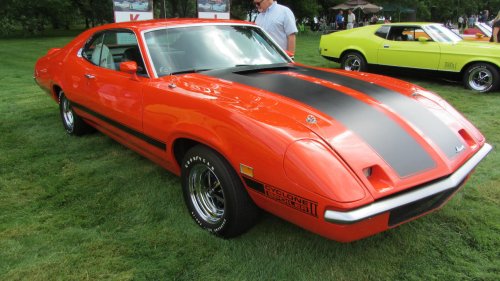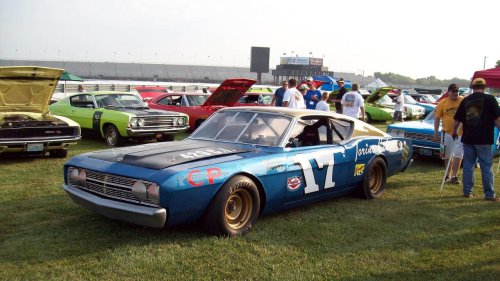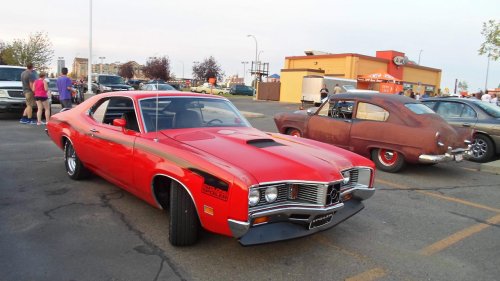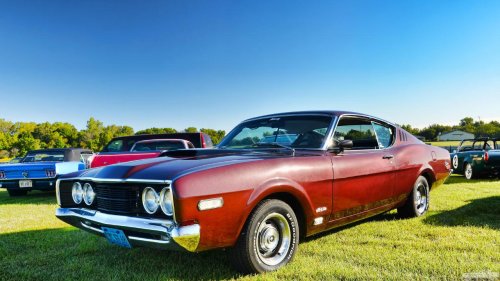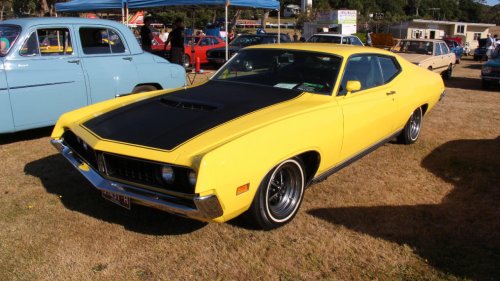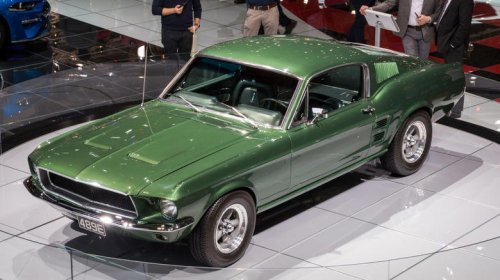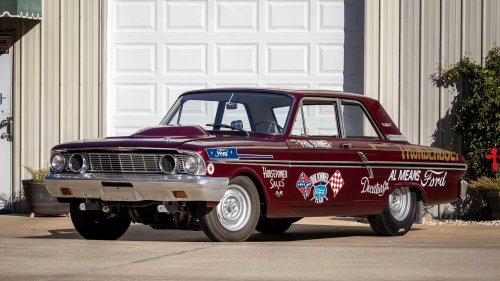
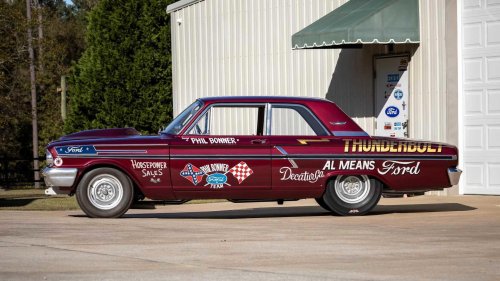
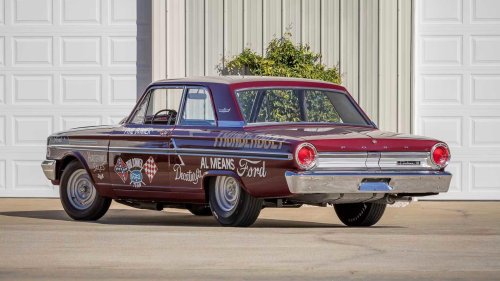

























The 1960s and 1970s were a heyday for American muscle cars, as all automakers vied for the top spot among consumer-ready, drag-strip-dominating vehicles. Ford, whose Mustang was a fixture on two-lane roads and police impound lots, released a flurry of muscle-bound cars to eager drivers in all budget tiers over those two decades. The automaker's upscale Mercury brand also had a few, though it also brought more comfort and luxury options to the mix.These cars combined the automaker's existing high-powered engines, performance, and styling, and took them to new heights. We've gathered a list of our favorite rare Ford muscle cars from the 1960s here to help you get started on your collector journey. The cars on this list offer high-powered V8 performance, low production numbers, and all the wild styling anyone could hope to see from a classic muscle car. Here are the rarest Ford muscle cars from the 1960s, and one that stands head and shoulders above them all when it comes to scarcity. The 1964 Ford Fairlane Thunderbolt Is The Rarest Production Muscle Car Of The '60s Units Produced: 100 Mecum AuctionsFord only made about 100 of these 1964 Fairlane Thunderbolts, and they were something special. These weren't your typical family sedans – Ford essentially took its NHRA Super Stock Championship car and sold it to regular people, though "regular" might be stretching it given what these cars could do.Mecum Auctions Under the hood sat a massive 427-cubic-inch V8 that Ford borrowed from its bigger Galaxie model, complete with dual four-barrel Holley carburetors. The official rating was 425 horsepower, but anyone familiar with Ford's tendency to underrate its performance engines knows that number was likely conservative. Buyers could pick between two transmission options, and everything else about the car screamed "race car" more than "street car."Mecum AuctionsFord went all-in on making the Thunderbolt lighter and faster. The body used fiberglass components wherever possible, and some windows were made from plexiglass instead of regular glass to shave off pounds. A functional ram-air hood scoop fed cool air directly to the engine, while underneath, Ford fitted heavy-duty suspension parts, a locking rear differential, and an electric fuel pump. The cars even came with proper drag racing tires from either Goodyear or Mickey Thompson, making it clear what Ford intended these Thunderbolts to do. Performance Specifications 1969 Mercury Cyclone GT CJ Drag Pack Is The Runner-Up Units Produced: 358 Ford's Mercury division built its version of the Fairlane, the Cyclone, late in the 1960s, and the GT variant became the pinnacle of the line in 1968 and 1969. The expensive-for-the-time Cyclone GT offered a 428 cubic inch Cobra Jet V8 making 335 horsepower, and some configurations got the "Spoiler" package, which brought NASCAR-inspired updates to the car. A lightweight fiberglass hood and a three-speed automatic rounded out the car's impressive performance specs.Via Flickr The rarest of them all, however, seems to be the Drag Pack option, which sees production numbers dwindle to just 358 units. This one featured Super Cobra Jet upgrades to the engine, including an external oil cooler and balancer and LeMans-style connecting rods. Officially, it made 335 horsepower, but the real output was easily closer to 400.Though it offered blistering performance numbers for the time, the Cyclone GT was overshadowed by the Mustang and other more dedicated muscle cars of the time. The GT would live on into the 1970s, but fuel economy regulations ended up being the car's silver bullet, leaving Ford with a dwindling number of engine options and middling performance figures for the car. Performance Specifications The 1968 Mercury Cougar GT-E Is Exceedingly Rare Units Produced: 394 Mecum AuctionsWhen Ford launched the Mercury Cougar in 1967, it carved out its own space as a more upscale alternative to the Mustang. The Cougar shared the Mustang's bones but wrapped them in sleeker styling and a more premium interior. Then, in 1968, Mercury turned up the heat with the GT-E model, transforming the refined Cougar into something genuinely fierce.Mecum AuctionsThe GT-E remains incredibly rare today, with just 394 examples produced. Under the hood, buyers got either a 427 or 428 cubic-inch V8 producing 335 horsepower and a stout 445 pound-feet of torque. Those numbers might sound modest by today's standards, but they were enough to launch the GT-E from zero to 60 mph in roughly six seconds – impressive performance for a luxury-oriented muscle car of that era.Mecum Auctions Performance Specifications 1969 Ford Torino Talladega Is An Overlooked Gem Units Produced: 754 BaTThe Ford Torino was built for around eight years between 1968 and 1976, but the one-year-only Talladega model was the pinnacle of early production efforts. Ford only built the car for a few weeks in the early days of 1969, naming it after the now-iconic Talladega Superspeedway in Alabama. It was only produced to satisfy homologation rules in the late 1960s, which required 500 road-going cars to be built alongside the race-only models for NASCAR compliance.BaT The two-door Torino Talladega had a modified front end and revised bodywork to improve its aerodynamics, and the front bumper was reshaped to boost airflow into the engine bay. Ford also updated the car's rocker panels to allow a lower ride height, which gave it a higher top speed while conforming to NASCAR's regulations. Compared to "normal" Torinos of the time, the Talladega featured upgraded engine and power steering oil coolers, heavier-duty shocks, and a beefier automatic transmission with column shifting capabilities.A total of just 754 Talladegas were built, but four of them are missing from the online registry, which tracks known cars. Though the actual numbers are not known, Ford is said to have lost thousands on the sale of each Torino Talladega, and today, the cars command a significant premium on the collector's market. Performance Specifications Closing Thoughts Any of these rare Ford muscle cars would be a solid choice for a collector, but they are all significantly more expensive than a "less special" car from the same era. If you want to drive your car and not worry about the resale value, be careful in your purchasing journey.The cars you see on this list are exceedingly rare, and their values are above and beyond any reasonable amount even the most dedicated enthusiast can expect to pay. Numbers-matching cars - those with engines, transmissions, and other components that carry the same VIN - are even more expensive, making them difficult to enjoy outside of a conversation at a Cars & Coffee event.If you're looking for a 1960s Ford muscle car and don't want to pay a premium, looking away from the rarest models is a good choice. The automaker built thousands of the Mustang and other cars perfectly suited for modification and engine swaps that make it hard to recommend a super-rare option costing thousands more than a readily modifiable "normal" model.The good news is that there are several great Ford cars from the 1960s that make it hard to ignore the automaker's golden era of performance. When you're ready to get started shopping for a 1960s Ford muscle car, pick the model that has the most complete and best-condition body you can afford and plan for extra expenses in the way of powertrain and suspension upgrades. These cars are a great start, but it's important to choose the vehicle that best fits your needs and the vision you have for your next muscle car build.Sources: Hemmings, Hagerty, Ford.