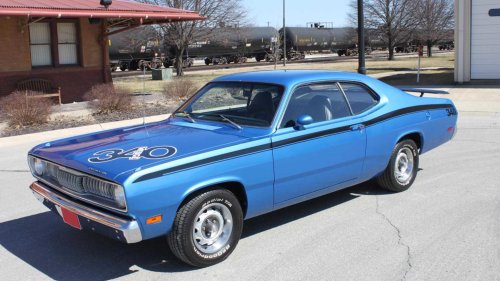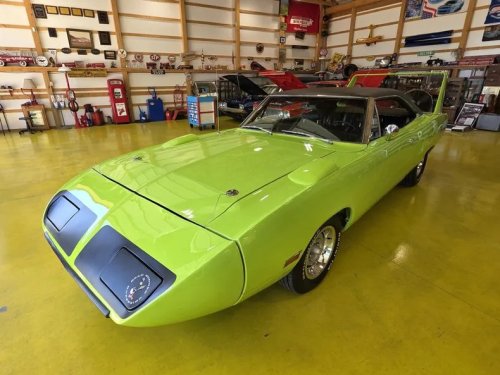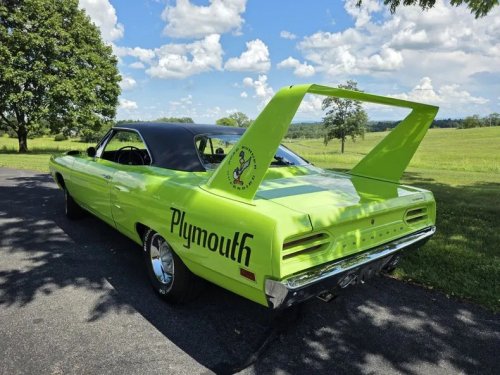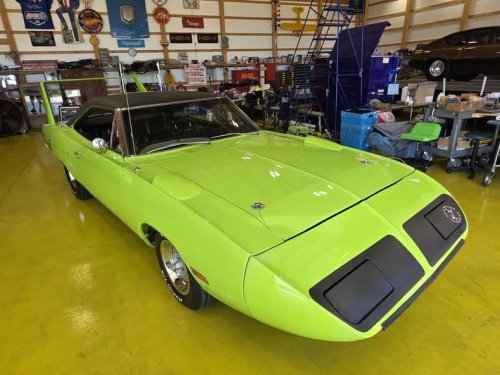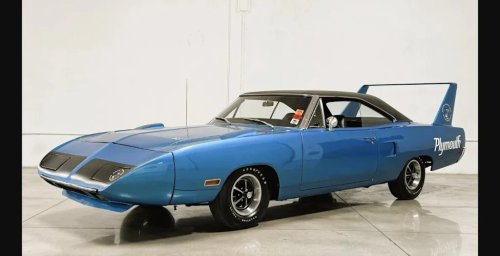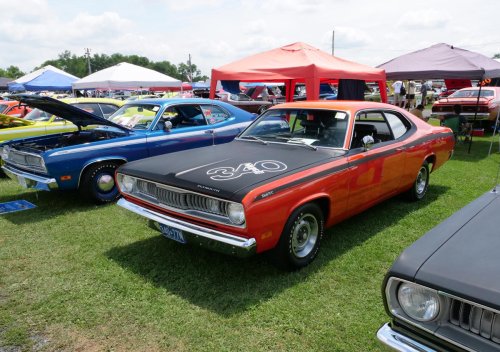
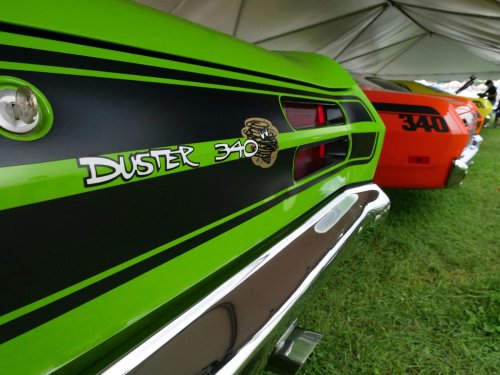
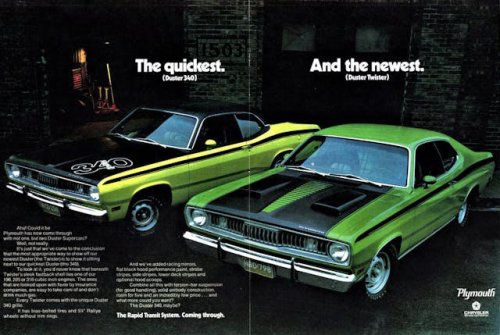
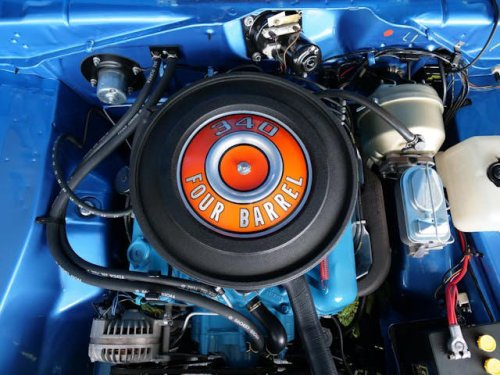
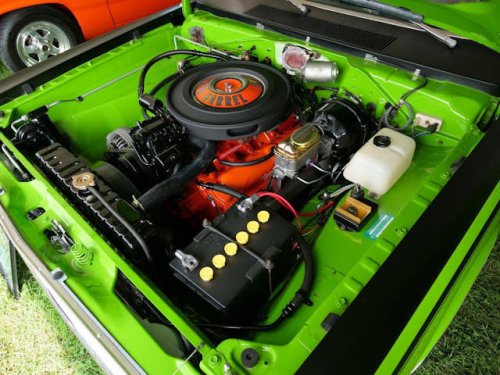
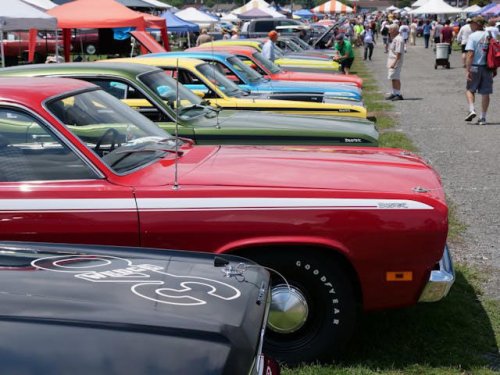
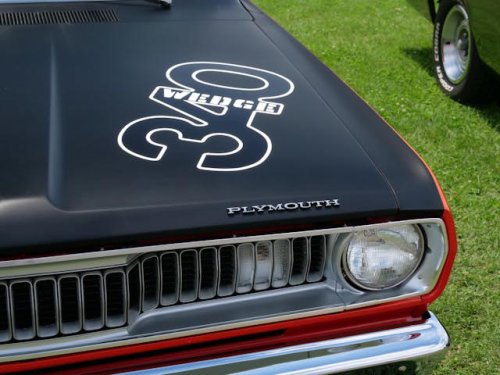
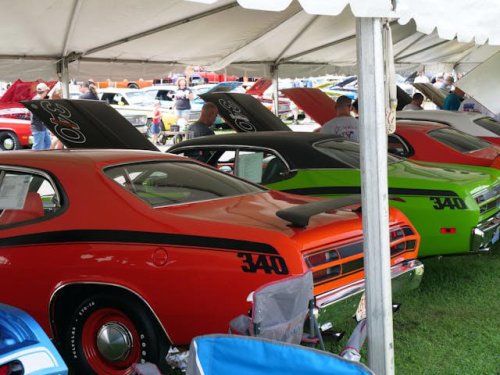
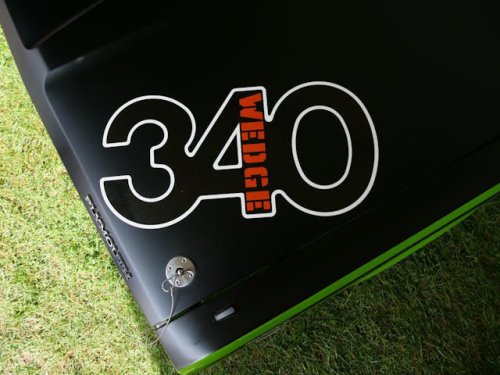
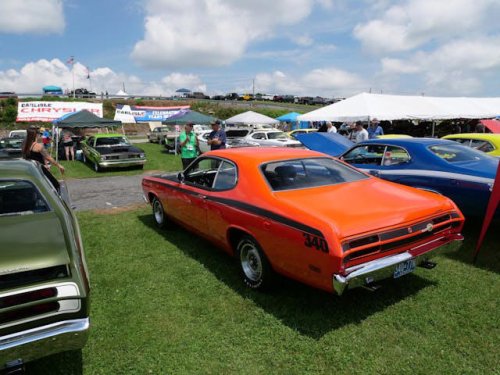
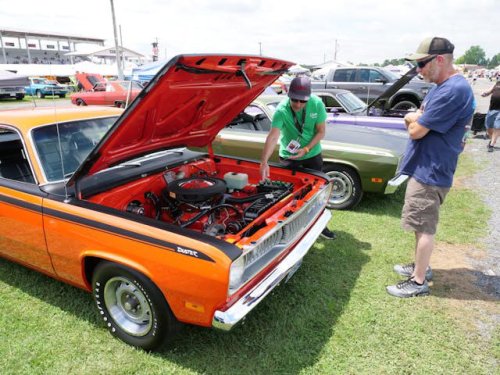
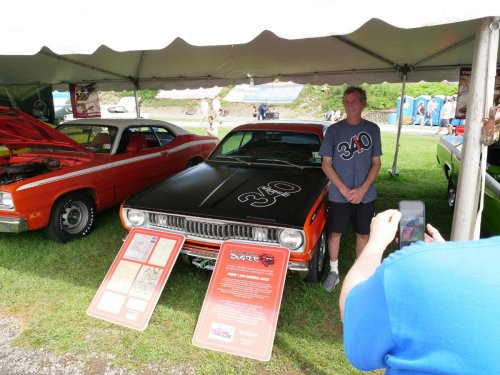
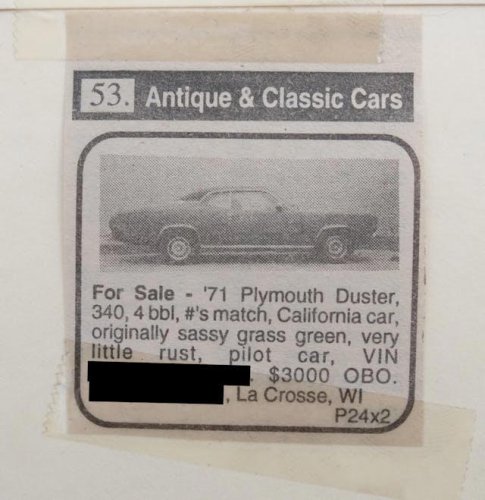
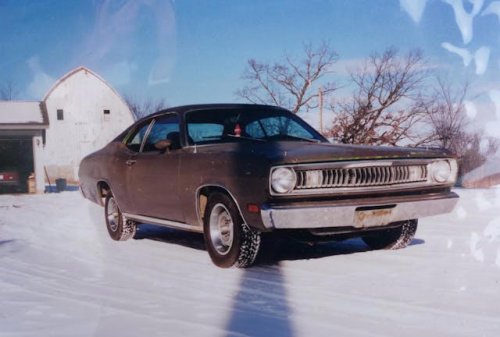
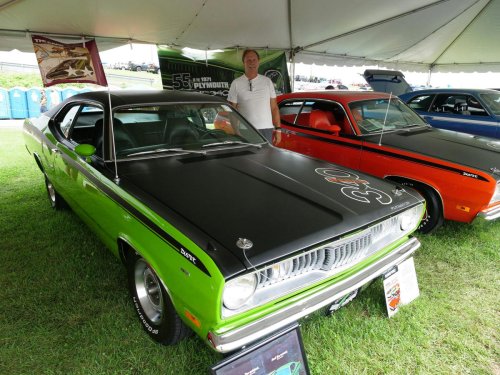
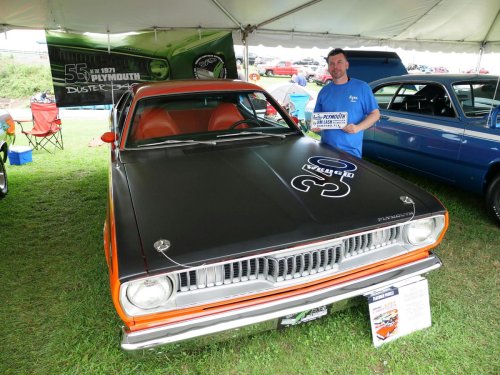
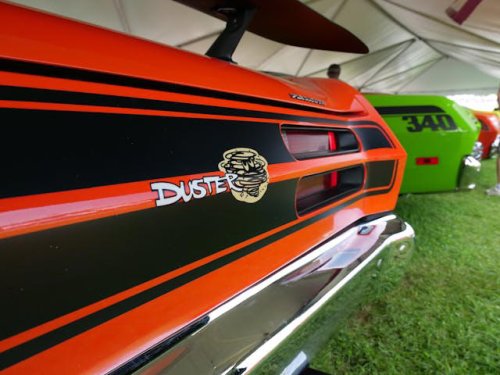
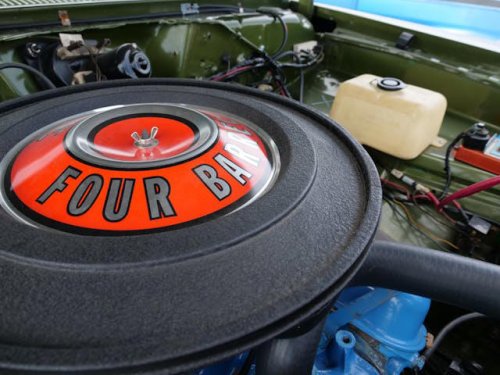
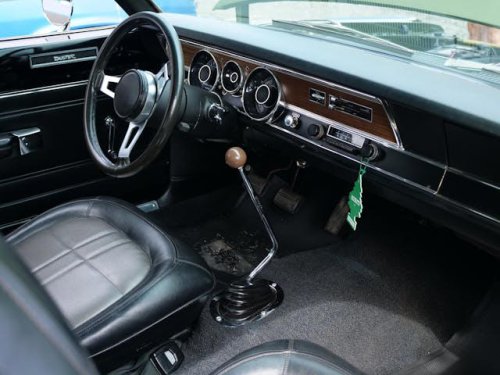
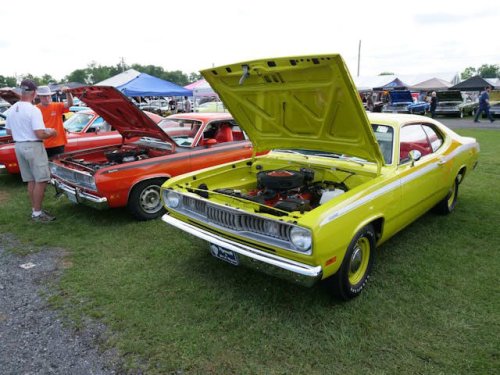
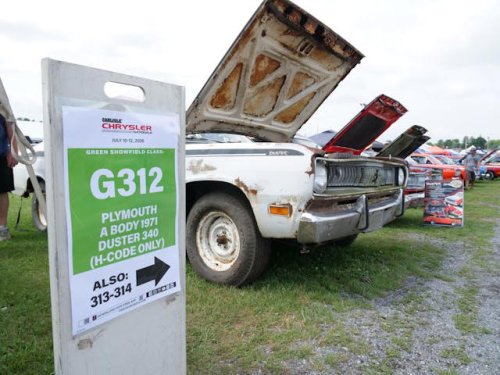
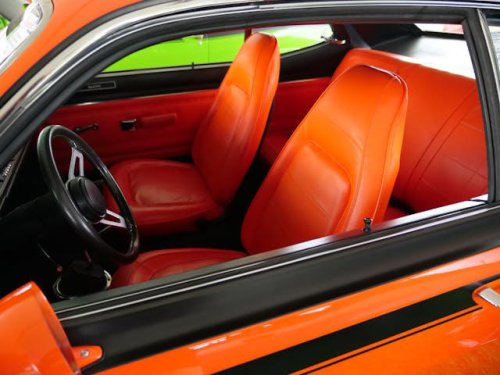
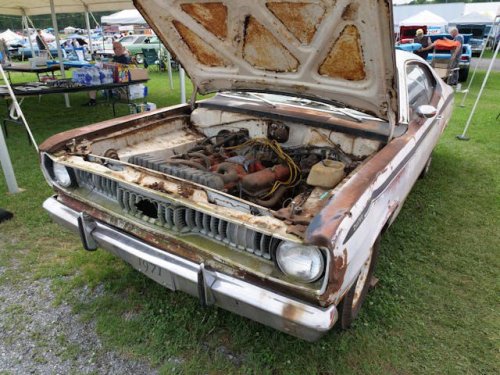
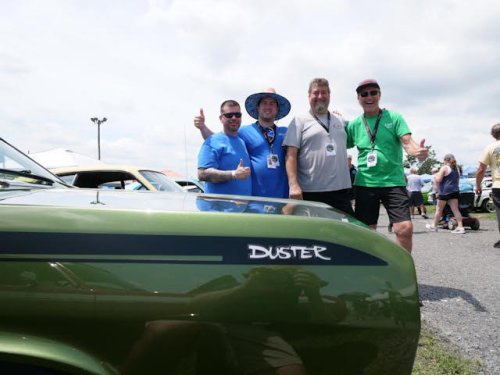
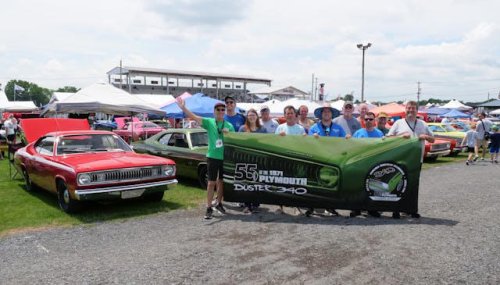
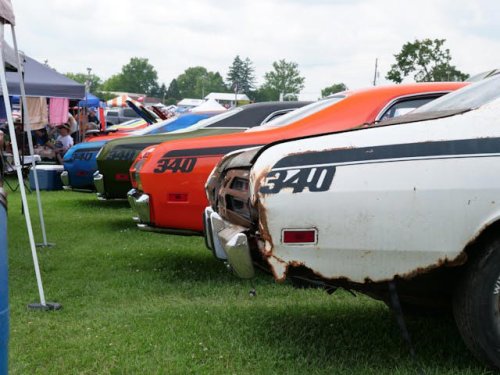



















The Plymouth Duster 340 Kept Muscle Cars Light, Fun, and Affordable Pollution regulations and the 1973 oil crisis are often blamed for killing American muscle cars, but long before the gas lines started, Detroit had already realized another limiting factor to the market: money. By the late ’60s, muscle cars had grown in both power and size, and so had prices. These bigger, more powerful cars were more expensive to buy and more expensive to insure—in part because of the increased number of accidents young drivers were causing in them. As a result, they were slowly slipping out of reach for many buyers. It seems crazy today, but several folks have told me stories of cars like the Plymouth Superbird or AMC Rebel Machine languishing on dealer lots, unable to find a customer willing or able to spend the money needed to buy and insure one. This, however, created the opportunity for smaller, less powerful muscle cars that were still fun to drive but less expensive to own. One of the entries into that market was the Plymouth Duster 340. Debuting in 1970, the Duster was a sporty two-door version of the Plymouth Valiant compact. Born as an economy car, its base engine was a 198-cubic-inch slant-six, but the real excitement started with the performance-oriented Duster 340. A genuine model, not just a trim level or option package, the Duster 340 combined Chrysler’s 340-cu-in V-8 from its legendary LA family of engines with the Valiant’s lighter A-body platform, making for an appealing sporty compact. An advertisement for the 1971 Duster 340 (left) and the new Duster Twister, which copied the 340’s sporty looks but came with a slant-six or 318 V-8, for even more insurance savings. Plymouth/Flickr/Alden Jewell The price, starting around $2100, was appealing, too. Adjusted for inflation, $500 in 1970 is equal to about $4400 in 2026 dollars, meaning that the “few hundred bucks” difference between a Duster 340 and a V-8 Barracuda, or a few thousand between a Duster and a Road Runner, was more of a yawing chasm than the small jump it sounds like today. While 340 cubic inches (5.6 liters) is hardly “small,” it was compared to big-blocks you’d find in Plymouth’s other rapid-transit cars. That smaller engine, combined with the economy-minded Valiant lineage, helped keep the insurance bills lower. The car’s size also made it light, which made for better handling and peppy acceleration, even with the Duster’s smaller engine. The Duster 340 lasted from 1970 until 1973, but the ’71 model is generally regarded as the apex within collector circles. Offering more performance and style upgrades than the year before, without the emissions detuning required in the years that followed, it’s the sweet spot. I had the pleasure of seeing more than 30 of these cars at this year’s Carlisle Chrysler Nationals event in July, which celebrated the 55th anniversary of the 1971 model. Lined up at the Carlisle Fairgrounds, the Dusters looked almost like a row of M&Ms, their bright candy colors shining in the sun on a breezy July day. Almost immediately I was drawn to the blacked-out hoods and the massive “340 WEDGE” decals, supposedly the largest engine call-out on any muscle car. The sharktooth performance grille, a design cue shared with ’Cuda, immediately identifies it as a performance-minded Plymouth, and the semi-fastback rear gives it both personality and practicality. Legit performance credentials came from the 340 small-block V-8, with a 10:3.1 compression ratio, Carter 80-cfm ThermoQuad four-barrel carburetor, enlarged intake and exhaust valves, a forged crankshaft, and dual exhaust—all good for 275 gross horsepower. Suspension was also beefed up over the standard economy Duster. Notable go-fast options included a special 8.75-inch rear diff used on other high-performance Mopars and a performance axle package with an available 3.91 rear axle gear. A three-speed manual was standard, with optional four-speed manual or three-speed TorqueFlite automatic. Notable look-fast options included side stripes and 340 decals on the rear quarters, treats like the aforementioned blackout hood and 340 WEDGE decal, or the even rarer performance hood with dual scoops. Other desirables included rallye wheels and a rallye instrument panel. And there’s just something about those decals that immediately endeared me to the Duster 340. In today’s world of cheap and accessible printing, anybody can design and order custom car decals, regardless of their talent or taste. But knowing that some designer at Plymouth came up with such a ridiculously big logo and successfully convinced a stodgy group of managers to approve it makes it all the more amusing. The fact that it faces away from the driver for the whole world to read adds to the car’s underdog personality. The Carlisle Fairgrounds were filled with nearly 3000 Mopars over the weekend of July 10–12, including 33 Plymouth Duster 340s from 1971—the most gathered in one place in a long time. Joe Ligo Clearly, I wasn’t the only one under the Duster’s spell, as several owners were eager to tell me about their cars. I had been invited to the 55th anniversary event by Liam Raftis, one of the admins of the 1971 Plymouth Duster 340 Registry, a group established in 2024 to track down and document these unique cars. Having traveled all the way from Ontario, Canada, he’s one of the car’s greatest evangelists, happily talking it up with anyone who stopped by. “As a high school student working part-time,” he told me, “I was drawn to the Duster 340 because it represented something unique: an economical car that offered genuine high performance… I purchased my first used 1971 Plymouth Duster 340 four-speed, finished in GW3 Sno-White, and from that moment, the car became part of my DNA.” Like so many teenagers, the car was more than just transportation for Raftis; it brought freedom, excitement, and a lifelong love of Mopars. He eventually sold that first Duster but came back into the fold in 2021 with a beautifully restored four-speed car in Tor-Red. I soon learned that every owner had an interesting story of how they acquired their Duster. Some were old used cars they had restored. Others were handed down from father to son. Several had been bought as cheap race cars, then preserved with extremely low miles. Owner Doug Mertinke still has the original classified ad from when he purchased his back in 1995. “Back before there was Facebook Marketplace and all these different places you can buy and sell cars,” Mertinke said, “we had a little local shopper newspaper called The Trading Post, and every Tuesday it would come out, and you’d want to get the early edition so you could look at the new listings for cars for sale.” At the time, Mertinke had been looking for a Chrysler A-body, specifically in one of the sought-after “High Impact” colors of Tor-Red, In Violet, Top Banana, Curious Yellow, Black Velvet, or Sassy Grass Green. His friend spotted an ad for a 1971 Duster 340 in Sassy Grass Green, and so Doug made the trek through Wisconsin snow to go see it. The car had lived some rough years, as evidenced by several dents and a bad respray in a drab metallic brown. But having originally come from California, it had hardly been touched by the deadly salt of Wisconsin’s winter roads. “I opened the hood, and all the original green was still there,” Mertinke said, and that was enough for him. He bought the car for $3000 cash and hauled it home. Although it was running and driving, within a year he began a complete restoration, back to Duster’s original glory. Interestingly, his is a “pilot car,” built on the first day of production for the 1971 models, making it one of the oldest known surviving 1971 Duster 340s. Pilot cars were typically very well-optioned, as reflected in his long list of features. “I knew it was a special car, and I had the opportunity to sell it many times, and I’m glad I didn’t. And I was just fortunate enough to hang on to it for all these years,” he said. “I could have flipped it and made some money, but you know, then I wouldn’t have it! So I’d rather have the car.” Although $3000 was a decent amount of money in 1995, it was far cheaper than what better-known muscle cars were selling for, and it was this value in part that attracted Registry co-founder Ryan Mason to his Duster 340 when he bought it in 2006. Duster Registry admin Ryan Mason with the car he restored, holding a plate from the dealer it was originally sold by. Joe Ligo “I was always looking for a Duster,” Mason said. “I was an A-body person.” (I noticed that Mopar guys typically identify themselves by what platform of cars they like best). “When I restored it, we didn’t have a garage… My family lived in an apartment and we rented a storage unit for three years. Sweating in that Florida heat, we got it done.” Echoing Mertinke, Mason explained how these cars weren’t held in the same esteem then as they are now. “I think when I restored it in 2009, there was one that was restored to this quality and it got about $30,000–$35,000 on eBay. And people were shocked then. Like, people were sending me quotes, ‘This car just sold for $35,000 on eBay!’ That was a high price for Dusters back then… They thought I was dumb for dumping a bunch of money—about $25,000—into this, and they thought I was kind of an idiot back then. But I think it’s worth it now.” As Mertinke explained, rising interest in the big-block (and big-buck) Mopars has carried the Duster values along for the ride. “The E- and B-body cars, you know, Challengers, ’Cudas, and Chargers, the prices on those things really went up, and I think they brought the A-body stuff with them. Because it used to be that you could buy a completed car like this one… an original, decent-shape car for less than $20,000. Well, now, that’s not the case.” According to the Hagerty Price Guide, prices for a concours-condition 1971 Duster 340 have gone from around $21,000 in 2006 to almost $95,000 today, with a few selling for even higher at auction. Still, that’s less than something like a 1971 Plymouth ‘Cuda, which hovers around $126,000 for the same 340 V-8, and jumps to $179,000 for a 440 Six Pack V-8. And we all know what Superbird values are like… The upside to that affordable price was that until recently, you could still get a Duster 340 for relatively little. The downside, however, is that the low price may have contributed to a low survival rate, especially compared to other big-ticket Mopars. Raftis theorized that a lot of people bought them, raced them, and threw them away. Despite building 69,353 Duster 340s from 1970 to ’73, the cars are fairly rare today. Adding to the challenge for collectors, Stellantis (formerly Chrysler Corporation) has long since lost or destroyed any specific vehicle-by-vehicle records of the cars, with the official data limited primarily to production totals, transmission options, and destination markets (mostly U.S. and Canada). That’s why a group of owners formed the 1971 Duster 340 Registry. Starting with what limited information they could get and a lot of research from Duster owner Miguel Loubier, Registry members aim to catalog as many authentic 1971 Duster 340s as they can. Of the 12,886 built that year, they’ve documented 456 so far, including a lot of the info Chrysler left out, like factory colors and options. These details are matched to VINs, along with private information about the car’s owner, location, and history. Their goal is to create a safe, accurate, and informed database for owners and hobbyists, while preserving that info for future enthusiasts. The group also takes interest in any patterns that have emerged, such as which options were most common, which colors were the most popular, which geographic regions the most cars were sold in, and if the surviving cars match the data from Stellantis. Some oddities have caught their attention, like a surprising number of cars with orange-and-black color combos sold around Halloween. Technically called “Tor-Red,” the color is closer to orange. Paired with black stripes and a factory orange interior, this was one of several so-called “Halloween cars” in the registry, although no official evidence exists that it was deliberately ordered with that intention. Raftis said it best, explaining the work of the Registry: “As the Registry continues to grow, we are discovering new and emerging patterns, connecting long-lost owners with current owners, and helping reconnect vehicles with previously unknown history, documentation, and provenance.” The increased awareness and increasing prices for these cars are already having an effect, as another two Duster 340s were added to the Registry during the Chrysler Nationals show. That enthusiasm is also helping to save surviving examples that just a few decades ago may have been scrapped. Legendary Mopar restorer Alan Gallant brought a barn find to the show in hopes of selling the car and a restoration as a package deal, and despite looking thoroughly battered, people were constantly stopping to check it out. Throughout the show I heard Duster owners say one word over and over: “underdog.” The Duster 340 was a scrappy underdog when new, and it still is today. Looking at its compact A-body styling, the bold colors, and the in-your-face graphics, I get it. “As traditional muscle cars became increasingly expensive and difficult to acquire,” explained Raftis, “enthusiasts began looking closer at the A-body platform and realized the Duster 340 was not a lesser muscle car; it was a different kind of muscle car. It was an economical, affordable performance car that delivered genuine excitement.” As it turns out, the same qualities that made the Duster 340 a hit in the first place still make it appealing 55 years later. “Owning these cars has been a journey that has connected my past with the present,” Raftis added. “What began as the dream of a young enthusiast has evolved into a mission to preserve the history and legacy of these unique vehicles.” With the help of diehards like Liam Raftis, Ryan Mason, Miguel Loubier, and Frank Cerciello, here’s hoping there will be even more Duster 340s at Carlisle in the next 55 years. Joe Ligo is the producer/director of The Last Independent Automaker, a six-part documentary series on the history of American Motors Corporation. Ironically, this is not the first time he’s written about Plymouth Dusters.