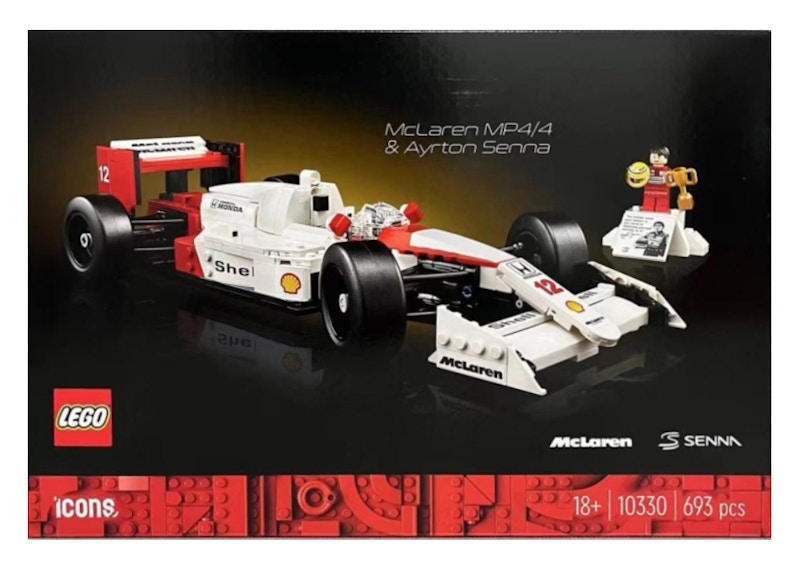
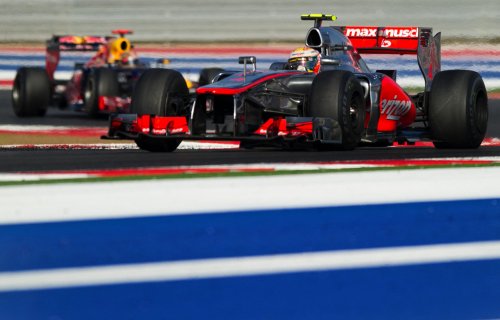
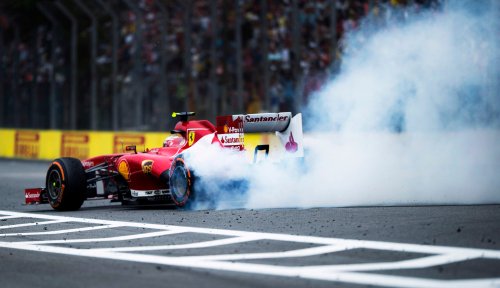
The Most Dominant Single-Seaters in Formula 1 HistoryThroughout the illustrious history of the FIA Formula 1 World Championship, certain engineering marvels have transcended the boundaries of mechanical design to achieve absolute statistical supremacy. These extraordinary machines, crafted by visionary designers and piloted by legendary drivers, did not merely compete; they systematically dismantled their opposition. From the dawn of the supercharged era to the modern age of complex aerodynamic ground effects, the pursuit of perfection has yielded a select group of single-seaters that stand as the ultimate benchmarks of dominance. The following compilation details the eleven most formidable vehicles to ever grace the grand prix grid, highlighting the technological innovations and ruthless efficiency that cemented their permanent legacy in sporting folklore.McLaren MP4/4Standing at the absolute pinnacle of statistical supremacy, the legendary McLaren MP4/4 executed the most ruthless single-season campaign in Formula 1 history. Designed by Gordon Murray and Steve Nichols, and powered by a ferocious Honda V6 turbo engine, this low-profile masterpiece won an astonishing 15 out of 16 races during the 1988 season. Driven by the legendary duo of Ayrton Senna and Alain Prost, the MP4/4 led a mind-boggling 97% of all racing laps that year, securing a permanent place in sporting folklore.Red Bull RB19The absolute benchmark of twenty-first-century aerodynamic perfection, the Red Bull RB19 reduced the modern grid to total helplessness under the technical guidance of design guru Adrian Newey. This car captured a record-shattering 21 victories out of 22 grands prix during the 2023 calendar, weaponizing an incredibly efficient drag-reduction system (DRS) and flawless floor ground-effects. Driven primarily by Max Verstappen, the RB19 set the all-time single-season win percentage record at a staggering 95.45%.Ferrari F2002The definitive weapon of the dominant Michael Schumacher era, the Ferrari F2002 was a masterclass in structural reliability and mechanical sympathy. Striking the grid partway through the 2002 season, the car won 14 out of the 15 races it entered, effortlessly adapting to varying track layouts and tire specifications. The F2002 was so analytically superior that Schumacher managed to secure the World Championship title by July, matching the all-time record for the earliest coronation in history.Mercedes-AMG F1 W05 HybridMarking the dawn of the revolutionary V6 turbo-hybrid era, the Mercedes-AMG F1 W05 Hybrid introduced a terrifying level of powertrain dominance that shifted the sport's baseline overnight. By cleverly pioneering a split-turbocharger packaging design, Mercedes generated an immense horsepower advantage over the rest of the field. The car secured 16 victories, 18 pole positions, and 11 dominant one-two finishes, kickstarting an unprecedented eight-year constructors' empire.Alfa Romeo 158/159 AlfettaOperating as the pristine foundation of grand prix history, the supercharged Alfa Romeo 158/159 was entirely untouchable during the inaugural 1950 Formula 1 World Championship. Despite its pre-war design origins, this elegant single-seater won every single grand prix it entered in 1950, sweeping the entire podium on multiple occasions. Guided by Argentina's Juan Manuel Fangio and Giuseppe Farina, the "Alfetta" remains the ultimate symbol of mid-century mechanical power.Williams FW14BAffectionately dubbed the "Our Car from Another Planet" by stunned rivals, the Williams FW14B stands as the most technologically advanced single-seater of its generation. The brainchild of Adrian Newey, this machine completely revolutionized the sport by perfecting computer-controlled active suspension, traction control, and blown diffusers. Driven by Nigel Mansell, the FW14B systematically crushed the 1992 field, securing pole positions by margins of up to two full seconds.Ferrari 500When sudden regulatory shifts threatened to leave the grand prix grid empty in 1952, Aurelio Lampredi designed the beautifully simple, naturally aspirated Ferrari 500 to compete under Formula 2 regulations. The result was an absolute onslaught of dominance, as Italian legend Alberto Ascari weaponized the car's nimble handling to win nine consecutive grands prix, an iconic single-seater record that stood uncompromised for over six decades.Lotus 79The car that permanently altered the aerodynamic landscape of modern motorsport, Colin Chapman’s beautifully sleek Lotus 79 was the first single-seater to fully master "ground effect" technology. By shaping the car's underbody like an inverted airplane wing, the Lotus 79 generated massive vacuum downforce that sucked the chassis directly to the asphalt. This aerodynamic revolution allowed Mario Andretti to glide through high-speed corners at velocities that left rivals entirely shell-shocked.Ferrari F2004The absolute high-water mark of screaming, high-revving V10 engine architecture, the Ferrari F2004 stands as one of the most visually spectacular cars ever built. Blending an ultra-stable aerodynamic package with bespoke Bridgestone tires, this machine shattered lap records globally, many of which took nearly two decades to break. The F2004 cruised to 15 victories out of 18 races, serving as the ultimate crown jewel of Schumacher's career.Tyrrell 003Constructed in absolute secrecy inside a timber yard by designer Derek Gardner, the nimble Tyrrell 003 became a blue-collar legend that took over the early 1970s. Utilizing a highly compact wheelbase paired with the iconic, reliable Ford Cosworth DFV engine, Jackie Stewart masterfully drove the car to six dominant victories in 1971, capitalizing on its superior mechanical grip to claim the world title with rounds to spare.Maserati 250FRounding out the list of historic single-seater masterpieces is the legendary Maserati 250F, a car celebrated as the ultimate expression of front-engined racing geometry. Boasting a beautifully balanced inline-six engine, the 250F was a favorite among privateers and factory icons alike for its progressive handling characteristics, culminating in Juan Manuel Fangio's historic, immortal 1957 German Grand Prix comeback at the Nürburgring.