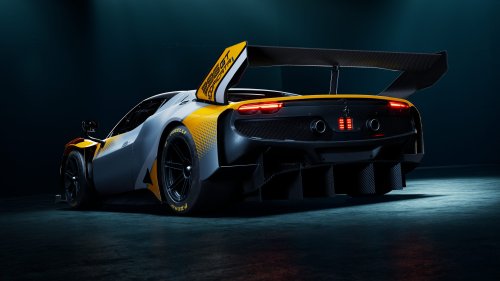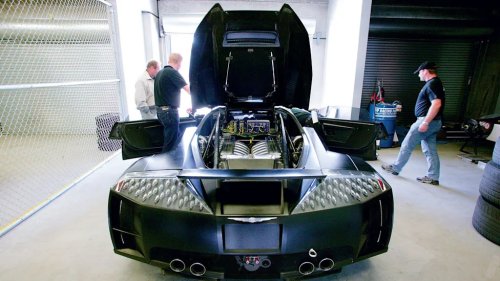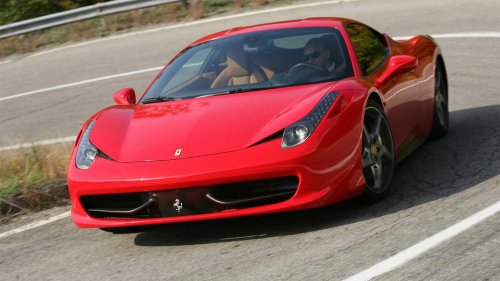
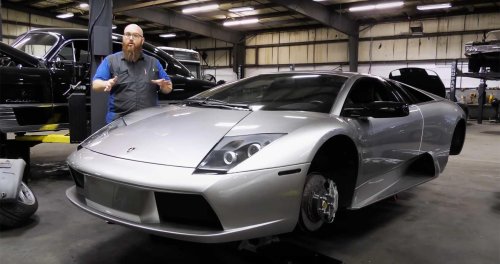
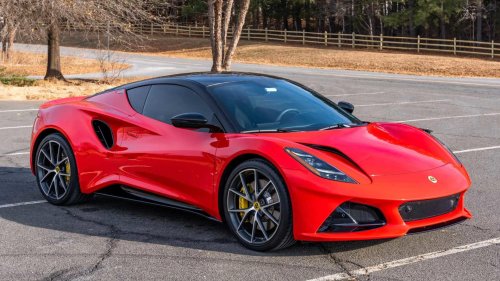
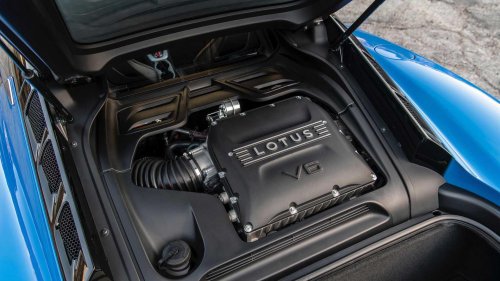
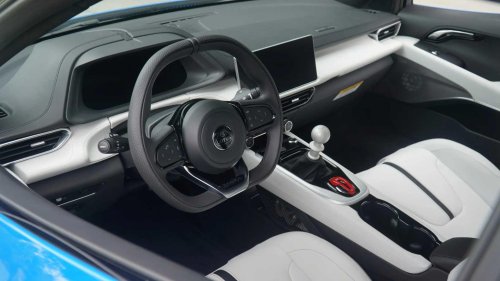
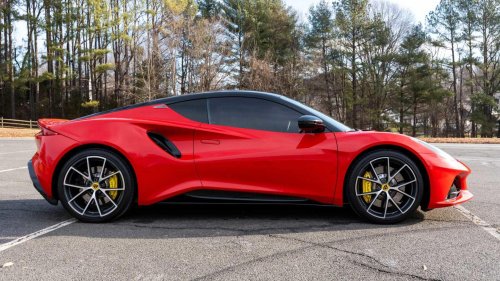
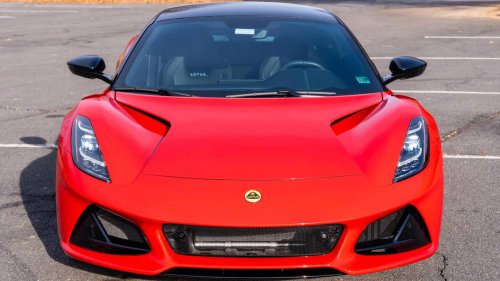
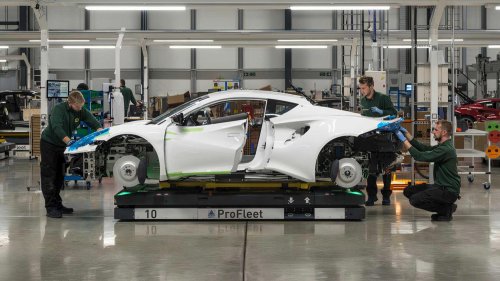
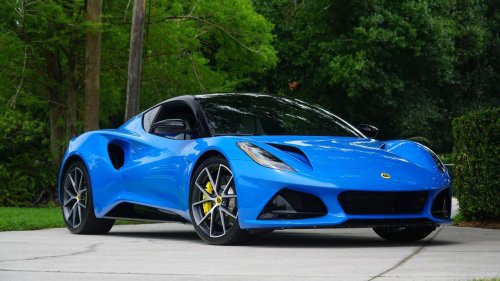
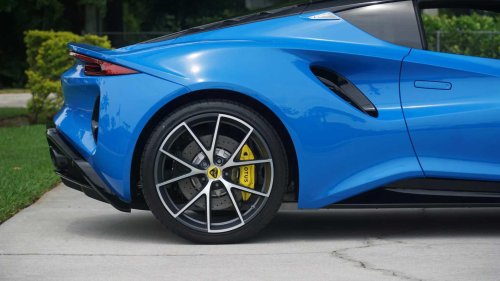
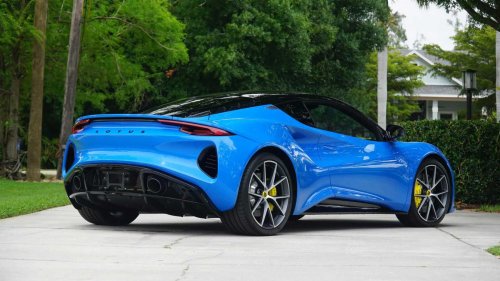
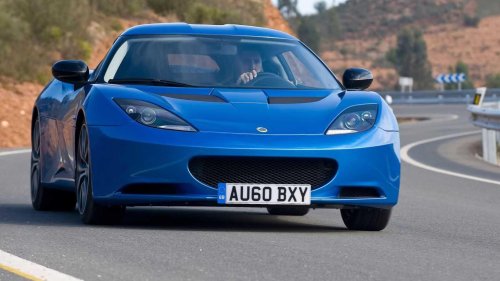



















Ever since Lamborghini made the Miura and Ford GT40 took Ferrari to school in LeMans in 1966, the perception around mid-engined sports cars slowly shifted into that of ultimate performance icons and status symbols. This sentiment is so strong today that even Chevy eventually faltered and turned their Corvette mid-engined to cash in on some of that mid-engined hype. That Corvette was a symbol of American performance and iconic for its front-engined layout, so countless purists cried foul. But alas, the C8 is now considered the best and most capable 'Vette ever. UPDATE: 2026/04/02 03:51 EST BY JARED SOLOMON This article has been updated to include additional context on the Lotus Emira’s Toyota-based reliability advantage and its real-world daily usability.Toyota, bless its sensible heart, has always been the polar opposite: the last time the brand flirted with anything remotely exotic was the ‘70s 2000GT it loaned to James Bond. Its most recent mid-engined effort? A meek 2-liter that never cracked 200 hp.With the average price of a new car eclipsing $50,000 in 2026, you'd expect every mid-engined supercar to cost a fortune and be a nightmare to keep on the road. That's very much not the case. One sports car brand offers a brand-new mid-engined sports car in 2026 that looks and drives like a Ferrari, but packs proven Toyota reliability under the hood. And it's easily the most underrated car on the market right now. Advantages And Disadvantages Of Mid-Engined Sports Cars FerrariBy planting the engine behind the cabin, it's much easier to hit that 50/50 weight distribution most sports car manufacturers chase. In some cases, such as in the C8 Corvette, this is closer to 60% over the rear axle, which helps add even more traction to the rear wheels.Meanwhile, because more of their weight is centered in the middle, mid-engined sports cars have lower moment of inertia and change direction more easily, massively improving the nose-heavy understeer that plagues most front-engined cars. This is the biggest reason to go mid-engined. Think of it like comparing the spin of a merry-go-round with an obese kid sitting on one edge versus the same kid sitting exactly in the middle – the latter will be much easier to spin.That's not to say that mid-engined cars are not without their shortcomings. These include worse visibility out the back, terrible storage space (a tiny frunk doesn't do much to help), space only for two (unless Gordon Murray designed your car), and perhaps the biggest one – high maintenance. Are Mid-Engined Sports Cars Less Reliable? YouTube @Car Wizard Not really, but it's not that simple. See, while reliability isn’t dictated by layout alone, mid-engined sports cars and supercars did earn a reputation for being a pain to maintain over the years. Parts are generally rarer, more unique, and more expensive, and they require specialized shops or trained staff to repair and maintain, which all adds up. Access to engine parts is significantly harder and requires much more labor hours, and even basic jobs like oil changes or spark plugs can be exhausting. Everything else will depend on the car itself, and one of your best bets for carefree mid-engined sports car ownership is exactly the car we'll talk about next. Why Toyota Engines Change The Reliability Game Completely The biggest reason the Lotus Emira feels like such a cheat code in the mid-engined world comes down to what’s sitting behind the driver—an engine with roots in some of the most dependable cars ever built by Toyota.Unlike traditional exotic engines that are often highly strung and complex, the 2GR-FE V6 inside the Emira has already proven itself across millions of miles in everyday vehicles. That fundamentally changes the ownership equation.Here’s why that matters in the real world: Parts availability is significantly better than most exotic engines Mechanics are more familiar with the platform The engine is under less stress compared to high-strung turbo setups Long-term durability is already well documented In simple terms, the Emira avoids the biggest pitfall of mid-engined cars—not because of its layout, but because of what powers it. It delivers exotic looks and balance without the usual fear factor when it comes to long-term ownership. The Lotus Emira Solves The Mid-Engined Reliability Debate Bring a Trailer In 2019, Lotus unveiled what would become the fastest and most powerful electric hypercar in the world, celebrating the brand's rebirth under Chinese ownership. The so-called Evija advertised having as much as 2012 hp, which would push a carbon-monocoque chassis to 60 mph in under two seconds and onto a top speed limited at 217 mph. Then COVID hit, and before the first Evijas were ever delivered in 2023, its design language carried over to Lotus's brand-new mid-engined baby supercar in 2022, which Lotus dubbed the Emira.The last pure ICE Lotus sports car before the brand's electric era, Lotus proclaimed the Emira "the most accomplished Lotus ever made" and aimed it directly at sports cars like the Porsche Cayman and Toyota GR Supra. Its styling and proportions are on par with Ferrari, and its cabin is more refined and equipped than any Lotus before it. It now has proper sound insulation and a leather-wrapped seat and dash trim. But the most important feature hides behind the cabin – a 3.5-liter supercharged 2GR-FE V6 borrowed from none other than Toyota.LotusOn paper, it's the same 3.5-liter V6 you'd find in a Toyota Camry, but if you didn't already know that, you'd never be able to tell. That's because, apart from the roots Eaton supercharger that's been bolted on top, Lotus also recalibrated the ECU and paired it with a custom intake and revised exhaust manifolds. The result? Exactly 400 horsepower and 310 lb-ft of torque.Bring a Trailer Proving this is a car made by gearheads, for gearheads, the power is routed to the rear wheels exclusively through a short-throw, badass 6-speed manual transmission with a metal knob. Heck, Lotus even added cool bits like exposed gear linkage in the transmission tunnel for owners to admire. This is definitely NOT a hairdresser's sports car. A 360-hp and 400-hp version of the AMG-sourced turbo inline-4 is also available in the Emira, but you're stuck with an 8-speed DCT in both.Bring a Trailer Tipping the scales at around 3,100 lbs, the Emira still follows founder Colin Chapman's original vision for the brand: "Simplify, then add lightness." That approach helps the 400-hp V6 Emira launch to 60 in about 4.2 seconds and cover the 1/4 mile in 12.6 seconds – on par with its main rivals, such as the 718 Porsche Cayman S and Toyota GR Supra 3.0 6MT. Get the 400-hp AMG four-pot, and that 0-60 time drops to just 3.8 seconds thanks to quicker shifts and more accessible torque. Ferrari Looks And Balance On A Budget Bring a Trailer Exactly 61% of the Emira's weight sits above the rear axle, helping it put the power down even without launch control and the driver rowing all the gears. Meanwhile, its short 2,575 mm (101.4 in) wheelbase lends itself to optimal balance on the road. That's about 4 inches longer than a Cayman or a Supra, but still significantly shorter than the Corvette C8 (107.2 in) and both the new Ferrari 296 GTB (102.4 in) and its older 488 GTB (104.3 in). Add to that a completely analog transmission and hydraulic steering that communicates every bump on the road, and what you get is essentially an old-school Ferrari in a brand-new sheet metal that costs exactly 3x less than the cheapest example you can get out of Maranello in 2026. Where do we sign? Reliability Overview Lotus Lotus didn't reinvent the wheel with the Emira. Instead, the brand perfected what already worked. They took the same 2GR-FE V6 that already proved robust in the Exige and Evora before it (along with millions of other Toyotas) to keep service costs down. Even with the supercharger bolted on, the V6 remains understressed compared to the two-liter AMG-sourced four-cylinder that pushes the same exact 400 hp and many other sports cars with similar power levels. It's a car designed to take a beating on a track and back roads and keep running, for years.That's why the Emira also comes with a much stiffer bonded aluminum chassis that doesn't rust, redesigned coolant plumbing for less heat soak, optimized airflow, and a race-bred forged double-wishbone suspension all around. Even the electronics are kept to a minimum to make sure there's virtually nothing to go wrong. Most Owners Swear By The Emira Bring a Trailer That said, the Emira is still a mostly hand-built exotic with rare parts and relatively expensive labor. Because of that, current owners are divided in the middle when it comes to its reliability. Many claim they've daily driven their Emiras up to 95k miles with no issues, while some claim smaller electrical gremlins and expensive maintenance compared to rivals like the Toyota Supra or Porsche Cayman. Owners on forums all swear by the engine, though, claiming they have zero issues and that it costs peanuts to maintain compared to other exotics.There are still no official reliability ratings or maintenance cost estimates, but most owners report their late model Evoras cost them between $1500 and $2500 to maintain per year, which uses the same engine. Oil changes will run you between $380 and $750, depending on where you get it done, and one Florida-based owner on Lotustalk.com reports paying $150 for an oil change and $120 for a brake fluid flush. Looks like it's a good idea to change your own oil or find an indie shop to do it for you.Bring a TrailerDespite the bulletproof engine, this all adds up to slightly higher maintenance costs compared to something like a Toyota Supra or even a Corvette, but that's the price you pay for a truly analog 400-hp mid-engined exotic in 2026.The only mid-engined sports car that's confirmed to be cheaper to keep on the road in 2026 is the new Corvette C8 Stingray, but it's not nearly as tactile and won't let you row your own gears, no matter the trim. Even the 718 Cayman – another very reliable alternative – will cost you a fairly steep $1,135 per year to maintain. The Emira May Become A Future Classic Bring a TrailerLotus currently asks as much as $115,400 for an Emira with the venerable supercharged V6 and manual transmission. The cheapest entry into an Emira is still a steep 109 grand for the 360-hp AMG-powered turbo-four Emira. Keep in mind, $64,600 will get you behind the wheel of a 300-hp base Cayman, and $105k is enough for a 400-hp 4.0-liter Cayman GTS. But all is not lost: used Emiras already trade hands for well under $90k in almost pristine condition, such as this one currently listed at $84,877 in Florida.Lotus Of course, the search for a reliable mid-engined Lotus doesn't have to end with the Emira. Produced from 2009 all the way up until 2021, older Evoras can offer the same mid-engined thrills for much cheaper. Base 2010-2015 Evoras are naturally aspirated and offer 276 hp, but they're also the biggest bargains at just $37k on the used market for a really nice one. The 345-hp Evora S will land between $40k and $50k, while the 400-hp Evora 400 and higher trims will command upwards of 60 grand. These are all great Emira alternatives if you don't mind the extra miles.Still, the reason why an Emira is such a good deal now is what it could become in the future. It's a fully-fledged baby supercar that turns heads more than an average Ferrari but comes with a reliable engine and manual transmission. Lotus has already publicly announced that the nameplate will be its last-ever ICE sports car before the brand moves on to hybrid and electric cars. Finally, the Emira has been on sale since 2022, but merely 10,000 examples have left the Hethel factory as of 2025, many of them four-pots. This rarity could play a crucial role in determining future value and may rocket the V6 Emira's price in the next 10 years.Sources: Classic.com, The Classic Valuer, CarEdge, RepairPal, Ferrari, Motor Trend, Reddit, Lotustalk, thelotusforums.com, KBB.