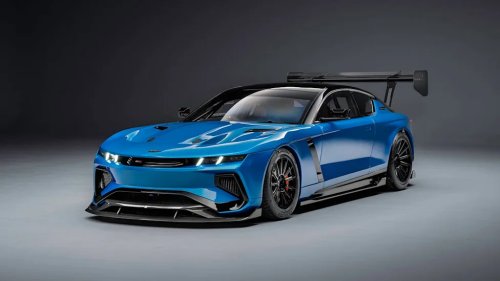
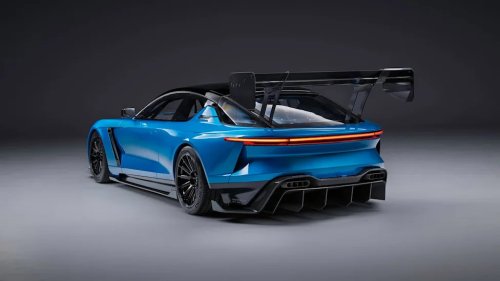
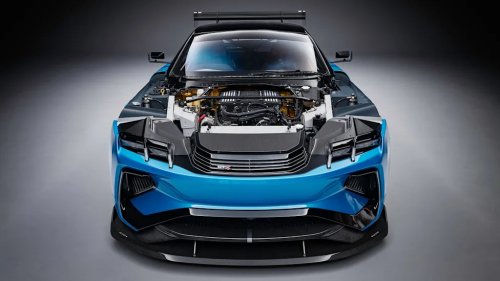
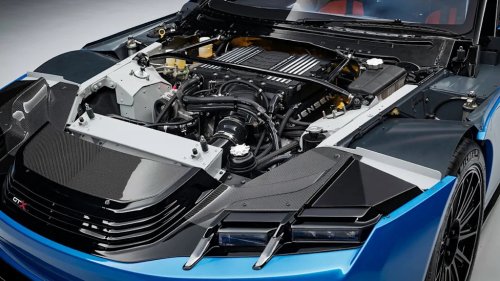
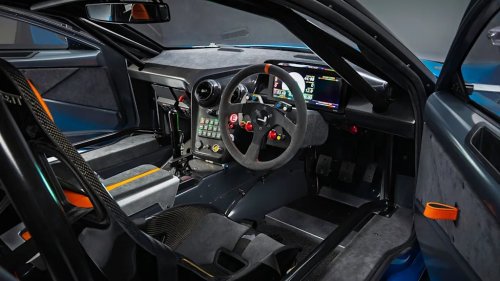
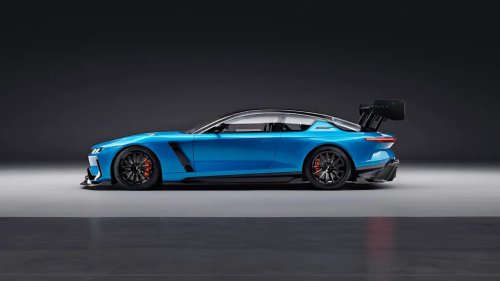
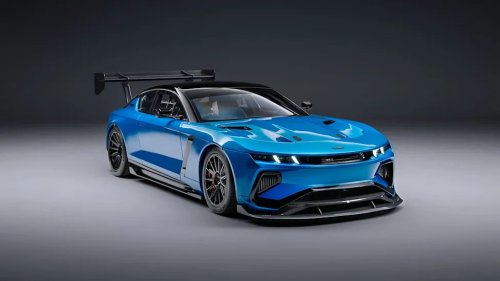
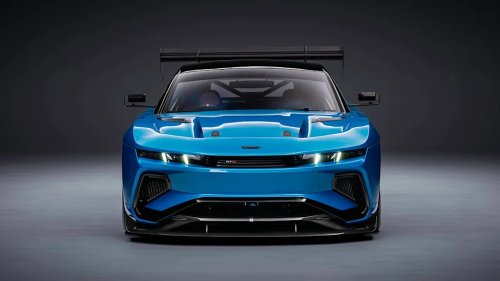
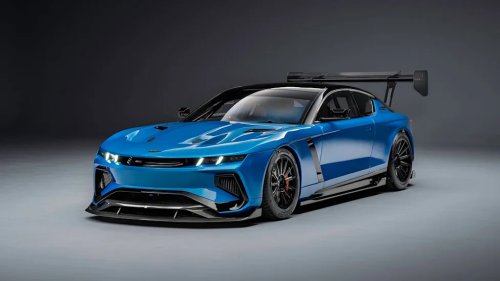
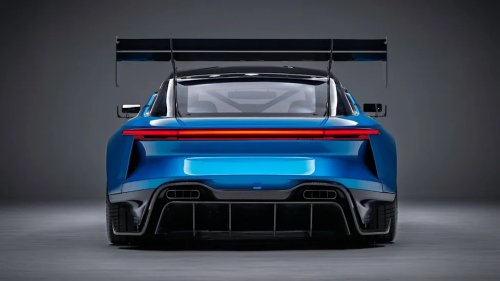
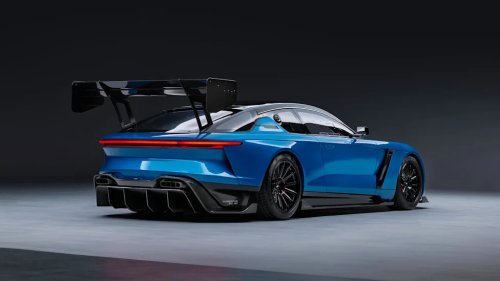
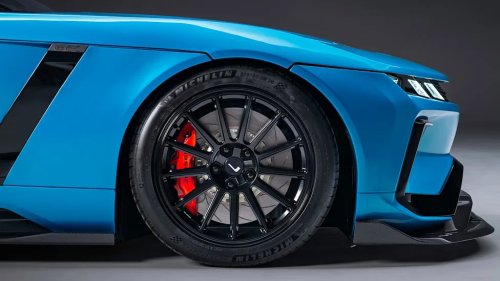
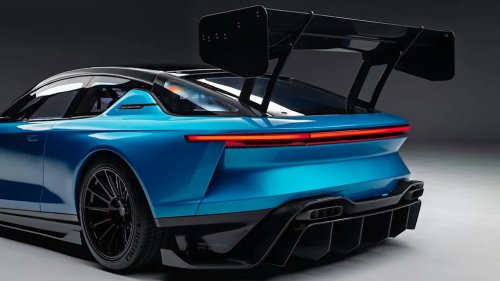
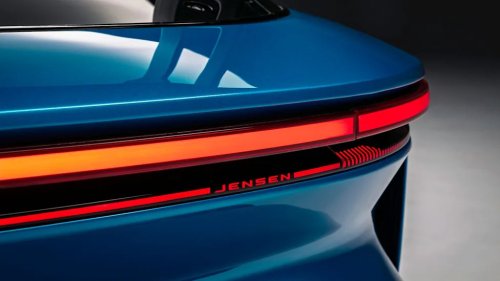
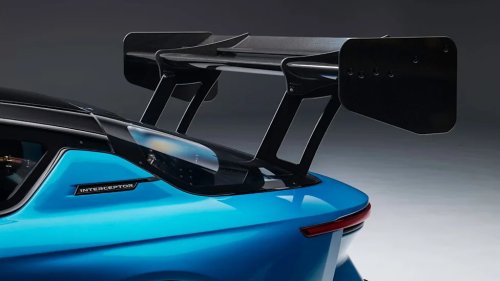
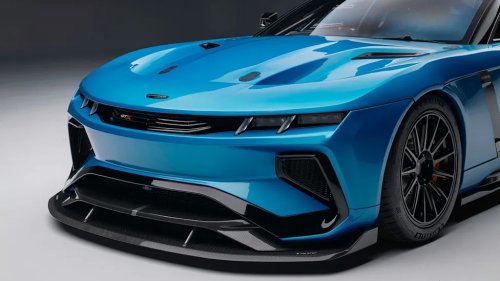
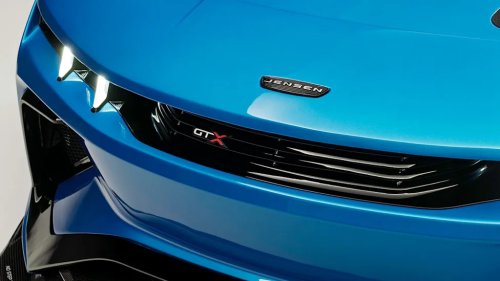
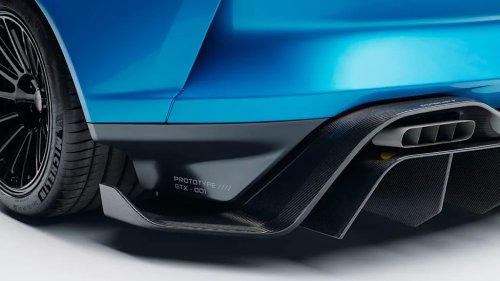
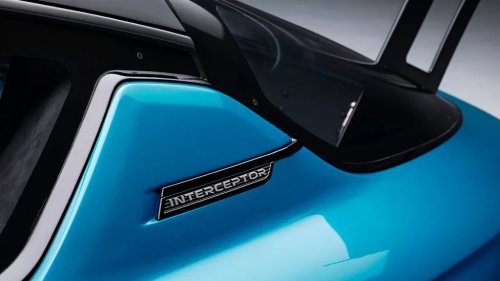
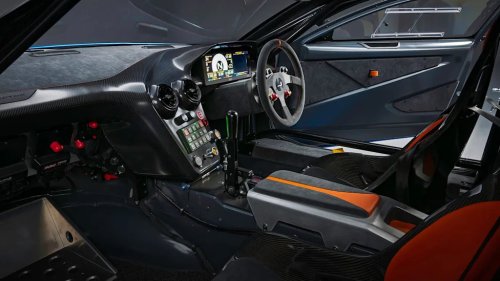
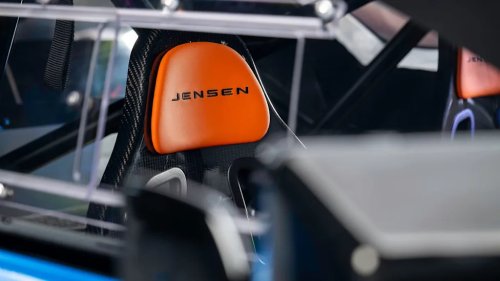
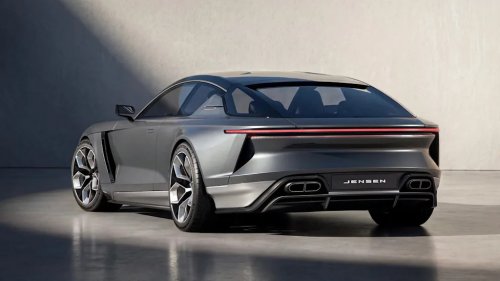
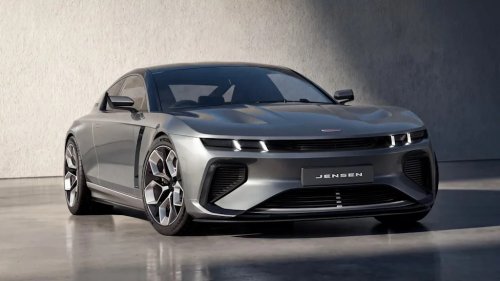
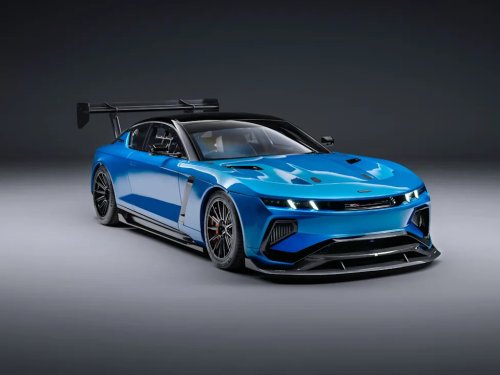
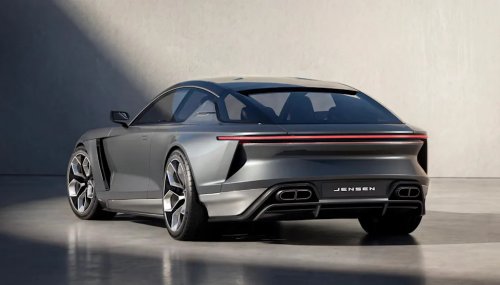
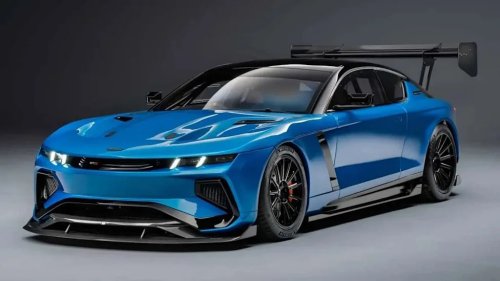
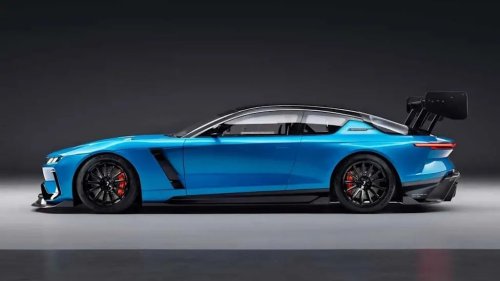
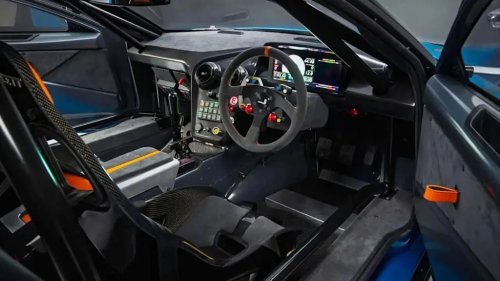
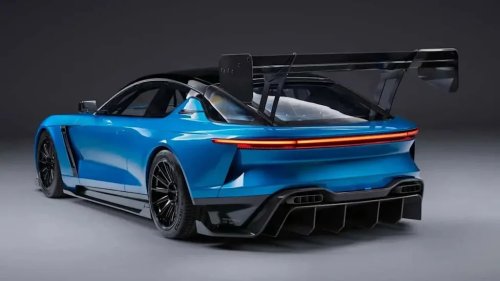
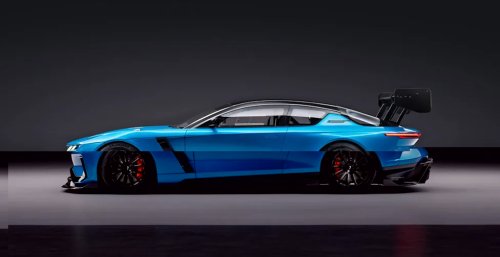
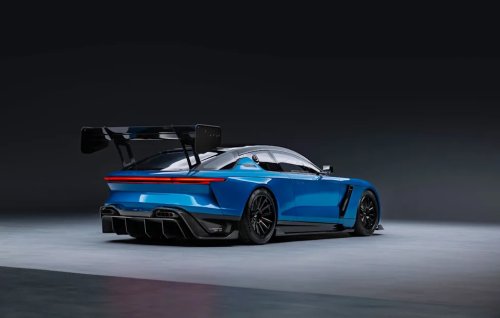
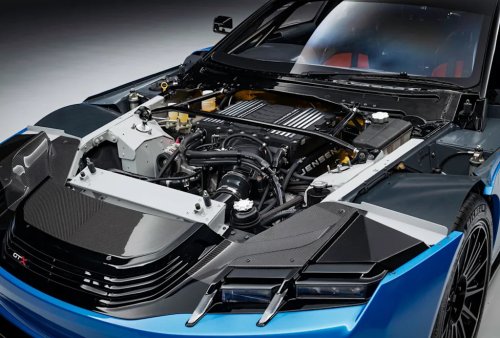
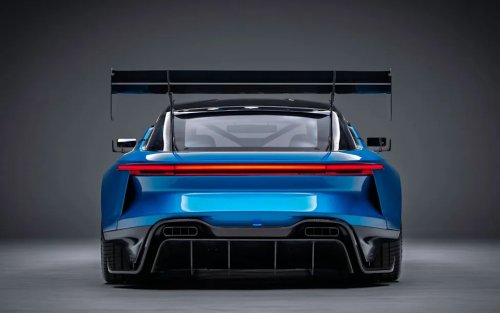
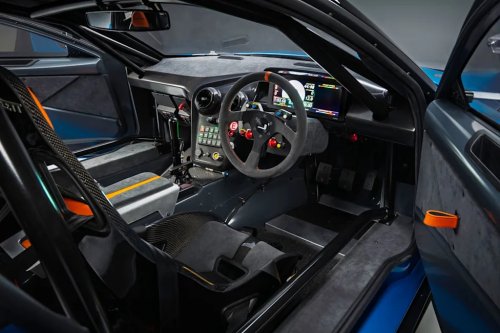
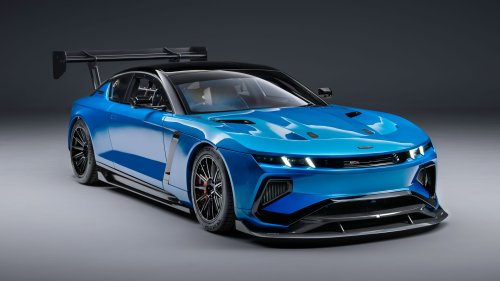
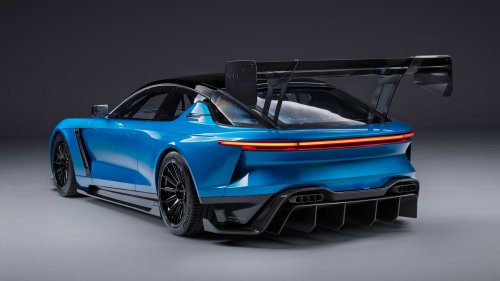
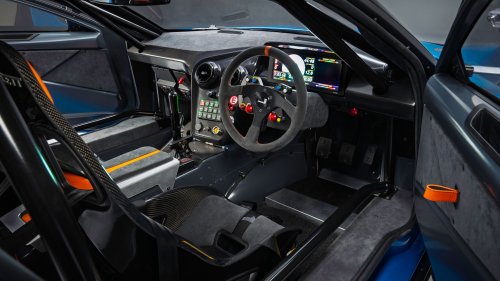
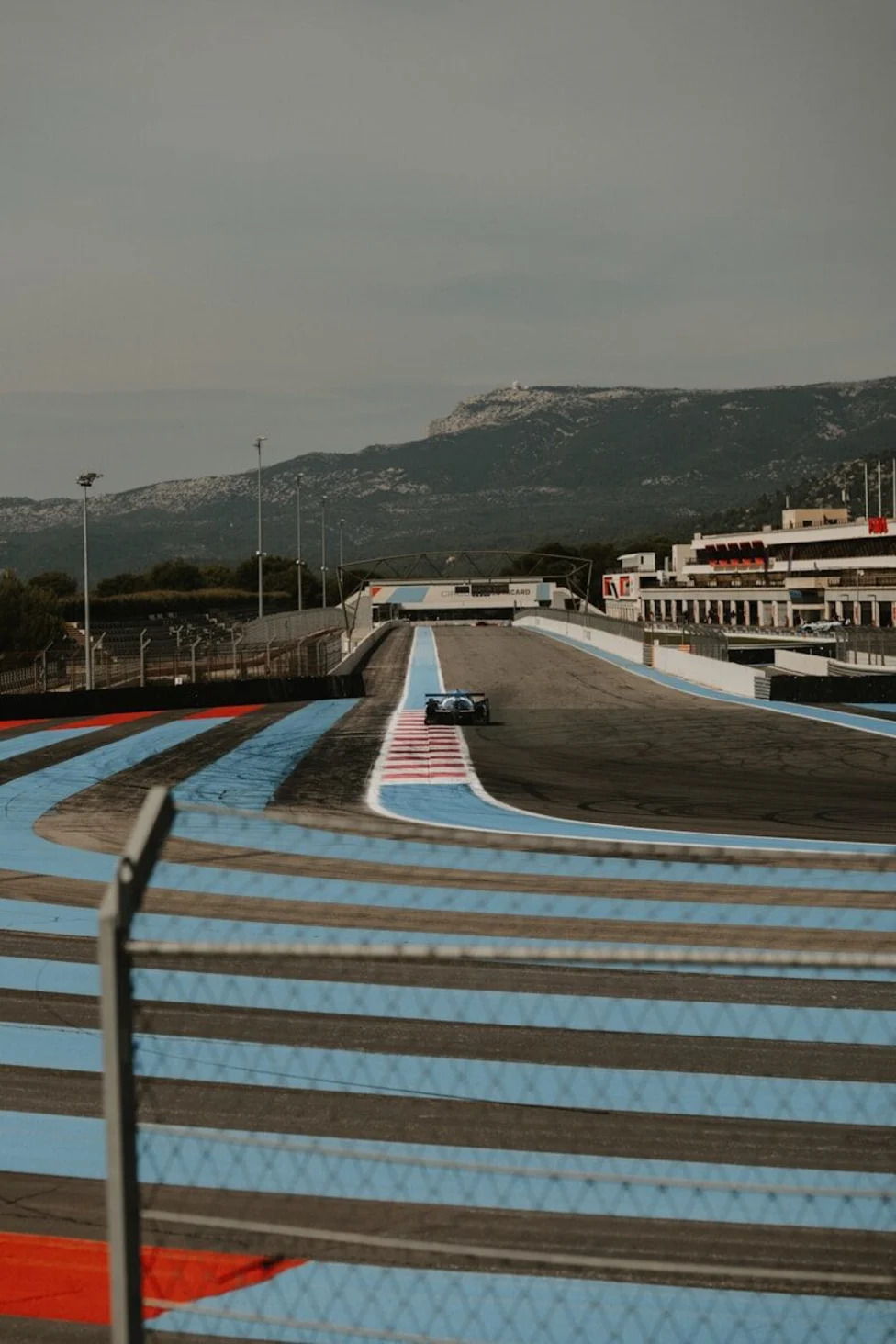
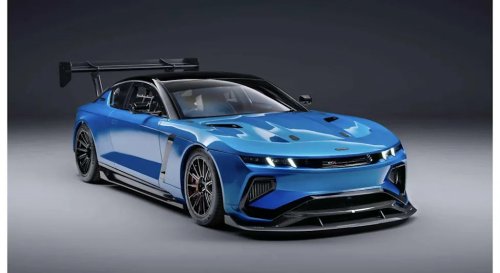
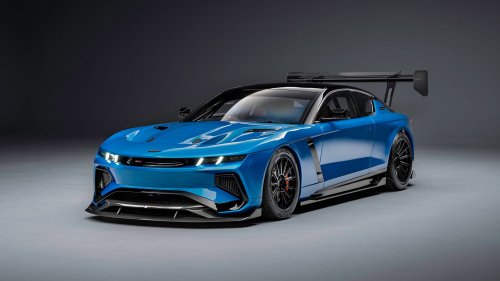
Jensen Interceptor GTX First Look: You Want One?JensenDavid Duerden has no idea if anyone wants to buy a 21st century take on the famous Jensen Interceptor, the fast and stylish grand turismo built in the U.K. from 1966–76. He calls the new, fully functional, track-only Interceptor GTX an enhanced prototype. "It shows what we can actually do," he says. "It's a live concept model." If everything goes to plan, the blue track-focused GTX you see here will spawn a pair of road-going Interceptors (see the photo near the end of this story)—a lightweight performance model called the GTR and a plush, luxury version called the GT. But the plan depends on enough people showing interest in the idea. The Interceptor GTX is a field of dreams supercar: They've built it, and now the buyers will come. Hopefully.What Is It?The new Jensen Interceptor GTX is a fascinating machine, a clever amalgamation of old-school-meets-high-tech that resonates with the original's quirky and charismatic character. And Duerden certainly knows his Jensen Interceptors after his company, Jensen International Automotive, has built 50 high-end Interceptor restomods during the past 16 years. But he acknowledges it's now a business of diminishing returns as there are fewer people who love old Interceptors enough to spend half a million dollars or more on a rebuilt one, no matter how beautifully executed. "We need to move onto something else," he says. "It's time we built a new Interceptor."JensenWhat's NewA quick walkaround of the GTX reveals echoes of the original Interceptor, whose elegant sheet metal was the work of Italy's Carrozzeria Touring. It's most apparent in the rear quarter panels where there's a nod to the original's recognizable C-pillar form, and in the way the car's shoulder surface continues around to the back end and runs under the rear window. The GTX also has the original's extravagant dash-to-axle ratio, as well as a large, rear-set cabin designed to accommodate four passengers. The front of the GTX is pure 21st century in terms of its design language, however, and arguably the least successful element of the car, not the least because its slim-line grille, squinty LED headlights, and gaping cooling vents at each corner make it look rather like a next-gen Chevrolet Camaro at first glance.AdvertisementAdvertisementThe GTX's hand-formed aluminum panels were styled by Avant Design, a consultancy based in the town of Leamington Spa, deep in the heart of Britain's automotive heartland that's not far from the headquarters of both Jaguar Land Rover and Aston Martin. Founded in 2018 by Jonathan and Chris Gould, whose resumes include stints at Geely-owned Lotus, Avant designed the lightweight electric-powered Longbow Speedster and Roadster models as well as a compact four-seat electric-powered Lotus concept. That was all before it approached Duerden with an idea for a new Jensen Interceptor. "Jonathan wanted to do it," Duerden says. "That's how this project started."Another key partner in the project is Jeff Qvale. His father, legendary California-based automotive entrepreneur Kjell, was instrumental in bringing British sports cars such as the MG TC and Austin Healey to America after World War II. Then, after BMC announced it was ending production of the Austin-Healey, he in 1970 bought the troubled Jensen factory near Birmingham at the behest of Donald Healey to create and produce the Jensen-Healey. "For me, this project is very personal because Jensen was such a significant part of my father's life and our family history," Jeff Qvale says. "What excites me about the Interceptor GTX is that it isn't trying to recreate the past or compete with the most extreme modern hypercars. The car follows the traditional Jensen philosophy of a powerful, hand-built British GT with real character, but reinterpreted using modern engineering and technology."The HardwareThe new Jensen Interceptor GTX rolls on an all-aluminum chassis made up of bonded and riveted extrusions. It's an interesting choice given Duerden's background. An engineer, Duerden is a carbon-fiber pioneer, first working on the material for British Aerospace in the 1970s before moving into motorsports, where one of his earliest projects was to produce molded carbon-fiber chassis parts for German entrepreneur Willy Maurer's successful Formula 2 and prototype Formula 1 cars in the early 1980s. But there's a good, pragmatic reason for using aluminum rather than carbon-fiber for the Interceptor GTX's chassis, Duerden says.Whereas a molded carbon-fiber chassis would require expensive tooling that would also lock the car's key dimensions, an aluminum chassis is less expensive to make and can be modified or altered easily. "When you start down the carbon road, you have to really commit to it," he says.JensenMuch of the hardware attached to the Interceptor GTX chassis is straight out of the race car handbook. The suspension is aluminum multi-link front and rear, with three-way adjustable coil-over shocks from British motorsports specialist Nitron handling the spring and damping chores. Steering is by way of a power-assisted hydraulic rack-and-pinion setup, and the braking system, developed by U.K. specialist BG Developments, features floating steel rotors and AP Racing calipers with competition-grade pads. Plus, there's an adjustable ABS system like that used in race cars such as the Mercedes-AMG GT3.AdvertisementAdvertisementThe rear-mounted transaxle transmission is a six-speed sequential-shift dogbox from Lithuania's Samsonas Motorsport; you change gears via a lever mounted on the transmission tunnel or paddles on the steering column. Drive is sent to the rear wheels via an American-made Wavetrac differential, which uses an innovative cam system to ensure maximum traction even if one wheel is in the air. The 20-inch wheels are forged items made by Miami-based Vossen Wheels.The car's aluminum body is handcrafted by Coventry Metalcraft, one of Britain's leading specialist coachbuilding and prototype manufacturing companies. Though the process of hand-forming aluminum panels is complex, requiring specialist tools and skilled craftspeople, Duerden says for low volume cars it's cheaper than making carbon-fiber bodywork. "All the body panel tooling is already produced and will last 10 or 15 units before it needs to be refurbished," he says. That said, there are some carbon-fiber parts on the car, most notably all the race-face aero hardware at its lower extremities. Should the road-going GTR and GT models get built, most of that stuff—along with the humungous rear wing—will disappear.The original Interceptor was powered by Chrysler V-8s, initially 6.3-liter and 7.2-liter big-blocks, the latter of which could be ordered with the fabled Six Pack triple Holley carb setup that boosted power to 385hp, before tougher emissions laws (roughly 50 percent of the 6000-plus Interceptors built between 1966 and 1976 were sold in the US) forced a switch to the milder 5.9-liter small block. The Interceptor GTX follows this storied British-American hybrid model (Allard's J2 ran flathead Fords and Mercury engines in the 1950s and of course Carroll Shelby turned AC's Ace roadster into the Cobra by stuffing a Ford small-block V-8 into it). But the V-8 under the GTX's hood now wears a Bow-Tie rather than Mopar branding.JensenThe EngineBuilt by Late Model Engines (LME) in Houston, Texas, the GTX's engine is based on the supercharged LT5 developed for the C7 Corvette ZR1, but only 20 percent of its parts are carryover GM items. The block is punched out to 6.8-liters and equipped with a forged crank and conrods, CNC machined heads and titanium valves, plus variable valve-timing and direct-injection systems. Overseen by a motorsports-spec Motec engine management system, LME says the engine, which revs to 7,000 rpm, can safely make up to 1,200 hp, though for the GTX its output is pegged at 960 hp. A carbon-fiber propshaft spinning inside a rigid aluminum torque tube takes the drive back to the transaxle transmission.JensenThough it looks like a race car, right down to its FIA-approved safety cage, Tillett carbon-fiber competition seats, six-point harnesses, and Lifeline fire extinguisher system, the Interceptor GTX, which would cost you about $1.2 million if you want Jensen to build you one, has not been designed to meet the FIA's GT2, GT3, or GT4 sports car regulations. Rather, it is aimed at the wealthy gentleman/gentlewoman driver who wants something loud and fast and fun for their occasional track day outing—and who doesn't want to turn up with a race-tuned Mercedes, Porsche, Ferrari, or Lamborghini like everyone else. "We're not looking for tenths of a second with this thing," Duerden says while explaining why, among other things, the GTX will come fitted with treaded Michelin Pilot Sport 4S tires, 275/40 up front and 345/30 at the rear, rather than racing slicks. "We're looking for something that's an enjoyable drive."JensenMore important than that, though, is its role as a prototype, a proof of concept. "We chose to begin with the track-focused GTX because it is the clearest first expression of the new Jensen program," Duerden says. "It allows us to prove the engineering, design direction, and specialist-supplier base behind the car, while giving prospective customers something tangible and fully functional to experience." Duerden says about 80 percent of the GTX's exterior form, including key body panels and associated tooling, is intended to carry through to the eventual road-going car range. "This project hasn't started with a marketing exercise or a nostalgic idea about recreating the past. We've approached it as engineers and enthusiasts."AdvertisementAdvertisementIndeed. The way the new Jensen Interceptor is designed means it can be easily upgraded and updated. For example, the GTX's track-focused transaxle six-speed dog-ring gearbox can be replaced easily with a road-car-friendly eight-speed dual-clutch unit like the Tremec TR-9080 used in the C8 Corvette and Ford Mustang GTD. And GM is going to continue to evolve its small-block crate motor program.JensenWill It Happen?If there's enough interest, either from potential customers—or if Jensen is bought by, say, a Chinese automaker looking to make the leap into the ultra-low volume ultra-luxury market—today's plan calls for the performance-oriented GTR to be the first of the street-legal new Interceptors, with the luxury GT, including a fully trimmed cabin and room for four people, to follow. Prices? Likely north of $2 million for those versions, which is quite a lot more than the cost of the GTX model. But if you come, they will build it.Photo credit: JensenPhoto credit: JensenPhoto credit: JensenAdvertisementAdvertisementPhoto credit: JensenPhoto credit: JensenPhoto credit: JensenPhoto credit: JensenAdvertisementAdvertisementPhoto credit: JensenPhoto credit: JensenPhoto credit: JensenPhoto credit: JensenAdvertisementAdvertisementPhoto credit: JensenPhoto credit: JensenPhoto credit: JensenPhoto credit: JensenAdvertisementAdvertisementPhoto credit: JensenPhoto credit: JensenPhoto credit: JensenPhoto credit: JensenAdvertisementAdvertisementPhoto credit: JensenPhoto credit: JensenPhoto credit: JensenPhoto credit: JensenAdvertisementAdvertisement