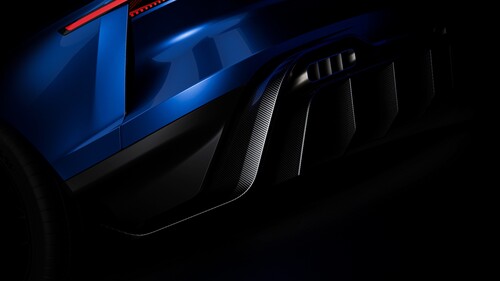
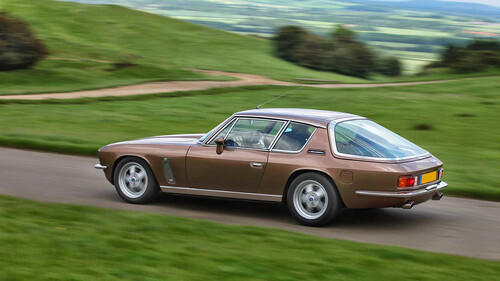
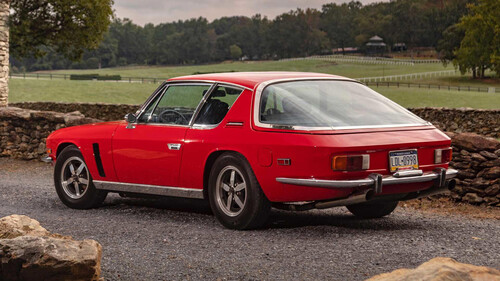
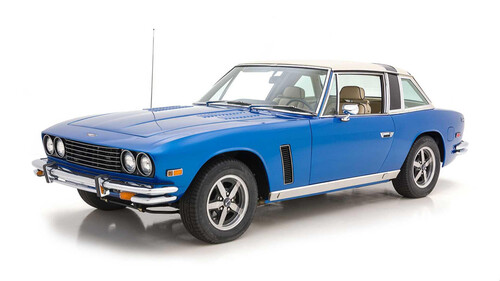
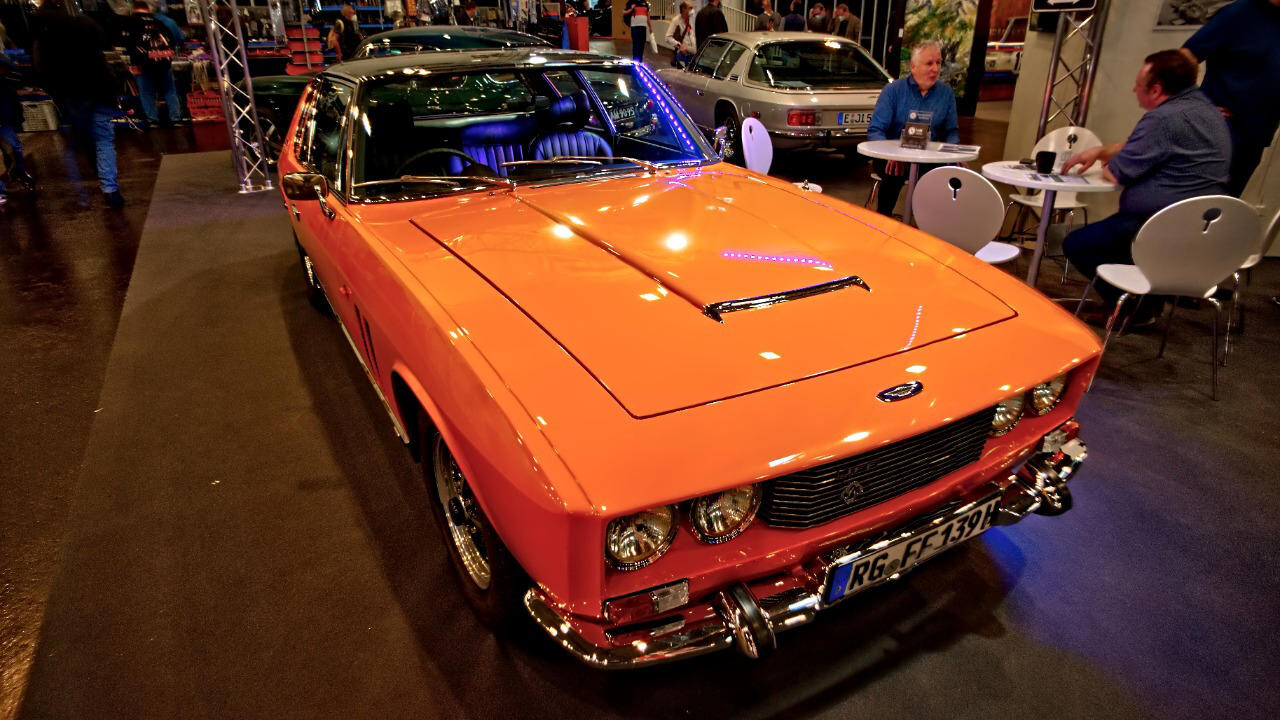
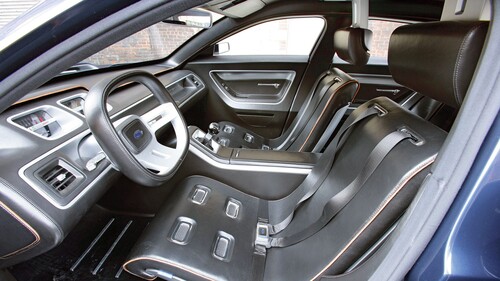
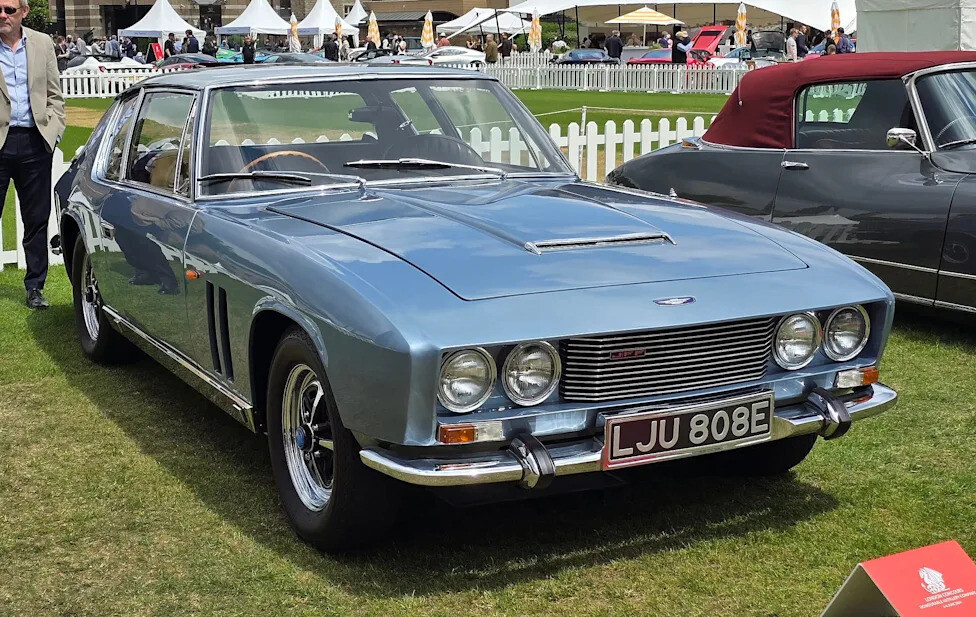
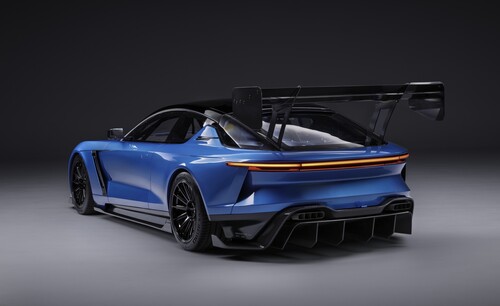
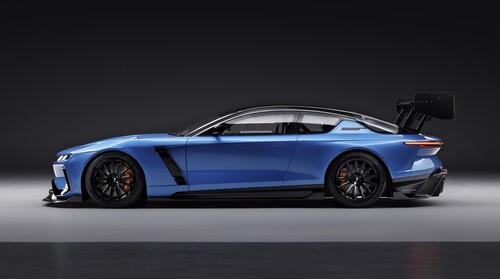
Reviving long-shuttered 20th century automakers, at least in name, has become increasingly common within the last couple of decades, evidenced by new vehicles with badging that bears such monikers as Bizzarrini, Touring Superleggera, Spyker, and Delage. Then there's Jensen, a bygone-era marque from Britain that returned in 2010 as a restomod house. Yet this morning, it officially debuted its first original prototype—the Jensen Interceptor GTX.This track-only tour de force pays homage to the Interceptor that was brought to market in 1966 by Jenson Motors, a manufacturer active for roughly five decades until running out of figurative gas in 1976. The interceptor GTX prototype, though, is a pioneer for what Jenson International (as the resurrected company is now known) intends to be a lineup comprised primarily of grand tourers.More from Robb ReportAdvertisementAdvertisementThis New Fiat 500 Jolly Is the Perfect Companion for Your YachtThis $7.2 Million Estate on the Greek Island of Corfu Overlooks the Ionian SeaJim Beam's New Basil Hayden Bourbon Was Aged in 25-Year-Old Cognac CasksThe Jensen Interceptor GTX prototype."Obviously, the 1966 Jensen Interceptor is a significant inspiration for us. And not just visually, but in terms of what that car represents," stated David Duerden, Jensen International's managing director, in the official press release. "From the outset, though, our intention was never to build a continuation car or revisit something that already existed."To that end, the Interceptor GTX was crafted using both today's tech and time-honored artisanal methods of coachwork. U.K.-based Avant Design employed digital techniques to compose the car's overall appearance, which, as with its mid-20th century muse, features a front-facing aesthetic of an American muscle car—in this case, one that's been hypertrophied by steroids. The roofline, however, progresses toward the rear with a far more refined teardrop styling that culminates in what would be an elegant fastback presentation if it weren't for the gargantuan rear wing. After Avant played its role, compatriot Coventry Metalcraft actually materialized the body, which was made primarily by hand from aluminum.The aluminum chassis is draped with a hand-shaped aluminum body.The chassis, too, is formed from aluminum, and houses double-wishbone suspension complemented with adjustable dampers (three settings available). It also carries a 6.8-liter V-8—delivering nearly 947 hp and able to rev at 7,000 rpm—from the specialists at Late Model Engines out of Texas. According to the release, the mill is "paired with a 2.65-liter Roots-type supercharger with electronic boost control," and the entire setup is mated to a "Samsonas Motorsport six-speed sequential transmission."The 6.8-liter V-8—from Late Model Engines out of Texas—delivers nearly 947 hp and is able to rev at 7,000 rpm.Although no performance figures have been given, the metrics should be impressive—bolstered by carbon-fiber aero considerations developed by another English outfit, Artiglio Automotive Studio. These include the overt front splitter, rear diffusor, and aforementioned wing that, at first glance, looks to be an aftermarket afterthought until you consider that it's responsible for more than 771 pounds of downforce. Also helping to control the output is what Jensen International refers to as its "motorsport-grade AP Racing brake package" from BG Developments. The steel discs bite on 20-inch, forged-aluminum Vossen wheels—unique to the Interceptor GTX—dressed in Michelin Pilot Sport rubber.At the back is a gargantuan wing that's responsible for more than 771 pounds of downforce.AdvertisementAdvertisementAs for the Alcantara-accented interior, the track-purposed cockpit is equipped with carbon-fiber seats by Tillett, an FIA-sanctioned safety cage, a Lifeline fire-suppression system, a digital-instrumentation display, and an array of buttons and manual selectors. It's posh for a track prototype, but then that bar is intentionally low. Where the vehicle's wow-factor can be assumed to lie is in its old-school drive dynamics.The cockpit includes carbon-fiber seats by Tillett, an FIA-sanctioned safety cage, and a Lifeline fire-suppression system."Apart from the adjustable traction control, launch control and motorsport ABS systems, we've deliberately avoided unnecessary electronic intervention," states Duerden in the press release. "We wanted the GTX to feel mechanical, connected and genuinely analog in the way it delivers its performance."The Interceptor GTX was crafted using both today's tech and bygone-era artisanship.Despite having an identity initially pinned to its namesake marque's legacy, this iteration of Jensen is using its new Interceptor GTX prototype as a declaration of independence. The claim is that much of what comprises this car will be incorporated into a street-legal version and a more sybaritic sibling, all to give a stalled lineage the jump start it deserves.Click here for more photos of the Jensen Interceptor GTX.Jensen International just revealed its Interceptor GTX prototype.Best of Robb ReportAdvertisementAdvertisementThe 2024 Chevy C8 Corvette: Everything We Know About the Powerful Mid-Engine BeastThe World's Best Superyacht ShipyardsThe ABCs of Chartering a YachtSign up for RobbReports's Newsletter. For the latest news, follow us on Facebook, Twitter, and Instagram.Click here to read the full article.