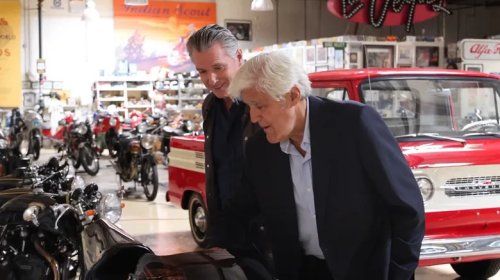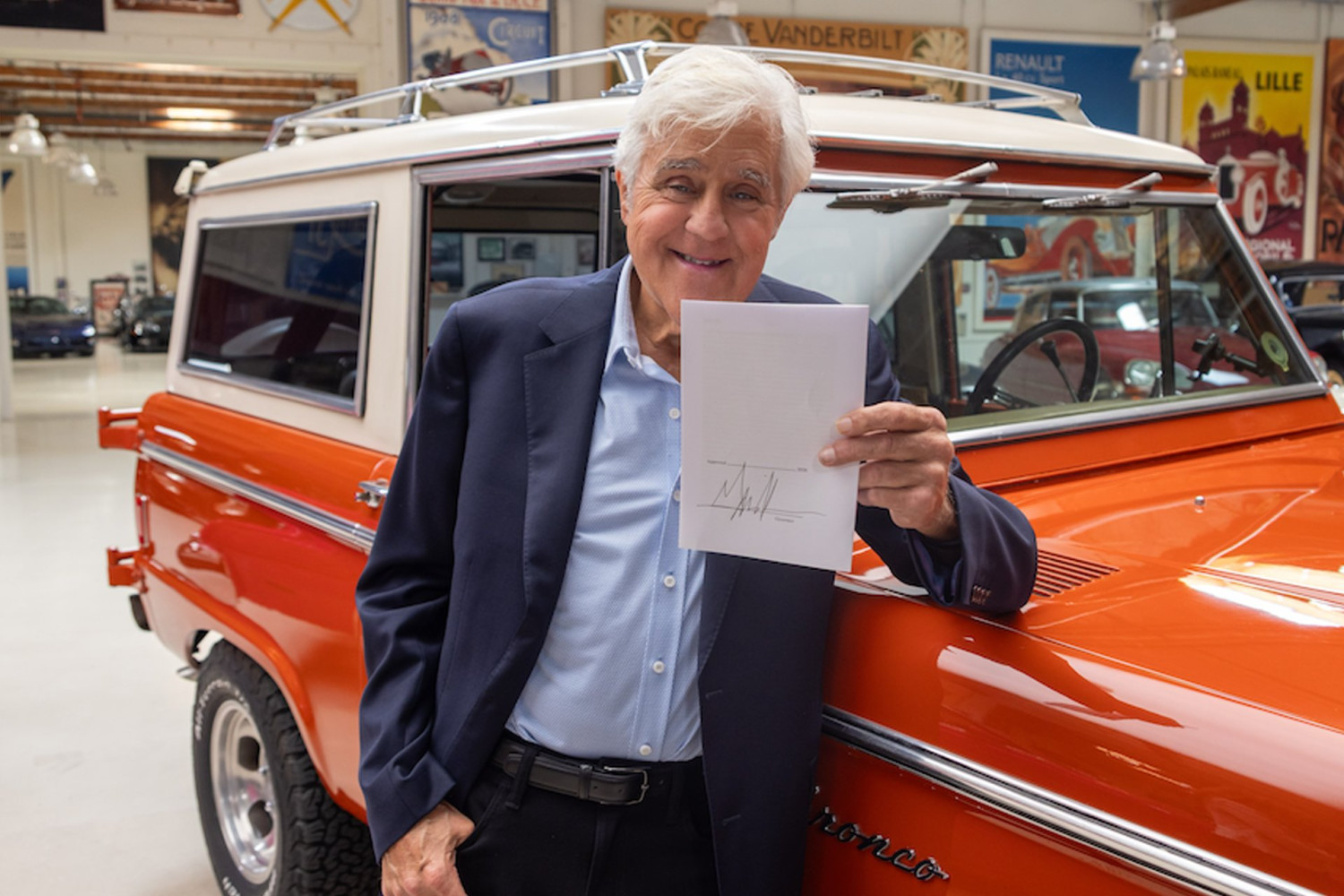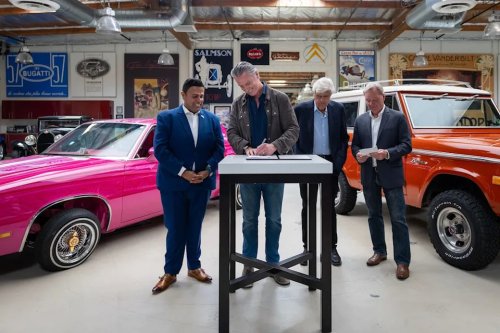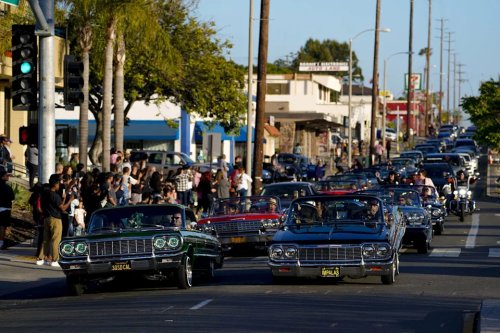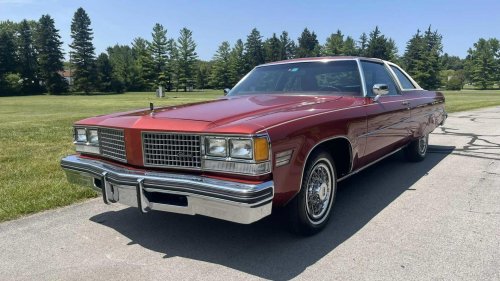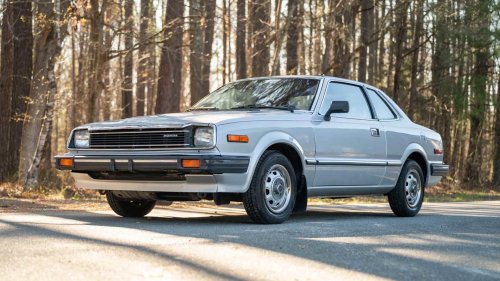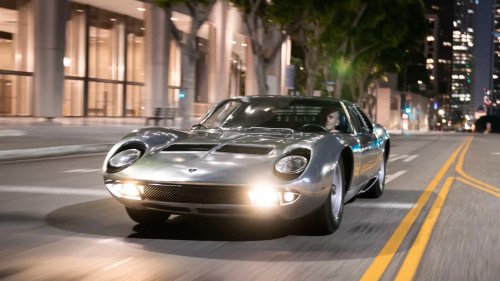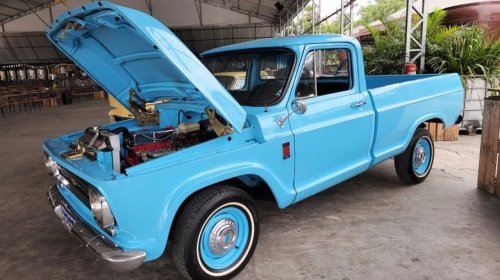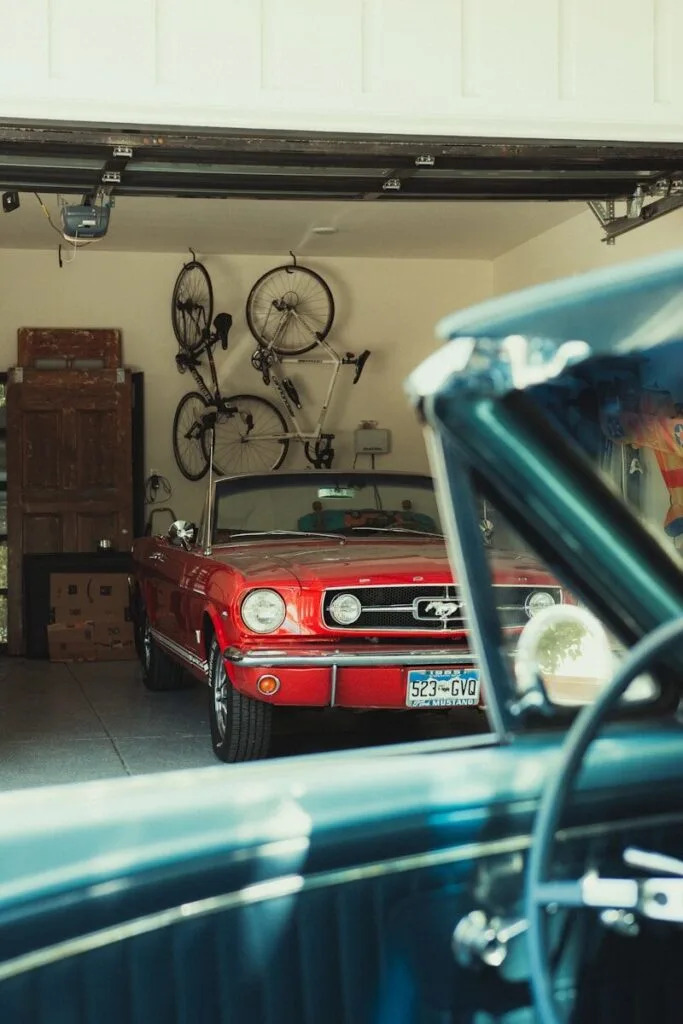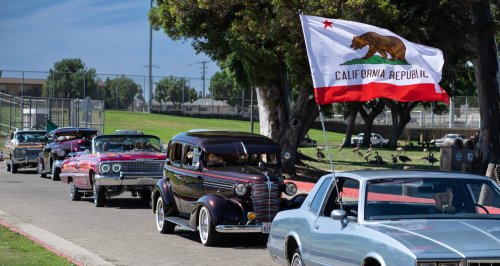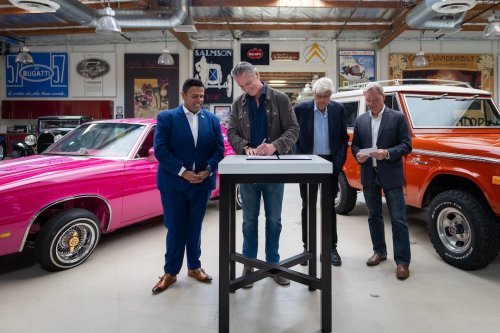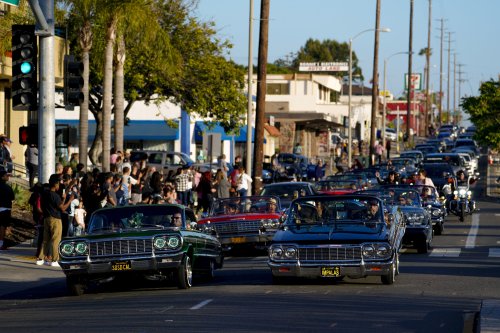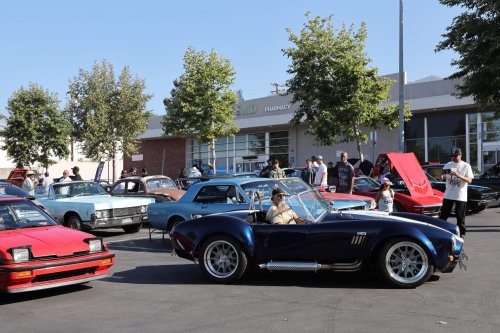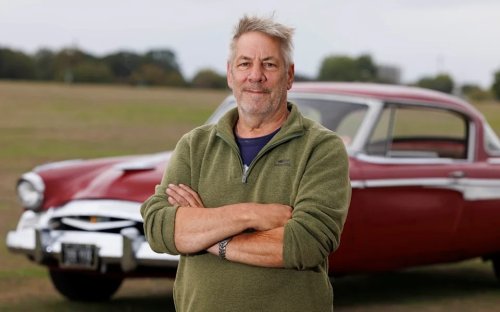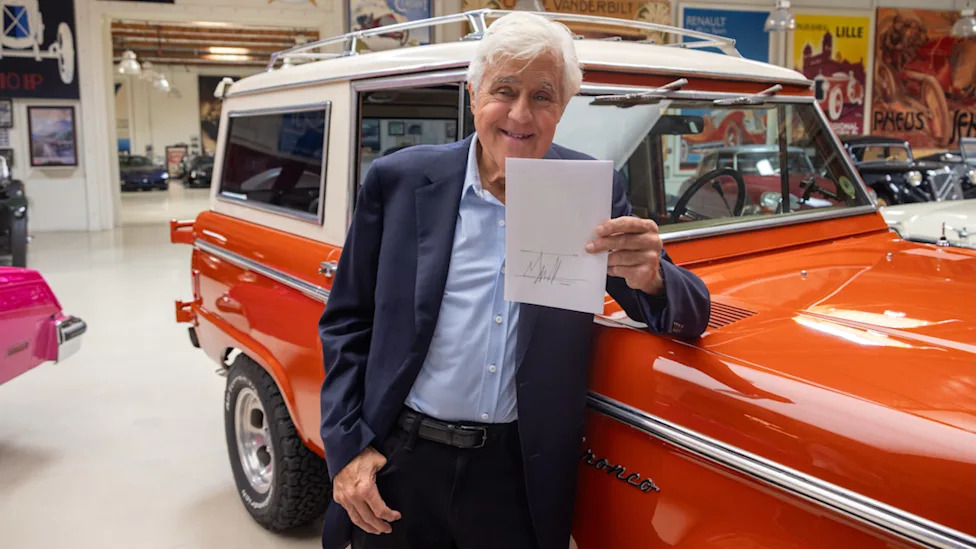
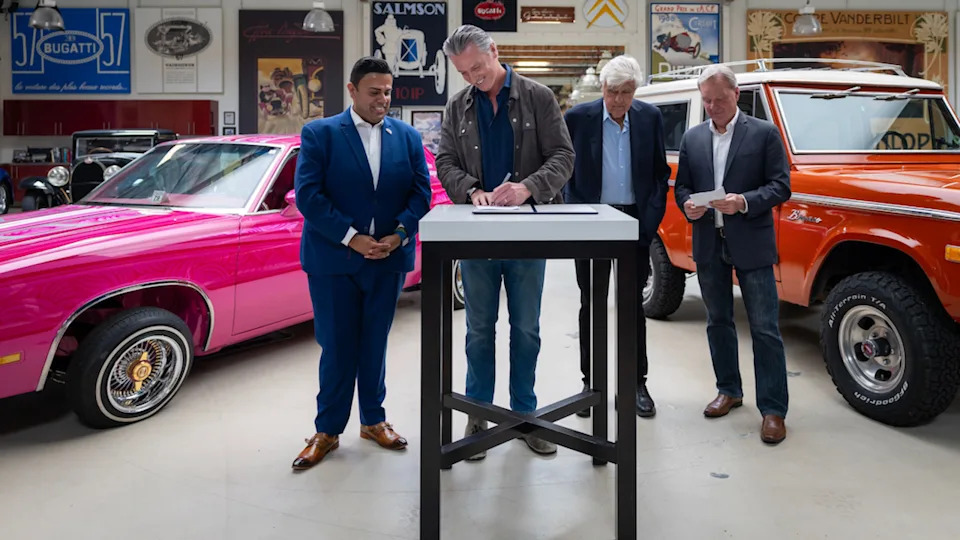
















California Has Approved Leno's Law — Here's What It Means For Classic Car EnthusiastsGuessing HeadlightsAndre NalinThu, September 17, 2026 at 6:30 PM UTCAdd us on GoogleImage Credit: Office of Governor Gavin Newsom.Owning a late-1970s or early-1980s classic in California can come with an unusual headache. A car may spend most of its life tucked away in a garage and cover only a handful of miles each year, yet keeping it registered can still mean dealing with the state's smog-check requirements.Classic-car enthusiasts have spent years pushing Sacramento to reconsider how those rarely driven vehicles are treated. Jay Leno became one of the most recognizable supporters of that effort, lending his name and influence to legislation intended to give qualifying collectors some relief.That campaign has finally produced a change in California law. Governor Gavin Newsom visited Jay Leno's garage on September 16 to sign Senate Bill 1392, officially known as Jay Leno's Law.AdvertisementAdvertisementThe change, however, isn't an immediate blanket exemption for every old car in California. It creates a carefully phased smog-check exemption covering certain collector vehicles from the 1976 through 1985 model years, and owners will have to meet several requirements before their cars qualify.The Smog Exemption Starts In 2028California already exempts vehicles manufactured before the 1976 model year from its regular smog-check requirement. Jay Leno's Law effectively creates another path for newer collector vehicles, starting with cars manufactured before the 1981 model year on January 1, 2028.The cutoff then advances by one model year annually. Cars from the 1981 model year become eligible in 2029, 1982 models in 2030, 1983s in 2031, and 1984s in 2032, before the final expansion takes effect on January 1, 2033, covering qualifying collector vehicles manufactured before the 1986 model year.That final date is important because this isn't an endlessly rolling exemption. Under the law as signed, the expansion stops with the 1985 model year.Your Old Car Doesn't Automatically QualifyImage Credit: Office of Governor Gavin Newsom.Age alone won't be enough. Under the revised definition, the vehicle must be at least 35 model years old and used primarily for activities such as shows, parades, charitable functions, historical exhibitions, display, maintenance, and preservation rather than serving as the owner's primary transportation.AdvertisementAdvertisementOwners must also satisfy another condition established through regulations adopted by the Bureau of Automotive Repair. The vehicle must either be insured as a collector motor vehicle, with proof submitted to the bureau, or be determined through a process developed by the bureau to travel fewer than 1,000 miles per calendar year.That second option could prove particularly useful for enthusiasts who own an old weekend car but don't have specialized collector insurance. Exactly how the mileage-verification process works will depend on regulations developed by the Bureau of Automotive Repair.It Doesn't Mean Every '80s Classic Is Free From Smog ChecksThe limitations make Jay Leno's Law narrower than the sweeping exemption some enthusiasts might imagine from the name. A 1985 collector car meeting the requirements eventually qualifies, for example, while a 1986 model doesn't gain the same exemption simply by reaching 35 years of age.There's also no immediate change for someone heading to register a 1978 Trans Am or 1980 Corvette today, as the first expanded exemption doesn't take effect until January 1, 2028.AdvertisementAdvertisementCalifornia's governor's office describes the affected vehicles as a small portion of the state's fleet that are generally preserved and driven sparingly. Senator Dave Cortese, who jointly authored the legislation with Senator Shannon Grove, said the intent is to recognize the historical value of collector cars while maintaining the state's clean-air goals.Leno Says Enthusiasts Have Been Waiting For ThisThe legislation follows previous attempts to change California's treatment of later-model classics. After Newsom signed the bill, Leno said the state's car community had been waiting a long time for progress on the issue.Newsom also signed separate legislation creating a specialized license plate celebrating California's lowrider heritage, while another bill signed alongside it addresses the state's approval process for aftermarket parts.For classic-car owners, though, SB 1392 is the headline. It doesn't eliminate California's smog rules for every aging enthusiast vehicle, but beginning in 2028, qualifying owners of certain 1976–1985 classics will finally have a route to keep their rarely driven cars registered without undergoing the state's regular smog-check process.AdvertisementAdvertisementIf you want more stories like this, follow Guessing Headlights on Yahoo so you don't miss what's coming next.