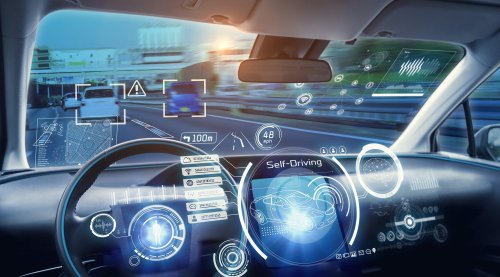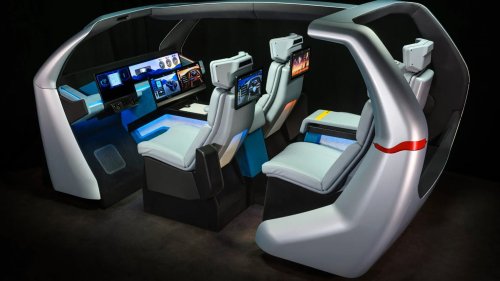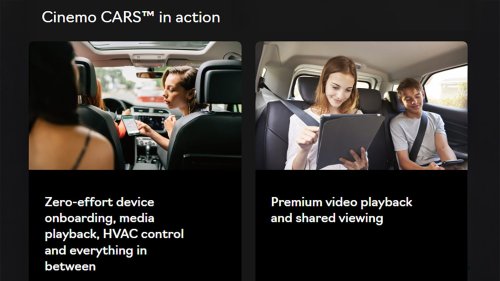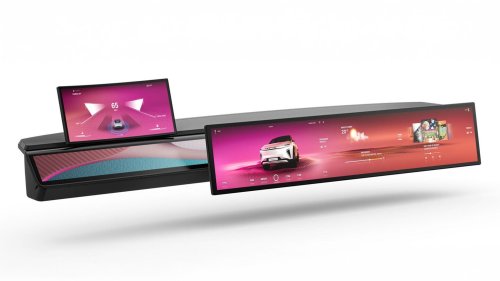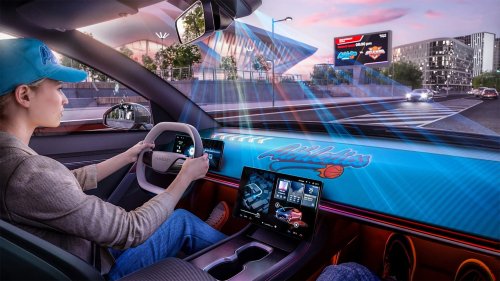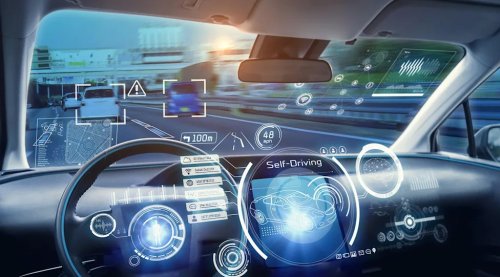
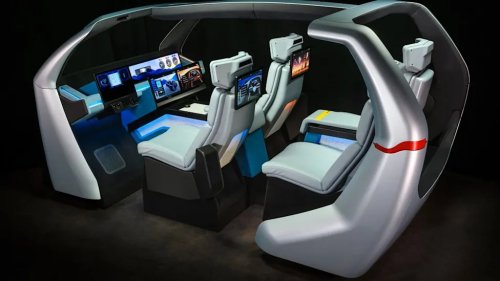
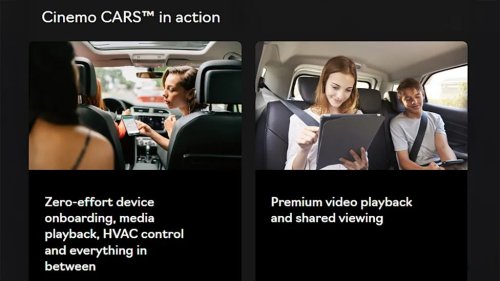
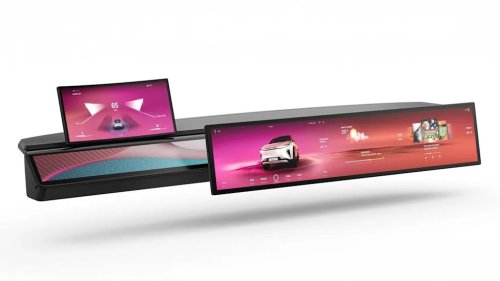
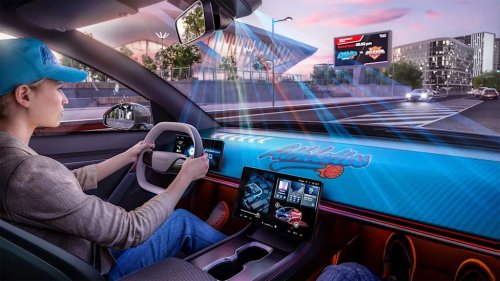



















Future Car Interiors and Next-Gen Cockpit Techmetamorworks - Getty ImagesEmerging trends in cockpit design and augmented reality include software-defined cabins where differing surfaces become the display and where personal devices are integrated into the human-machine interface architecture. And augmented reality focus is advancing from floating arrows to explaining what the vehicle sees and intends to do—visualizing lane change intent, emphasizing pedestrians and other obstacles, and guidance through intersections, to either help drivers maneuver or build their trust in what the autonomous system is doing.1) Garmin Unified CabinPhoto credit: MotorTrendGarmin Unified Cabin powers up to six screens from a single Qualcomm chip, while four ultrawideband antennas can detect what screen a Bluetooth headset is nearest and play audio from that screen. Onboard video chat lets one passenger interrupt programming to communicate directly with another. Garmin also imagines using Meta Neural Band wearables—another brought-in, not built-in technology—to drive gesture control.2) Cinemo CARS Connect DirectPhoto credit: MotorTrendGerman supplier Cinemo envisions a smartphone web-based platform (not app) called CARS Connect Direct, which allows guest passengers to "join" the car, say, for a road trip, either via QR scan or by tapping a near-field communications (NFC) node. Their phone or tablet then becomes their own personal onboard screen. Multiple users can then watch the same or differing video entertainment; the screens can be used for onboard gaming and more. The concept runs on Android Automotive OS.3) Aumovio Colored E-InkPhoto credit: manufacturerAumovio Colored E-Ink works like a Kindle's black-and-white screen but with additional colored pigments. Each has its own unique electrical charge allowing "electrophoresis" to push the desired color to the top of each microcapsule, while pulling others to the bottom to form a design. It's geared toward panel decoration, not screens. Ferrari is putting e-ink into production on the Luce's key fob, but this is black-and-white technology beneath color filters.4) Aumovio Projection SolutionsPhoto credit: MotorTrendAdvertisementAdvertisementAumovio's Projection Solutions is another panel-decoration concept using up to three mini LED projectors to present logos, patterns, designs, warnings, etc. onto the dash cover. The 85-lumen design shown at CES 2026 isn't bright enough to rely on for mission-critical messaging, but it looks cool in lower light conditions.5) Hyundai Mobis Holographic HUDPhoto credit: MotorTrend - MotorTrendHyundai Mobis teamed with German optical company Zeiss to develop a holographic optical element (HOE) capable of turning the entire windshield into a high-brightness (10,000 nits) head-up display with separated viewing—the driver sees only useful navigation and vehicle data, while the passenger can enjoy AR/VR content. We're told to expect production in the 2027–29 timeframe.6) Valeo RacerPhoto credit: MotorTrendValeo Racer aims to integrate vehicle camera and sensor data into onboard gaming projected onto screens or brought-in phones/tablets. There's a racing game where the player aims for coins and other objects projected onto the camera view of what's ahead of the car, while actual g-forces act on the game car, as well.7) Augmented RealityPhoto credit: willia walker - MotorTrendAugmented reality is evolving to identify buildings and destinations in contextual navigation, either using camera images of the view ahead on a screen or by highlighting them via head-up projection on the windshield. Off-road AR "transparent hood" applications that help place the front tires are proliferating, with rock-crawling path-guidance coming—imagine "AR as spotter."8) Nio SkyRide Electrohydraulic Active SuspensionPhoto credit: manufacturerAdvertisementAdvertisementChinese automaker Nio leverages the SkyRide electrohydraulic active suspension in its ET9 flagship to provide a 5D cinema experience when parked. It syncs body movements with the movie's action and uses the HVAC system to blow air in viewers' faces during high-speed sequences.