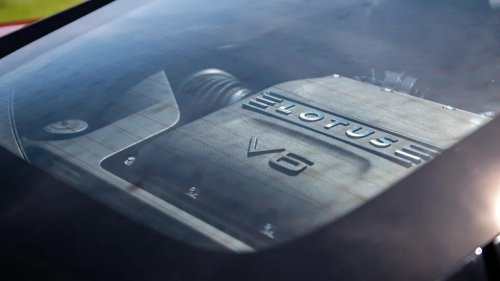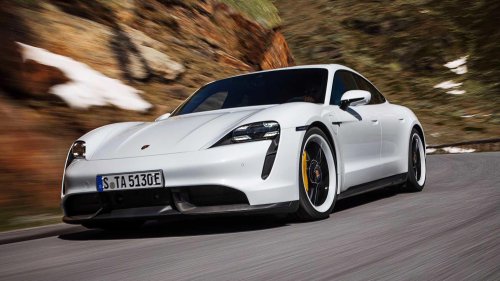
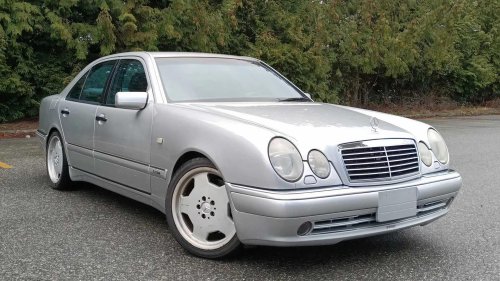
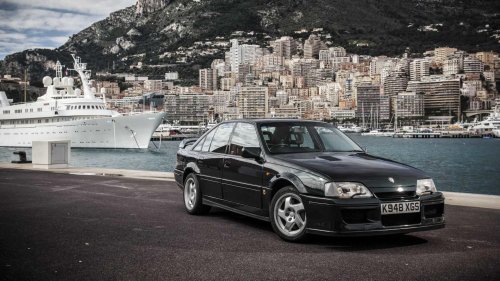
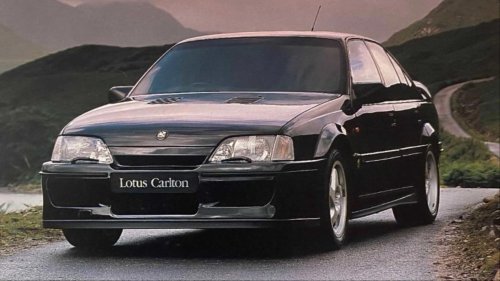
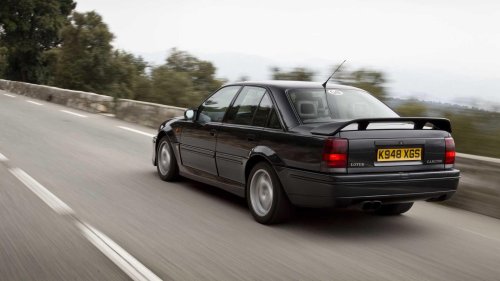
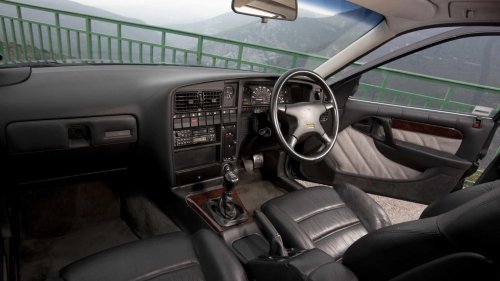



















Many of us absolutely love performance sedans. These cars attempt to combine the best of both worlds between performance and practicality. Often, they end up succeeding. Some of them have ended up becoming iconic models, too. That's usually because enthusiasts cotton onto them, falling in love with their sleeper status and ability to be a one-car solution for almost everything they could want. Sedans As Powerful As Supercars Are Surprisingly Common Now PorscheOnce upon a time, it was unheard of for sports sedans to have power that could rival or even beat supercars. Now, that almost seems commonplace. The latest generation of electric sports sedans like the Porsche Taycan Turbo and the Tesla Model S Plaid can easily keep up with today's supercars. While they may not oust a proper supercar in the top speed stakes, they can certainly match them on power and acceleration.A couple of decades ago, though, things were a different story. It was very rare for performance sedans to have serious amounts of power. They were designed more to blend practicality with performance, not to be crazy speed machines. But, things changed once the automotive industry went into one of its greatest decades. Monster Performance Sedans Started Appearing In The '90sBring a TrailerSports sedans weren't a new concept by the time the '90s came around. But, this was the decade when the real monster models started appearing. Audi launched the first iteration of the S4 around the start of the '90s, while later on in the decade Mercedes-Benz gave us the fantastic E55 AMG. There were also the E34 and E39 generations of the BMW M5, which became yardsticks for what a performance sedan should be. There were also the performance versions of the Holden Commodore and Ford Falcon in Australia, and some American monsters like the Ford Taurus SHO.Out of all these performance monsters, there was one that stood above the rest. This car didn't come from one of the big German brands. In fact, it came from a fairly ordinary marque from Great Britain. The Vauxhall Lotus Carlton Was A Terrifyingly Fast Sedan That Equalled Supercars In Speed And PowerStellantisOut of all the crazy sports sedans that the '90s birthed, none have become as infamous as the Vauxhall Lotus Carlton. This incredible machine was the result of Lotus Cars getting to work on Vauxhall's Carlton executive sedan (known as the Opel Omega in Europe).The upgrades Lotus did started with the engine. Lotus took the 3-liter V6 that was already used in the Carlton GSi and enlarged it to 3.6 liters. If that wasn't enough, Lotus's engineers also added two turbochargers. The result of that was 377 horsepower and 419 lb-ft of torque.That gave it almost as much power and much more torque than a Ferrari Testarossa of the time. The Testarossa produced 385 hp and 361 lb-ft of torque. All that power could take the Lotus Carlton from 0-60 mph in a shade over 5 seconds, and onto a top speed of 176 mph. To make sure the engine could cope with that extra power, Lotus reinforced the external webbing of the engine block and replaced several of the inernal components. This included a new crankshaft that was forged and machined in Germany, new forged slipper pistons produced by Mahle and new piston connecting rods that were designed by Lotus. It Shared Components With A Legendary American Sports Car And An Iconic Australian Sedan LotusAs part of Lotus's modifications to the Carlton to create this high-performance beast, it included a couple of components from two legendary cars made outside of Europe. The first of those was the 6-speed manual transmission. This was the same transmission that was used in the C4-generation Chevrolet Corvette ZR1. In between that transmission and the rear wheels was a limited-slip differential that was taken from the V8 Holden Commodore.Both these components already had proven high-performance applications by that point. They were also easily accessible to Lotus's engineers, as Vauxhall was owned by General Motors at the time. It's not really surprising, then, that Lotus's engineers decided to put those parts into the Carlton while they were beefing it up. It Was So Fast, Some Organizations Tried To Have It Banned StellantisAs you might expect, the existence of a sports sedan that could hold its own against (and maybe even beat) supercars created a big stir. This included concerns from Britain's police. Because the Lotus Carlton was so fast and had all the practicality of a mid-sized sedan, people twigged on that it could be a good getaway car. No police car that Britain had at the time could even come close to the Lotus Carlton's 170+ mph top speed.This led to a public campaign, spearheaded by the Daily Mail and the Association of Chief Police Officers, to get the Lotus Carlton banned. This campaign actually made it as far as being discussed in Parliament, where British MPs also criticized how the car was advertised at the time. But, no ban was ever passed on selling the Lotus Carlton in the UK.Interestingly, some contemporary journalists also criticized how insanely fast the Lotus Carlton was from the factory. Bob Murray, who was the editor of Autocar Magazine around the time the Lotus Carlton was launched, once remarked that "nobody buying this car could possibly argue he either needs or will be able to use a top whack which is claimed to be around 180 mph." On top of that, he suggested that Vauxhall should electronically limit its top speed like the big German brands were doing to their fast sedans at the time. It's Now Become A Valuable ClassicStellantisThanks to its legendary reputation, the Vauxhall Lotus Carlton has become a valuable classic. There was once a time when you could get these cars cheaply. Not any more. The average used value of a Lotus Carlton these days is $57,307. Individual examples have been known to sell for over $100,000, too.If you just want a great '90s performance sedan, there are much cheaper options out there than the Lotus Carlton. But, if you want to buy into the legend, there's no substitute for it. The value of these cars will only go up more, too. As more and more '90s cars get closer to true classic status, the Lotus Carlton will be among the most collectible cars of that era.Sources: Autocar, Classic.com, Ferrari, Lotus, Vauxhall