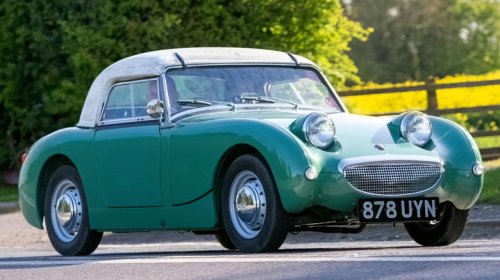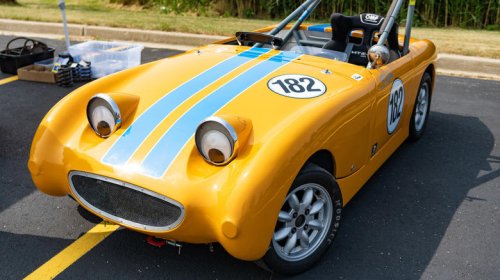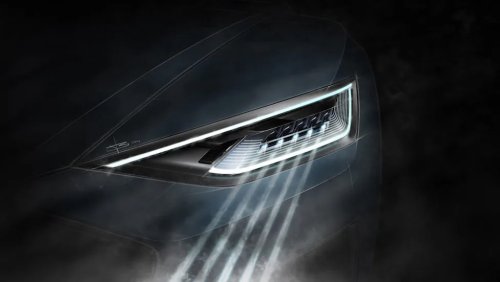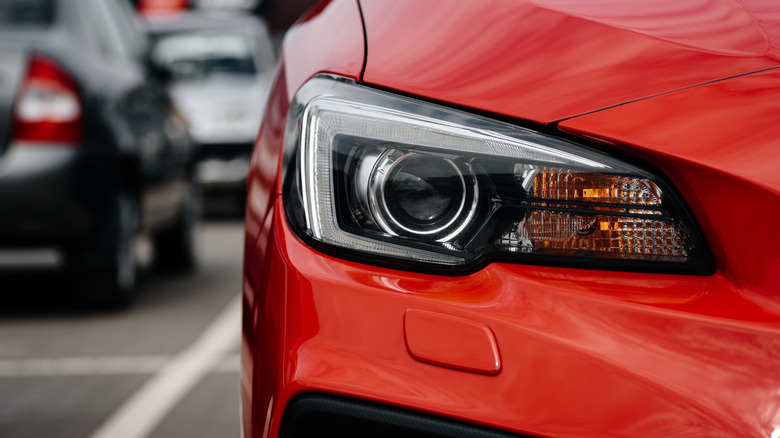
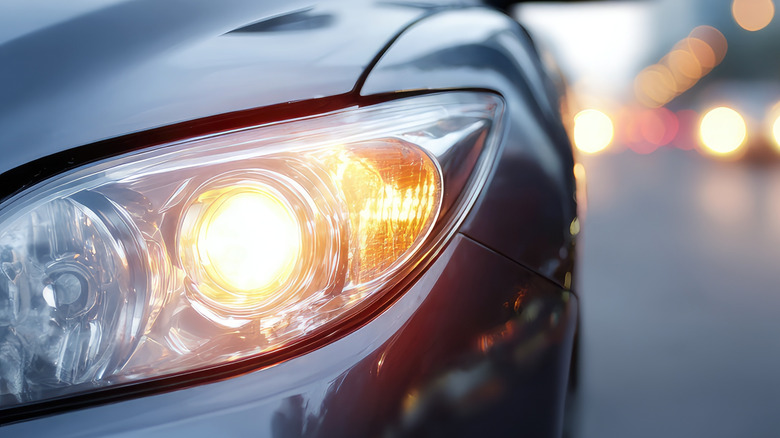



















Anton Pentegov/Shutterstock Headlights have come a long way since the days of yore. From the finicky and potentially explosive acetylene headlights of old to the modern retina-searing white beams, automotive illumination has reached a point where we're now actively finding ways to minimize glare from ridiculously bright headlights. Part of that discussion, as you may know, is the projector versus reflector setup. The fundamental difference between the two lies in their construction: Both reflector and projector headlights feature a mirror bowl, with the latter also getting an additional condenser lens to better focus the light beam. Think of it as a magnifying glass that focuses all that scattered light into a concentrated, well-defined pattern. Naturally, these design differences bring about several pros and cons. Firstly, because of the more complex arrangement, projector headlights are more expensive than reflector-based setups. But thanks to a certain shield inside the projector's housing, the beam pattern has a defined cut-off point, as opposed to the reflector's more scattered light pattern. The cut-off shield also reduces glare by preventing the scattered light from dazzling oncoming traffic. Projectors are generally brighter and offer much better range than their reflector-based counterparts. The beam, however, is spread across a relatively wider area in the case of reflectors. Understand that projector headlight assemblies are larger and typically more sensitive to alignment issues, as opposed to the relatively simpler reflector systems. Generally speaking, projectors are the preferred/superior headlight type because of their brighter illumination and focused light output. Telling them apart, plus the LED talk agyarstudio/Shutterstock Identifying projector lights is pretty simple. They are relatively modern with an eye-socket design and much of the reflector portion hidden inside the assembly. In contrast, reflector lights are the traditional-looking item, which have a lot of their reflector elements visible within the mirror bowl. Depending on the make and model, you may find reflectors, projectors, or hybrid headlights that typically have projector low-beams and reflector high-beams. More recently, things have changed, with most new cars featuring LED headlights in either a projector or reflector arrangement. However, it's not uncommon to find halogen bulbs offered as standard equipment on certain entry-level cars and trucks. But if you're planning to swap light bulbs, remember to check compatibility first. Quality is something else you don't want to skimp out on. LEDs are your best bet, since they are significantly brighter, more efficient, and offer better longevity than halogen bulbs. If you already have OEM LEDs in either projector or reflector setups, then your options are pretty limited in terms of upgrades, according to this video from TheRetrofitSource YouTube channel. On the other hand, if you have reflector headlights, you could experiment with high-intensity LEDs first, then maybe upgrade the assembly to a projector unit, to then try out all the fancy stuff, including Demon-eyes, Halos, and so on. Bear in mind, however, that the exercise of retrofitting LEDs in a headlight assembly designed for halogen bulbs is illegal. The legal way is to upgrade the entire assembly (including the bulb) with ones that are approved by the U.S. Department of Transportation. This, as you'd imagine, is a costlier undertaking.