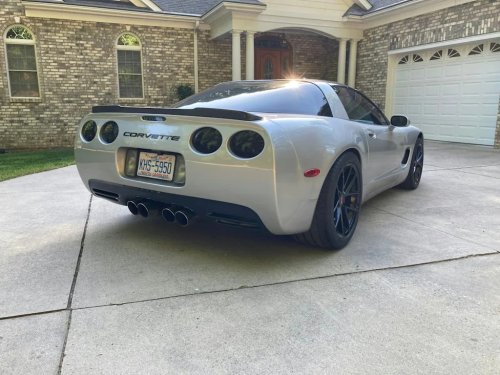
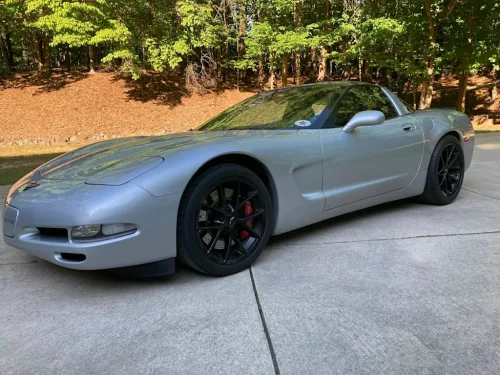
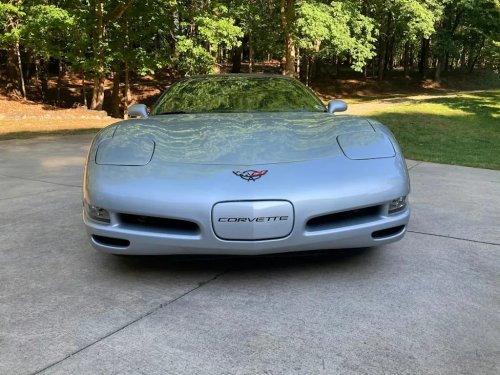
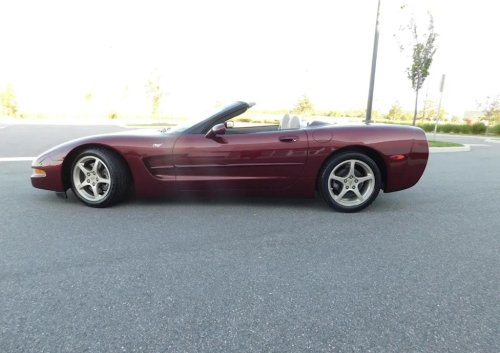
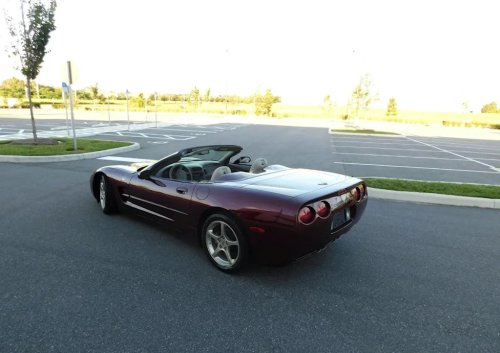
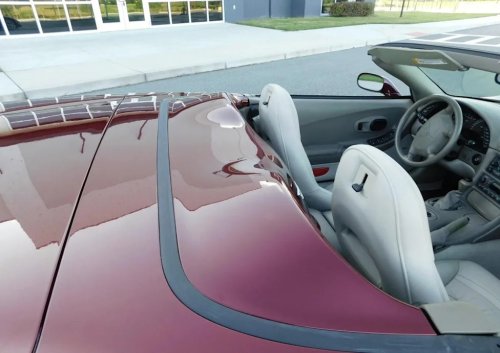
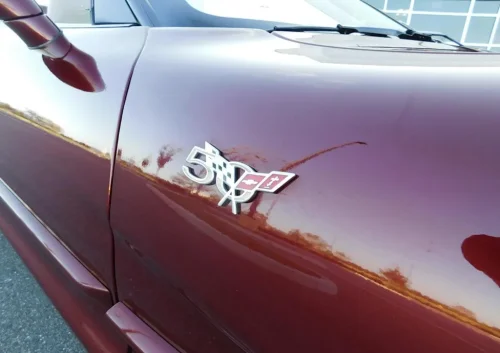
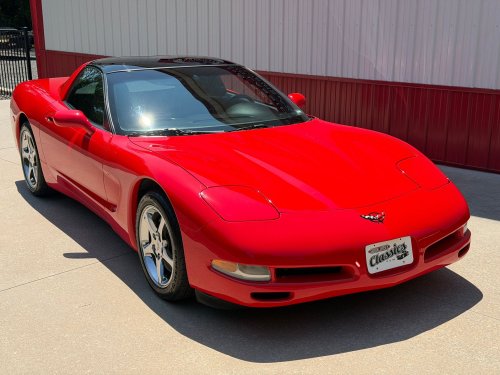
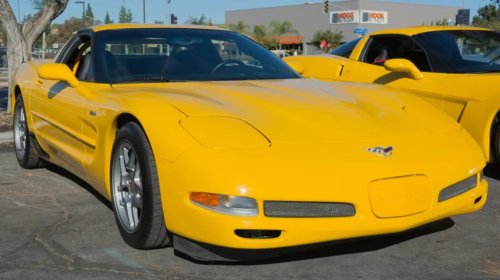
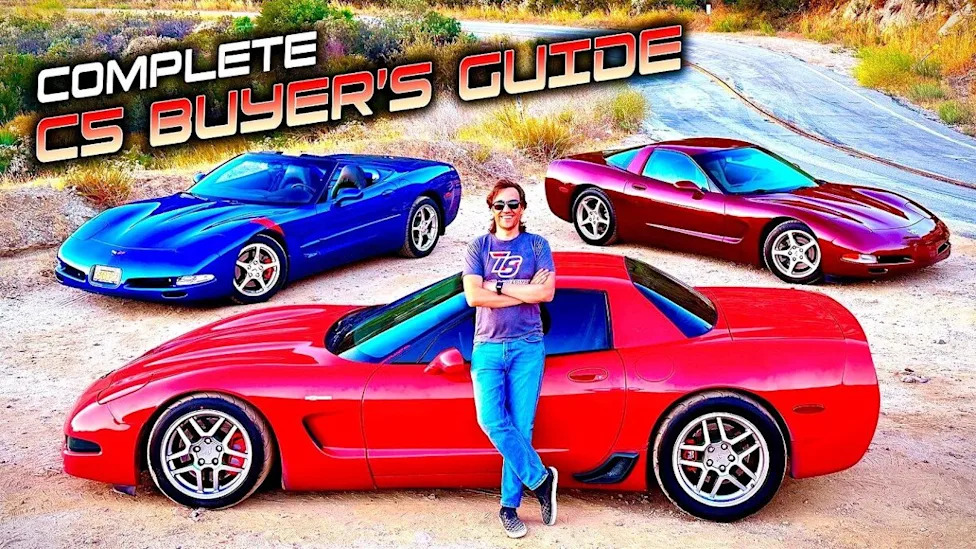
the complete c5 corvette buyers guideEverything you NEED to know about buying a 1997-2004 C5 Corvette in 2026!This C5 buyer's guide covers performance, common problems, reliability, colors, current values with options, special editions like the Z06, and major changes for each model year, including what years are best and what to avoid.The AutoGuide Creators Series tells stories and amplifies creators from the car world, including family life, car buying advice, commuting tips and car culture.Chevrolet C5 Corvette (1997–2004) Buyer's GuideThe fifth-generation (C5) Chevrolet Corvette remains one of the best performance bargains on the modern sports car market. Produced from 1997 through 2004, it introduced a modern hydroformed chassis structure, a rear-mounted transaxle for ideal weight distribution, and the legendary LS1 V8 engine.AdvertisementAdvertisementThis comprehensive guide covers year-by-year changes, common mechanical failure points, market values, and top recommended model years.Model Year Breakdown (1997–2004)1997Debut Features: The C5 launched strictly as a hatchback coupe with a removable targa top.Chassis & Drivetrain: Features a hydroformed frame rail chassis-4.5 times stiffer than the C4-paired with a rear transaxle connected via a torque tube.Engine & Output: Debut of the 5.7L LS1 V8 making 345 hp and 350 lb-ft of torque.Transmissions: 4-speed automatic (700R4/4L60-E derivative) or 6-speed manual (BorgWarner T-56).Suspension Options: Standard FE1 base suspension, stiffer Z51 Performance Handling Package, or F45 Selective Real Time Damping (3-mode adjustable shocks).Aerodynamics & Luggage: Ultra-slippery 0.29 Drag Coefficient (Cd). Features a massive 25 cubic feet of rear cargo space under the hatch.Production Rarity: The rarest C5 model year due to a delayed launch, with only 9,752 units produced.1998Convertible Introduced: Adds a manual soft-top convertible with a glass rear window, real trunk lid (13.9 cu ft), and rigid tonneau panel.Active Handling System (JL4): Debuts as a $500 option, utilizing yaw/lateral sensors and selective braking to counteract oversteer and understeer (includes a Performance/Competition mode).Option Additions: Lightweight magnesium wheels (N73) and Light Oak interior options become available.Indy 500 Pace Car Replica: 1,158 units produced in Radar Blue with Yellow wheels/graphics and a two-tone interior.1999Fixed Roof Coupe (FRC) Introduced: Features a non-removable notchback hardtop roof. The FRC chassis is 12% stiffer than the targa coupe and 79 lbs lighter, but cargo space drops to 13.3 cu ft.FRC Specifications: Sold exclusively with the 6-speed manual transmission and Z51 sport suspension.Head-Up Display (HUD / UV6): Debuts as a $375 option, projecting digital speed, RPM, and engine vitals directly onto the lower windshield glass.Steering & Comfort: Revised power steering system reduces high-speed wandering; power-telescoping steering column becomes optional.2000Wheels: "Wagon Wheel" 5-spoke rims are replaced by thinner, lighter 5-spoke wheels (available in painted, polished, or magnesium finishes).Suspension Tweaks: Z51 package gains thicker sway bars.Weather Sealing: Upgraded rubber seals keep water out of the interior and prevent hatch drips when opened.Keyless Entry: Proximity feature removed; passenger-side exterior key lock cylinder eliminated.Final Year for FRC: Low sales (2,090 units in 2000) lead to the FRC being retired to make way for a dedicated performance model.2001 (Major Mechanical Overhaul)Z06 Debut: Replaces the FRC notchback body style with an ultra-high-performance track variant.LS6 V8: High-compression engine producing 385 hp and 385 lb-ft of torque via a revised intake, hotter camshaft, and higher redline (6,500 RPM).Exhaust & Wheels: Titanium cat-back exhaust system (halves exhaust system weight) and lightweight 10-spoke Speedline alloy wheels wrapped in non-run-flat Goodyear Eagle F1 Supercar tires (includes tire inflator kit).Gearing: M12 6-speed manual transmission with shorter, more aggressive gear ratios.LS1 Base Engine Upgrades: Receives the LS6 intake manifold, camshaft profile tweaks, and stronger rod bolts. Output increases to 350 hp and 360 lb-ft (auto) / 375 lb-ft (manual).Electronic Brake Control Module (EBCM): Second-generation EBCM introduced and relocated to the front of the engine bay. This unit can be rebuilt by third-party shops if it fails.Driveability Updates: Second-generation Active Handling becomes standard across all models; revised clutch hydraulics lower pedal effort.2002Z06 Power Bump: LS6 engine output rises to 405 hp and 400 lb-ft of torque thanks to a higher-lift camshaft, sodium-filled valves, deleted pup-cats, and an upgraded air intake system.Piston Redesign: LS1 and LS6 engines receive revised piston ring packages to address cold-engine "piston slap" noise.Hardware Upgrades: Plastic sway bar end links are replaced with aluminum units across all trims.200350th Anniversary Special Edition (1SC): Available on coupe and convertible models. Features Anniversary Red metallic paint, Champagne-finished wheels, standard Magnetic Ride Control, and a Shale leather interior with padded door armrests and embroidered 50th logos.F55 Magnetic Selective Ride Control: Replaces the slower-reacting F45 shock system. Utilizes magnetorheological fluid inside the shocks for instant damping adjustments.Fuel System Redesign: Mid-year transition to a returnless "FFS" saddle-tank fuel system where the fuel filter is located inside the left-hand tank rather than mounted along the frame rail.2004Commemorative Edition (Z16 / Z15): Honors Le Mans racing victories with Le Mans Blue paint and Shale/Black interiors.Z06 Commemorative (Z16): Adds a carbon-fiber hood (saves 10.6 lbs) and silver/red racing stripes.Suspension Re-tuning: Z06 shocks and sway bar bushings revised for smoother breakaway characteristics at the limit.Common Problems & Failure Points1. Electronic Brake Control Module (EBCM) FailureSymptoms: ABS and Traction Control warning lights illuminate on the dash with DIC codes C1214 , C1255 , or C1288 .Year Split Critical Warning:1997–2000 Models: Early EBCM units are sealed in potting compound and mounted near the rear differential or front crossmember. They are generally non-rebuildable. Finding a functional used unit can cost $1,200–$2,000+ with no long-term reliability guarantees.2001–2004 Models: Second-generation EBCM mounted in the engine bay can be removed and rebuilt by third-party specialists for approximately $150–$250.2. Steering Column Lock MalfunctionSymptoms: "Pull Key, Wait 10 Sec" or "Service Column Lock" appears on the DIC; steering wheel remains locked or fuel cuts off at 2 mph.Fix: Install an aftermarket LMC5 Column Lock Bypass Module ($50), which connects to the Body Control Module (BCM) in the passenger footwell to bypass the stock column lock motor.3. Wobbling Harmonic BalancerSymptoms: Visible wobbling or squeaking from the lower engine pulley at idle.Cause: The rubber isolator ring separating the inner hub and outer ring of the factory harmonic balancer degrades over time.Fix: Replace with an aftermarket pinned or press-fit steel balancer (e.g., ATI, Summit, or PowerBond). Expect 5–7 hours of shop labor ($1,000–$2,200 total), as the rack-and-pinion assembly must be unbolted to access the crank bolt.4. Torque Tube Couplers & BearingsSymptoms: Oscillating vibration or metallic scraping/rattling noise originating from the center tunnel under acceleration or idle.Cause: The internal rubber guibo couplers inside the aluminum torque tube dry-rot and tear.Fix: Complete teardown of the rear suspension/transaxle subframe to rebuild the torque tube with fresh rubber or polyurethane couplers and high-speed bearings ($1,800–$2,800 with labor).5. Weak/Broken Valve Springs (2002–2003 Z06 Only)Symptoms: Engine misfire, dropped valve, or sudden catastrophic top-end failure.Cause: A batch of yellow OEM valve springs supplied on 2002 and early 2003 LS6 engines was prone to fatigue cracking.Fix: Swap out OEM yellow springs for upgraded aftermarket valve springs (e.g., PAC or Brian Tooley Racing).6. Battery Tray Acid CorrosionSymptoms: Mysterious electrical short circuits, loss of headlight operation, or BCM faults.Cause: Standard lead-acid batteries leak acid through bottom vents directly onto the engine wiring harness and vacuum lines running underneath the battery tray.Fix: Replace older lead-acid units with an AGM (Absorbed Glass Mat) leak-proof battery.Technical Specifications ComparisonFeature / SpecBase Coupe / ConvertibleFixed Roof Coupe (FRC)Z06Production Years1997–2004 (Coupe) / 1998–2004 (Vert)1999–20002001–2004Engine5.7L LS1 V85.7L LS1 V85.7L LS6 V8Horsepower345 hp ('97–'00) / 350 hp ('01–'04)345 hp385 hp ('01) / 405 hp ('02–'04)Torque350 lb-ft ('97–'00) / 375 lb-ft ('01–'04 manual)350 lb-ft385 lb-ft ('01) / 400 lb-ft ('02–'04)Transmissions4-speed Auto / 6-speed Manual6-speed Manual Only6-speed M12 Manual OnlyCurb Weight~3,240 lbs~3,170 lbs~3,118 lbs0–60 mph Time4.7–5.2 seconds4.7 seconds3.9–4.1 secondsC5 Corvette Market Value & Pricing GuideValues reflect stock, clean-title examples in good to excellent condition with average mileage (30,000–80,000 miles).Base Coupe & Convertible Models1997–2000 Coupe / Convertible: $12,000 – $16,0002001–2004 Coupe / Convertible: $15,000 – $20,0001999–2000 Fixed Roof Coupe (FRC): $15,000 – $19,000Special Editions & Z062001 Z06 (385 hp): $20,000 – $24,0002002–2004 Z06 (405 hp): $24,000 – $30,0002003 50th Anniversary Edition (1SC): $18,000 – $23,0002004 Commemorative Z06 (Z16): $26,000 – $33,0001998 Indy Pace Car Replica: $18,000 – $24,000Final Recommendation: Which C5 Should You Buy?Best Overall Value (Daily Driver / Weekend Cruiser): 2001–2004 Base Coupe or ConvertibleWhy: You get the upgraded 350 hp LS1, stronger rod bolts, less intrusive Active Handling, and-most importantly-the rebuildable 2nd-generation EBCM brake module.Best for Track & Performance Enthusiasts: 2002–2004 C5 Z06Why: The 405 hp LS6 engine, titanium exhaust, stiffer chassis, shorter gearing, and non-run-flat wheel setup provide superior performance out of the box.Years to Exercise Caution On: 1997–2000 ModelsWhy: Unless priced significantly below market value or verified to have a functional ABS system, early cars carry the risk of non-rebuildable EBCM module failures.AdvertisementAdvertisementBecome an AutoGuide insider. Get the latest from the automotive world first by subscribing to our newsletterhere.


















 +77 others