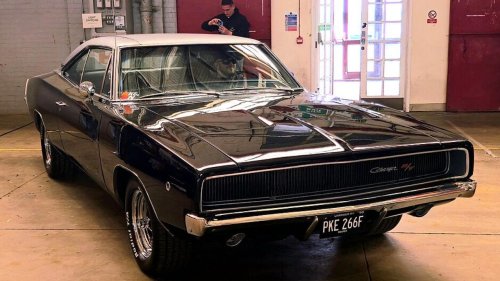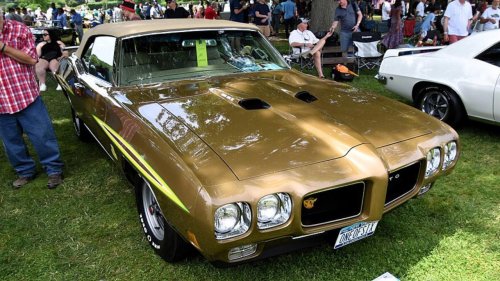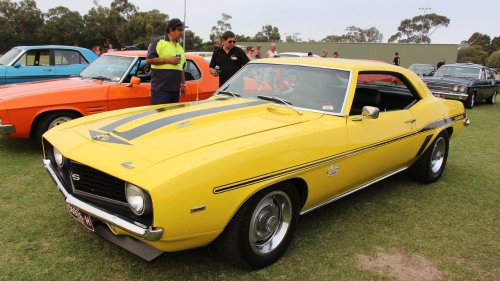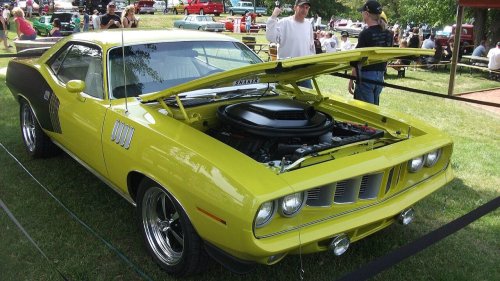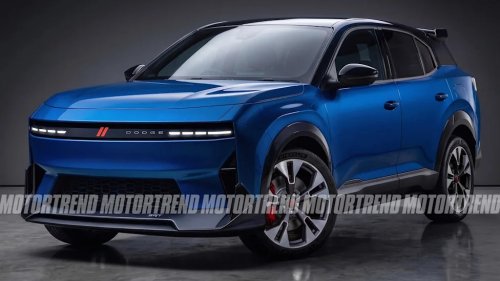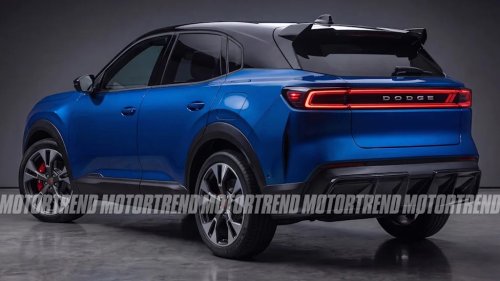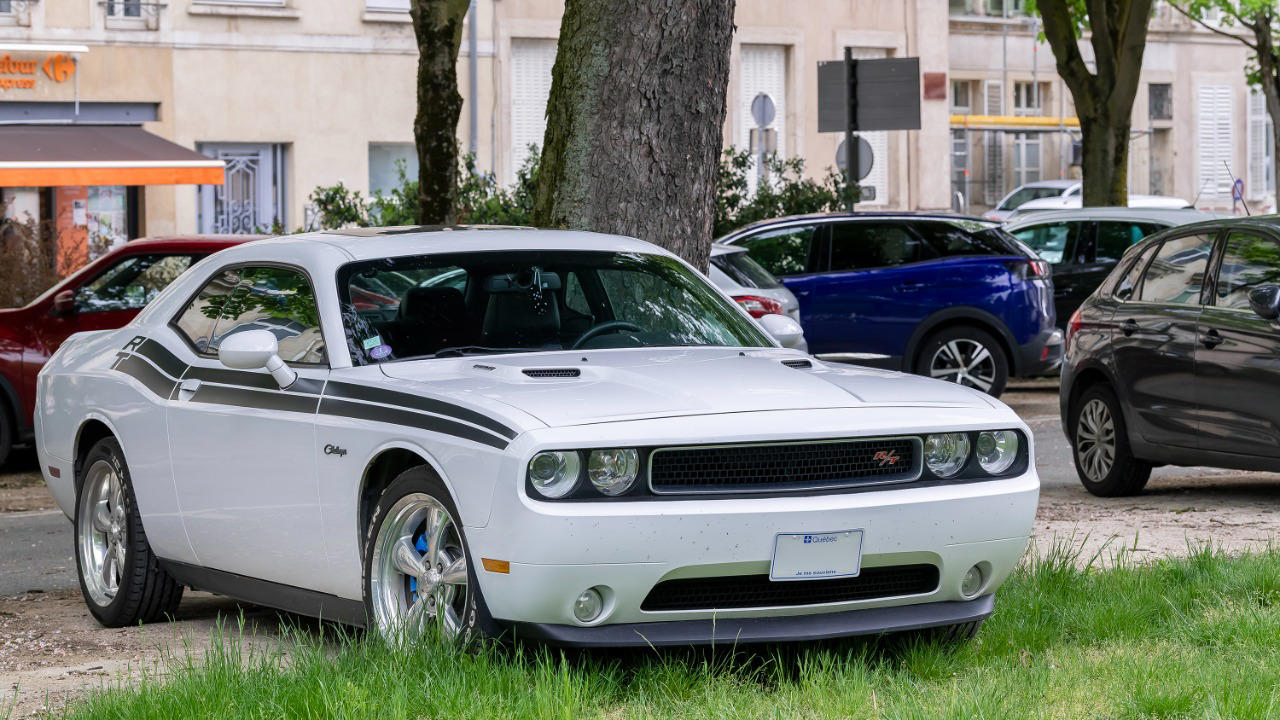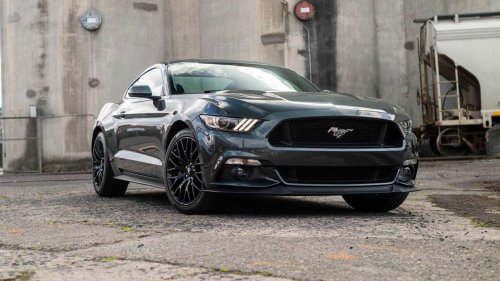
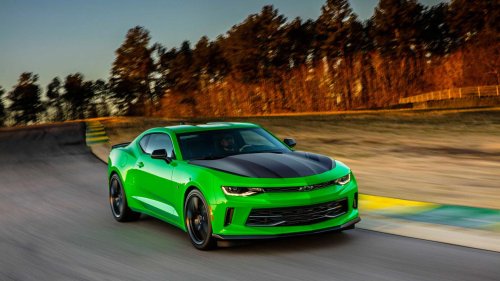
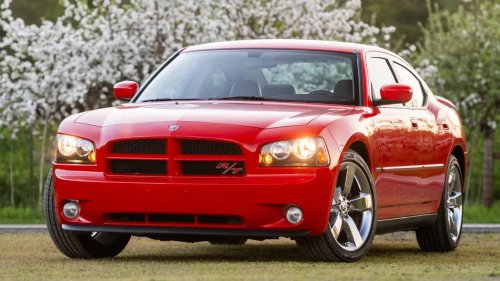
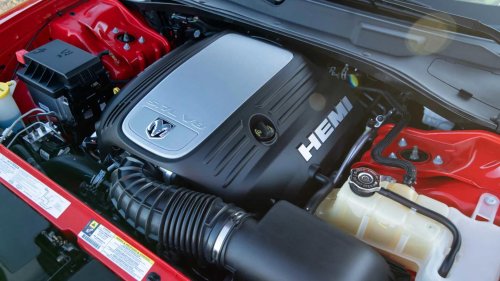
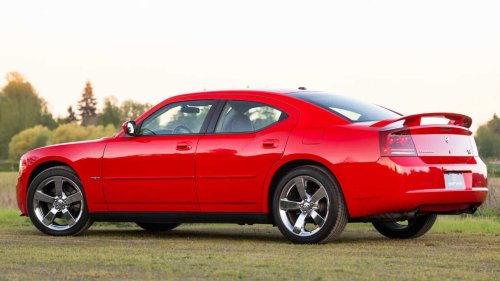
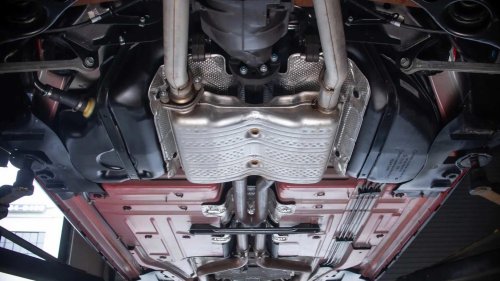
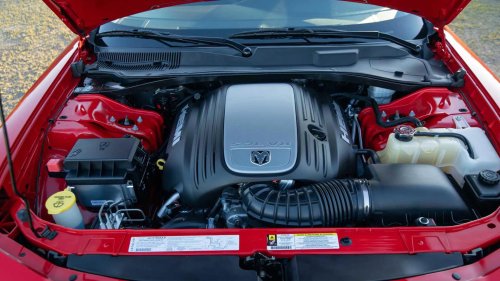
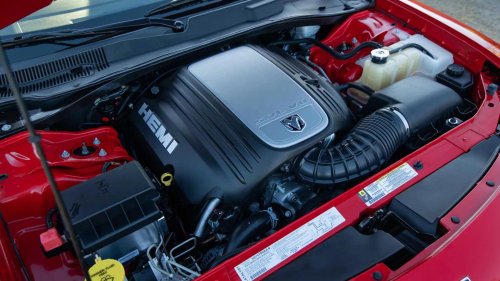
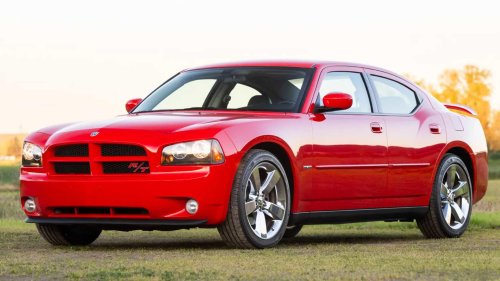
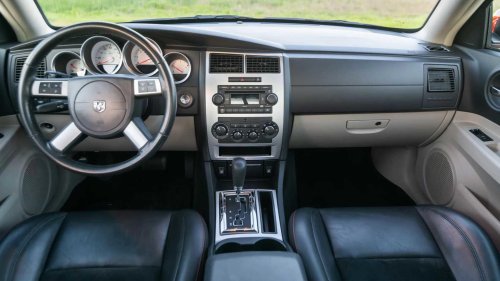
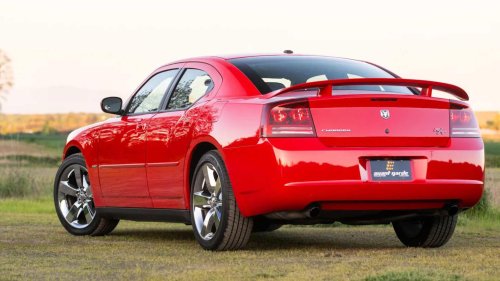



















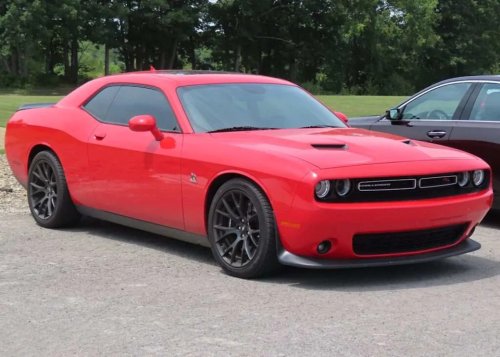

Owning a muscle car in 2026 costs more than it ever has and choices for a new one are incredibly limited. The new Dodge Charger (that no longer has a V8) starts at $49,995, and the Ford Mustang GT opens at $46,560, both sitting well above the average new car price. It's not like the alternatives are easier to swallow either. The Camaro, and Challenger are gone, and the Mustang is the only V8 muscle car that is still alive.At $46,000, the S650 Mustang is great value, but it is far from the blue-collar sports car originally envisioned. The cars that made V8 muscle feel accessible have left the market. So if you want a rear-wheel-drive V8 muscle car in 2026 without spending new-car money, the showroom floor isn't where you'll find it. The answer is in the used market, and specifically in one corner of it that most buyers are still walking past. The Cheap V8s You Could Buy Two Years Ago Aren't Cheap Anymore Bring a TrailerA few years ago, the path to a cheap V8 muscle car felt obvious. Pick up a used Mustang GT, a Camaro SS, or a Challenger R/T, pay well under $20,000, and enjoy the kind of performance that used to cost twice as much.Now that window has mostly closed, and the obvious candidates have appreciated. A 2015 Dodge Challenger R/T now hovers in the low-to-mid $30,000 range. A 2015 Ford Mustang GT sits closer to $36,000. These aren't collector prices, but they're no longer bargains either.The story of depreciation sounds promising on paper. A Chevrolet Camaro loses around 38% of its value over five years, while a Ford Mustang drops closer to 57%. But that only helps you if you're buying a recent model, and the sweet-spot years, the 2015 to 2019 cars that were genuinely affordable two or three years ago, have already been corrected by the market.ChevroletManual transmission cars are in an even tighter spot. V8 cars with three pedals are in short supply, and the market is aware. Clean manual examples, particularly low-mileage Camaro 1LE and 2SS variants, are already showing slight appreciation on Classic.com and Hagerty's valuation tools. Buying one now means paying a premium for a car that was supposed to be the budget option.What's left for the buyer on a tighter budget tends to be higher-mileage examples, questionable service histories, or model years old enough to carry their own set of risks. You start making compromises you didn't plan on making. The cars that were genuinely cheap in 2022 aren't cheap anymore, and the ones still wearing a low price tag usually have a reason for it.There is, however, one car in this segment that hasn't followed the same script — a full-size V8 muscle car, but with four doors that the market has largely overlooked, and that still sits right at the bottom of its depreciation curve. This Overlooked Dodge Still Costs Less Than A Used Camry Bring a TrailerThe 6th-generation Dodge Charger R/T ran from 2006 through 2010, and it carried a 5.7-liter Hemi V8 for every single one of those years. Power started at 340 horsepower and climbed to 368 hp for the 2009 model year, all of it sent to the rear wheels through a 5-speed automatic transmission.This was a full-size four-door sedan with room for five adults, a trunk you could actually use, and the kind of road presence that made people turn around in parking lots. It was and remains a real muscle car that you can drive every day.Bring a Trailer The prices right now are genuinely hard to believe. According to Kelley Blue Book, a 2010 Charger R/T carries a private party value of $4,750 to $5,950. A 2009 R/T runs $4,075 to $5,150 in the same terms.Dealer asking prices on clean examples tend to run $6,000 to $10,000, and with KBB trade-in values on the 2010 sitting at just $2,150 to $2,775, there's real room to negotiate. Making the 6th-generation Charger R/T the cheapest V8 muscle car money can buy.VBring a Trailer To put that in perspective: the 2026 Dodge Charger Sixpack — attempting to project the same rear-wheel-drive muscle car idea, albeit with the Hurricane inline-6 turbo, — starts at $49,995. You could buy ten of these for the price of one new one.Based on 839 owner reviews, KBB puts this generation at 4.6 out of 5 stars, with 92% recommending the car outright. That's not the rating of a problematic vehicle. That's the rating of a car that's been quietly doing its job for nearly two decades without getting the credit it deserves. One Of The Cheapest V8s In America To Keep On The Road Bring a TrailerAccording to RepairPal, the Dodge Charger averages $652 a year in repair and maintenance costs, right in line with the broader vehicle average. Repairs can be on the pricier side when they do happen, but the key word is when: major issues are genuinely uncommon on these cars.Furthermore, Charger owners bring their cars in for unscheduled repairs an average of 0.2 times per year. That compares to 0.3 for full-size cars generally, and 0.4 across all vehicle models, meaning the Charger needs unexpected shop visits less often than almost anything else in its class.Bring a Trailer If you're looking for a V8, fuel economy is perhaps not a high priority, particularly with a HEMI. The EPA rated the 5.7-liter R/T at 16 city and 25 highway, for a combined 19 mpg. For a rear-wheel-drive V8 sedan, those are honest and livable numbers, but with fuel prices climbing as quickly as the Charger will run the standing quarter, it won't be without its challenges.One thing worth knowing about is the Multi-Displacement System, or MDS. It's the cylinder deactivation technology that helps the 5.7-liter stretch its highway mileage by running on four of the eight cylinders when cruising. It works, but it's also connected to the Hemi tick that some owners experience.Long-term, these cars hold up well. Most Chargers are expected to last between 150,000 and 250,000 miles, and plenty of owners report hitting 100,000 miles without any significant drama. Even if you budget $2,000 for deferred maintenance on top of a $7,000 purchase price, you're still under $10,000 all-in for a Hemi V8 with rear-wheel drive. How To Buy A V8 Charger Without Inheriting Someone Else's Problem Bring a Trailer The 2009 and 2010 model years are the sweet spot for performance. Dodge revised the 5.7-liter’s output to 368 hp for 2009, and these later "Eagle" engines feel significantly punchier than the earlier versions. However, they aren't bulletproof. While the 2006–2008 cars were known for dropping valve seats, the 2009 and 2010 models moved into the era of the "Hemi Tick," a camshaft and lifter wear issue that persisted well into the 2020s.That said, the Hemi tick is manageable if you catch it early. A full cam and lifter job can run around $3,500 to $5,000 in parts and labor, which is a steep bill on an $8,000 car, but often results in an engine that’s "better than new" if upgraded with aftermarket parts. This is why a cold-start inspection is the most important part of your Pre-Purchase Inspection.Bring a Trailer When you go to look at one, arrive before the seller starts it. Open the hood and listen to the engine from cold. A brief tick in the first 20 to 30 seconds is normal, that's just oil pressure building in the valvetrain. What you don't want is a tick that sticks around past warm-up, or one that gets louder when you rev the engine under load.Ask for service records and pay close attention to oil change intervals. The 5.7 Hemi is more sensitive to neglected oil than most engines, and a car with a spotty maintenance history is a car where the lifter risk goes up considerably. Regular changes with the correct viscosity are the single best indicator that an engine has been looked after.Bring a Trailer The NAG1 5-speed automatic is a durable unit, but some early examples had software-related shift quality issues. A smooth, progressive test drive with no harsh downshifts or hesitation is a good sign. A car that clunks between gears or hunts for ratios deserves closer scrutiny before any money changes hands. What $10,000 Buys You In 2026 Bring a Trailer A 2009 or 2010 Dodge Charger R/T, bought carefully in the $8,000 to $12,000 range, is the cheapest way to own a real V8 muscle car in 2026. You get 368 hp, rear-wheel drive, five seats, and access to one of the most well-supported parts ecosystems in the American performance car market.As the Hemi V8 disappears from new car production and nostalgia for the real thing grows, the 6th-gen R/T will start attracting the same collector attention that has already pushed the Camaro and Challenger out of reach for most buyers.For roughly the price of a used Camry, you can own a piece of American V8 history that still pulls hard, still turns heads, and costs less to keep on the road each year than most people spend on streaming subscriptions. That's a combination that's getting harder to find, and it won't last.