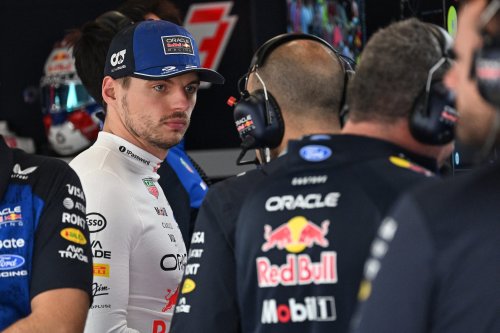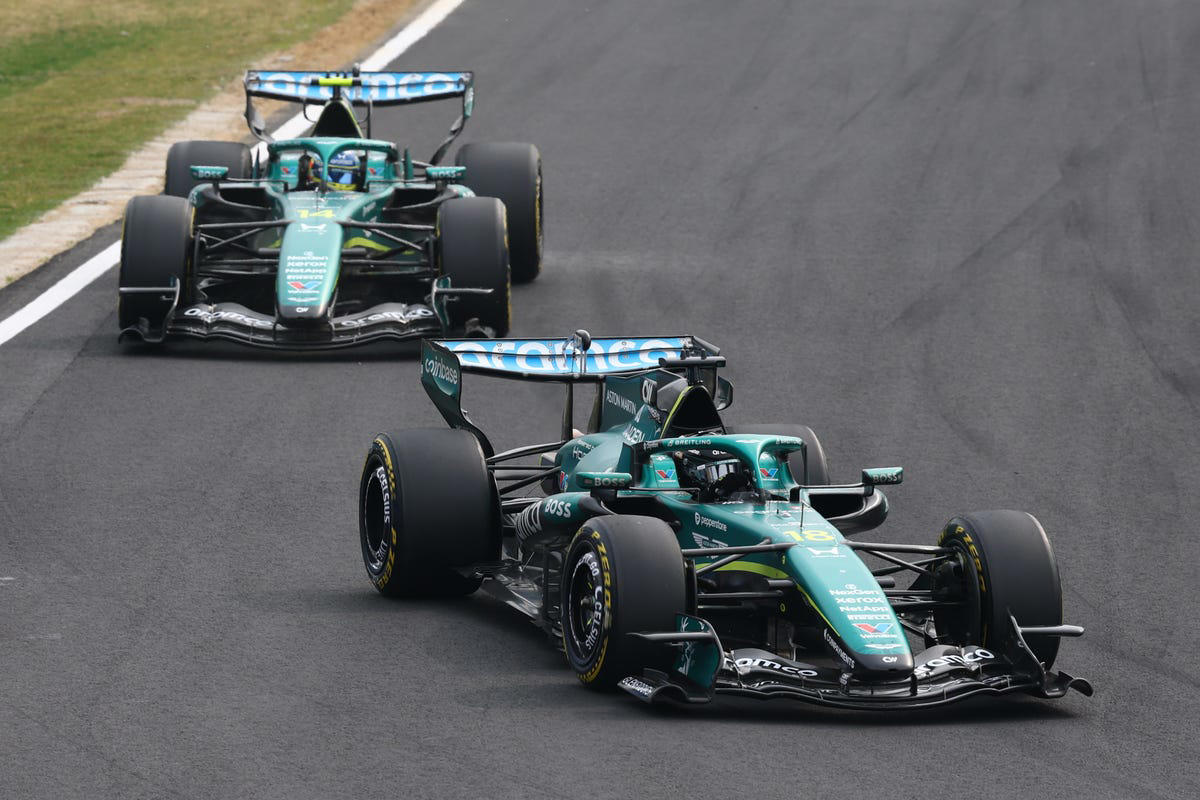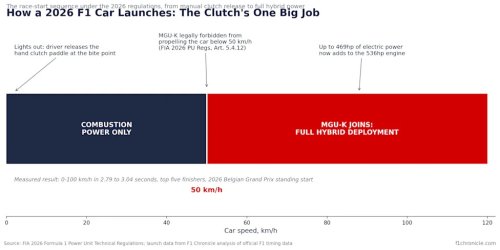



















The Biggest Annoyance Drivers Still Have With 2026 F1 CarsThe 2026 Cars Still Have One Problem Drivers Cannot IgnoreFormula 1 made changes before Miami to improve the 2026 cars, and the weekend looked better because of it.The racing was more entertaining, the worst straight-line speed drop-offs were reduced, and drivers had less need to lean on lift-and-coast tactics than earlier in the season. The result was a more convincing show than many had feared.But that does not mean the drivers are happy.The main complaint remains deeply awkward for a racing series: in some situations, the 2026 cars can reward a driver for going slower through a corner so they have more battery energy available for the next straight. Max Verstappen described the feeling bluntly, saying the car is still “punishing” the driver because going faster through corners can make the car slower down the next straight.That is the heart of the annoyance. The cars are faster when managed correctly, not always when driven more aggressively.Why Going Slower Can Be FasterThe problem comes from the 2026 power-unit concept.The new rules are built around a much larger electrical contribution than before. Formula 1’s own explainer says the MGU-K output rises from 120kW to 350kW, with the regulations designed around a much greater balance between combustion power and electrical power.That sounds modern and efficient, but it changes how a lap is driven.A driver who carries more speed through a corner may use more energy on exit or leave less opportunity to recharge. A driver who sacrifices some corner speed may be able to preserve or recover more battery energy, then use it for a much bigger gain on the straight.In normal racing logic, the driver who takes the corner better should be rewarded. Under the 2026 energy balance, that is not always what happens.That is why the complaint has become so persistent. It is not only about speed. It is about the feeling that the car is asking drivers to think against their instincts.Miami Helped, But It Did Not Fix the FormulaThe pre-Miami tweaks were not meaningless.Formula 1 confirmed that refinements to the 2026 regulations were agreed by stakeholders before the Miami Grand Prix weekend, with changes aimed at improving the way the cars behaved under the new energy rules.Those changes reduced some of the more visible problems. The cars were less obviously compromised on long straights, and the racing spectacle improved. That gave F1 some breathing room after a difficult early reaction to the new rules.But the drivers’ criticism is aimed at something deeper.The issue is not just that the cars needed a few settings adjusted. It is that the whole concept depends heavily on battery management. As long as straight-line electrical deployment is worth more lap time than pure corner speed, drivers will still feel pressure to manage rather than attack.That is why Verstappen said that, despite the adjustments, the feeling was still largely the same.Drivers Want to Attack Corners NaturallyEsteban Ocon’s criticism is especially revealing because it explains what the issue feels like inside the car.The problem is not simply that drivers must save energy. Drivers have always managed tires, fuel, brakes, and deployment. The frustration is that the 2026 cars can force them to take corners in a way that feels unnatural.Instead of carrying the best possible minimum speed and building the exit normally, drivers may have to overwork the first part of a corner, avoid committing to the throttle too early, or shape the corner around energy recovery and deployment rather than pure vehicle dynamics.That matters because Formula 1 is supposed to be the highest expression of driving. When the fastest approach feels counterintuitive, drivers notice immediately.A car can be technically advanced and still frustrating if it does not reward the kind of commitment drivers believe should define F1.The Battery Is the Center of the ArgumentLando Norris summed up the frustration in simple terms: if drivers push flat out everywhere as they did in previous years, they still get penalized for it.That is the battery argument in one sentence.The 2026 rules give electrical energy enormous importance. Formula 1 has explained that the new cars can recharge under braking, partial throttle, lifting off, and even through certain full-throttle harvesting scenarios.Those tools are technically clever. But they also mean the lap becomes a constant calculation of where energy is saved, where it is spent, and whether the driver should sacrifice one part of the lap to gain more elsewhere.For engineers, that is an interesting optimization puzzle.For drivers, it can feel like the car is telling them not to drive as hard as possible.Hardware Changes Are Harder Than Software TweaksThere are possible ways to reduce the problem, but none are simple.One route would be to increase the combustion engine’s contribution, potentially through fuel-flow changes. That could reduce the need for the car to rely so heavily on battery energy for performance on the straights.But changing fuel flow is not just a small adjustment. More combustion power can mean extra reliability demands, stronger components, different cooling needs, and potentially larger fuel tanks. With engine designs already far advanced for the current regulation cycle, major hardware changes would be politically and technically difficult.That is why short-term fixes are more likely to focus on regulation refinements and energy limits rather than a major redesign.The problem is that the drivers are not only asking for a tweak. They are questioning the basic direction.Politics May Decide How Much ChangesCarlos Sainz’s view points to another obstacle: even if many drivers agree there is a problem, teams and power-unit manufacturers may not agree on the solution.Some teams may have done a better job adapting to the 2026 rules. Those teams have little reason to support changes that reduce their advantage. Power-unit manufacturers also have their own interests, because any rule change can affect reliability, development direction, and competitive balance.That makes the issue political as much as technical.Formula 1 can identify a problem, but changing the rules requires support from groups that may benefit from leaving the problem partly intact. The more performance is tied to energy management, the more each manufacturer will protect its own interpretation of the regulations.That is why deeper changes may not arrive quickly, even if the drivers keep complaining.Canada Could Expose the Problem More ClearlyMiami was never going to be the final test.The circuit was relatively forgiving for the new energy-management demands. A better race there helped quiet some criticism, but it did not prove that the 2026 cars are fixed.Montreal is likely to be a sharper test. The Canadian Grand Prix layout features long straights, heavy braking zones, and a major run from the hairpin toward the final chicane and start-finish section. That kind of circuit can expose energy deployment problems more clearly than Miami.If drivers have to sacrifice corner performance to preserve energy for the straights, Canada may make the issue more visible.That is why the next few races matter. Miami showed that the spectacle can still work. Canada may show whether the underlying driving problem is still too big to ignore.The Real Complaint Is About What F1 Should RewardThe biggest annoyance with the 2026 cars is not simply battery management.It is what the battery management represents.Drivers want Formula 1 to reward commitment, precision, bravery, and corner speed. They accept that modern F1 involves strategy and energy use, but they do not want the fastest lap to depend on deliberately giving up natural corner performance to protect deployment later.That feels backwards.The sport can explain the technology. It can refine the rules. It can produce better races on certain circuits. But if drivers still feel punished for attacking corners, the criticism will not disappear.The 2026 cars may be more efficient and more advanced, but Formula 1’s challenge is more basic than that.The fastest racing cars in the world should make drivers want to push harder, not teach them that sometimes the smarter move is to slow down.