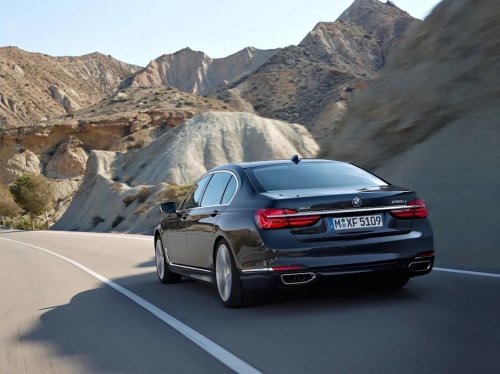
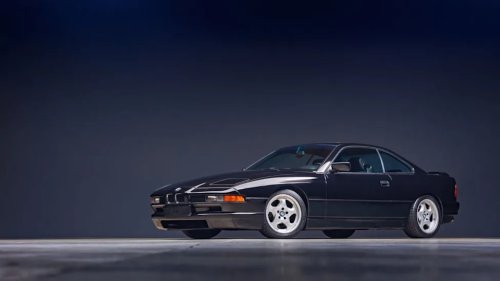
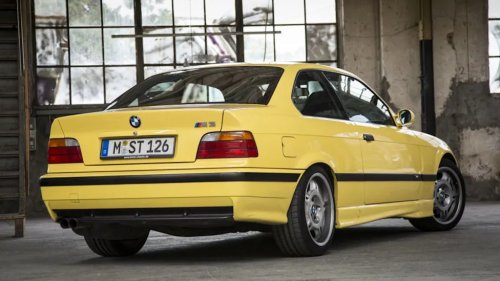



















Image Credit: BMW.The 1990s gave BMW one of its strongest manual-performance eras. The company still built cars around naturally aspirated engines, rear-wheel-drive balance, and gearboxes that made the driver part of the speed rather than a passenger to it.The decade also brought unusual variety. BMW sold high-revving inline-six M cars, a hand-finished super sedan, a compact shooting-brake oddity, a muscular V8 M5, and a rare V12 grand tourer with a six-speed manual. Several were capped at 155 mph, so raw top speed does not tell the full story.Acceleration matters more here, along with engine character, transmission choice, rarity, and the role each car played in BMW’s performance identity. A 155-mph limiter made many of them look similar on paper, but the way they reached that point could feel completely different.AdvertisementAdvertisementThese are the 1990s BMWs that kept the manual gearbox at the center of the experience. Some were precise and rev-hungry, others were muscular and expensive, and one carried a V12 into a corner of the market that barely exists anymore.How The Ranking Handles BMW’s 155-MPH ProblemImage Credit: BMW.The ranking focuses on BMW production models sold during the 1990s with factory manual transmissions. Swaps, later conversions, automated manuals, and cars that mainly reached customers after the decade were left out, which keeps late-arriving models such as the Z8 outside the comparison.Where BMW offered different European and North American versions, the stronger factory manual version from the 1990s is used, with the market difference noted where it matters. That is especially important for the E36 M3 Evolution and Z3 M Coupe, whose European S50B32 versions were much more powerful than the U.S.-market cars.Top speed alone would flatten the story because several of these BMWs were electronically limited to 155 mph. Acceleration, engine output, gearbox type, displacement, rarity, and period significance all carry weight. The result is a clearer look at the manual BMWs that delivered the strongest real performance during the decade.BMW E39 M5Image Credit: BMW.The E39 M5 sits at the top because its numbers and reputation still line up cleanly. BMW Group Classic lists the sedan with a 302 cubic inch S62 V8, 400 hp, a six-speed manual gearbox, a 155 mph electronically limited top speed, and a 0 to 100 km/h time of 5.3 seconds.AdvertisementAdvertisementThe V8 changed the M5’s personality. Earlier M cars built much of their drama around straight-six revs, but the E39 brought deeper torque, a broader powerband, and the kind of highway authority that made the car feel expensive even before the speed arrived.Its body did not shout about the performance. The proportions were clean, the cabin was mature, and the sedan still looked close enough to a serious executive car to keep the surprise intact. That restraint is a major part of why the E39 M5 has aged so well.It remains one of BMW’s great manual achievements because it never feels like a one-trick performance car. It can cover distance, carry adults, sound properly expensive, and still make the driver work through a six-speed gearbox when the road opens up.BMW Z3 M CoupeImage Credit: BMW.The Z3 M Coupe brought BMW M performance into one of the strangest shapes the company ever approved. The European launch version used the 195 cubic inch S50B32 inline-six from the updated E36 M3, rated at 321 hp, paired with a five-speed manual transmission.AdvertisementAdvertisementBMW M lists the S50B32 Z3 M Coupe at 0 to 100 km/h in 5.4 seconds, with the limiter stepping in at 155 mph. That puts it just behind the E39 M5 by acceleration, but the driving experience feels much more concentrated.The short body, long hood, fixed roof, wide rear haunches, and rear-wheel-drive layout gave the M Coupe a nervous energy that BMW’s larger cars did not have. It was not polished in the same way as an M5 or 850CSi. It felt compact, odd, and slightly unruly, which is exactly why it still has such a strong following.The Z3 M Coupe also proves that BMW’s 1990s manual era was not only about sedans. It gave the decade a small, muscular, unmistakably weird M car with serious pace and almost no visual substitute.BMW E36 M3 EvolutionImage Credit: BMW.The E36 M3 Evolution represents the sharpest factory version of the 1990s M3 formula. BMW M says the 1995 update brought the 3.2-liter S50B32 inline-six, 321 hp, a 0 to 100 km/h time of 5.5 seconds, and a new six-speed manual transmission.AdvertisementAdvertisementThat specification gave the European E36 M3 a very different character from the North American cars, which used less powerful U.S.-market engines. The Evolution was the one that showed how far BMW could take the E36 platform while still keeping it usable as a daily performance coupe.The engine loved rpm, the chassis stayed balanced, and the car’s body remained restrained enough to avoid looking theatrical. Its speed came through precision rather than brute force, which made it feel more disciplined than many larger performance cars from the same period.The E36 M3 Evolution matters because it helped define the modern M-car template: enough comfort for real use, enough speed to feel serious, and enough mechanical feedback to keep the manual gearbox central to the experience.BMW E34 M5 3.8Image Credit: nakhon100 - BMW M5 3.8 E34, CC BY 2.0/Wiki Commons.The E34 M5 carried the hand-built M tradition into the 1990s. BMW Group Classic notes that production ran until August 1995 and that this was the last M vehicle with parts of the production process still carried out by hand.AdvertisementAdvertisementThe later 3.8-liter version is the one to focus on for this ranking. Its 232 cubic inch S38 inline-six produced 340 hp, and performance references commonly place the 0 to 100 km/h run at about 5.9 seconds, with the top speed electronically limited to 155 mph.Compared with the E39 M5, the E34 feels more mechanical and more closely tied to BMW Motorsport’s earlier straight-six tradition. The engine needs revs and commitment, the controls feel deliberate, and the body carries its performance with almost no visual drama.It is not the quickest car here, but it may be the most old-school M sedan of the group. The E34 M5 3.8 still appeals because it gives speed a hand-finished, naturally aspirated, straight-six character that BMW would soon leave behind.BMW 850CSiImage Credit: JoshBryan / Shutterstock.The 850CSi is the grand tourer that gives this group its V12 outlier. BMW M lists the E31 flagship with a 340 cubic inch S70 V12, 380 hp, 406 lb ft of torque, a six-speed manual gearbox, a 0 to 100 km/h time of 6.0 seconds, and a 155 mph electronically limited top speed.AdvertisementAdvertisementIt was not a light car, and it was never meant to behave like an M3. The 850CSi used displacement, gearing, high-speed stability, and rare technical hardware to turn the 8 Series into something far more special than a luxury coupe with a bigger engine.The six-speed manual is central to its appeal now. Modern V12 grand tourers rarely ask the driver to shift for themselves, and BMW never built many cars like this in the first place. BMW M lists total 850CSi production at 1,510 units, which gives the car real scarcity on top of its unusual specification.The 850CSi closes the ranking because it is not as quick to 62 mph as the lighter M cars, but no other 1990s BMW here has the same mix of V12 drama, manual control, long-distance presence, and understated M involvement.Why These Manual BMWs Still Feel SpecialImage Credit: BMW-M.The quickest manual BMWs of the 1990s came from a narrow window in the company’s history. The engines were powerful enough to feel properly fast, the electronics were not yet dominant, and the gearbox still shaped the way the car delivered its performance.AdvertisementAdvertisementThe E39 M5 brought V8 force to the M sedan formula. The Z3 M Coupe turned the E36 M3’s engine into something stranger and more compact. The E36 M3 Evolution kept the classic six-cylinder M coupe sharp, while the E34 M5 3.8 preserved the hand-built straight-six tradition.The 850CSi added a different kind of magic: a rare BMW M-developed V12 grand tourer with a manual transmission and serious high-speed intent. It was not the lightest or sharpest car of the group, but it gave BMW’s 1990s manual story a sense of scale.That variety is the reason these cars still matter. They do not feel like different trims of the same idea. They feel like separate answers from a time when BMW could build a manual super sedan, a compact M oddity, a straight-six sports coupe, a hand-finished executive car, and a V12 flagship without losing the driver in the process.If you want more stories like this, follow Guessing Headlights on Yahoo so you don’t miss what’s coming next.