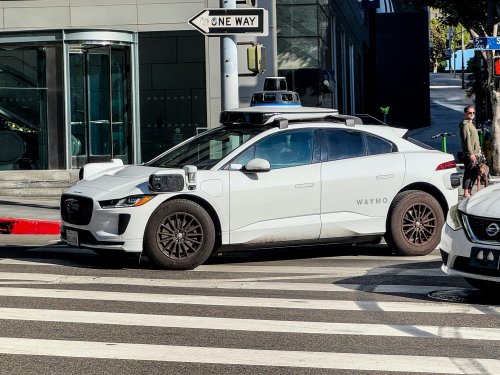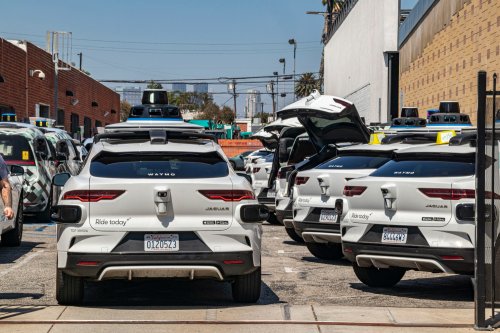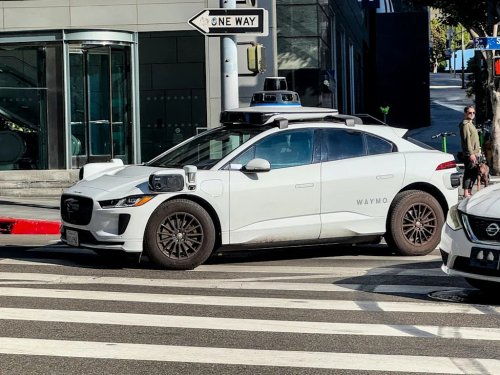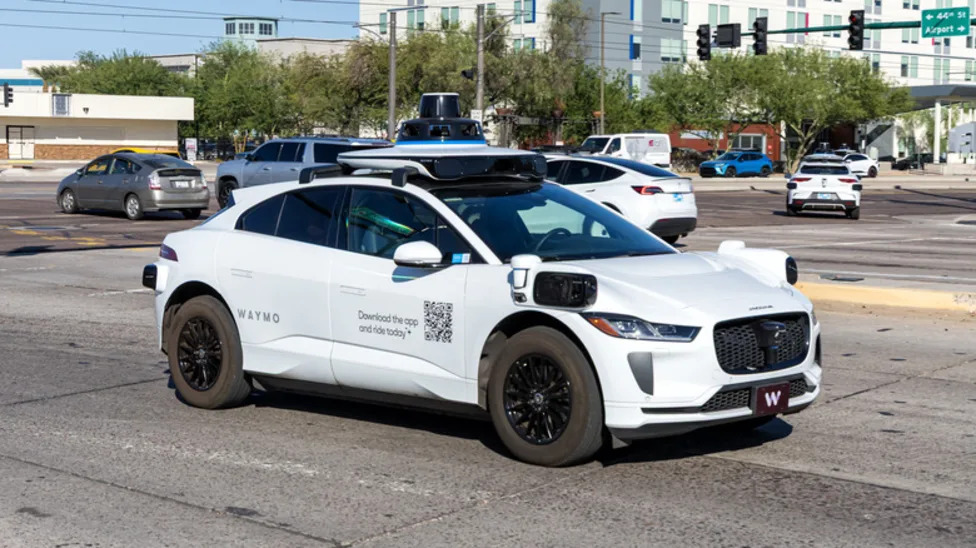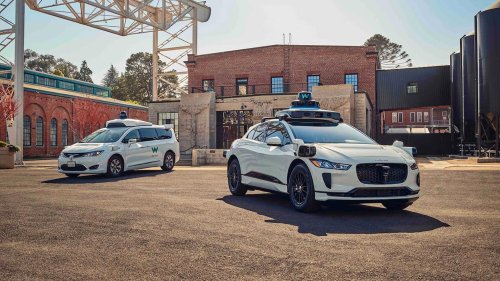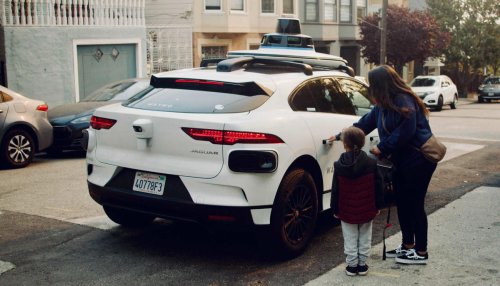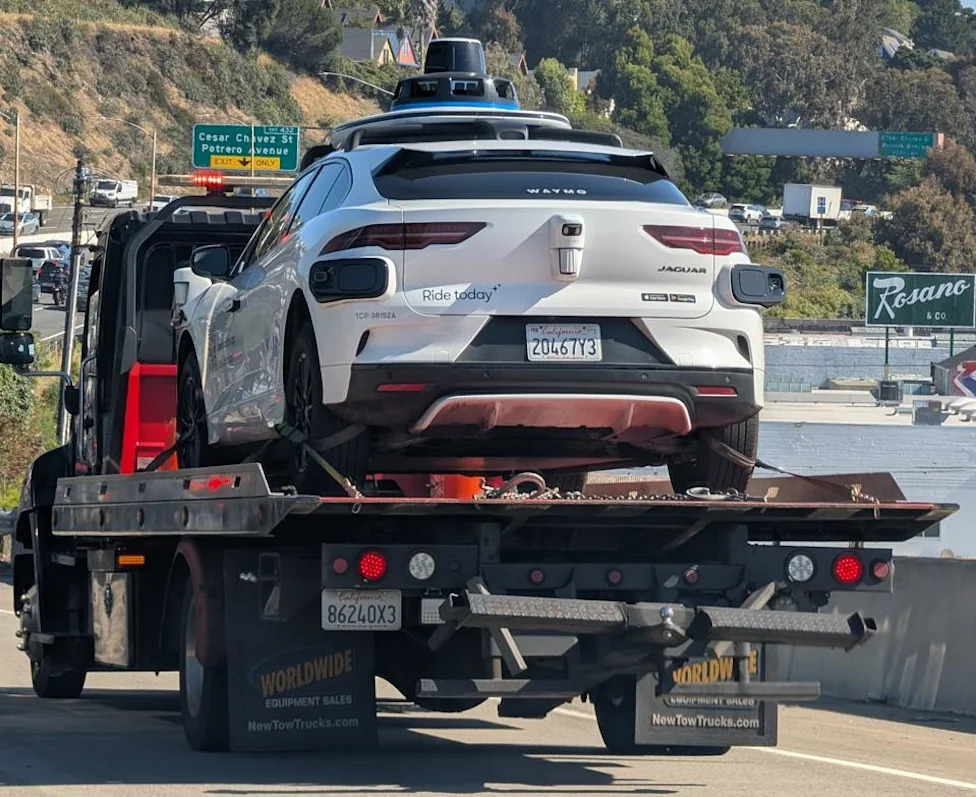



















In this photo from May, a Waymo in San Francisco sits on a tow truck, though not from a flooding related breakdown.Brad TempletonThe Waymo robotaxi service has been having a bad week, particularly in dealing with flooded roads. Waymos have driven into flooded streets and gotten stuck. One empty Waymo drive into a flood so severe it washed the car away. Waymo has halted service multiple times in areas with lots of flooding, and issued a “recall” (really just a software update caused by special circumstances) through the NHTSA process about their flood detection with an interim fix. Four cities in Texas, and Atlanta, have faced problems and service shutdowns, even after the recall.This is surprising for two reasons. First of all, what should normally be the great thing about robocars is that if a mistake is discovered, it gets fixed, and after that none of those cars make that mistake again. Some fixes are imperfect though, and some problems can happen for multiple reasons, so even if you fix one reason another one pops up, making it seem from the outside like the same thing has happened again. We don’t know the reason here. Waymo has declined so far to comment on the flooding issues or the recall.The event where the vehicle got washed away is particularly troubling and frightening, because it’s possible that could happen with a passenger on board. Most other cases just involve vehicles getting into too much water, and so far nobody has been hurt beyond wet shoes and pants.This Should Be SolvableThere’s a particular irony for Waymo here. Waymo vehicles are equipped with LIDAR sensors that make a true 3D map of the world. Waymo states that these sensors are necessary to attain high levels of safety. Tesla (which has yet to deploy a truly unsupervised robotaxi, though it has the appearance of having deployed a few which it has not denied have remote supervision in limited areas in Texas) predicts that LIDAR is not necessary.AdvertisementAdvertisementLIDAR sees the world in true 3D. During a flood though, the laser beams scatter off the water. To the LIDAR it looks like an empty bottomless void. Since roads don’t turn into bottomless voids outside of horror movies, the system can detect the presence of standing water by the fact the road surface under it is now “missing.” The shape of the flooding section is also generally quite apparent in the camera image.The real benefit comes when the LIDAR maps the road when it’s dry. It is able to record its true 3D shape. If it has a dip, it can know the shape and depth of it, and record that. While HD maps often compress the 3D data, one piece of data that should be easy to store is the relationship between the dimensions of the flood and the depth of the flood. If the flood is 100 feet wide, you can know it’s 2 feet deep at the bottom. Where the waters start tells you how deep they go. It may not tell you how fast they are moving, you need other tools for that.So as a robocar approaches a flood, it should be able to look at where the edge of the flood is and know if it’s safe to cross from a depth standpoint. As noted, the edge of the flood should be clear to both LIDAR and vision. You could also detect it from sound, or a cheap ultrasonic transducer pointed down. (The latter is even better and doesn’t need the 3-D map, it can just tell you if the water is rising to the bottom of the vehicle and when that starts.)What surprises me is that I don’t think anything I have said above is unknown to the Waymo team. So I’m missing something about why this problem has been so hard for them. There are many other ways to detect driving into water, including the car slowing down and needing more torque as it gets into deeper water, or something to measure if actual water is flowing around the bumpers beyond what happens in heavy rain.This could be not a problemAn electric car could have the ability to cross very deep water. Off-road vehicles can often drive through water that goes up to their windows, by using an elevated air intake called a snorkel. Electric cars don’t need air, and they tend to be quite heavy, so they could readily drive through 3 or more feet of water, except for the fact they aren’t sealed, and so such water will get into their electronics and other components, causing trouble. At some depth they would float, which is obviously bad. And if the water is fast, there is the risk of being swept away, so this would not be an everyday plan. Companies may not have yet spent much time on tools to measure the speed of water across a road, but this is one of those situations where human remote assist operators can look at the video and make a judgment. In most cases though, the best course is just to turn around.AdvertisementAdvertisementIn addition, the risk of fast water should be predictable from real time rainfall totals, though that would not know about blockages or other factors that could affect this. Waymo has apparently been trying to use weather data for flooding but this was an area they needed to improve, according to statements from the company.As more and more robotaxis get custom designed, rather than being built on existing auto platforms like the Jaguar, we might see them designed to drive in several feet of water if they are going to operate in areas with regular flooding.While I expect robotaxis to make more and more mistakes as they scale up, since perfection is not on the table, it’s hardly a secret that flooding occurs in these towns. I am curious why this problem slipped through the net in the design and testing of these vehicles. The good news is, every company is watching this and everybody will be thinking more about it. Waymo has taken longer to fix than I bet they would like, but they will fix it.More WoesThe other element of the bad week was that Waymo announced it temporarily has disabled freeway access, because of concerns with how the system handles construction zones. No word on what the problem they were having in those zones was. Waymo is highly conservative about freeway operation for a good reason; a mistake there could be catastrophic. Unfortunately, it also makes the service a great deal less useful. I have a flight next week, and I won’t even consider Waymo to the airport if it can’t do freeway, nor many other destinations around here.AdvertisementAdvertisementOn the plus side, Waymo changed where they do SFO airport pick-up/drop-off, switching from the rental car center to the airport Hyatt. Both require the use of the airport’s “Airtrain” people mover, which adds a lot of time to your trip and is not even operating in the big terminal, Terminal 3, but options at the Hyatt are much better. Hopefully they will have freeways back quickly, and get access to the curb for PuDo.This article was originally published on Forbes.com