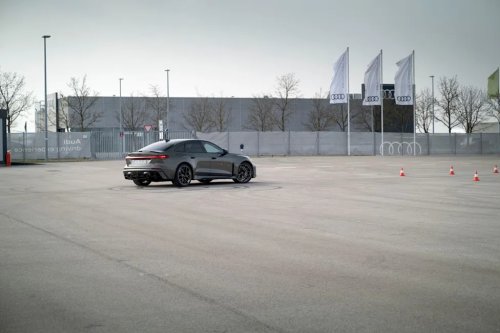
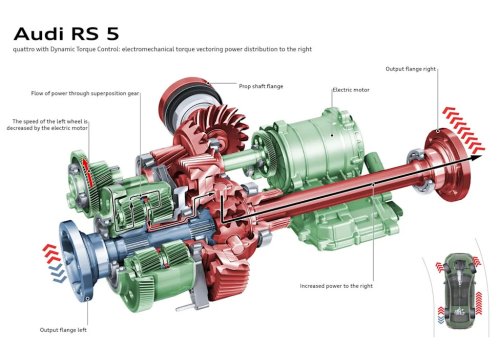
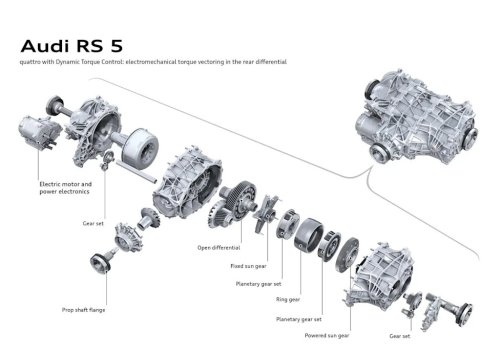
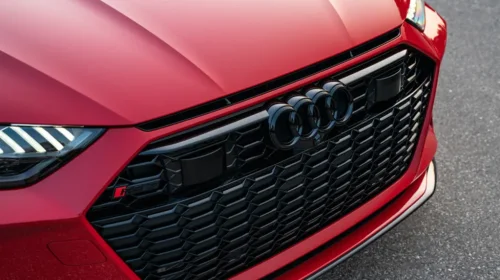
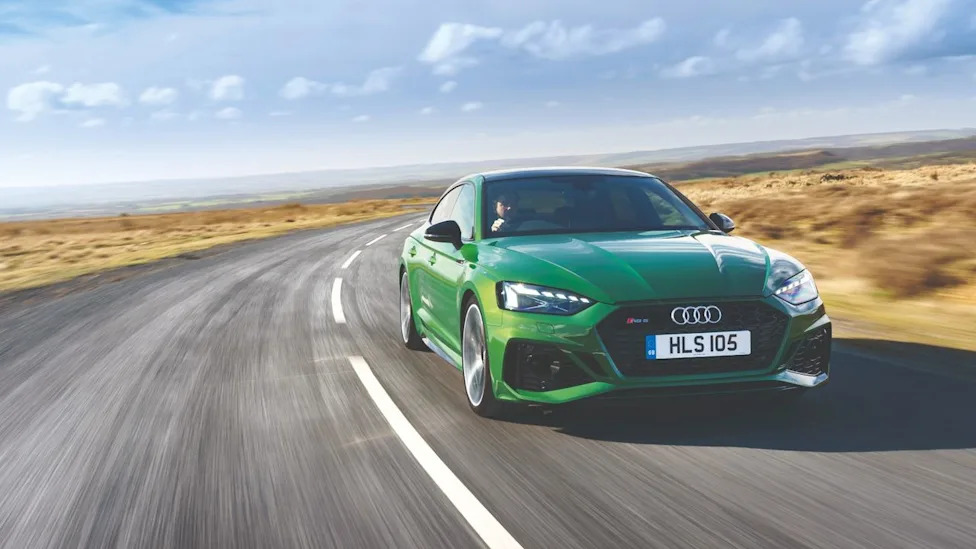
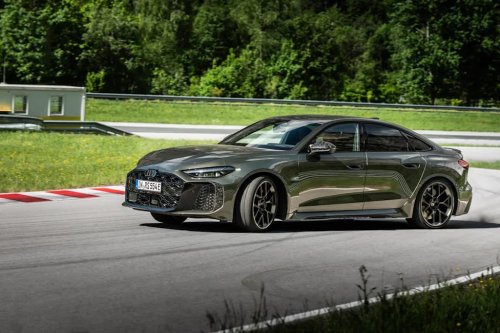
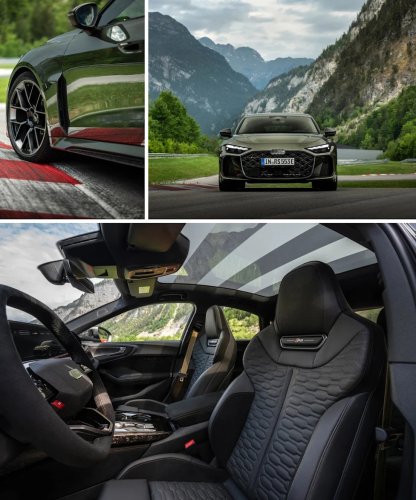
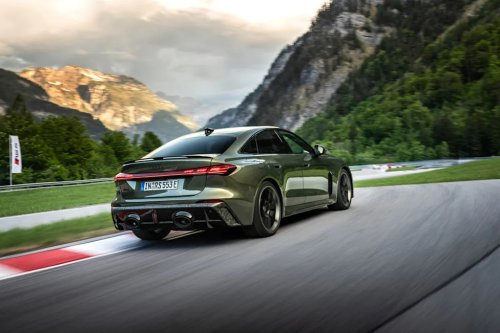
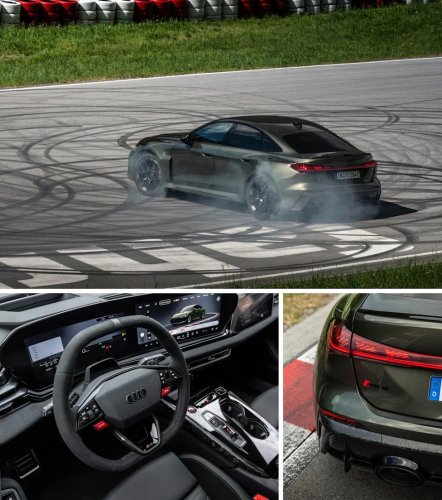
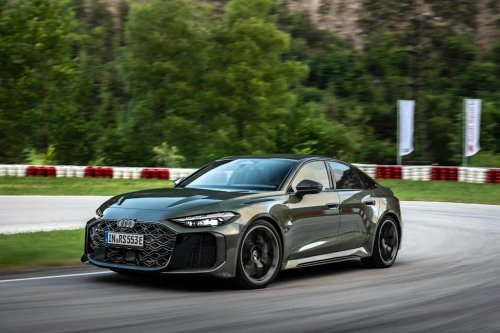
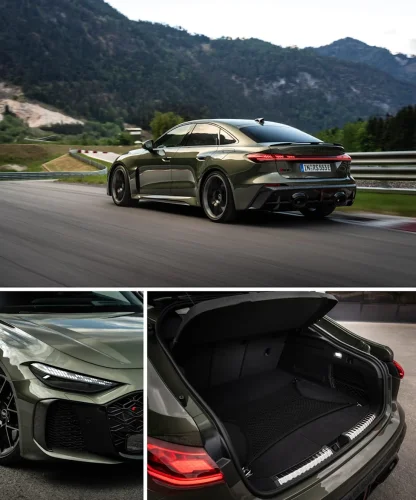
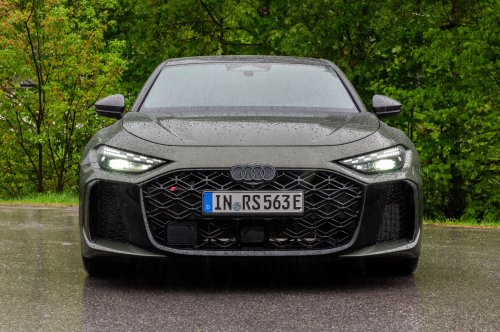
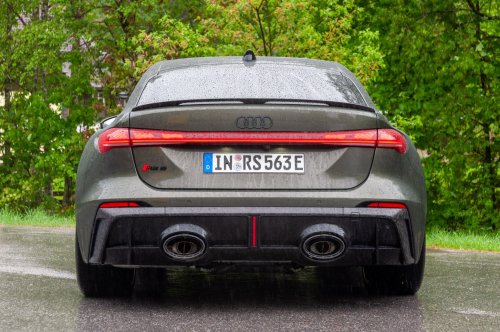
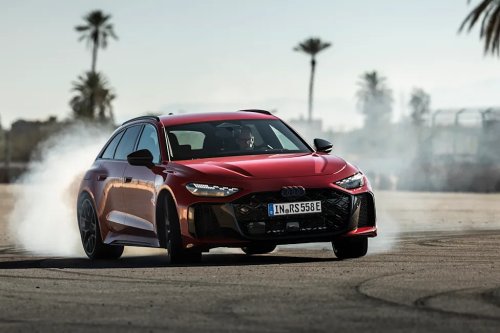
Audi RS5's Electro-Mechanical Diff: ExplainedAudiAudi loves its Quattro all-wheel-drive heritage and will take any opportunity to brag about its history of producing AWD performance machines. With the new plug-in hybrid RS5, there's an entirely new Quattro experience on tap thanks to a fascinating electro-mechanical torque vectoring system. Audi calls it Quattro with Dynamic Torque Control.One of the elements that Audi touts most with its Quattro systems is control. One of this new torque vectoring system's main selling points is its ability to put you and the car into an out-of-control state, all while being entirely in control. Going sideways is one of my favorite pastimes, and the ease with which Audi makes such activities possible in the RS5 can't be overstated. That said, this torque vectoring system stands out thanks to its ability to generate and control the car's yaw moment under braking and turn-in on corner entry with incredible speed and precision. It combines the benefits of both a traditional limited-slip diff and rear mechanical torque vectoring in one, while doing both better than either individual system can.There are a few key components of this innovative, 187-pound box on the rear axle developed by Audi and Borg Warner. The silver bullet of sorts is a 400-volt, 11-horsepower/30-pound-foot permanent magnet electric motor that serves as the actuator for the fun to come. This motor is paired with a superimposing gearset and an open differential. Thanks to the beautiful magic of torque multiplication, the electric motor can deploy torque differences of up to 1475 lb-ft to either wheel in either direction, reacting as quickly as 15 milliseconds. Holy torque control.AdvertisementAdvertisementGenerally, we've always understood mechanical torque vectoring to be the ability to shuffle torque between each drive wheel to help slingshot you through a corner. The Honda Prelude SH was the first production car to use active torque vectoring, and plenty of others have followed in its footsteps with varying strategies. They all tend to accomplish the same goal: overdrive the outside wheel on acceleration out of a corner, helping you accelerate with greater stability and eliminating understeer. Stability isn't always the goal, though, and on RWD or AWD cars with torque vectoring, it's easy to overdrive the outside wheel so much that you can easily slide it. Audi already does this with the RS3, making it quite the tail-happy monster.Maximilian ThumWhere Dynamic Torque Control takes this to an entirely different level is its extremely high torque inputs (1475 lb-ft versus 885 lb-ft with the RS3's clutch-based system), precision control of said torque, and the ability to reverse the torque, bettering the turn-in stability capabilities of a traditional limited-slip differential.The automaker's animations of the system at work speak volumes, but Audi chassis engineer Andreas Sticht does an excellent job, too."So we are slightly on the brake, and we're at the same time steering into the corner," Sticht says. "We are just about to release the brake. And in these situations, typically the car wants to rotate into the corner a little bit too much. And we need to stabilize it a little bit here. So here, basically, the drag torque arrives here. And we redirect it, such that we have on the rear right, higher drag torque. So on the left corner situation, we basically slow down the yaw motion of the vehicle."AdvertisementAdvertisementAnd sure, a limited-slip differential essentially performs a similar function, but it's naturally limited by how much drag torque is present until the wheel speed difference is zero. In Audi's system, there is no limit. It has the full and total freedom to inject stabilizing torque in the exact amount it wants, exactly when it wants. For example, if 220 lb-ft of drag torque is what helps the car bend itself into a corner on the track under trail braking due to all the external factors (elevation, speed, steering angle, grip, etc.), that's exactly what the diff is going to supply. It's almost creepy how much control Audi has over the attitude of the car with this system.As you'd expect, it performs the same function as any other mechanical torque vectoring system on corner exit, injecting additional torque to the outside rear wheel. That said, it's not a case of a certain percentage of the rear axle torque being shifted. It's difficult to wrap your head around it, but being able to inject 1475 lb-ft of torque to either side is the "limit" of what it can. If that means all 1475 on one side, so be it, but it can also just as easily make that 737 lb-ft of positive torque on one side and 737 lb-ft of drag torque on the other. Bizarre, but it only goes to show how interesting and different a concept this diff is than what we're accustomed to.For our enjoyment purposes, it means Audi can just as easily make the RS5 into a drift machine as it can make acceleration utterly stable and controlled. How the diff reacts is dependent on drive modes, which means RS Torque Rear is going to respond quite a bit differently than Comfort mode. Choose your adventure. Sticht emphasizes that maintaining a controlled drift is easier than ever before, and coming out of it doesn't take a driving wizard.Audi"So once the car rotates, we have again all the freedom to reduce that agility again and shift torque inwards, reduce the agility," Sticht says. "So we have a very slowed-down rotation into the drift if we want it."AdvertisementAdvertisementMoves that would traditionally upset a vehicle and be cause for stability control intervention are even controlled by the diff now."So if you are driving straight, 150 km/h, so quite fast, and you want to do a lane change in one direction and back to the other, then we basically inject a little bit of torque to start your motion, and then shortly afterwards, we inject a little bit of stabilizing torque, such that we don't have that swinging motion of the yaw motion afterwards," Sticht says. "So the car reacts extremely fast, and then extremely quickly also settles to the stationary conditions."AudiThe only way this is possible, Audi says, is that it's using this blink-your-eye-quick electromechanical system to control matters. This, combined with coordination between other dynamic systems in the vehicle are key to its success. All the vehicle dynamics computer work is controlled via a single, central computer that's fed information from all over the vehicle. Centralizing this software is key to the system's seamless and holistic responses. Sticht especially notes the tight hand-in-hand work that's done between the adaptive dampers and rear diff."We need a tight collaboration between what that damper is doing and what torque vectoring is doing," Sticht says. "So in that moment where we inject torque to rotate the car, at the same time, we need to tell the damper, OK, you now have to control the roll motion of the chassis at the same point in time. And this is why the central integration makes a lot of sense in that case, because we have that tight integration."AdvertisementAdvertisementYou might be thinking to yourself that this system sounds like it could be quite energy-intensive and produce a boatload of heat. Audi will tell you that the RS5, being a plug-in hybrid with a 400-volt electrical system, is the key enabler to making this tech viable in a performance car. Sticht says it could technically be possible with a 48-volt system, but the motor would need to be significantly larger, causing packaging and weight concerns. As it stands, the only heat concern with this differential is keeping the electric motor and power electronics cool. I queried Sticht about the cooling strategy, and he assured me that there will be no issues, even at racetrack pace."So the power electronics are water-cooled, and the stator of the electric motor is water-cooled," Sticht says. "And the system is designed that basically the cooldown between a corner to the next is enough to make it thermally stable. So if you drive a certain corner in a very edge case condition, then the only thing that really gets hot is the power electronics. The chips of the power electronics. And the cooling is designed that basically on a corner exit, you ramp up the temperature, and until the next corner, it's already enough with that. So you will never face a thermal degradation in a track-like situation."As you'd expect, Audi tested the hell out of this to verify the system's ability to withstand heat on its proving grounds and racetracks, the Nürburgring included. Sticht also promises the full 1475 lb-ft of torque will always be at the ready."It will also not de-rate," Sticht says. "It's designed that the capability of these 1475 lb-ft are there long enough for a very long corner exit scenario, second gear, third gear, 1475 lb-ft, then until the next corner it's cooled down."AdvertisementAdvertisementAudi is somewhat coy about the future of this Dynamic Torque Control diff, but it implied the RS5 won't be the last Audi Sport product with said technology."I mean, for us, it's the game changer and the entrance gate to a new level of vehicle dynamics in the segment. Full stop," Sticht said when asked if other Audi models will enjoy the magic of this electro-mechanical system.I think it's safe to say that means there will be other Audis that enjoy this same tech. That should mean a big step forward in handling dynamics across the brand, which we already got a taste of at the RS5's first drive.You Might Also LikeIf You Can Only Own One Car, Make It One of TheseThese Are the Most Popular Cars by State