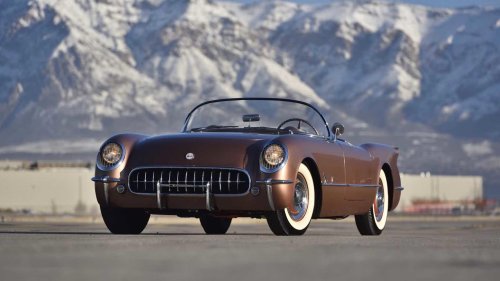
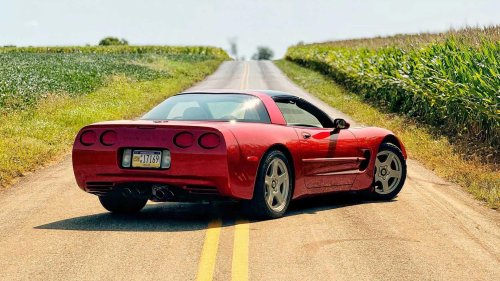
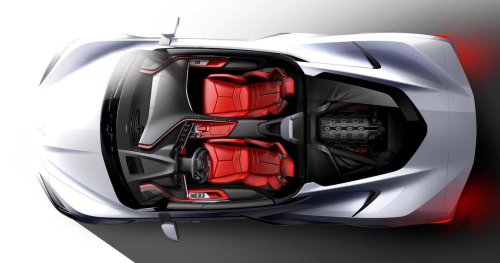
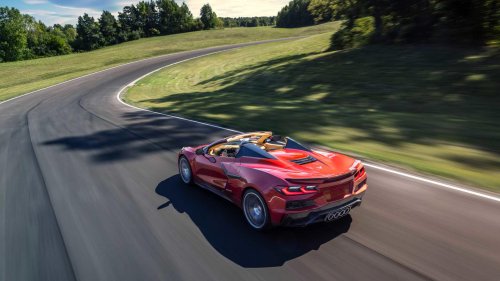
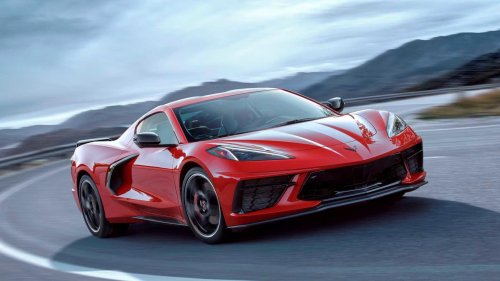



















I hate the rumor that sports cars are inherently unreliable. There may have been a time when building a fast car meant sacrificing reliability. But that time was the 1920s. The problem is that this rumor persisted for decades, and even some car companies believed it. In fact, certain enthusiasts began to take a perverse pride in how finicky their sports cars are.Then everything changed. Detroit just said, “Hold my beer and watch this.” The latest flagship American sports car drives like a Porsche and lasts like a Toyota. And you can now buy one for the price of a new Highlander. Porsche Performance Came At A Cost—For Decades Porsche For the first century of automobile design, the motto might as well have been “Performance and reliability: you can only pick one.” Over the years there have been some incredibly unreliable sports cars. But drivers loved them so much, they risked being stranded by the side of the road.Here at HotCars, our list of the least reliable sports cars includes: The Maserati Biturbo—an overpriced lemon. The Lanci Beta Coupe/Montecarlo (spoiler alert, buy a welder if you own one). The Alfa Romeo GTV6, a car that won’t so much break down as require constant fine-tuning. The Lotus Espirit Turbo, which has a well-earned reputation for unreliability.Then there’s the irrationally beautiful and fun Alfa Romeo 4C, which is also irrationally unreliable for a late-model car. The Maserati Ghibli—a four-door Italian with similar problems to its little 4C cousin. The Maserati GranTurismo, see above and beware: overheating. The Mazda RX7—avoid, especially if previously owned by a sports car enthusiast who didn’t know the first thing about maintaining the quirky Wankel motor.Even certain German cars have problems. The E60 M5: BMW’s foray into V10 engines famous for rod bearing issues just proved that BMW should stick with I6 powerplants. The E90 M3: BMW’s foray into V8-powered M3s and its (you guessed it) rod bearing issues, proved that BMW should stick with I6 powerplants (you guessed it again). How America’s Sports Car Earned Its Nickname Mecum AuctionsChevrolet conceived the Corvette as an American take on European sports cars. Its fitting first nickname was America’s Sports Car. Every generation of Corvette has incorporated the latest European sports car technology—at a fraction of the price, and often with twice the reliability.Many American servicemen had sampled light, nimble European sports cars during WWII and while American troops were stationed in Europe after the war. By the 1950s, the import business for European sports cars was booming. General Motors saw a major opportunity.In 1953, Chevrolet debuted a limited-edition, 300-model run of an all-new hand-built vehicle. The fiberglass-bodied “Corvette” was named after an agile warship. It was small and powerful and ready to go toe-to-toe with the best Europe had to offer.Buyers loved the Corvette. Soon, it earned the nickname “America’s sports car.” Since then, the Corvette has had quite the history. For every generation, GM’s engineers have studied the worldwide sports car market and then found a way to build the latest and greatest performance technologies to be both cheap and reliable. The Corvette is a testament to the engineering prowess and innovative manufacturing practices of the USA. The Chevy Corvette Raced Into The 21st Century For 1955, Chevrolet began offering the Corvette with a V8. The quickest trims could rocket to 60 mph in 5 seconds. For 1963, every second-gen Corvette got independent rear suspension and fuel injection. In 1965, Chevrolet introduced disc brakes on all four corners and began offering the car with a big-block V8 which made 425 horsepower.At this point, the Corvette’s technology was decades ahead of many competitors. And Chevrolet had no plans of slowing down.The ZL1 trim of the third-generation Corvette (C3) could run the quarter mile in an absurd 10.89 seconds. In 1984, the C4 debuted an all-aluminum suspension and brake calipers to reduce unsprung weight. It also pioneered the electronic dashboard with liquid crystal displays. Even its manual transmission option was available with an automatic electronic overdrive gear.Bring A TrailerFor 1997, the C5 launched the Corvette into the 21st century. The automaker completely redesigned the chassis and powertrain. Chevy achieved a perfect 50/50 weight distribution by swapping to an aluminum engine block and integrating the transmission into the rear axle (with a “transaxle” assembly). The C5 was the first generation with a high-performance Z06 trim, and C5 Z06s are often named as the best bargain in used supercars. But the C5 Z06 is relatively rare. The C6 generation of the Z06 had a similar transaxle and a huge seven-liter V8. As it reaches peak depreciation, the C6 Z06 threatens to take the C5 Z06’s crown as the best bargain supercar.The C6 Z06 wasn’t perfectly reliable from the factory. They came with a few issues, such as brittle exhaust valves prone to breaking off in the engine. But many owners who address these problems report 100,000 or more worry-free miles in their Corvette.A C6 Z06 doesn’t drive “like a Porsche.” They are quick cars that can often match track times of Porsche 911s of the day. But they are gutsy muscle cars and drive like muscle cars. They can accelerate and brake like few other cars on the road, but don’t offer the precise steering of a Porsche. Chevrolet wouldn’t achieve such precision for another ten years. The 2020 Chevrolet Corvette C8 An American Sports Car That Drives Like A Porsche But Lasts Like A Toyota via ChevroletBy the early 2011s, GM engineers began discussing a mid-engine Corvette. The fact of the matter was that the fastest supercars around a track were all mid-engine cars. For GM’s next Corvette to take any major performance leaps, the automaker would need to change up its front-engine, RWD layout.The automaker only made slight tweaks to the outgoing Corvette’s naturally aspirated 6.2-liter V8 (the LT1). The new engine (renamed the LT2 V8 engine) is rated at 490 horsepower at 6,450 rpm and 465 lb-ft at 5,150 rpm. It features an eight-speed, dual clutch automatic by Tremec. This is the same company putting the power to the road in Hellcats and the Mustang Dark Horse. It also builds transmission for mid-engine supercars, such as the eight-speed in the Maserati MC20.The result is a Corvette that Chevy claims can rocket to 60 mph in 2.9 seconds. Reviewers have done it in 2.8. But the engine and transmission may be the most boring thing about the 2020-present Corvette.ChevroletChevrolet designed an all-new aluminum frame for the C8 Corvette, made of just six huge die-cast components to improve rigidity. It also tossed the C7’s rear leaf springs for a modern coil-over setup. Finally, it offers optional magnetic ride control on all trim levels. All of these improvements magnify the C8 Corvette’s defining feature: the mid/rear engine placement.Why shoehorn a car’s engine in behind the driver and passenger? This engine placement improves front/rear weight distribution and lowers the vehicle’s center of gravity. Translation: Launching off the line like a bat out of its cave. A mid-engine car also has an improved moment of inertia. Translation: It carves from lefthand to righthand corners like a sharp knife cutting hot butter.There’s a reason Dr. Ferdinand Porsche jumped through all kinds of hoops to build a rear-engine car in 1950—namely, sacrificing reliability. But in 2020, Chevrolet managed to assemble a mid-engine car built like a tank.The key may be that Chevrolet could capitalize on 47 years of supercar suspension tuning it’s done across its seven generations of Corvettes. In addition, it could capitalize on 66 years of small block V8 engine development with its LT2. To get specific, the LT2 technically belongs to the LS family of the small block, which debuted 23 years before the C8 Corvette. Naturally aspirated V8s are Detroit’s signature, and the Motor City knows how to build ones that run like Toyota powerplants. The C8 Corvette Is Still A Supercar It Requires More Maintenance Than A Regular Chevy Reviewers have called the C8 Corvette an absolute “track weapon.” It truly drives like a Porsche or another comparable supercar. What’s equally incredible about the V8-powered mid-engine Chevy is how much more reliable it is than its competitors. But it isn’t your regular old Malibu. The C8 Corvette is still a supercar that requires supercar maintenance.Here’s one example: its dry sump system keeps the engine low and the weight down but leads to higher oil consumption than your standard V8 Silverado.ChevroletIn addition, the first model years suffered from transmission control unit software problems. Chevrolet repaired almost all Corvettes under warranty. But if you’re considering a used Corvette, you’ll want to make sure any problems have already been addressed. Swapping the transmission outside of warranty could cost $20k. But if you address the C8 Corvette’s weak spots ahead of time, you may get Toyota mileage out of this mid-engine tank. Porsche Excitement On A Toyota Budget Early, C8 Corvettes are reselling for $50k or less. With an original MSRP of $59,995, that may not sound like a deal at all. But here’s the kicker: almost no buyers ordered a base Corvette. The used cars reselling for under $50k all had sticker prices of $90k, $100k, or more. What’s more, dealers took advantage of the first mid-engine Corvette buying frenzy to slap on $15k or $20k upcharges. $50k on the used market is an absolute bargain.By March 2026, the average new car transaction price was up to $49,275. After destination charge, the Toyota Highlander's price starts at $47,365. The most recent 2020 Corvettes sold on Cars and Bids went for $57,500, $56,000, $63,500, $59,000, $55,500, and $49,500.Sources: The Fast Lane Car, Doug DeMuro