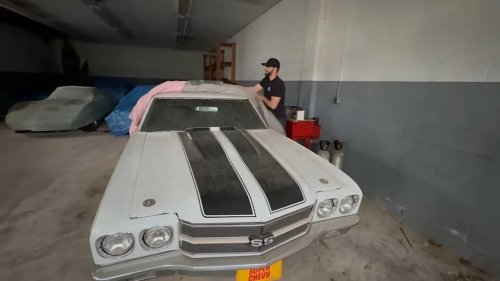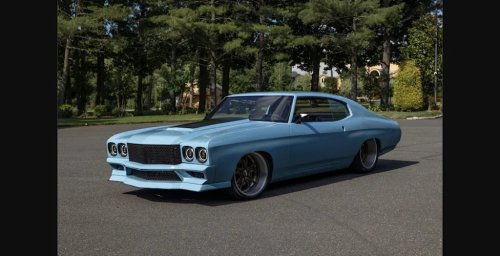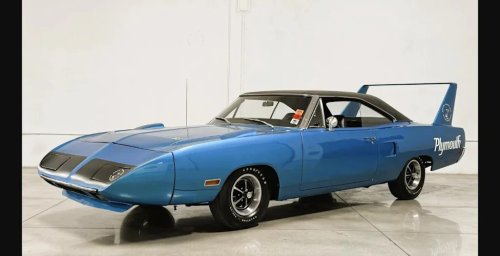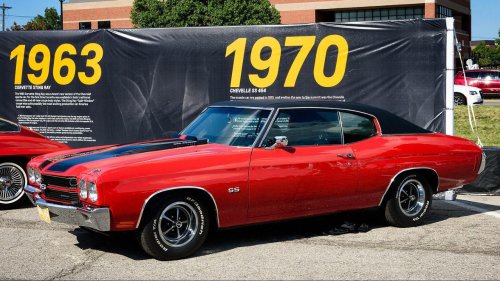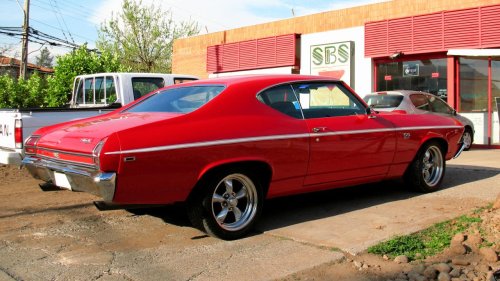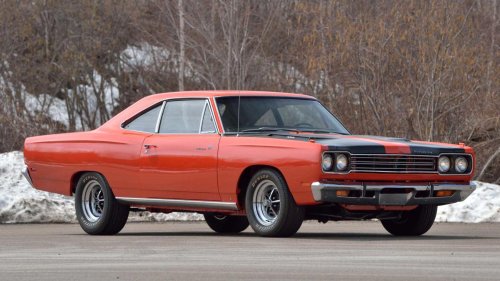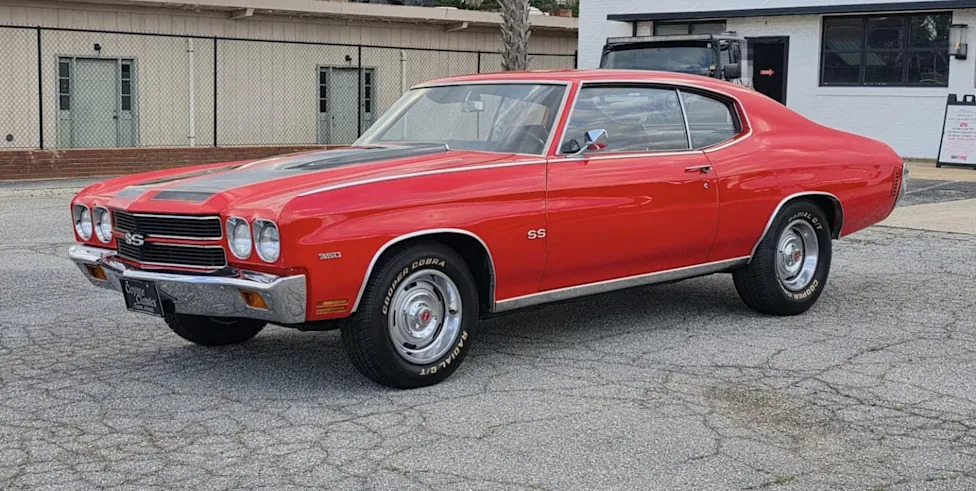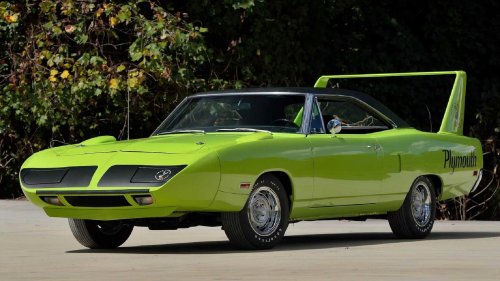
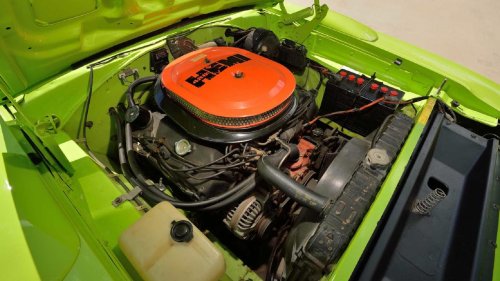
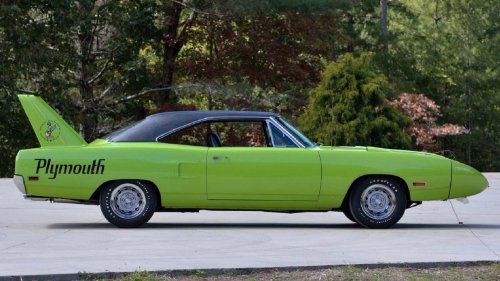
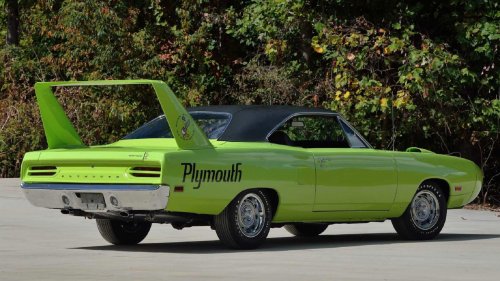
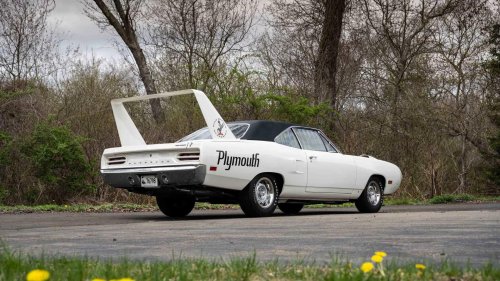
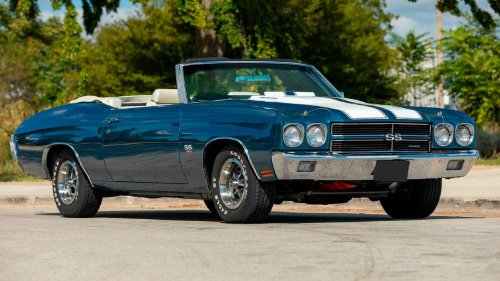



















Muscle cars are renowned for taking physics out back and giving them a proper seeing to, something made possible by their huge V8 engines under the hood. While taking control of the streets, they also ruled the roost on the American drag strips and racetracks. Racing proved to be the ideal development tool for manufacturers to find the next avenue in unlocking more performance.NASCAR was one of the best-proving grounds in this regard, as cars spent so much time maxed out and at high speed. Top speed was key here, and several iconic muscle cars, such as the Plymouth covered here, were built with this metric purely in mind.With the top-speed war having spilled over into the 1970s, HotCars decided to shine a spotlight on the muscle with the highest top-end figure of the decade. Blazing Plymouth Superbird Could Breach The 200 MPH Barrier Mecum Auctions1970 Plymouth Superbird SpecsThe fastest muscle car of the 1970s was the mighty Plymouth Superbird, one of the winged warriors from the Chrysler Corporation that was built with one goal in mind. To dominate NASCAR. The automotive giant's main target was to prove untouchable on the superspeedway tracks on the NASCAR calendar, namely Daytona and Talladega, the latter of which has some interesting hidden details.Mecum Auctions While the effect that big, powerful engines had on the pace of a vehicle had been known for decades, the advantages of good aerodynamics were less clear-cut. Knowledge of the black art of aero efficiency on cars was gained at a rapid pace during the 1960s, with the best experimental arena being the racetrack.The push to make a vehicle not only immensely powerful, but one that could make use of the surrounding air, came to a head in the late 1960s. Chrysler's Dodge brand developed the Charger Daytona, a heavily modified version of the standard Charger R/T model it had campaigned in the 1968 NASCAR season. Aerodynamics Were A Key Focus For The Charger Daytona Project Mecum Auctions Having struggled against its Ford and Chevrolet rivals, Dodge went all in on the Daytona to dominate the sport. Using a wind tunnel, a new technology in the automotive space during the 1960s, Dodge developed a special 18-inch nosecone that channeled air over the front of the car, improving its drag coefficient.A huge rear spoiler was also added to the party to help increase rear downforce, making the car more stable through the long, banked corners of American oval tracks. Measuring a mammoth 23.5 inches high and 58 inches wide, the cast aluminum components worked perfectly with the new nose to create a monster.Mecum Auctions The wing was designed to be this high so that it could take advantage of the 'clean air' above the vehicle's roofline. Any air that is disturbed by the car traveling through it doesn't provide as much downward pressure, making it more difficult to achieve consistent downforce. Getting clean air means more downforce could be generated by the rear wing, increasing grip and stability at high speed.The Charger Daytona hit 200 mph in 1969, though it would only last for that one year. This is where the Plymouth Superbird came in, taking over its predecessor's mantle to become the 1970s muscle car with the highest top speed. It could also hit 200 mph, as per Simone Automotive Museum. Plymouth Superbird's Performance Was Compromised Due To Aesthetics Mecum Auctions While the Dodge Daytona continued to compete in NASCAR in 1970, Chrysler's attention was turned towards its Plymouth brand's program. It had managed to lure the legendary Richard Petty back from Ford for that year's campaign, so its Superbird needed to hit the spot. Plymouth's engineers gave its Road Runner model the same treatment the Charger got, designing a new nosecone and rear wing.For the track, it got the same race-prepared 426 ci Hemi V8. The street version of this powerplant was available for the consumer model, though most came with the easier-to-maintain 440 ci big block engine. The former made 425 hp under the hood of the Superbird, with the latter offering up 380 hp. These could be mated to either a four-speed manual gearbox or a three-speed TorqueLite auto transmission.The nosecone on the Superbird was smoother than that of the Charger, allowing it to cut through the air more easily. Their hard work was undone by deciding to have the rear spoiler lean back significantly further than the Daytona's. This was done as Plymouth preferred the look, though all it really achieved was making the car less aerodynamically efficient.As per Hagerty, the change in rear wing design meant the Superbird was left with a drag coefficient of .31. The Charger Daytona was rated at .29, making it significantly more aero-efficient. This translated to a deficit of anything between 1-3 mph in terms of top speed, a significant amount over a long race.As a result, the Charger Daytona took the NASCAR title in 1970 courtesy of Bobby Isaac, while Petty ended up as the highest-classified Superbird racer in the standings in fourth. He still claimed 18 wins over the year though, so it wasn't all bad. Plus, as the Charger was a product from the 1960s, the Superbird gets the accolade of having the highest top speed of any 1970s muscle car. LS6-Equipped Chevy Chevelle SS 454 Was Another 1970s Top Speed Merchant Mecum Auctions1970 Chevrolet Chevelle SS 454 LS6 Specs While not anywhere near the level of the extreme-winged Superbird, the Chevy Chevelle SS 454 with the commanding LS6 V8 under the hood could still manage a respectable 162 mph. The LS6 was the key element in the Chevelle hitting its impressive top-speed figure, the 454 ci unit being a significant upgrade over its LS5 sibling.Despite sharing the same cast-iron engine block and displacement, the ultra-rare LS6 V8 received several exotic parts to help boost its power and torque levels. A forged steel crankshaft, and connecting rods, were added to deal with the extra power, while lighter forged aluminum pistons were also brought to the party.The engine's compression ratio was also increased to 11.25:1, which was the main reason power levels hiked up so much. The mighty V8 sent 450 hp and a tire-shredding 500 lb-ft of torque to the rear wheels, which were protected somewhat by a limited-slip differential. The component is handy for cars with high power figures as it prevents the wheels from rotating at the same speed, which can cause the inside wheel to spin up. The LS6's star sadly proved to be shortlived though, courtesy of ever-tightening emissions regulations and rising fuel and insurance costs. It was therefore dropped from Chevy's line-up following its use in the Corvette ZR2 in 1971, though it had arguably already done its job.While not able to make up the deficit of the Chevelle's inferior aerodynamic properties compared to the Superbird, it still proved more than enough to net the muscle car an impressive top speed.