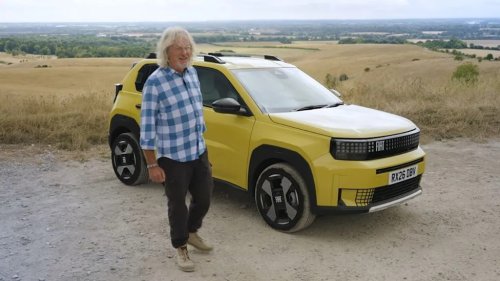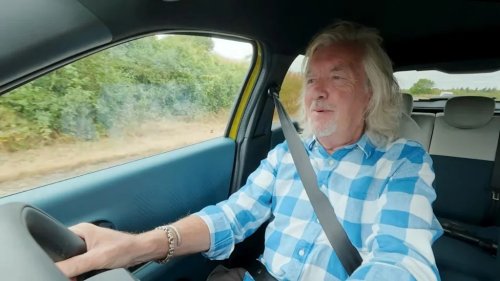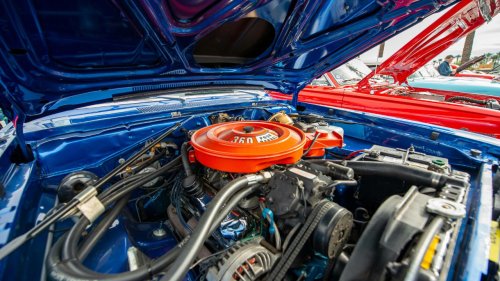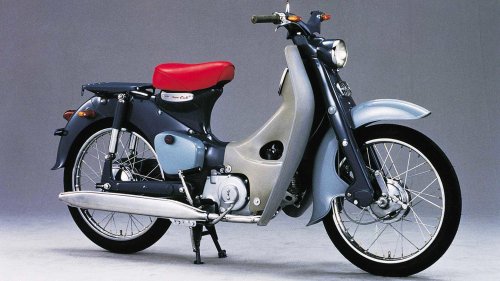
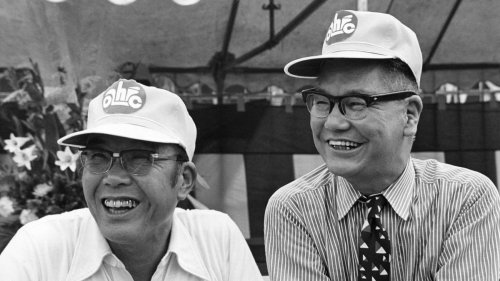
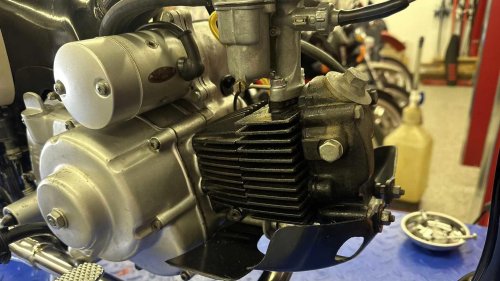
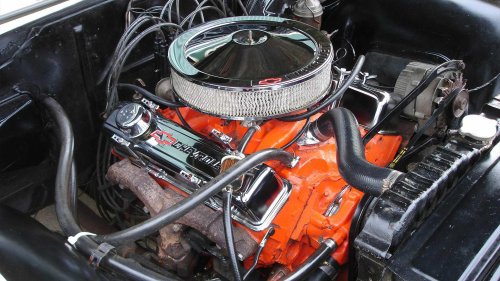
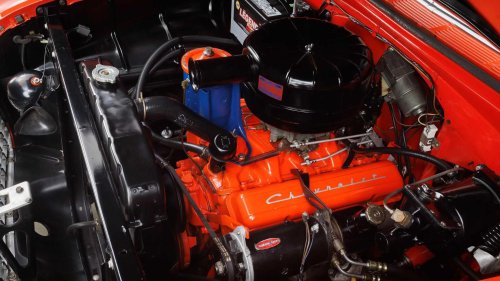
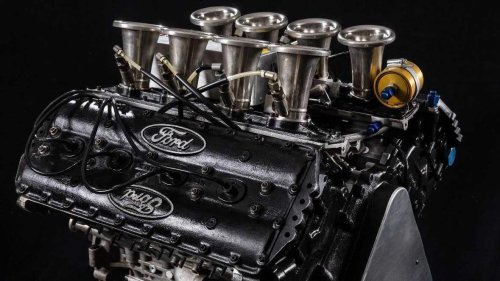


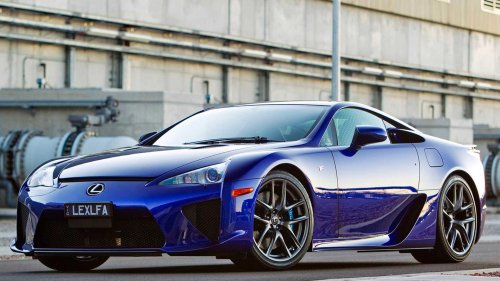























If you were tasked with choosing the five best television shows of all time, it might take you years. Are we talking drama, sit-com, soap opera, or hell, news broadcasts? There are too many gems scattered across the genres to truly narrow it down. If you're a car enthusiast, it would be just as hard to pick the most legendary engines of all time. Everything from reliability to race-winning pedigree would have to cross your desk, and who in the world could possibly answer that question?Well, if you ask us, it's James May and Richard Hammond. These two gentlemen are just the kind of out-of-the-box thinkers who could throw out a fantastic list without having to do a research study beforehand. Not to mention, these two are as seasoned as enthusiasts come. Here are their top five engine picks and a little additional background to give you the full lowdown.In this article, information about each engine is sourced from its respective manufacturer. James May Loves The Honda Super Cub Single Cylinder Honda As James May points out in the video, there may not be an engine that's mobilized more people than the Honda Super Cub and its thumper. The development and eventual success of this little motorcycle can be attributed to the most important person you may have never heard of: Takeo Fujisawa. He co-founded the Honda Motor Co. alongside Soichiro Honda and agreed to oversee the financial side of the business, often coming up with genius marketing ideas that took the brand to the next level.Honda Such was the case with the Super Cub. Fujisawa saw the bustling market for small, two-wheeled personal transportation in Europe (think Vespa), and understood the need for the same thing in Japan. Fujisawa and Honda planned to create an affordable motorcycle that could practically mobilize people, and were persistent in ensuring the Super Cub was suitable for use in a wide range of applications, from food delivery to off-road trail riding.Bring A Trailer The engine that first appeared in the original Super Cub was a 50cc, single-cylinder, OHC four-stroke engine that produced just 4.5 horsepower and revved to 9,500 rpm. It was simple by today's standards, but its accessible price of about $300 in the early 1960s made it an instant hit in Japan. Not to mention, this was the very first overhead-cam single four-stroke single in history.Over the next 70+ years, the Super Cub's engine would continually grow in displacement until its current version that utilizes a 125cc engine. In that time, Honda has sold more than 100 million of them - more than any other motorized vehicle in history. That's about twice as many units produced as the Toyota Corolla (43 million), the best-selling car of all time. The Chevy Small-Block V8 Is A Mass-Market Legend Top Classic Cars Though it more than deserves its spot, not everyone would think to include the Honda single-cylinder motor in their list of all-time engines, but you'd have to be particularly daft not to write in the Chevy small-block. Just like the Super Cub's engine, this is a piece of motoring technology that was so good from the outset that its same basic design is still in use exactly 70 years later in 2025.The small-block Chevy's story is a long-winded journey of development, engineering, and the genius of a man named Ed Cole. Cole rose up the ranks of GM from being a lead Cadillac engineer to being Chief Designer of GM. Cole's main focus for this new V8 was to support the incoming Bel Air and 210 models that were debuting for 1955, and after a few attempts that didn't impress him, Cole decided on engineer Don McPherson's design. His drawings focused on simplicity, packaging, light weight, and maximum output – all things that Cole wanted for the new generation of Chevrolet products.Bring A Trailer The first SBC was introduced in 1955 as the 265 c.i. "Turbo-Fire" V8 (no, it didn't have a turbocharger), and made about 162 horsepower. Over the years, well-known versions of the SBC would come in the form of engines like the 327 V8, the iconic 350 Chevy that debuted in the first Camaro (1967), the Gen-2 LT1 V8, the world-renowned LS-series engines, and more recently, the Gen-5 LT-series V8s that power the modern Corvettes.The small-block Chevy has been under the hood of everything from the tri-five era family cars, to the big-body Suburban, and of course, America's sports car – the Corvette. As of 2020, more than 108 million SBCs have been produced, according to Hagerty, and with GM confirming the development of the Gen-6 small-block this past May, we're excited to see that number jump even higher. The Cosworth DFV V8 Is A High-Revving Monster Cosworth In the 1960s, Ford had been investing in and working with the small racing engine manufacturer, Cosworth, to produce powerplants for Ford's various racing endeavors. At the same time, Ford was in another partnership with Lotus, with a similar goal of motorsport development. This convoluted partnership between British and American forces was the conduit for what became one of the greatest performance engines of all time – the Cosworth DFV.It starts with legendary Cosworth engineer Keith Duckworth, who, in the early 1960s, helped develop a four-cylinder engine that would end up in both the Ford Cortina and Lotus Elan. The success of these engines from a sales and performance point of view caused Ford to take another look at the concept, considering its possible application in racing. Soon, the twin-cam, four-valve per cylinder inline-four would be made into race spec to be used in Formula 2 race cars.Cosworth Dubbed the FVA, this fizzing four-pot was, in truth, just a stepping stone for their true goal, a Formula 1 V8. To oversimplify, the development process of the DFV V8 consisted of taking two FVA four-cylinders, slightly reducing displacement, and joining them at the crank to create a 90-degree, 3.0-liter DOHC V8 that produced 400 horsepower and 270 pound-feet. It could reliably rev to 11,500 rpm, but its output and longevity goals were already met by 9,000 rpm, the redline they landed on in the end.The DFV was light, weighing just 370 pounds in total, whilst at the same time, being a load-bearing component for its early Lotus applications. This engine was incredibly versatile, but what's most impressive is its success as a V8 during a time when most F1 engine manufacturers were using 12-cylinder engines. The dominance was immediate and consistent, as Cosworth DFV engines would be the powerplant behind 155 Formula 1 victories (more than half the races it entered), and seven consecutive F1 World Championships between 1968 and 1974. The Lexus LFA 1LR-GUE V10 Is Uncontested In Sound Via: Lexus In the video of May and Hammond (at the top), the LFA's V10 is the first of two picks that they give on behalf of the absent Jeremy Clarkson, and we couldn't agree more. The LFA was the first true halo car to come out of the brand since the marque debuted in 1989 with the iconic LS400 executive sedan. But where the LS400 was made to beat Mercedes-Benz at their own luxury-oriented game, the LFA was aimed right at the best supercars on the planet.Via: Lexus The car's story starts with a Toyota engineer named Haruhiko Tarahashi and their Chief test driver, Hiromu Naruse. They wanted to build a supercar, as one does, and thanks to Naruse's relationship with Akio Toyoda, who was the executive Vice President of Toyota at the time (he is also the grandson of Toyota's founder, Kiichiro Toyoda), they were able to get the board to agree with no constraints.The engine was, obviously, one of the key focuses of this project. They knew from the beginning it had to be a V10, as a V8 wouldn't be able to rev quickly enough, and a V12 would be too large for the supposed packaging goals (plus, the F1 engines at the time were V10s). Interestingly, Toyota hired Yamaha to spearhead the development of the engine and even had its audio division fine-tune the engine's sound.Via: Lexus When finished, the 1LR-GUE was a 4.8-liter, 72-degree, 40-valve V10 with ten individual throttle bodies, titanium valves, and the ability to produce 552 horsepower (352 LB-FT) at a maximum rpm of 9,500. It is, by many people's accounts, one of the best-sounding engines of all time – bolstered by the fact that the average LFA now sells for an average of nearly $850,000, according to Classic.com. The Bugatti Chiron's W16 Is A Quad-Turbo Powerhouse Bugatti The second pick that May and Hammond chose for the absent Clarkson was Bugatti's W16, which, at the time, was powering the Bugatti Chiron. But the W16's origins go all the way back to another car you certainly know about – the Bugatti Veyron. This was the poster car conceptualized by Ferdinand Piech to break the production car top speed record. In 2005, it did just that, reaching 407 kph or 253 mph.Bugatti The 1,000-horsepower W16 that helped it reach that goal was a feat of engineering, to say the least. Basically, the W16 consisted of two narrow-degree VR8 engines that were joined at the crankshaft, creating an 8.0-liter W16 Frankenstein of a motor. To reach the horsepower figures they needed, it received four, count 'em, four turbochargers, and as you could imagine, this gigantic monstrosity weighed a lot - about 1,100 pounds by itself.Bugatti One iteration of the Veyron and nearly ten years later, we arrive at the Chiron. This was the predecessor of the iconic Veyron and took the production top speed record even further. Reaching 304 mph in 2019, the Chiron made the fastest one-way pass of all time, and it was all thanks to the updated W16. In short, the W16 was the same basic engine that came in the later 1,200-horsepower version of the Veyron, but after updating everything from the turbocharging system to cooling, fuel, and exhaust, the Chiron's W16 made 1,497 horsepower and 1,180 pound-feet of torque.There are countless iconic engines that we know aren't on this list, so feel free to give us your top five in the comments down below.Sources: Hagerty, Classic, GM, Ford, Bugatti, Honda, Toyota