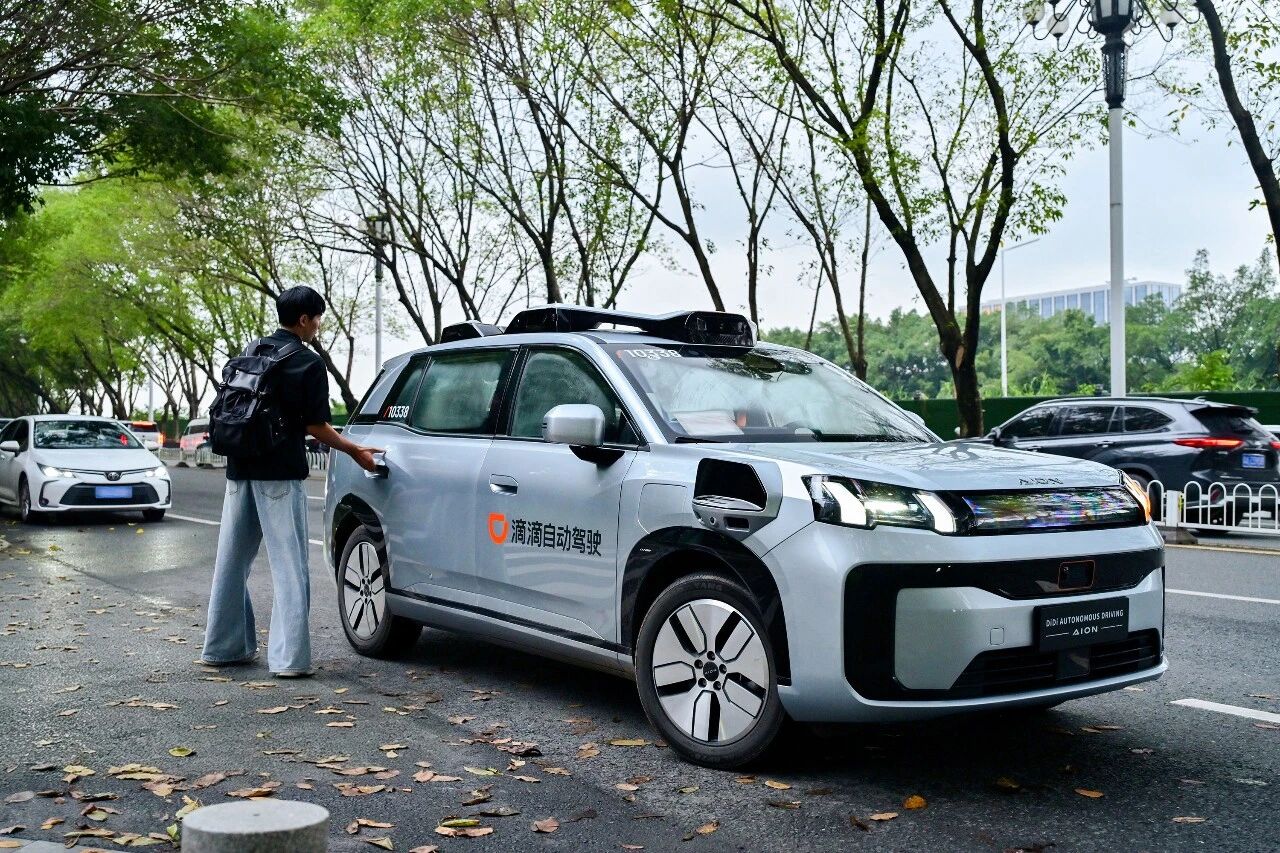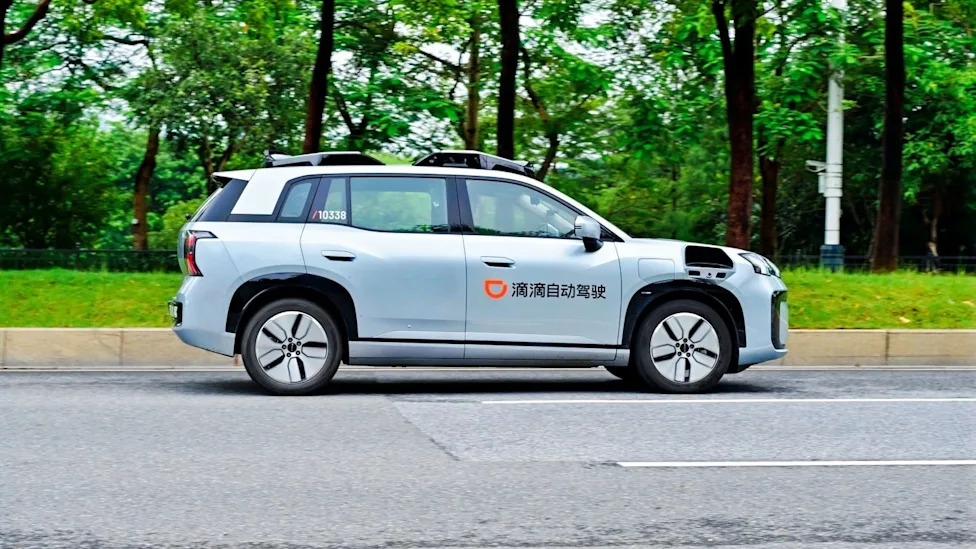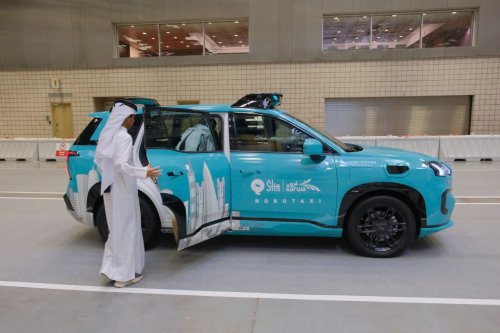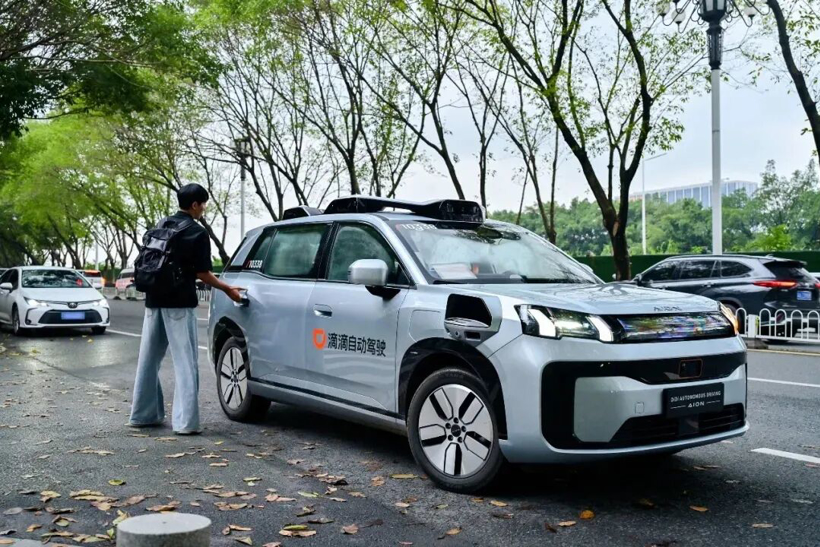



















Gasgoo Munich-DiDi Autonomous Driving's Robotaxi R2 has officially launched unmanned passenger testing services. The vehicle features a combination of RoboSense's EM4 "thousand-line" digital main LiDAR and the E1 all-solid-state blind-spot digital LiDAR. Ride-hailing services are now available in designated demonstration zones in Beijing and Guangzhou.Developed jointly by DiDi Autonomous Driving and GAC Aion, the R2 utilizes DiDi's L4 full-stack hardware and software solution. It carries 33 sensors—including 10 digital LiDAR units—enabling omnidirectional perception capabilities that combine "long-range precision recognition with near-field blind spot elimination."Image Source: DiDi Autonomous DrivingThe deployment configuration—comprising four main thousand-line radars and six all-solid-state blind-spot radars—relies on RoboSense's proprietary SPAD-SoC chip. This setup represents a mainstream approach to high-redundancy design in current Robotaxi perception systems.Unveiled by RoboSense in early 2025, the EM4 is the world's first "thousand-line" ultra-long-range LiDAR. It fuses several advanced technologies, including a digital architecture, crosstalk elimination, full-condition optoelectronic signal processing, and lossless data compression, achieving a detection range of up to 600 meters. Furthermore, with a maximum angular resolution of 0.050°×0.025°, the EM4 can effectively detect tires from 170 meters away, as well as rocks, cardboard boxes, or small animals crossing the road from 250 meters.The E1, meanwhile, boasts an ultra-wide field of view of 120°×90° and is primarily tasked with eliminating near-field blind spots.Beyond the DiDi Autonomous Driving Robotaxi R2, WeRide's newly upgraded Robotaxi GXR also features a "main radar plus blind-spot radar" combination consisting of the thousand-line EM4 and the E1.According to previously released data from RoboSense, the company sold a total of 719,200 LiDAR units in the first half of this year, a 169.6% increase from the previous year. Of that total, sales of LiDAR products for ADAS, and for robotics and other applications, reached approximately 436,600 and 282,600 units respectively, marking year-on-year growth of 98.0% and 510.4%.