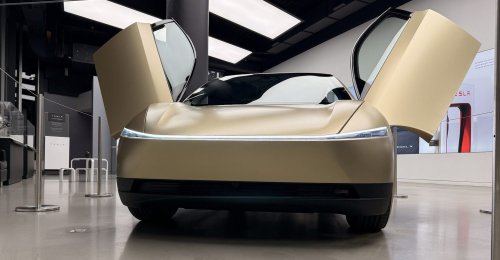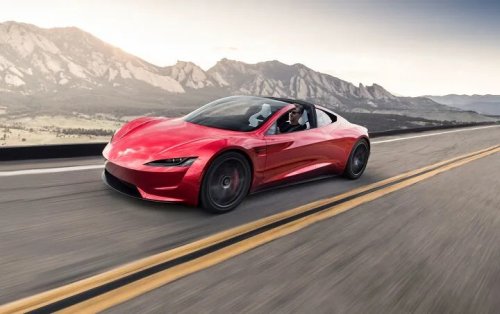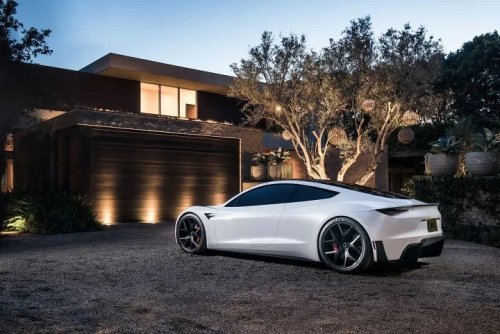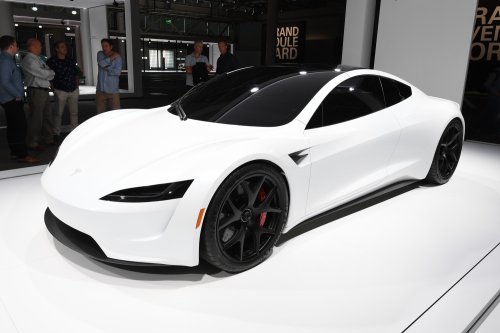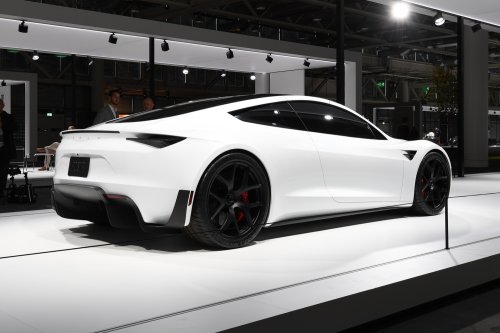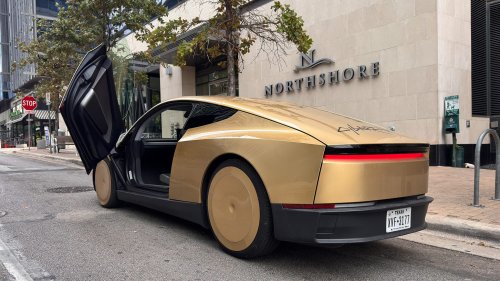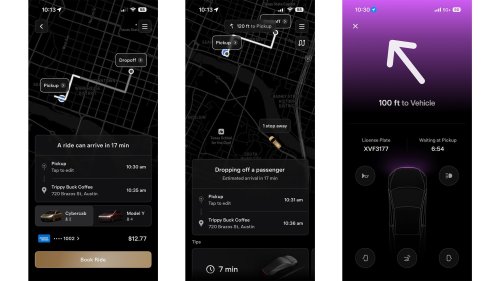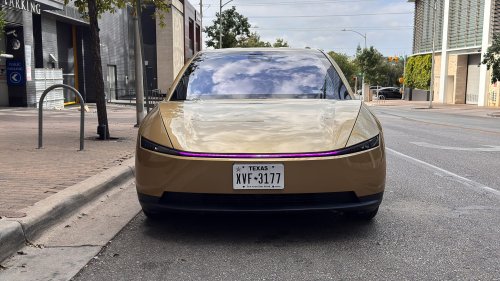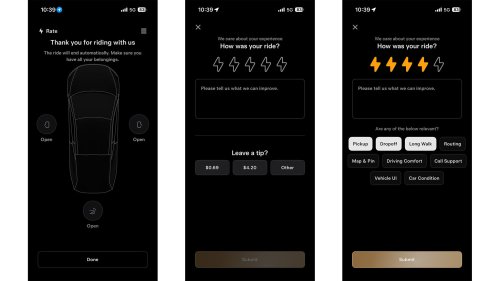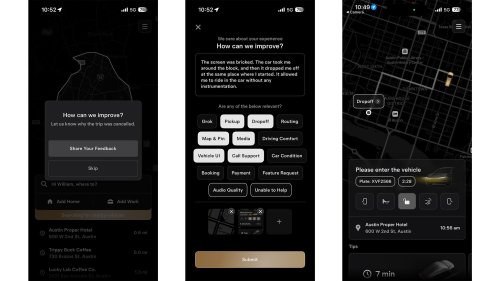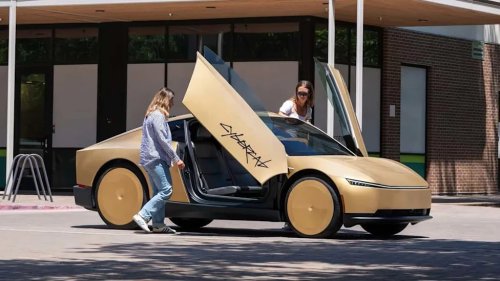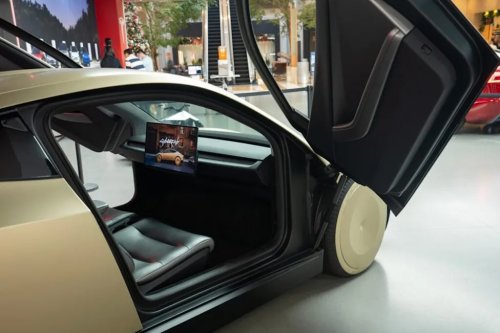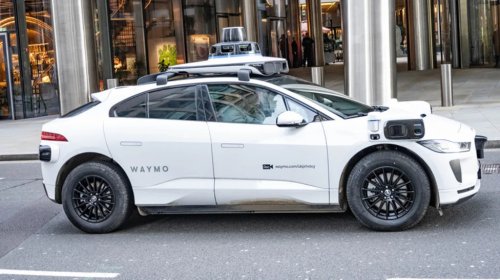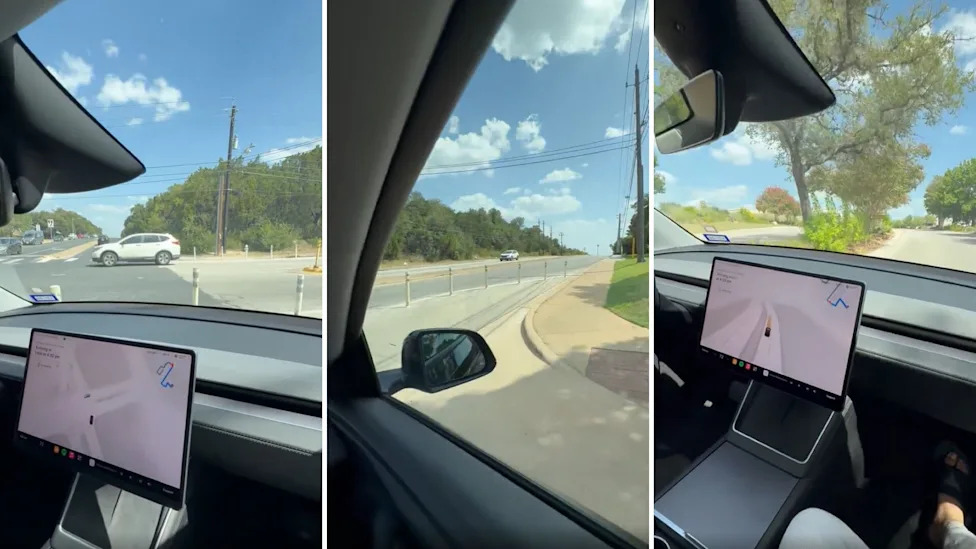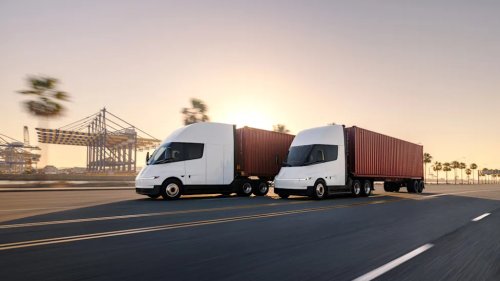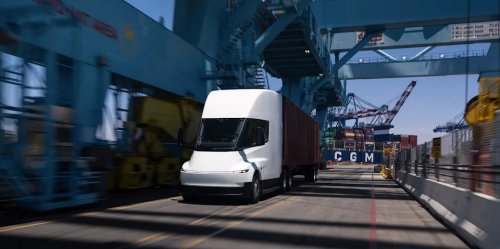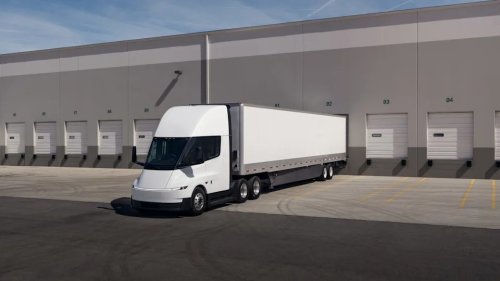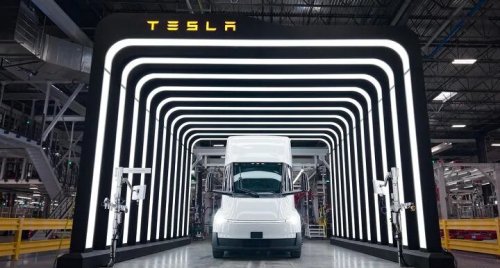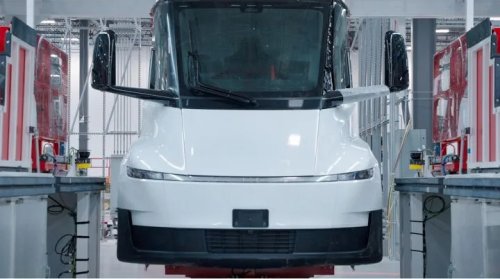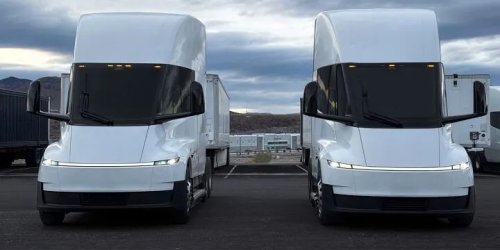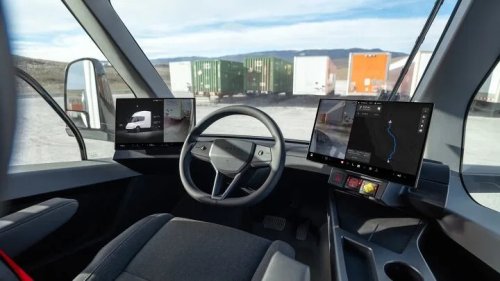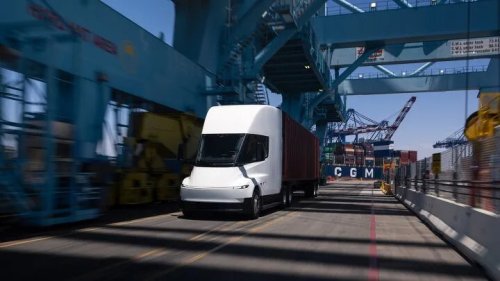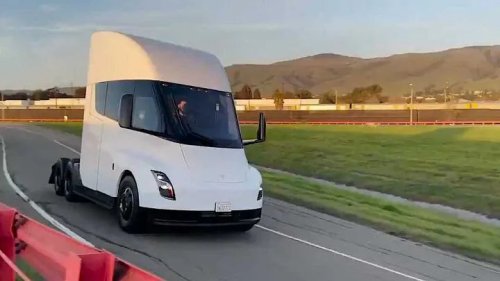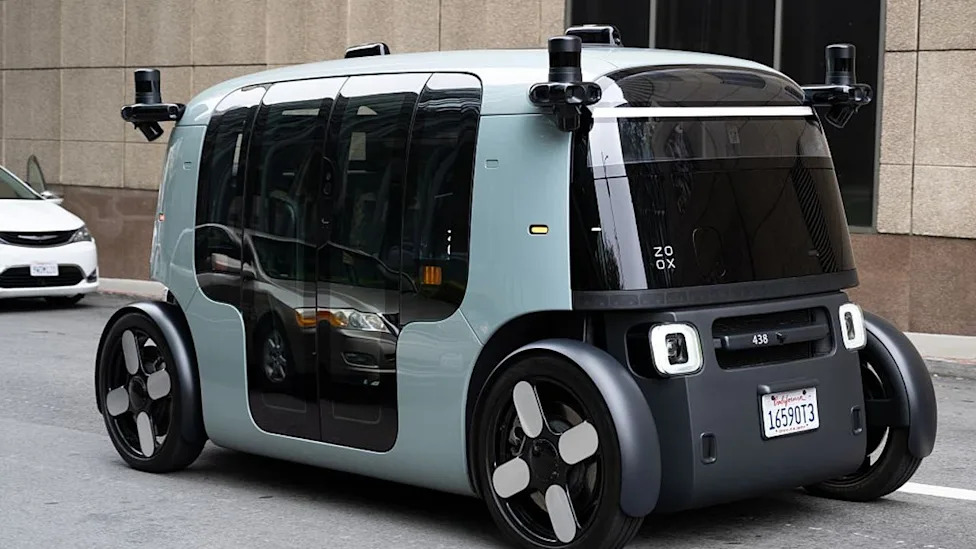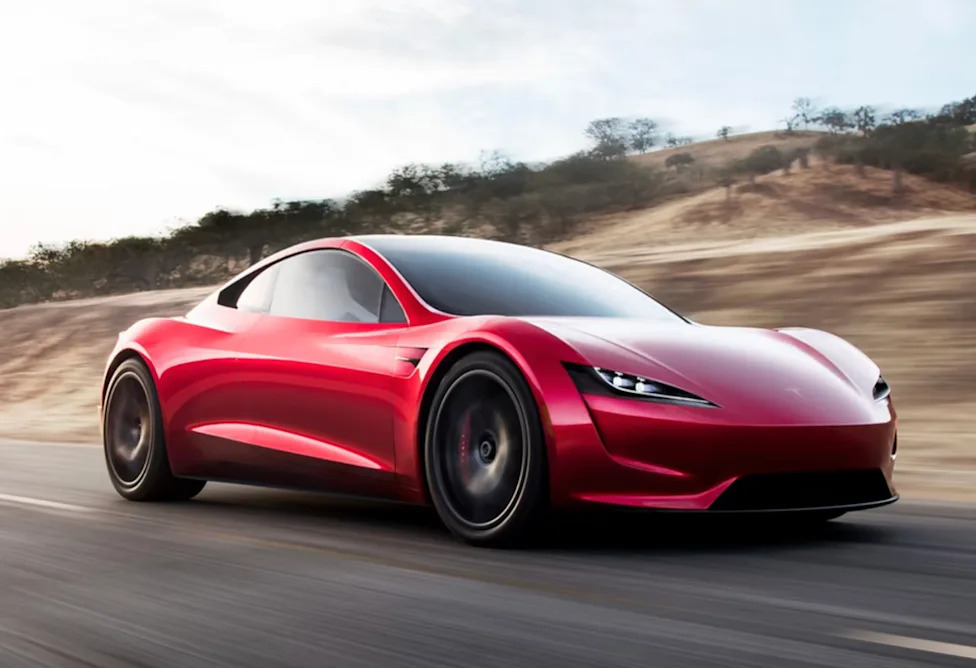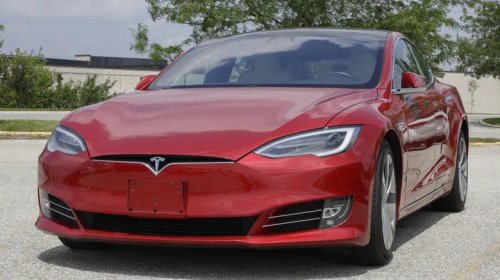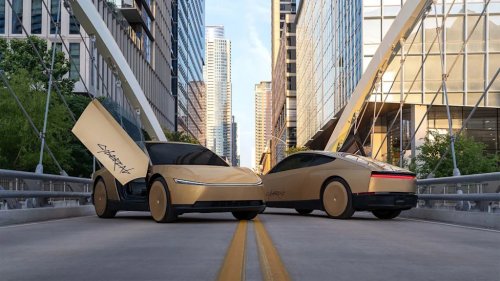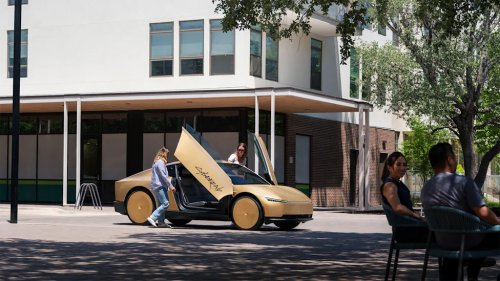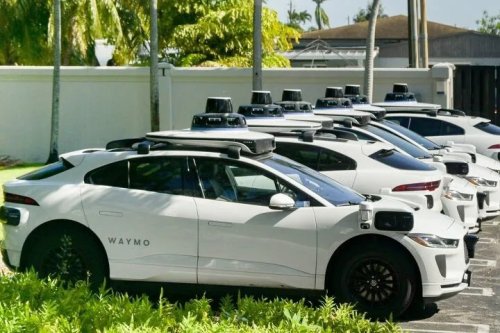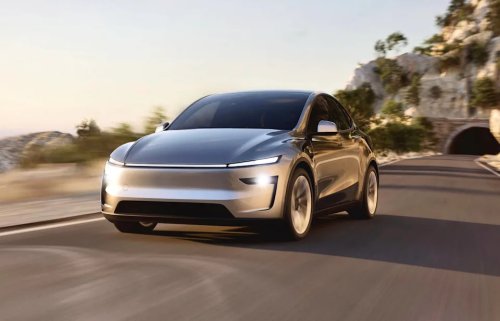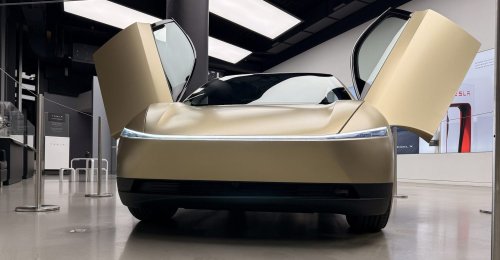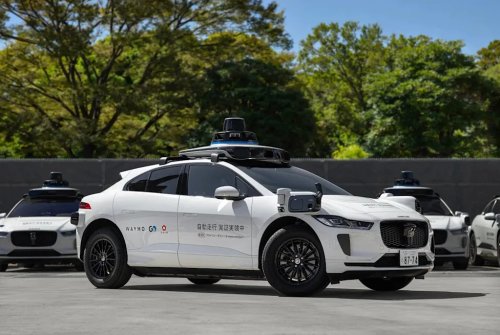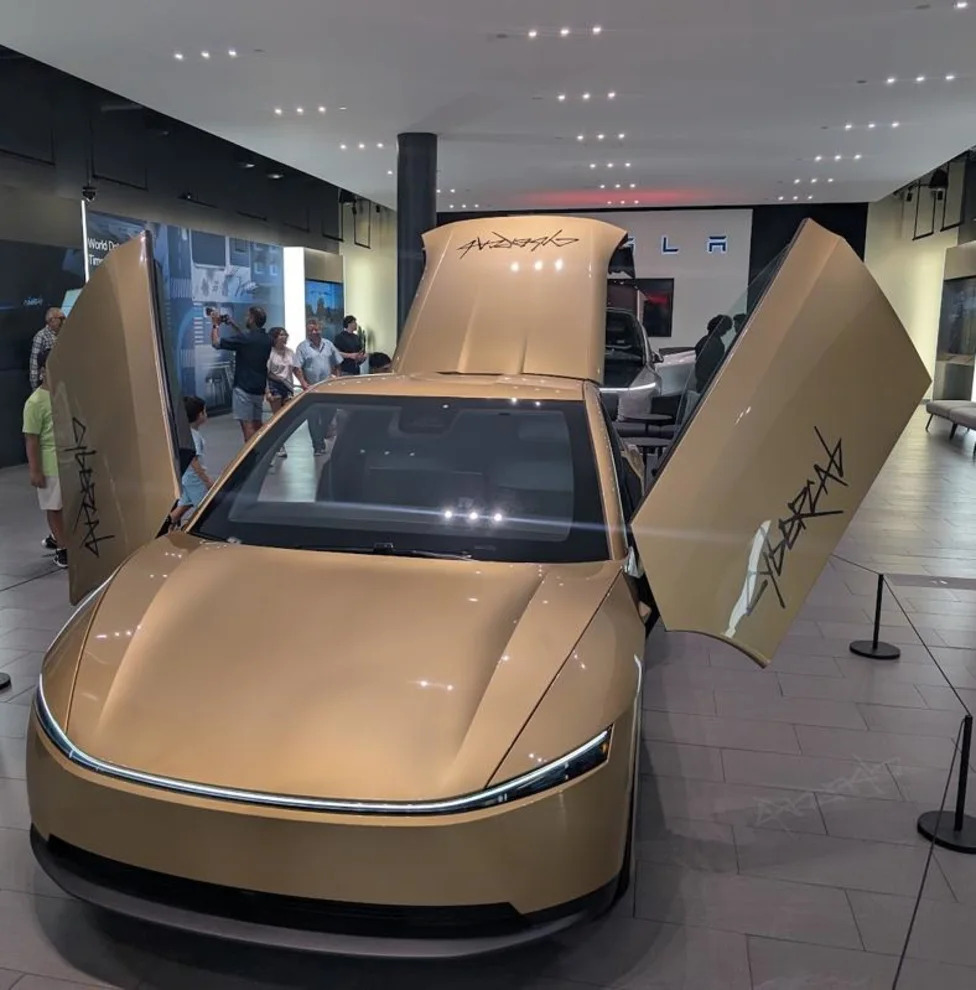
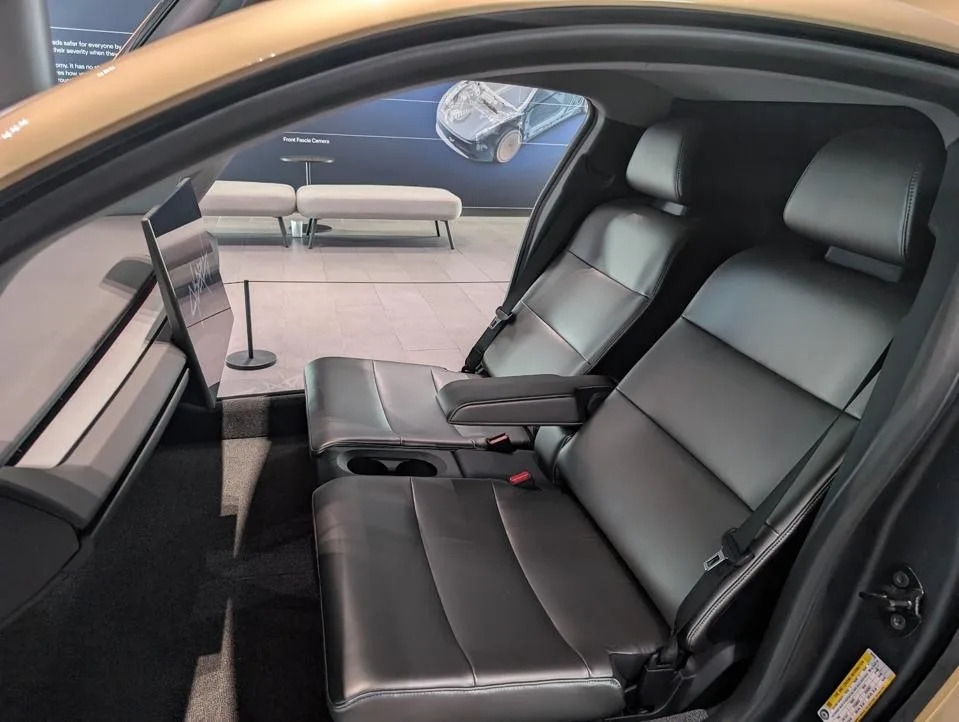
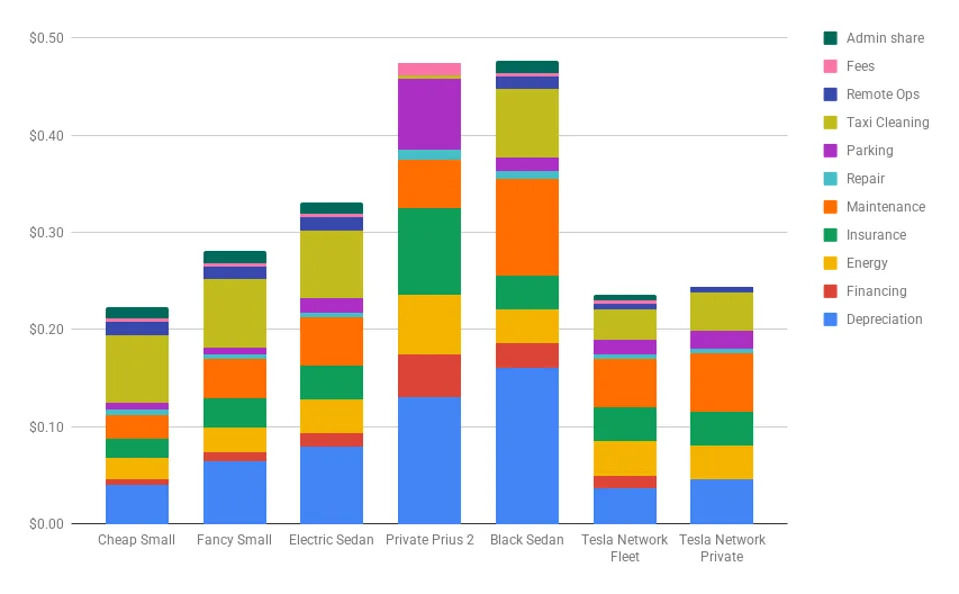













A Tesla Cybercab on display at a Tesla storeBrad TempletonOn Sept 3, Tesla held a small event to "launch" their custom-designed robotaxi vehicle called the Cybercab. The launch involved deploying approximately 35 of the vehicles in Austin, with no steering wheel or pedals, and no employee in the vehicle. Attendees all got rides, and the vehicles were added to the small fleet of Model Ys in Austin doing rides without an employee in the car (but almost surely with an employee supervising remotely.)There's a lot to like in the Cybercab design. The low cost 2-seater design is spartan but with an extra-large display for entertainment. The low, sleek design is highly aerodynamic, with a claimed drag coefficient less than 0.2, among the best out there and highly valuable on highways. It has a giant trunk, reclining seats and excellent legroom. Tesla claim it could be made and sold for $30,000.It also includes Starlink, both for use by riders, and to improve communications with the car for remote assistance, monitoring and other functions. I presume the CEO of Tesla is friends with the CEO of SpaceX and could arrange a deal and even special bandwidth access.AdvertisementAdvertisementIt features unusual wing doors that fold up for easy entry, but which protrude out quite a way and block traffic to the side of them during entry/exit; they may have trouble parking next to walls or very tall vehicles. From a physical standpoint, it is a very good robotaxi for the days when companies are competing tightly on price. The problem for Tesla releasing it now is that sort of competition is unlikely until the 2030s, possibly well into them.The biggest problem, however, is the software, which is not yet ready for robotaxi deployment, which is tied to the hardware, which has been designed to be low cost and rely only on cameras, rather than the superhuman sensors used by all working robotaxi companies.There is a vigorous debate about the merits of camera-only systems and Tesla's other design decisions compared with those of Waymo, Zoox, Nuro, Motional, Baidu, Pony.AI and WeRide. Whatever one's view on that debate, the hard reality is that Tesla has constantly failed to meet its projections. The fact that they don't have more than a small number of vehicles deployed clearly says their team does not yet judge their system safe enough, while companies like Waymo reached that level 7 years ago. Sadly, what Tesla says they are doing provides little reliable information, one must judge the companies on what they actually do. Elon Musk is so keen to make his predictions happen that if they had even the slightest ability to actually launch it seems extremely likely they would not hold back.Tesla does have a small fleet operating with no employee on board. But every company, when they first put out their vehicles with no employee, kept to a small fleet and had employees supervising the vehicles full time over the network. If Tesla isn't doing this, it's reckless of them. Waymo, Zoox and others have announced that they ceased this remote supervision some time ago (they still use remote assistance, and always will, but that's an entirely different thing, and is also done by Tesla, and always will be.) This lack of readiness is the strongest explanation for not attempting to scale.AdvertisementAdvertisementOn the other hand, if any car can make FSD work, it's the Cybercab, since it was designed most recently, and fixes well known issues with earlier cars through the sensor cleaning, new camera locations, Starlink integration and more. Every other company has designed the software first, then adapted the hardware. Tesla tried to finalize the hardware first but that's a challenge.Two SeaterThe two-seat cabin of the Cybercab is spacious and simpleThe two seat design has been questioned by many, but it is probably wise. As Tesla knows, 80-90% of ride-hail trips are 1-2 people. For those few who have more than 2, Tesla will just send one of their 5 or 7 seat Model Y vehicles. That sizes the vehicle to the passenger load, which is cheaper and more efficient. Most rides get the extra cargo space, legroom, low drag and low cost that the 2-seater provides. As first pointed out by Larry Burns 15 years ago, robotaxis can be cheaper than regular cars because their sensors and computers will plummet in price, and there are many expensive components you can remove if you don't have a driver. The Cybercab did keep electric moving and reclining seats, but the movement is paired, which lowers cost.Tesla claims they will save money on the vehicle in many other ways, including a refinement of their unboxed manufacturing process.Can Self Driving Improve New Transit Even More Than It Does Cars?AdvertisementAdvertisementA fleet of two seaters, combined with a smaller number of 5 and 7 seat model Ys and 20-seat Tesla "Robovan" vehicles for group trips and transit could be a very good design. The Robovans could operate in a "Vansit" style system described in the article above.Is it important to be cheap?A more difficult question is what the virtues are of low cost. Today, all robotaxi companies have expenses for R&D and growth that dwarf the cost of their vehicles. The vehicle cost means nothing, and will continue to do so until companies find themselves in a commodity status, competing head to head on price with one another. No company wants to just be a commodity, and that time is far away.Estimate costs of various factors in running a Robotaxi. Note that cheaper Tesla vehicle doesn't make a big difference in total COGS.Even when that time comes, the vehicle cost is only about 1/3rd the "Cost of Goods Sold" for a robotaxi service on a per-mile basis. (The car itself is about half the total cost of ownership for a private car.) That means that even if you cut the cost of the car in half, you only reduce your COGS by about 17%. That's worth doing, but it's not a category killer. It's irrelevant today. In the 2030s we may see head-to-head price competition, where the lower cost service will win the customers. Other companies, like Zoox, are building an expensive custom vehicle hoping its special features will win customers. Nuro has partnered with Lucid to use their luxury "Gravity" vehicle, which their co-CEO Dave Furguson compares to a high-end "black car" service. Waymo's new vehicle is a roomy minivan and their prior vehicle was a luxury Jaguar.Tesla has said their simple sensor approach also saves money, and should it work in the future, it would. But the superhuman non-camera sensors are all from the world of digital electronics. Everything in the world of digital electronics gets ridiculously cheaper with time and scale. It is often noted that transistors today cost one-billionth of what they used to cost. Anybody who bets that digital electronics, including LIDARs and radars, will continue to be expensive at scale is making the worst possible bet, based on the history.Would Buying A Private Cybercab Or Hiring Out Your Tesla Make Sense?AdvertisementAdvertisementLower cost is valuable if you are are selling cars to end users, who will then break out that cost rather than having a focus on total cost of ownership like a fleet operator would. Tesla has put up a form where people who want to buy Cybercabs to operate a fleet can express interest. This idea has issues. Tesla would continue to manage all booking an operations and own the customer. The vehicle owner would provide capital, declare operational hours and do cleaning/maintenance/storage and possibly ancillary services. The profit margin will be small--if it gets large, Tesla would rather keep the profits rather than let somebody else buy the vehicle and get them. One possible area this could work is with cars that are free at peak driving hours (rush hour) but desired by their owner off-peak. The value of a car during peak hours is highest.Tesla Master PlanTesla's cheap-first strategy with the Cybercab is a reversal of the company's old strategy, known as the "Tesla Master Plan." That plan was to start fancy and expensive with the Roadster and Model S, then develop a more consumer priced car in the model 3, with an eventual "model 2" low priced car. The Cybercab could be viewed as that model 2, but it's really a whole new type of vehicle, and Tesla's self-driving development hasn't followed the master plan at all. It began with a focus of trying to make self-driving work with the cheapest hardware, when all the other companies (many of which succeeded while Tesla has yet to deploy) followed the Tesla Master Plan, starting expensive, then reducing cost.Is the Cybercab for real?Tesla has a long history of missed promises, misleading statements and even faking autonomy (such as demonstrating Optimus robots which had unrevealed human tele-operators.) This unfortunately means one must be extremely skeptical of Tesla's claims, and focus on what they do, rather than what they say.The release of 35 Cybercabs is a big step for Tesla, but it's still a very small fleet, particularly since photograph suggest fairly large numbers of Cybercabs have been manufactured. The Cybercabs are much better suited to be a robotaxi, as they have a new generation of hardware, cleaning systems on the cameras, a front camera and a built-in Starlink, none of which are found on the stock Model Y.AdvertisementAdvertisementThe problem is that all known robotaxi companies have begun, when they first deployed vehicles with no employee inside, by doing full time remote supervision. A safety driver watches the car in operation, and has access to at least an emergency kill button and possibly a video-game steering wheel and other controls to intervene. Everybody does this, because it would be stupid and reckless to just send your empty car out into the world for the first time and hope it comes back. Waymo, Cruise and Zoox, however, all declared that they stopped doing this remote supervision. (Remote supervision is different from on-request remote assistance, which all companies, including Waymo and Tesla, do today and plan to do indefinitely.)Tesla has yet to declare they have ended remote supervision. Not everybody declares it, but the small fleet sizes strongly suggest it continues. Based on Musk's many promises, if they were actually ready to deploy at scale, it would be quite surprising if they didn't. His team must have told him the system is not ready--he is not a cautious leader.One impressive number Tesla announced was that their no-employee vehicles had now driven one million miles. That's a big step up, though still well within the range doable with remote supervision. It would be good to get concrete data on this, as well as crash data. (Crash data will be released to NHTSA after a month or so, but it doesn't always distinguish between the vehicles with safety drivers inside and those without.)The Cybercab is real, but the self-driving software still needs work. Many users of Tesla's system mistakenly think that if they see a vehicle make 10, 100 or even 1,000 drives in a row, all perfect, that this means it is close to ready. The real numbers are much higher. You need to see more like 50,000 drives in a row without crash to be at human level, and more like 200,000 drives in a row without being at fault in a crash to be at Waymo's level. No one human being can evaluate the quality of the system just by riding in it. Only Tesla itself has access to that data--and they have yet to attempt to scale, and they decline to disclose the numbers to the public. If the numbers were great, they would shout them from the rooftops. As such we must continue to judge them on what they do, rather than what they say.This article was originally published on Forbes.com