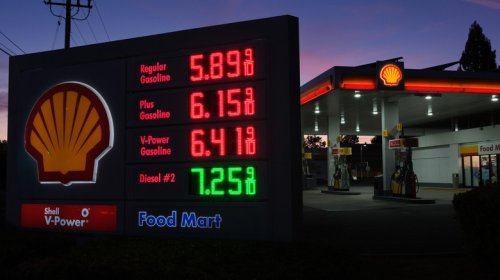


















gm is getting sued over the recalled 10 speed automatic transmissionDrivers routinely push past the posted speed limit to shave time off their morning commute, rush to pick up children from school, or squeeze in one last errand. However, a comprehensive study reveals that this collective habit heavily drains bank accounts and increases tailpipe emissions while offering almost no statistical time savings.According to the research published in the Nature journal of Communications Sustainability, if American motorists simply abided by posted speed limits, it would collectively save millions of dollars at the pump and eliminate millions of gallons of wasted fuel every single day. The most surprising takeaway from the data is that changing these deeply ingrained habits would not even add a full minute to the average driver's daily commute.iihs blames advertising for america s speed problemTo quantify the real-world impact of speeding, researchers at the University of Minnesota conducted a massive tracking analysis. The team evaluated 120 million individual vehicle trips across the United States. The researchers pulled anonymized telemetry data from national road networks, cross-referencing it with official speed limits and localized geographic elevation data. The study focused specifically on highways and primary arterial roads featuring speed limits of 45 mph or higher.AdvertisementAdvertisementThe behavioral results showed that speeding is a dominant trait among American drivers. More than 43 percent of all analyzed trips contained at least one clear instance of speeding. Furthermore, the data showed that drivers spent nearly 12 percent of their total time behind the wheel actively traveling faster than the law allowed.Wasted Money vs. Negligible Time SavingsThe financial and environmental cost of that extra speed is staggering. The study found that if drivers of conventional internal combustion engine vehicles adhered strictly to the posted speed limits, the country would save 6.7 million gallons of fuel and eliminate 57,000 metric tonnes of carbon dioxide emissions every single day.Accounting for higher baseline mileage and the volatile fuel markets of 2026-where geopolitical conflicts have pushed gas prices past the $4.00 per gallon threshold-those daily savings balloon to roughly $26 million and 7.2 million gallons of fuel saved each day. The environmental benefit of this behavioral shift is equivalent to completely removing about 5.5 million passenger vehicles from the road.Despite these heavy costs, the perceived reward of speeding turns out to be an illusion. The researchers calculated that the average daily driving distance for an American motorist sits at 28.6 miles. When modeling that exact distance, driving at or below the legal speed limit only adds an average of 54 seconds to the total daily travel time.Regional Behaviors and the Impact on Electric VehiclesThe study exposed distinct driving habits when analyzing behavior on a state-by-state level. Nevada emerged as a primary hotspot, exhibiting both a high overall prevalence of speeding and a high degree of speed excess, meaning drivers there speed often and go significantly over the limit. States like Florida, Georgia, and North Carolina also showed a high frequency of speeding, though drivers there tended to stay closer to the legal threshold. Conversely, states like Montana, Wyoming, Idaho, and South Dakota registered the lowest overall rates of speeding and speed excess.AdvertisementAdvertisementWhile the primary economic benefit targets gas-powered cars, the study noted that the rule of physics applies universally. By creating a separate model for California to account for its high concentration of electric cars, researchers confirmed that driving slower yields identical efficiency benefits for battery-electric vehicles by preserving battery range and lowering energy consumption per mile.Independent engineering experts view the study's conclusions as a rare operational freebie for consumers. While 7.2 million gallons is a small fraction of the roughly 375 million gallons of gasoline Americans burn through every day, changing driving habits requires zero financial investment from the consumer. With high oil prices directly impacting household budgets this summer, lifting off the accelerator remains the easiest, most immediate way for motorists to give themselves a financial break.Become an AutoGuide insider. Get the latest from the automotive world first by subscribing to our newsletter here.