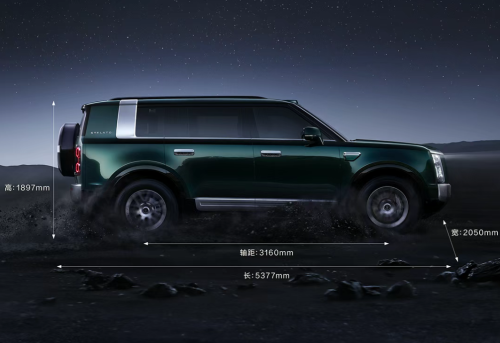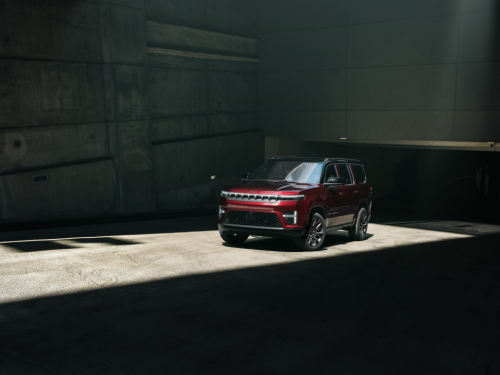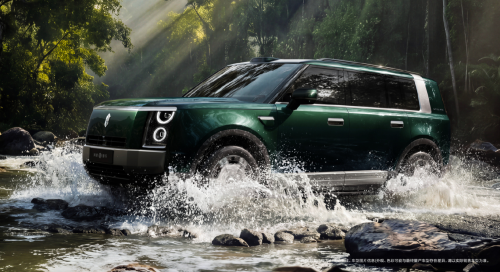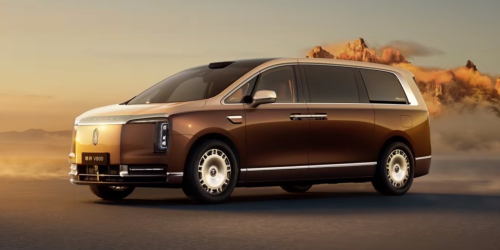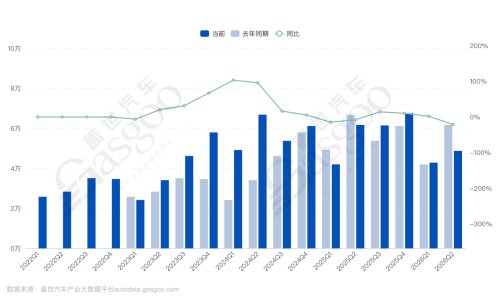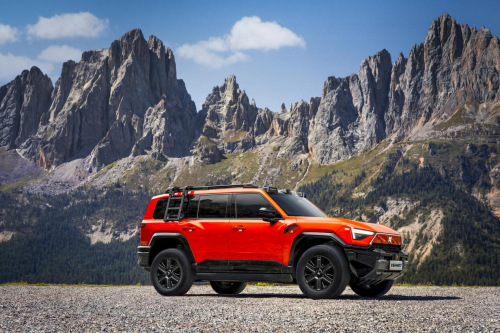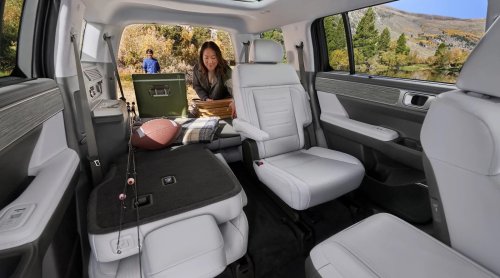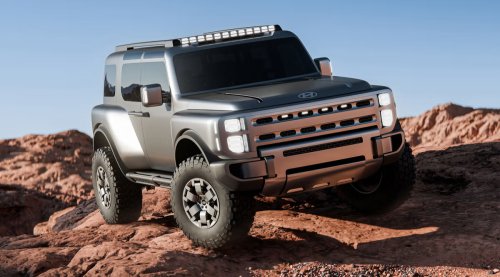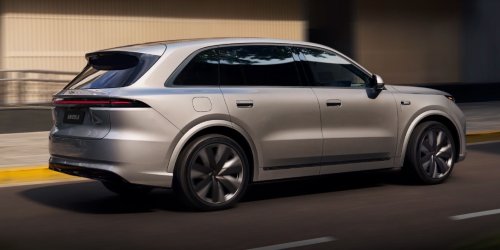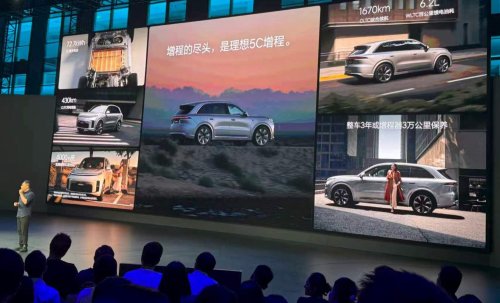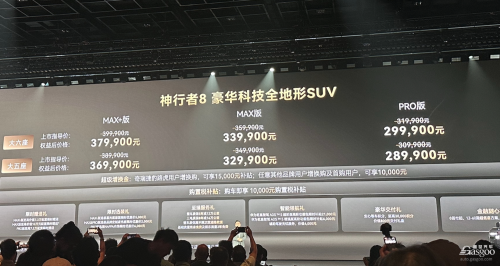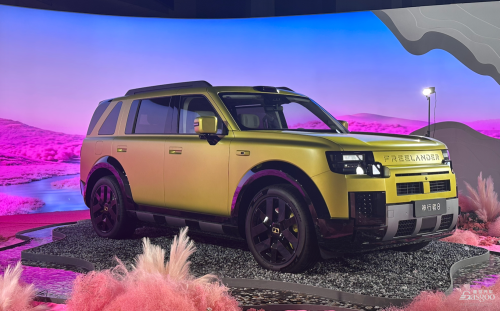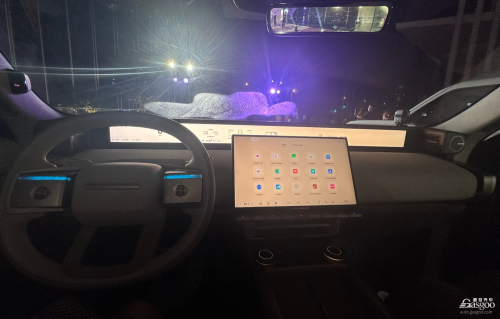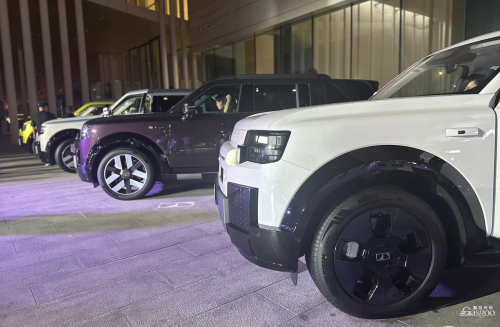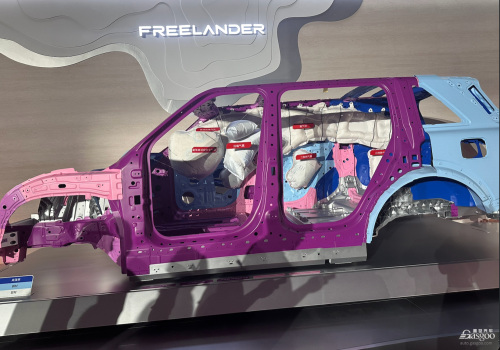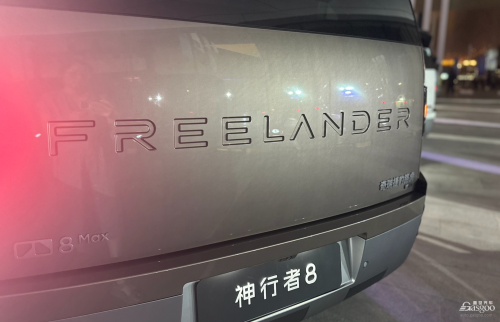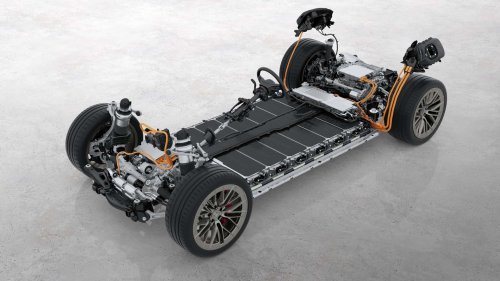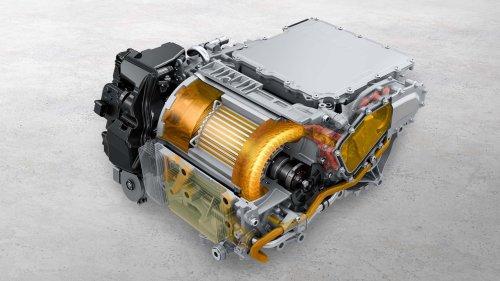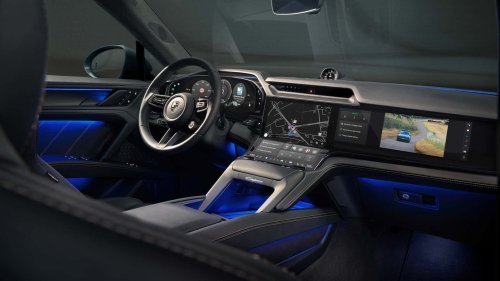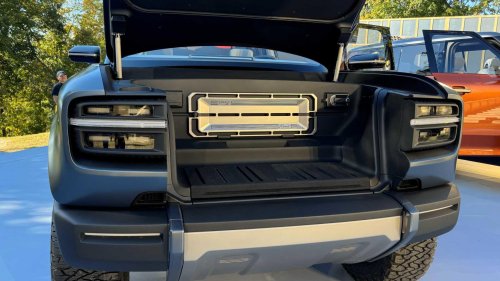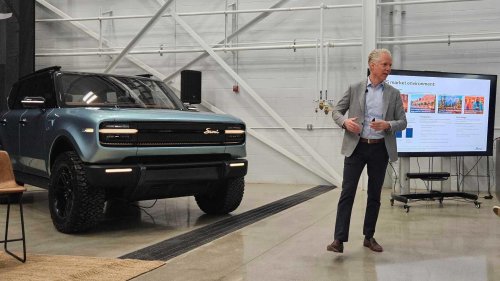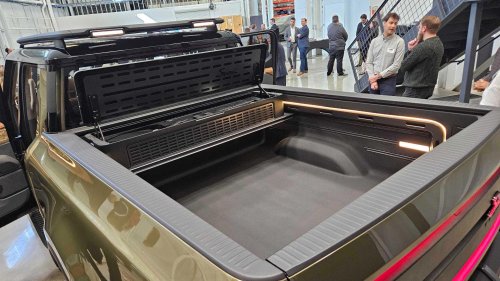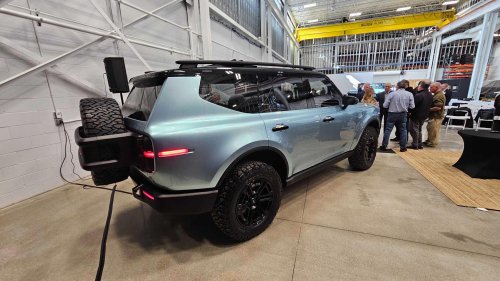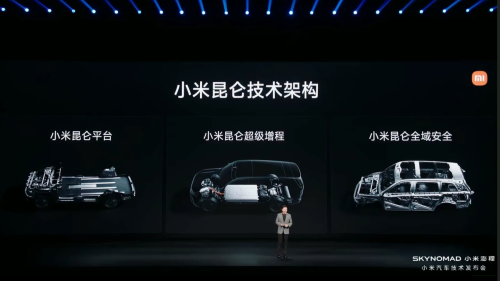
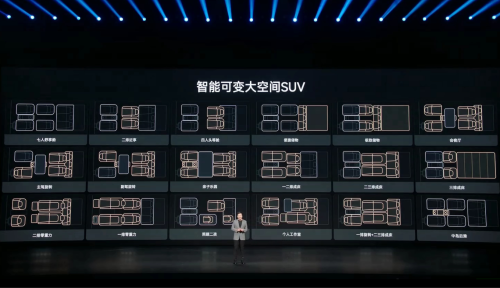
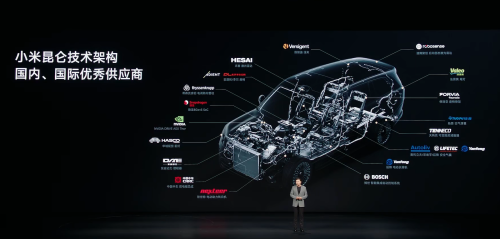
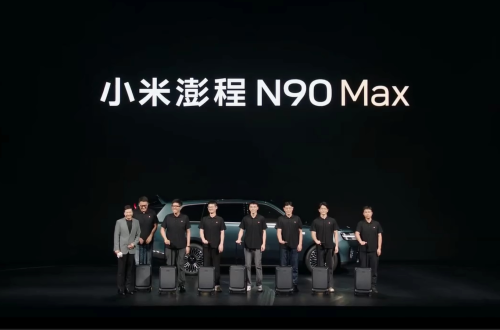
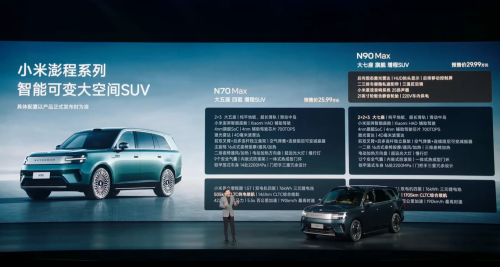
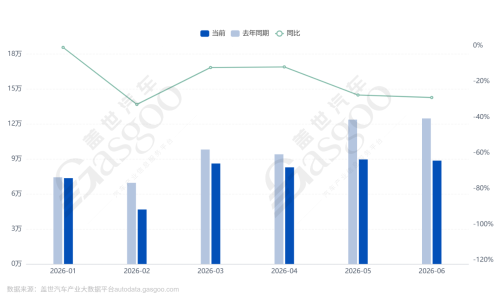
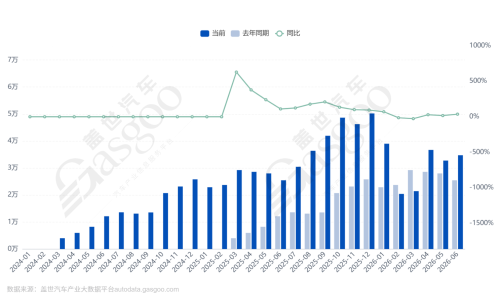
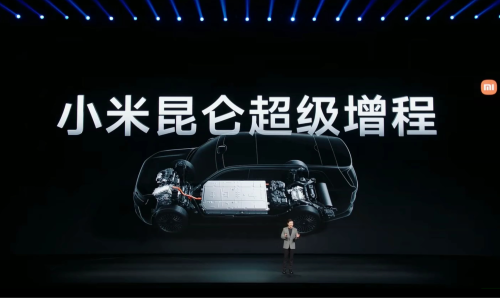



















Gasgoo Munich- On the evening of July 30, Xiaomi Auto formally unveiled its Kunlun technical architecture, designed specifically for extended-range SUVs. Debuting alongside it were two production models built on this platform: the SkyNomad N70 Max and N90 Max, both opening for pre-sale with prices set at 259,900 yuan and 299,900 yuan, respectively.To many observers, Xiaomi's move appears not only late but also risks looking like a bandwagon play on the extended-range trend.In reality, Xiaomi initiated the SkyNomad project in early 2023. With its pure electric lineup now firmly established, the project's official launch marks Xiaomi's formation of a dual-product strategy: a "Pure Electric Driving Series" and an "Extended-Range Space Series."At the launch event, Xiaomi Group founder, chairman, and CEO Lei Jun defined the SkyNomad series as the "second chapter" of Xiaomi's automotive journey.Lei Jun noted that if the past five years were the "first chapter"—focused on answering whether Xiaomi could build good cars at all—then the release of the Kunlun Architecture and SkyNomad series opens the "second chapter." This new phase, he said, aims to answer whether Xiaomi can build a wider variety of excellent cars for users with diverse needs.Yet, a fact that cannot be ignored is that SkyNomad's entry coincides with a "red ocean" cycle: the domestic extended-range market is seeing consecutive declines, and the dominance of top players has solidified. Against this backdrop, can SkyNomad, entering against the current, become the disruptor that rewrites the rules?Three Years in the Making: Kunlun Architecture Reshapes the Extended-Range SUVWithin Xiaomi's technological framework, the Modena architecture focuses on pure electric performance and driving dynamics. The Kunlun architecture, however, was anchored to "intelligent variable space" from its inception, developed specifically for family-oriented extended-range SUVs. It aims to resolve pain points in current large SUVs: rigid seating layouts, cramped second and third rows, and insufficient pure electric range.To achieve this, Xiaomi abandoned the traditional development logic of "styling first, space allocation second." Instead, the Kunlun architecture reverses the engineering process, starting with spatial requirements to define the vehicle design. Its core comprises three technological modules: the vehicle platform, super range extension, and all-domain safety.Image Source: Xiaomi AutoAt the vehicle platform level, the Kunlun architecture's most immediate breakthrough is the reconstruction of interior spatial possibilities.Traditional extended-range SUV chassis must simultaneously house battery packs, fuel tanks, exhaust systems, rear electric drives, suspensions, and underbody protection. This often leads to rear floor humps and uneven floor heights, resulting in extremely poor spatial flexibility.Addressing these issues, Kunlun architecture underwent deep integration and optimization across the X, Y, and Z axes: compressing front cabin length, optimizing wheel arch structures to release lateral space, and flattening the rear drive and suspension to reduce vertical height. Combined with a CTB (Cell-to-Body) battery cover integrated floor design, it achieves a completely flat floor stretching from the first row to the third row and through to the trunk, eliminating the stepped, fragmented feel of traditional SUVs.Building on this, the Kunlun architecture lays six high-strength sliding rails up to 1,938 mm long inside the cabin. This allows for sliding strokes of up to 900 mm for both the second and third rows. Cabin components such as seats, sliding center consoles, and tray tables can all move freely and reconfigure along these rails.Image Source: Xiaomi AutoTo accommodate spatial changes, officials have preset 18 space modes, including face-to-face meeting, lounge bed, and maximum cargo loading. Users can also customize layouts according to their needs. This directly breaks away from the traditional extended-range vehicle logic of "fixed cabin, fixed seats," returning the choice of space to the user.In Lei Jun's words, it offers the exterior, drivability, and passability of an SUV, combined with the space and layout flexibility of a recreational vehicle (RV).In terms of powertrain, Kunlun architecture adopts a "large battery + efficient range extender" technical route, emphasizing an "electricity for daily use, fuel for emergencies" experience. This creates a clear distinction from the industry's prevailing "small battery as backup" philosophy.Specifically, the system features a 1.5T range extender customized by Dongan Power, with focused development on seven core components and optimization of 57 others. It is compatible with all grades of gasoline: 92, 95, and 98.Two battery specifications are offered: an entry-level 52 kWh LFP battery and a higher-spec 76 kWh ternary lithium battery. The N70 Max high-spec version achieves a CLTC pure electric range of up to 505 km, with energy consumption as low as 15.85 kWh per 100 km. The N90 Max boasts a CLTC pure electric range of 464 km and a combined CLTC range of 1,705 km with a full tank and charge, while fuel consumption in depleted battery mode (WLTC) is as low as 6.26 L/100 km. Additionally, the entire SkyNomad series comes standard with an 800 V high-voltage fast-charging platform.Regarding safety, the Kunlun architecture overhauled the vehicle safety system to address the characteristics of variable space, focusing on two core areas: body safety and battery safety.For battery safety, Xiaomi Auto officially introduced the "Dragon Armor Battery" system at the conference—a systematic power battery solution defined, designed, and quality-controlled by Xiaomi throughout the entire process.Beyond this, the vehicle is equipped with multiple emergency redundancy designs covering scenarios such as power-cut unlocking, tailgate escape, and emergency wading.Image Source: Xiaomi AutoNotably, the lineup of core component partners for the Kunlun architecture was also clarified during the launch. Covering key systems like chassis, intelligent driving, body, and powertrain, the list includes Bosch, ZF, Forvia, Top Group, RoboSense, Hesai Technology, Dongan Power, Huayu Saicoly Body, and CRRC. This mature supply chain provides industrial-level support for the subsequent production ramp-up and quality stability of the SkyNomad series.Overall, the Kunlun architecture is not a patchwork of existing extended-range technologies but a ground-up reconstruction starting from the chassis. It moves beyond the simplistic idea that "extended range is just an EV plus an engine," positioning spatial flexibility, pure electric daily experience, and all-scenario safety as core goals. Essentially, it uses a new generation of technical standards to redefine the product DNA of the home-use extended-range SUV.Two Models Hit the Road: Staking a Claim in the 200,000–450,000 Yuan Extended-Range SegmentBased on the Kunlun architecture, Xiaomi's SkyNomad series debuts with two distinctively positioned models: the SkyNomad N70 Max and N90 Max. Pre-sale prices were announced simultaneously at 259,900 yuan and 299,900 yuan, respectively. They target the medium-to-large five-seat SUV and full-size seven-seat SUV markets, forming a product matrix that covers both high and low ends.The SkyNomad N90 Max serves as the series flagship, positioned as a large seven-seat flagship extended-range SUV. It directly competes with 400,000-yuan class family flagships like the Li Auto L9 and AITO M9.Image Source: Xiaomi AutoThe vehicle measures 5,285 mm in length, 1,998 mm in width, and 1,825 mm in height, with a wheelbase of 3,080 mm and a 2+2+3 seven-seat layout. Thanks to the flat floor and long sliding rails, second-row legroom can reach up to 1,550 mm. Even with seven passengers on board, the trunk can still accommodate seven 20-inch suitcases.Power comes from a dual-motor four-wheel-drive system with a combined output of 310 kW, enabling a 0-100 km/h acceleration of 5.5 seconds. Paired with a 76 kWh ternary lithium battery, it achieves a combined range of 1,705 km and fuel consumption of 6.26 L/100 km in depleted battery mode.The chassis features front double-wishbone and rear multi-link independent suspension, standard with five-stage adjustable air springs and continuously variable damping shock absorbers. A turning radius of just 5.95 meters ensures this 5.3-meter giant remains agile to handle.The cabin comes standard with a 9-liter compressor refrigerator, a 21.4-inch rear entertainment screen, and 95% soft-touch surfaces throughout. Higher trims feature a 25-speaker Xiaomi Star String audio system. First- and second-row seats offer heating, ventilation, massage, and zero-gravity modes. The vehicle is equipped with 12 airbags, including dual-chamber far-side airbags for the second row, providing comprehensive protection for all three rows.For intelligent driving, the car comes standard with dual LiDAR sensors and a Thor chip with 700 TOPS of computing power, supporting advanced driver assistance on highways and urban roads. An additional rear-facing LiDAR is included to further optimize parking and blind-spot perception for this large SUV.Beyond the standard version, the car can be fitted with a factory camping pop-top roof. An electric hydraulic lifting roof combined with built-in bed boards directly unlocks outdoor living scenarios.Image Source: Xiaomi AutoThe SkyNomad N70 Max is the volume leader of the series, positioned as a medium-to-large five-seat extended-range SUV targeting the 250,000–300,000 yuan family market. Its core competitors include the Li Auto L6 and the entry-level AITO M7.Measuring 4,960 mm long, 1,998 mm wide, and 1,765 mm high with a 2,950 mm wheelbase, the N70 Max uses a five-seat layout across the board. It highlights spacious rear seating and trunk cargo capacity. Power is standard dual-motor four-wheel drive, paired with a 76 kWh ternary lithium battery. The CLTC pure electric range reaches up to 505 km—the longest in its class—while the combined CLTC range hits 1,461 km.As the volume driver, the N70 Max continues Xiaomi's strategy of "standard equals high-spec." The 800 V platform, LiDAR, advanced intelligent driving, and variable space are all standard across the line. The pre-sale price of 259,900 yuan directly lowers the entry barrier for high-spec extended-range SUVs.From a product positioning perspective, the pure electric SU7 and YU7 focus on performance, handling, and technology, appealing to users who prioritize driving experience and city commuting. The SkyNomad series emphasizes spatial flexibility and all-scenario adaptability, better suiting large family travel, long-distance road trips, and outdoor leisure.With significantly different core usage scenarios and user profiles, the two are unlikely to create significant internal competition. Instead, they will jointly broaden the boundaries of Xiaomi Auto's user coverage.The Extended-Range Market Slumps: Why Is Xiaomi Only Arriving Now?The extended-range market of 2026 is no longer the growth hotspot it once was.Image Source: Gasgoo Automotive Industry Big Data PlatformData from Gasgoo Automotive Industry Big Data shows that wholesale sales of domestic extended-range models totaled 467,519 units in the first half of 2026, a year-on-year decline of 20.03%. June sales alone hit 88,603 units, a staggering 29% annual drop. Specifically in the extended-range SUV segment, first-half sales reached only 405,749 units, down 21.4% year-on-year.Behind these figures lies a saturated market: 85 extended-range model lines were on sale in the first half, spread across 38 brands—a 70% year-on-year increase. Average sales per model have been halved, signaling that market competition has reached a fever pitch. So, what is the logic behind Xiaomi Auto's decision to enter against the tide?Xiaomi Auto actually provided its answer to this question back on July 9, when the SkyNomad series was officially announced.In an official post, Lei Jun defined the SkyNomad series as Xiaomi's second answer sheet, running parallel to the "driver's car" concept of the SU7 and YU7. While the former focuses on driving pleasure, the latter addresses the scenario demand for an "intelligent, variable large-space SUV."In Xiaomi's view, the domestic market is not short on products with stacked features. "Refrigerators, color TVs, and big sofas" and "large six- or seven-seaters" have become standard in family SUVs. However, user needs have fundamentally shifted—many people are no longer satisfied just with large space and comfortable seats; they care more about whether they feel truly at ease inside the car."How to make a car truly comfortable?" This was the core question Xiaomi repeatedly asked when the SkyNomad series was initiated in early 2023.The answer they arrived at was "defining space with intelligence, creating a living space." The interior should not be fixed but should change freely according to the user's needs and whims."To do this well requires simultaneous possession of 'AI technology + smart ecosystem + smart manufacturing capabilities.' Xiaomi happens to have all three, and the foundation is solid." Thus, the SkyNomad series was born.Regarding user positioning, SkyNomad deliberately avoided the industry-standard labels of "dad car" or "business van." Officials stated clearly that SkyNomad is not built for a single identity group, but for all users with diverse life roles who pursue composure and freedom. They don't need a car to signal their status, but they will pay for truly innovative experiences.If user value is the original intention behind Xiaomi's SkyNomad, then realistic considerations at the market and strategic levels are the core driving force for the project's launch at this time."Xiaomi's launch of the SkyNomad series is a strategic layout moving from 'breaking through with a single hit product' to 'systematic, all-scenario competition,'" an analyst at the Gasgoo Automotive Research Institute believes. "It will provide strong supplements in product categories, user demographics, technical routes, and scale."Focusing only on pure electric means Xiaomi Auto would voluntarily give up a significant portion of potential users.Currently, over 60% of domestic car owners lack fixed charging piles. Range attenuation in northern winters and charging congestion during holidays remain real pain points that pure electric models cannot fully overcome in the short term. In this context, for users without private chargers, multi-child families, or those traveling frequently between cities, extended-range vehicles remain an attractive compromise due to their "fuel or electric" flexibility.Abandoning the extended-range track would undoubtedly mean losing this segment of the market to some extent.Moreover, with just two existing pure electric models, Xiaomi Auto would find it difficult to achieve true scale effects in the short term, let alone support its grand layout of a "full-scenario smart mobility ecosystem."Image Source: Gasgoo Automotive Industry Big Data PlatformIn the first half of 2026, Xiaomi Auto delivered 185,000 new vehicles via retail, a year-on-year increase of 17.2%, ranking tenth among domestic new energy manufacturers in retail sales. This result is commendable given it only has two models.However, it is worth noting that Xiaomi's annual sales target for this year is 550,000 units. By this calculation, the completion rate for the first half was only 33.6%. This means Xiaomi Auto needs to deliver at least 60,000 units per month in the second half to meet the target. Since the monthly sales volume of its existing pure electric models is nearing a phased ceiling, relying solely on the pure electric route will be difficult to sustain rapid sales growth.In the long run, running dual architectures in parallel is also the necessary path for Xiaomi Auto to move from "single-product breakthrough" to "systematic competition."Over the past five years, Xiaomi used the Modena architecture to prove its manufacturing capability and built market reputation with the SU7 series. Now, with the landing of the Kunlun architecture, it is replicating its technical prowess into a new track, forming a complete layout of "pure electric + extended-range" dual technical routes and "driving + family" dual product series.The two architectures share smart cockpits, driver assistance systems, supply chains, and channel service systems. This not only amortizes R&D and operational costs but also allows for deep optimization for specific scenarios.Furthermore, in the future, Xiaomi Auto can derive more sub-categories based on the Kunlun architecture, continuously filling price bands and product gaps to provide sustained growth momentum for scaling up sales.Breaking Out of the Red Ocean: Latecomer Advantages and Real-World ChallengesAs a latecomer to the extended-range track, SkyNomad does not hold absolute advantages, but it is certainly not without opportunity."This point in time is certainly not the best first-mover window, but it represents a relatively safe, second-best entry timing," an analyst at the Gasgoo Automotive Research Institute believes. "There are three core reasons: First, user education for the extended-range track is complete. Second, there is still demand space in the current market, and top extended-range automakers are generally facing significant pressure due to product strategy adjustments, so the competitive landscape has not yet fully solidified. Third, Xiaomi's full-ecosystem advantage offers room for differentiated breakout."Specifically, the first card in Xiaomi Auto's hand is the technological generation gap brought by its latecomer advantage.Most mainstream extended-range SUVs in the 200,000–400,000 yuan class were launched between 2023 and 2024. Volume models still rely largely on 400 V platforms, have relatively low pure electric range, and adhere to traditional SUV design logic with fixed cabins and seats.In comparison, the Kunlun architecture starts by making the 800 V high-voltage platform standard across the line, with high-spec models breaking the 500 km pure electric range barrier. Combined with a variable space design featuring flat floors and long rails, it effectively performs a spec upgrade on the industry's standard configuration baseline, stepping out of the homogenized involution of "sofas, color TVs, and fridges."The second card is the differentiated competitiveness of Xiaomi's full ecosystem.Xiaomi's strength lies in its massive user base of consumer electronics and AIoT devices. The Mijia ecosystem connects over a thousand device categories, covering the daily home scenarios of the vast majority of ordinary households.For existing Xiaomi phone and smart home users, seamless integration and scenario linkage between the vehicle and their existing devices will be a significant purchasing plus. This kind of ecosystem stickiness is difficult for other brands to replicate quickly.The third card is Xiaomi's consistent strategy of high specs at an affordable price.Judging by the market performance of the SU7 series, Xiaomi Auto excels at using superior hardware specifications and stronger performance at the same price point to lower category barriers, creating a powerful value-for-money impact.The pre-sale pricing of the SkyNomad series continues this line of thinking. The 259,900 yuan price tag for the N70 Max brings an 800 V platform, large battery, and LiDAR smart driving down to the 250,000 yuan level. The starting price of 299,900 yuan for the N90 Max is also a notch lower than flagship extended-range SUVs in the same class.This pricing strategy is likely to quickly break through user decision thresholds, replicating the breakout path seen in the pure electric market.Image Source: Xiaomi AutoBut there is another side to the coin. To tear open a gap in this red ocean, the SkyNomad series faces no shortage of real-world hurdles.The first hurdle is the cruelty of zero-sum market games.Currently, the Matthew effect in the extended-range market is stark. The 85 model lines on sale in the first half of 2026 shared a wholesale volume of 468,000 units, meaning the average sales volume per model line was less than 6,000 units.Moreover, the leadership structure of the extended-range market is extremely stable.Data from Gasgoo Automotive Industry Big Data shows that in the first half, just three brands—AITO, Li Auto, and Leapmotor—accounted for 47% of the market share combined. The top 10 brands held 73% collectively.This means the remaining twenty-plus brands must fight for less than 30% of the market. Many tail-end models sell fewer than 1,000 units a month, with their survival space severely compressed. Entering now, Xiaomi must steal existing users from top brands—a task far harder than during a period of high industry growth.The second hurdle is the solidification of user mindsets.Breaking user mindsets is harder than gaining market share. Li Auto has cultivated the "dad car" perception for years, making it deeply rooted. AITO, meanwhile, has firmly occupied the high ground of high-end smart extended-range vehicles through Huawei's intelligent driving and HarmonyOS ecosystem. When choosing a 200,000–400,000 yuan family extended-range SUV, these two brands are often the first-tier choices.Although Xiaomi enjoys extremely high awareness in consumer electronics, its mindshare regarding family extended-range SUV scenarios is almost a blank slate. Breaking users' inherent selection inertia requires both solid product strength and sustained word-of-mouth accumulation—it cannot be achieved overnight.The third hurdle is the long-term ceiling of the technical route.Objectively, the long-term ceiling for extended-range technology always exists. Particularly as ultra-fast charging networks continue to spread and pure electric vehicles improve in range and charging efficiency, the market space for extended-range as a transitional technology may gradually shrink in the long run.This means Xiaomi needs to scale up volume quickly within the window while the market still has capacity, recouping R&D and production investment. Simultaneously, it must continue to solidify its pure electric core technology to avoid forming a path dependency on the extended-range route.ConclusionFor Xiaomi Auto, SkyNomad is not a deviation from the pure electric route, but an inevitable step toward a full-scenario layout. From "driver's car" to "family space car," Xiaomi's automotive blueprint is becoming increasingly complete.However, while the official debut of the SkyNomad series showcases the technological depth of the Kunlun architecture and demonstrates Xiaomi's determination to enter the family extended-range SUV market, the real test lies ahead.The final pricing upon official launch, the delivery pace of production ramp-up, and the genuine word-of-mouth in the terminal market—these are the core keys that will determine how far the SkyNomad series can go and whether it can carve out incremental space in the extended-range red ocean.